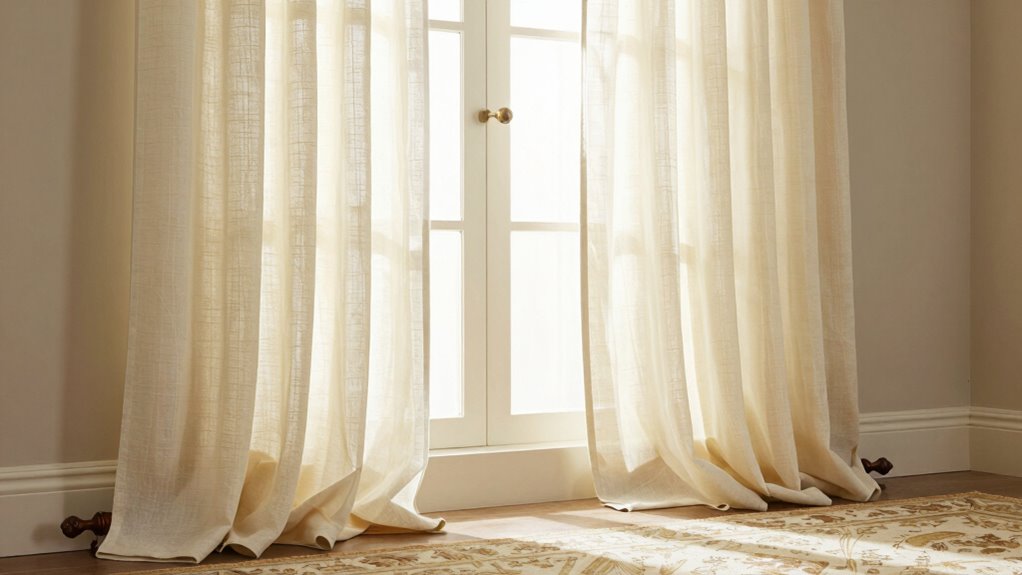
To make your window treatments feel truly finished, focus on selecting fabrics that match your room’s style, whether luxurious velvet or airy sheer. Coordinate hardware styles and finishes to elevate the look and guarantee smooth operation. Pay attention to how textures, weights, and patterns work together to add depth and personality. When all these elements come together, your window treatments become a seamless, polished focal point. Keep exploring to discover more tips for perfecting your space.
Key Takeaways
- Coordinated fabric choices and patterns that complement the room’s overall design create a polished appearance.
- Well-chosen hardware styles and finishes enhance the window treatments and unify the decor.
- Properly tailored and hung window treatments ensure a neat, tailored look.
- Layering different fabric textures adds depth and visual interest.
- Attention to small details like trim, tiebacks, and finials elevates the finished look.
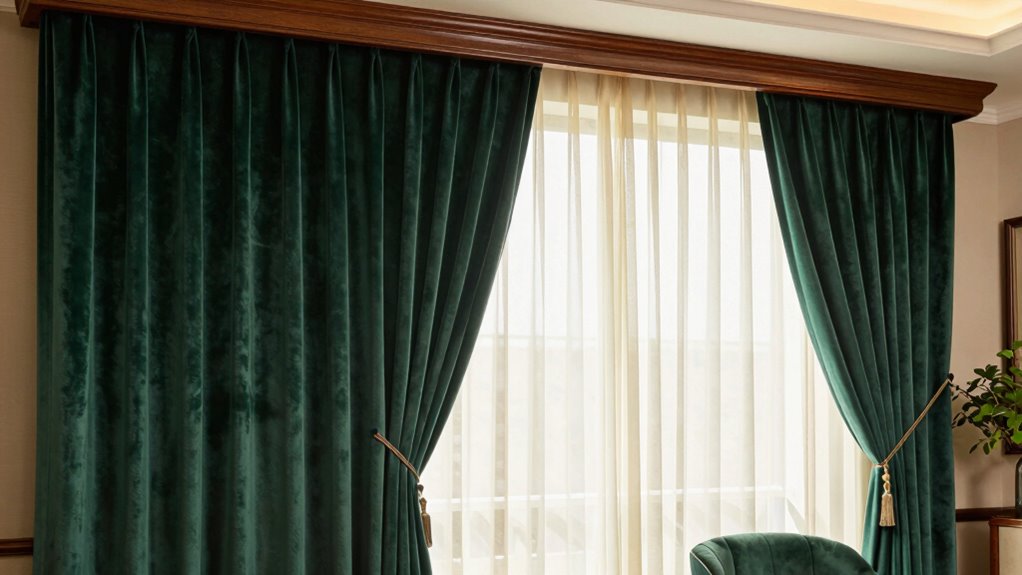
Ever wonder why some rooms just feel complete while others seem unfinished? It often comes down to the details, especially when it comes to window treatments. The right fabric choices can dramatically influence the overall vibe, making a space feel cozy, elegant, or playful. Think about the texture, weight, and pattern of your fabrics—these elements contribute to the room’s personality. Heavy, luxurious materials like velvet or thick linen create a sense of richness, while light, airy fabrics such as chiffon or sheer organza evoke a breezy, open feel. The color of your fabric also matters; coordinating with your walls or contrasting for a pop of interest can tie the entire room together. When you select fabrics thoughtfully, your window treatments become more than just functional; they become a statement piece that anchors the room’s design. Additionally, considering fabric texture can add depth and tactile interest to the space. Choosing the right fabric pattern can also help emphasize or soften architectural features, creating visual balance. Properly selecting fabrics can even influence the room’s acoustics, adding a layer of comfort and privacy. Incorporating fabric weight can further enhance the overall ambiance and functionality of your window treatments. To achieve a truly polished look, it’s also important to think about fabric durability, especially in high-traffic or sunlit areas. But fabric alone isn’t enough to achieve that finished look. You also need to regard hardware styles. The right hardware can elevate your window treatments from simple to sophisticated. For example, sleek metal rods in matte black or polished brass add a modern touch, while ornate finials or vintage-inspired pulls evoke a more classic or traditional feel. The style and finish of your hardware should complement the other elements in your room, like your furniture, lighting fixtures, and accessories. Properly chosen hardware also ensures smooth operation and durability, so you don’t have to worry about constant adjustments or replacements. When hardware styles harmonize with your overall decor, they help create a cohesive, polished look that makes your window treatments feel intentional and complete. Paying attention to hardware details can also prevent the need for frequent repairs or adjustments over time. When all these elements work together seamlessly, your window treatments don’t just serve their purpose—they transform your space into a beautifully finished room.
As an affiliate, we earn on qualifying purchases.
Frequently Asked Questions
How Do I Choose the Right Window Treatment for My Room?
To choose the right window treatment, consider your privacy needs and the room’s style. Opt for custom installation to guarantee a perfect fit and seamless look. Think about how much light you want to block or let in, and select materials that suit your comfort and decor. Always prioritize your privacy considerations, whether you prefer sheer curtains or blackout shades, to create a functional and stylish space.
What Materials Are Best for Different Climates?
For different climates, choose materials based on durability and climate adaptation. In humid areas, opt for moisture-resistant fabrics like polyester or treated cotton to prevent mold. For colder regions, heavy fabrics such as velvet or layered treatments help insulate windows. In hot, sunny environments, consider UV-resistant materials like outdoor fabrics or solar screens. Selecting the right materials guarantees your window treatments last longer and adapt to your climate’s specific demands.
How Often Should I Clean or Replace Window Treatments?
You should clean your window treatments regularly, typically every 1-2 months, depending on your cleaning frequency and household dust levels. For fabric blinds or curtains, consider a deep clean or professional wash annually. Replacement timeline varies; you might need new treatments every 3-7 years if they show wear or become outdated. Keep an eye on fabric fading, damage, or loss of function to determine when it’s time for replacements.
Can Window Treatments Improve Energy Efficiency?
Imagine your windows as tiny energy vampires, draining your wallet daily. Well, window treatments act as superhero shields, boosting thermal insulation and blocking drafts. You’ll conserve energy effortlessly, keeping your home warmer in winter and cooler in summer. So yes, your window coverings can substantially improve energy efficiency, saving you money and reducing your carbon footprint—because who wouldn’t want stylish armor against energy vampires?
What Are the Latest Trends in Window Treatment Designs?
The latest trends in window treatment designs include smart automation, allowing you to control blinds or curtains with your phone or voice commands for convenience. You’re also seeing a focus on decorative hardware, which adds a stylish touch and complements your room’s decor. These trends make your window treatments more functional and visually appealing, helping you achieve a polished, modern look while enhancing ease of use and aesthetic appeal.
Conclusion
To make your window treatments feel truly finished, focus on details like coordinating hardware, adding a decorative valance, or incorporating a layered look. For example, imagine a homeowner who installed sleek blinds but added a textured fabric valance and stylish curtain tiebacks—suddenly, the room feels polished and inviting. Small touches like these elevate your window treatments from functional to fabulous, creating a cohesive, thoughtfully styled space that truly feels complete.