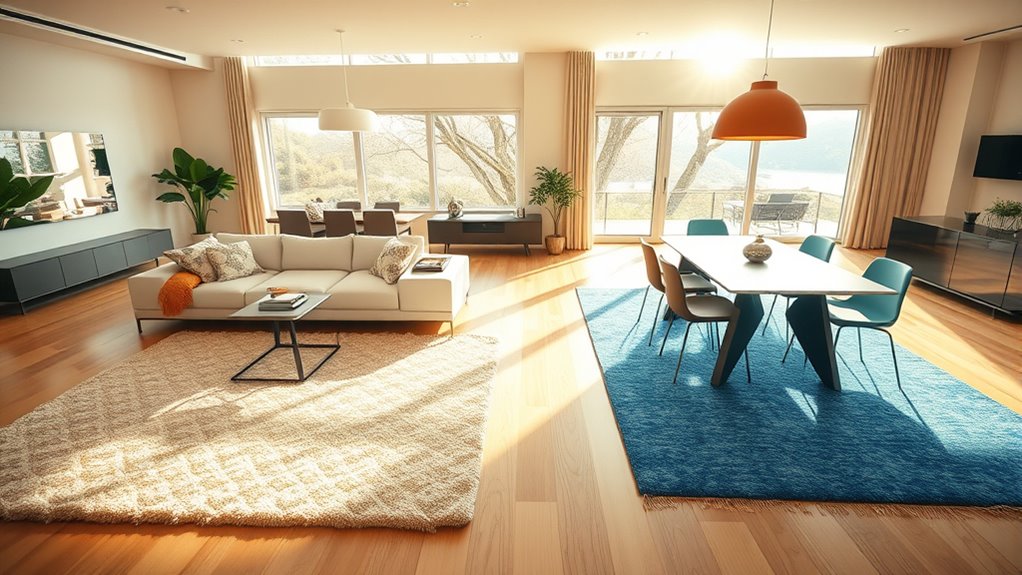

To define zones in an open-plan space, use rugs to create visual anchors for each area; plush rugs can mark cozy lounge zones, while flat-weave rugs can set apart dining spots. Complement these with lighting accents like pendant lights or soft ambient fixtures to highlight specific functions and guide movement. Combining textures and strategic lighting makes your space feel connected yet organized. Keep exploring to discover how these elements can transform your open layout into a stylish, functional haven.
Key Takeaways
- Use lighting accents like pendant lights and ambient fixtures to visually distinguish different functional zones.
- Place rugs strategically—plush in lounge areas and flat-weave under dining tables—to define specific spaces.
- Combine varied textures and patterns in rugs to add character and help visually separate zones.
- Position lighting and rugs to highlight architectural features or artwork, enhancing space division.
- Layer lighting and rugs to create a cohesive flow, guiding movement while maintaining an open, airy feel.

Have you ever wondered why open-plan spaces have become so popular in modern design? It’s all about creating a sense of flow and flexibility in your home, but without clear boundaries, it can be tricky to define individual zones. That’s where lighting accents and rug textures come into play. These elements help you carve out distinct areas while maintaining the airy, connected feel that characterizes open layouts.
Lighting accents are your best friends when it comes to defining zones. Instead of relying on walls or partitions, you can use different lighting techniques to signal the purpose of each space. For instance, a set of pendant lights over your dining area instantly draws attention to that spot, making it clear where your family gathers for meals. Meanwhile, softer, ambient lighting in the living area invites relaxation, subtly separating it from more active zones. Adjustable fixtures like dimmable lights give you even more control, allowing you to change the mood depending on the time of day or occasion. The strategic placement of lighting accents creates visual cues, guiding your eye and body through the space naturally.
Lighting accents define zones, guiding your eye and mood without walls.
Rug textures also play a vital role in defining zones within an open-plan design. They don’t just add comfort underfoot—they act as visual anchors that delineate specific areas. For example, a plush, shaggy rug under your coffee table in the lounge area signals a cozy, informal gathering spot. In contrast, a sleek, flat-weave rug beneath the dining table establishes that space as a dedicated eating zone. Mixing different textures and patterns can enhance each zone’s character, making the shift from one area to another feel intentional and seamless. Layering rugs can also add depth and warmth to your open space, making it feel more inviting and personalized. Incorporating lighting accents and rug textures together can significantly enhance your home’s flow and visual appeal.
Combining lighting accents with thoughtful rug choices allows you to craft a cohesive, functional environment without sacrificing openness. You can highlight architectural features or artwork with targeted lighting, while contrasting or complementing rugs visually separate spaces. This approach not only improves your home’s flow but also helps you tailor each zone to suit your lifestyle—whether it’s entertaining guests, relaxing with family, or working from home. By paying attention to these details, you create a space that feels unified yet clearly divided, all while maintaining that open, airy vibe that makes modern design so appealing.
Frequently Asked Questions
How Do I Choose the Right Rug Size for Each Zone?
To choose the right rug size for each zone, consider your furniture layout and rug placement. A good rule is to select a rug that fits comfortably under all key pieces or defines the space. Opt for rugs with patterns that complement your decor without overwhelming the room. Measure carefully, ensuring enough space around the edges, so each zone feels balanced and cohesive.
What Lighting Options Work Best for Open-Plan Areas?
You should opt for layered lighting, combining ambient and task options to create a versatile, inviting space. Use ceiling fixtures or recessed lights for overall illumination, and add floor or table lamps for task lighting and ambiance. Incorporating dimmer switches allows you to modify the lighting levels throughout the day. This approach ensures your open-plan area feels cozy yet functional, highlighting different zones effectively.
How Can I Reduce Noise Between Different Zones?
To reduce noise between zones, you can implement soundproofing techniques, add acoustic panels, and use soft furnishings. These methods absorb sound, minimize echo, and create a quieter environment. Incorporate rugs, curtains, and upholstered furniture to further dampen noise. By combining soundproofing techniques with acoustic panels, you effectively block sound transfer, making each zone more private and peaceful, perfect for focused work or relaxing moments.
Are There Color Schemes That Unify Open-Plan Spaces?
Yes, you can create a unified look by choosing a consistent color scheme across your open-plan space. Opt for complementary or analogous colors to achieve visual harmony. Using color coordination in furniture, walls, and accessories helps tie different zones together seamlessly. Stick to a cohesive palette, like neutrals with pops of your favorite hues, to make the entire area feel balanced, inviting, and visually connected.
How Do I Maintain Safety With Varied Lighting and Rugs?
To keep safety with varied lighting and rugs, guarantee fire safety by choosing fire-resistant rugs and avoiding clutter near heat sources. Check that electrical wiring is properly installed and not frayed or overloaded, especially around different lighting setups. Use stable, non-slip rugs to prevent falls, and keep cords organized and out of walkways. Regularly inspect all lighting fixtures and wiring to spot potential hazards early, maintaining a safe, functional space.
Conclusion
By using rugs and lighting to define zones, you transform open-plan spaces into inviting, functional areas. Think of these elements as the heartbeat of your design, guiding the eye and creating harmony amid the open canvas. With intentional placements, your space becomes more than just open; it becomes a tapestry of purpose and style. So, embrace these simple tools—they’re your secret to turning an open space into a warm, welcoming home.