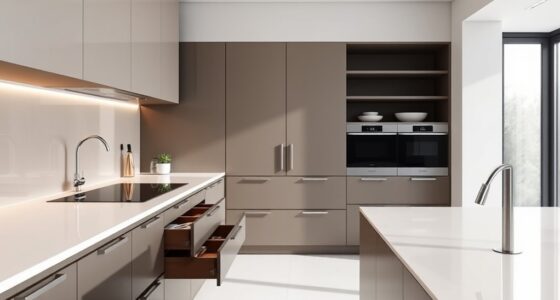
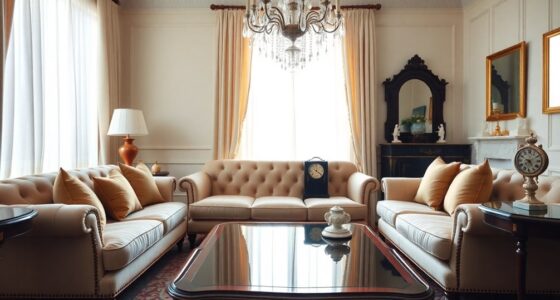
In open-concept zones without walls, you enjoy flexible living that feels spacious and connected. Use furniture, colors, and materials to define different areas without losing flow. Layer lighting to enhance functionality and ambiance, while incorporating storage solutions to keep the space organized. Managing noise and privacy with rugs, panels, or plants helps create a peaceful environment. Keep exploring these strategies for crafting a seamless, personalized layout that balances openness with purpose.
Key Takeaways
- Use furniture, rugs, and lighting to define distinct zones without physical walls.
- Apply consistent color schemes or materials to create visual cohesion across open areas.
- Incorporate visual anchors like pendant lights or cabinetry to subtly delineate zones.
- Strategically arrange furniture to guide movement and establish functional areas.
- Utilize natural elements or decorative accents to create a sense of separation and harmony.
Benefits of Open-Concept Layouts

Open-concept layouts offer several advantages that can enhance your living experience. One key benefit is spatial flexibility, allowing you to easily adapt the space for different needs, whether entertaining guests or relaxing alone. Without walls dividing the area, you gain a sense of openness and freedom to arrange furniture creatively. Additionally, open designs promote natural ventilation, helping fresh air circulate more efficiently throughout your home. This can improve indoor air quality and reduce reliance on artificial cooling or heating. The seamless flow between spaces makes your home feel larger and more inviting. Incorporating natural materials and thoughtful decor can further enhance the cozy ambiance of open-concept layouts. Overall, embracing an open-concept layout creates a versatile environment that boosts comfort, air quality, and the feeling of spaciousness.
Designing Seamless Transitions Between Spaces

Creating smooth connections between open spaces helps your home feel unified and inviting. Focus on maintaining flow and visual cohesion to guarantee every area connects effortlessly. When done right, these transitions make your space more functional and aesthetically pleasing. Incorporating open floor plans enhances the sense of spaciousness and encourages natural light to flow throughout the home.
Flow and Continuity
To achieve a harmonious flow between different areas, careful attention must be paid to how spaces connect and shift into one another. Effective floor planning ensures pathways are intuitive and unobstructed, guiding movement smoothly across zones. Use consistent flooring materials or subtle progressions to create visual continuity, which helps your eye follow the space naturally. Avoid abrupt changes or barriers that disrupt the sense of openness. Instead, design open sightlines and aligned furniture placements to promote spatial harmony. These choices encourage seamless passages, making the space feel unified rather than disjointed. Additionally, understanding the hours of operation for nearby retail stores can help you plan your layout and usage of the space during different times of day. When you prioritize flow and continuity, your open-concept zone becomes more inviting, functional, and comfortable, allowing occupants to move effortlessly through the entire area without feeling interrupted or disconnected.
Visual Cohesion
How can you make different areas feel part of a cohesive whole? Focus on visual cohesion by creating seamless progressions between spaces. Use decorative accents consistently—like matching rugs or artwork—to tie areas together. Incorporate visual anchors, such as pendant lights or cabinetry, to guide the eye naturally across zones. Consider these strategies:
- Repeat colors or patterns across different zones to unify the design.
- Use similar materials or textures in furniture and decor for continuity.
- Establish visual anchors that draw attention and define boundaries without walls.
- Maintain emotional connection by ensuring the visual flow supports a sense of harmony and belonging.
These elements help your open-concept layout feel intentional and connected, rather than disjointed. By carefully selecting decorative accents and maintaining consistent visual cues, you create a harmonious flow that invites movement and interaction.
Choosing the Right Furniture for Open Zones

To create a cohesive open zone, you need to define each functional area clearly so they serve their purpose. Choose furniture styles that complement each other to maintain visual harmony across the space. Prioritize versatile pieces that can easily adapt to different needs and configurations. Incorporating remote collaboration furniture can also enhance the usability of open zones in hybrid work environments.
Define Functional Zones Clearly
Choosing the right furniture is essential for clearly defining functional zones in an open-concept space. Proper furniture arrangements enhance space zoning and boost functional efficiency. To achieve this, consider:
- Selecting distinct furniture styles for each zone to visually separate areas without walls.
- Using area rugs to anchor specific zones, making them feel intentional and organized.
- Incorporating multi-functional pieces that serve multiple purposes, maximizing space utility.
- Integrating unique and wicked planters to add visual interest and subtly delineate different areas within the open space.
Select Complementary Furniture Styles
Selecting furniture styles that complement each other is key to creating a cohesive look in your open-concept space. Your decor style guides your choices, ensuring each piece fits seamlessly within the overall theme. Consider mixing textures and materials that align with your aesthetic, whether modern, rustic, or eclectic. When planning furniture placement, aim for harmony by balancing different styles without cluttering the space. For example, pair sleek, minimalist sofas with vintage accent chairs to add character while maintaining unity. Stick to a consistent color palette to tie everything together visually. Thoughtful furniture selection and strategic placement help define zones subtly, making your open-concept area inviting and well-organized without sacrificing style. Embracing artistic expression in your decor choices can also inspire more creative and personalized arrangements.
Prioritize Versatile Pieces
When designing open zones, prioritizing versatile furniture guarantees your space remains flexible and functional. Choosing multifunctional furniture allows you to maximize usability without clutter. To do this effectively:
- Select pieces that serve multiple purposes, like a sofa bed or storage ottoman.
- Incorporate adaptable decor that can shift between styles and functions easily.
- Opt for furniture with adjustable features, such as extendable tables or modular shelving.
- Consider professional recommendations to select high-quality, versatile pieces that suit your space and lifestyle.
These choices help you create a dynamic environment where furniture adapts to your needs. Versatile pieces make it simple to reconfigure your space for entertaining, relaxing, or working. By embracing multifunctional furniture, you ensure your open zones stay organized, stylish, and highly adaptable to your lifestyle.
Using Color and Materials to Define Areas

Using color and materials effectively can instantly distinguish different zones within an open-concept space. By choosing specific colors based on color psychology, you can evoke the desired mood in each area—calming blues for relaxation zones or energizing reds for activity spaces. Material textures also play an essential role; smooth surfaces like glass or polished wood create a sleek feel, while textured fabrics or rougher finishes add warmth and coziness. Combining these elements allows you to create visual boundaries without walls, guiding movement and defining function naturally. Think about contrasting or complementing colors and textures to highlight shifts between your living, dining, and workspace zones. This approach keeps your space cohesive yet clearly segmented, making it more functional and inviting. Incorporating color psychology principles can further enhance the emotional impact of each zone.
Incorporating Storage Solutions in Open Spaces

In open spaces, incorporating smart storage solutions is essential to maintain a sense of order and prevent clutter from taking over. You can achieve this through integrated storage that seamlessly blends with your design, enhancing both function and aesthetics. Consider these options:
- Built-in shelves and cabinets that maximize vertical space without disrupting flow.
- Decorative solutions like open shelving with stylish baskets or boxes, adding personality while hiding clutter.
- Multi-purpose furniture, such as ottomans or benches with hidden compartments, to provide discreet storage.
- Incorporating dream symbols into your design choices can subtly influence the atmosphere of your space, promoting feelings of calm or inspiration.
These strategies help you maintain an open, airy feel while providing practical solutions. Integrating storage not only keeps your space organized but also elevates your décor, making it both functional and visually appealing.
Managing Noise and Enhancing Privacy

Ever wonder how to create a peaceful open-concept space despite the noise and lack of walls? You can start by applying soundproofing techniques, such as adding rugs, heavy curtains, or acoustic panels, to absorb sound and reduce echoes. Strategic placement of furniture also helps block noise pathways and create visual privacy. Incorporate acoustic treatments like wall-mounted panels or fabric-covered dividers to dampen sound transmission between zones. Using bookshelf walls or plants can further break up sound waves and add privacy without sacrificing openness. These approaches make your space more comfortable, allowing conversations to stay private and background noise to diminish. With a few thoughtful adjustments, you’ll enjoy an open environment that feels spacious yet peaceful.
Lighting Strategies for Open-Plan Environments

Have you considered how lighting can define and enhance the flow of your open-plan space? Proper lighting creates zones without walls, guiding movement and focus. Use layered lighting to achieve this:
- Ambient lighting sets the overall mood, providing uniform illumination across the area.
- Task illumination targets specific work or activity zones, ensuring adequate brightness without glare.
- Accent lighting highlights architectural features or decor, adding depth and visual interest.
Balancing these elements helps maintain a cohesive look while ensuring functionality. Opt for dimmable fixtures to adjust intensity as needed, and consider directional lights for task areas. Thoughtful lighting strategies not only improve usability but also subtly define different zones within your open-plan environment.
Tips for Maintaining Functionality and Aesthetics

Effective lighting sets the foundation for a space that’s both functional and visually appealing. To maintain this balance, consider integrating artistic elements that reflect your style, such as unique furniture or curated artwork. Using outdoor integration, bring natural elements inside—think potted plants or window views—to enhance aesthetics. Proper zoning with rugs or furniture arrangements helps preserve functionality without clutter. Here’s a quick visualization:
| Functional Zones | Artistic Touches |
|---|---|
| Kitchen & Dining | Statement lighting and artwork |
| Living Area | Custom furniture and plants |
| Workspace | Organized storage, natural light |
| Lounge | Cozy textiles, outdoor views |
Keep these tips in mind to create a space that’s both beautiful and practical.
Frequently Asked Questions
How Can I Create Distinct Zones Without Physical Barriers?
You can create distinct zones without walls by using visual separation and functional zoning. Incorporate rugs, lighting, or color changes to define spaces clearly. Arrange furniture strategically to create natural boundaries, like a sofa grouping for a living area or a dining table for the dining zone. These techniques help you establish different functions within one open space, making each zone feel separate while maintaining an open, airy feel.
What Are the Best Plants to Improve Air Quality in Open Spaces?
Think of plants as nature’s air filters in your space. To improve indoor air, choose plants like snake plants, pothos, and peace lilies—they’re easy to care for and boost plant health while purifying the air. These green guardians help remove toxins and increase oxygen, making your open space feel more invigorating and healthier. Incorporate them strategically, and you’ll create a vibrant, ventilated environment that feels like a breath of fresh air.
How Do I Prevent Furniture From Cluttering Open-Concept Areas?
To prevent furniture from cluttering your space, focus on smart furniture placement that promotes flow and openness. Use multi-functional pieces to maximize space and keep clutter management in check. Keep pathways clear by arranging furniture away from walkways, and choose storage options that hide excess items. Regularly declutter and reassess your layout to maintain an organized, breezy environment that feels spacious and inviting.
What Are Eco-Friendly Materials Suitable for Open-Plan Designs?
Think of your space as a living canvas, where eco-friendly materials breathe life into your design. You can choose sustainable flooring that echoes nature’s serenity and recycled countertops that transform waste into art. These choices symbolize harmony with the environment, making your open-plan area not just beautiful but also meaningful. Embrace these materials to create a space that feels both inspiring and responsible, reflecting your commitment to a greener future.
How Can I Incorporate Privacy Screens Without Disrupting Flow?
You can easily incorporate privacy screens by using decorative curtains or movable partitions. These options allow you to create private areas when needed without disrupting the overall flow of your space. Choose curtains that complement your decor for a stylish look, and opt for lightweight, movable partitions that can be repositioned as your needs change. This way, you maintain an open feel while enjoying flexible privacy.
Conclusion
Embrace your open space like a blank canvas, where each piece and color paints a story of harmony and flow. Let your furniture and lighting be the brushstrokes that define zones and moods. When you balance openness with thoughtful touches, your home becomes a living masterpiece—an uninterrupted symphony of comfort and style. In this way, your open-concept zone transforms into a sanctuary where every element harmonizes, inviting life to flow freely and beautifully.