
TL;DR

Get furniture and decor delivered free — and shop member deals
- Fast, free delivery on millions of items
- Access to Prime Big Deal Days deals on October 6–7
- Prime Video, Amazon Music and more included
Recent studies indicate that modern interior decor may negatively affect brain function. Experts warn that certain design choices could contribute to increased mental strain. The findings are preliminary and further research is needed.
Emerging research indicates that certain elements of modern interior decor may be contributing to increased mental strain among individuals. Experts warn that minimalist, high-contrast, and clutter-free environments could influence cognitive load, raising concerns about mental health. This development matters because it challenges assumptions that contemporary design is universally beneficial for well-being.
Recent studies published in the Journal of Environmental Psychology suggest that some aspects of modern decor, such as stark color contrasts, minimal clutter, and open-plan layouts, may increase mental fatigue. Researchers analyzed brain activity patterns and reported that these environments could elevate stress levels and impair concentration. While these findings are preliminary, they align with anecdotal reports from individuals experiencing heightened mental exhaustion in such spaces.
Experts such as Dr. Lisa Carter, a cognitive neuroscientist at the University of California, noted, “Our initial data indicate that certain design features, like high-contrast color schemes and sparse layouts, might increase cognitive load. This could have implications for mental health, especially for vulnerable populations.”
It is important to emphasize that these findings are still under review, and the research team has called for more extensive studies to confirm the effects and explore potential mechanisms. No definitive causal link has yet been established, and the impact may vary among individuals.
Implications of Design Choices on Mental Well-Being
This research raises important questions about the impact of interior design on mental health. If certain modern decor elements do increase cognitive strain, it could influence how homes, offices, and public spaces are designed in the future. Mental fatigue can affect productivity, mood, and overall well-being, making this a concern for designers, homeowners, and policymakers alike.
Additionally, these findings could lead to a reevaluation of popular aesthetic trends, emphasizing the need for environments that support mental resilience rather than inadvertently impair it. As awareness grows, there may be increased demand for designs that balance aesthetics with cognitive comfort.
calming minimalist decor furniture
As an affiliate, we earn on qualifying purchases.
As an affiliate, we earn on qualifying purchases.
Recent Trends in Modern Interior Design and Mental Health Research
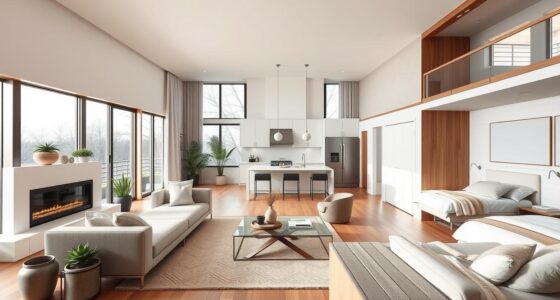
Modern interior decor has favored minimalist, high-contrast, and clutter-free environments for the past decade, driven by trends in Scandinavian and contemporary styles. While these designs are often associated with cleanliness and simplicity, some experts have questioned their psychological effects.
In parallel, research in environmental psychology has increasingly explored how physical surroundings influence mental health. The latest studies suggest that certain design elements, such as stark color contrasts and open spaces, could elevate stress or impair focus, though conclusive evidence remains limited.
These developments come amid a broader societal focus on mental health awareness and the search for environments that promote well-being. The new findings add a layer of complexity to the ongoing debate about the psychological impacts of design choices.
“”Our initial data indicate that certain design features, like high-contrast color schemes and sparse layouts, might increase cognitive load. This could have implications for mental health, especially for vulnerable populations.””
— Dr. Lisa Carter, cognitive neuroscientist
Unconfirmed Aspects of Decor’s Impact on Brain Function
While initial studies suggest a potential link between modern decor and increased mental fatigue, the research is still in early stages. It is not yet clear how significant the effects are across diverse populations or whether specific design elements are more impactful. Further, causality has not been firmly established, and individual differences may influence outcomes.
Researchers emphasize that more comprehensive, controlled studies are needed to confirm these findings and understand underlying mechanisms. The current data do not justify broad conclusions or immediate changes to design practices.
Next Steps in Research and Design Recommendations
Scientists plan to conduct larger, more detailed studies to verify the initial findings and explore how specific design features influence cognitive load and stress. Meanwhile, interior designers and architects are encouraged to consider mental health implications when creating spaces, possibly integrating more varied color schemes and clutter management strategies.
Public health officials and mental health advocates may also review these preliminary results to develop guidelines for mental-friendly environments. Ongoing research will determine whether these decor trends need adjustment or if new standards should be established.
Key Questions
Can modern decor cause mental health issues?
Current research suggests there may be a connection between certain design features and increased mental fatigue, but definitive evidence linking decor to mental health problems has not yet been established. More studies are needed.
Which design elements are most likely to impact mental fatigue?
Preliminary findings point to high-contrast color schemes, minimal clutter, and open-plan layouts as potential factors that could increase cognitive load. However, individual responses vary.
Should I change my interior design based on this research?
At this stage, the findings are still preliminary. If you feel mentally exhausted in certain environments, consider adding softer colors, more clutter, or personal touches that promote comfort. Consult with design professionals for personalized advice.
How soon will we know more about decor’s effects on mental health?
Researchers plan to conduct further studies over the next year. It may take longer to establish clear guidelines or make definitive recommendations for interior design practices.
Source: hn
Halloween Picks
halloween
As an affiliate, we earn on qualifying purchases.