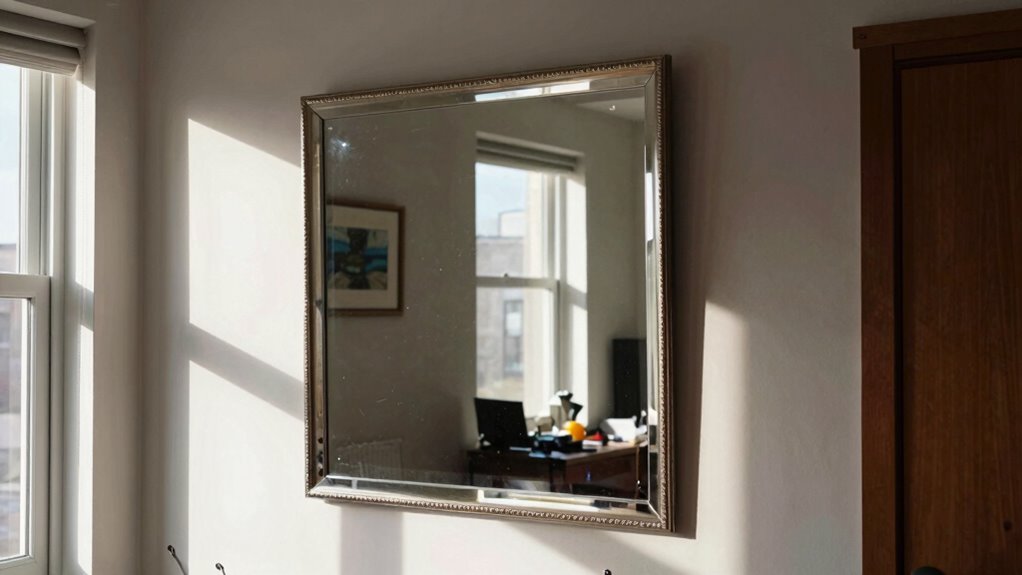
If you place mirrors in cluttered corners or too high or low, you block natural light and create shadows that dim your space. Mounting mirrors facing doorways or busy areas reflects chaos instead of brightness. Ignoring wall colors and surroundings can cause glare or dull reflections. Proper placement—like near windows or bright walls—can maximize light, but common mistakes hinder this. Keep exploring to discover how to position mirrors effectively for a brighter, more inviting home.
Key Takeaways
- Placing mirrors in cluttered or dark corners blocks light reflection and creates visual noise.
- Mounting mirrors too high or too low reduces their effectiveness in bouncing light evenly.
- Obstructing doorways or traffic flow prevents natural light from entering and limits mirror placement options.
- Ignoring wall colors and surroundings can cause glare, clash, or diminished reflection quality.
- Using ornate frames or textured surfaces absorbs or diffuses light, decreasing overall brightness.
Why Proper Mirror Placement Boosts Natural Light
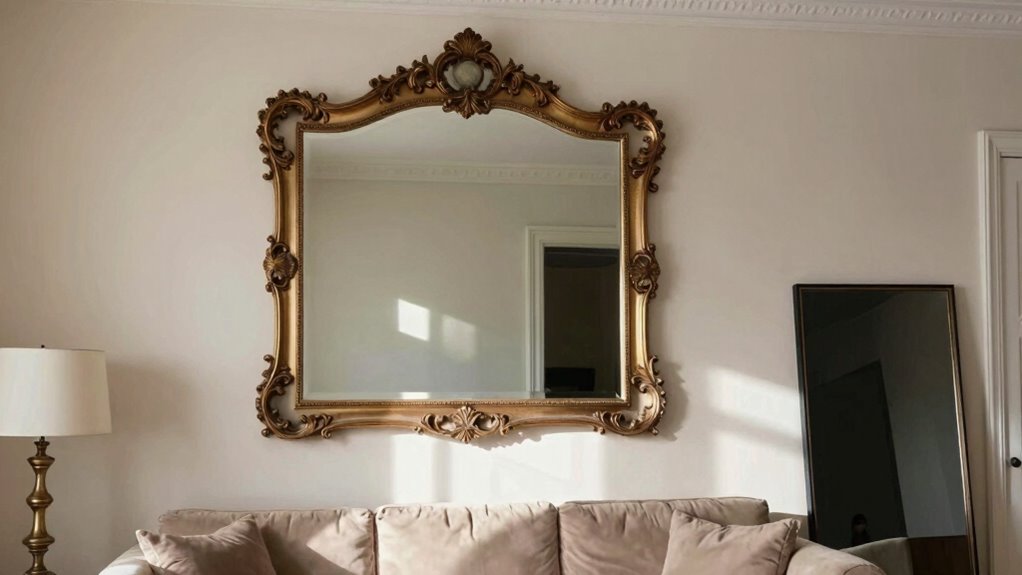
Proper mirror placement can considerably increase the amount of natural light in your space. When you position mirrors thoughtfully, you optimize how light reflects around your room, making it feel brighter and more open. Regular mirror maintenance ensures that the surface stays clean and free of smudges, which helps maximize light reflection. Incorporating decorative accents with your mirrors not only enhances your decor but also draws attention to their placement, encouraging better light distribution. Placing a mirror opposite windows or near light sources amplifies daylight, reducing the need for artificial lighting during the day. Additionally, understanding interior design principles can further assist you in creating a balanced and harmonious space. Recognizing the importance of natural light flow can significantly enhance the overall brightness of your environment. Ensuring that your mirrors are positioned considering light reflection techniques can further improve the effectiveness of your lighting strategy. Using light-enhancing materials around your space can also amplify the effects of well-placed mirrors, making your environment even brighter. Remember, a well-placed mirror acts as a light amplifier, transforming your space into a brighter, more inviting environment while complementing your overall interior design.
Common Mistakes That Block Light With Mirrors
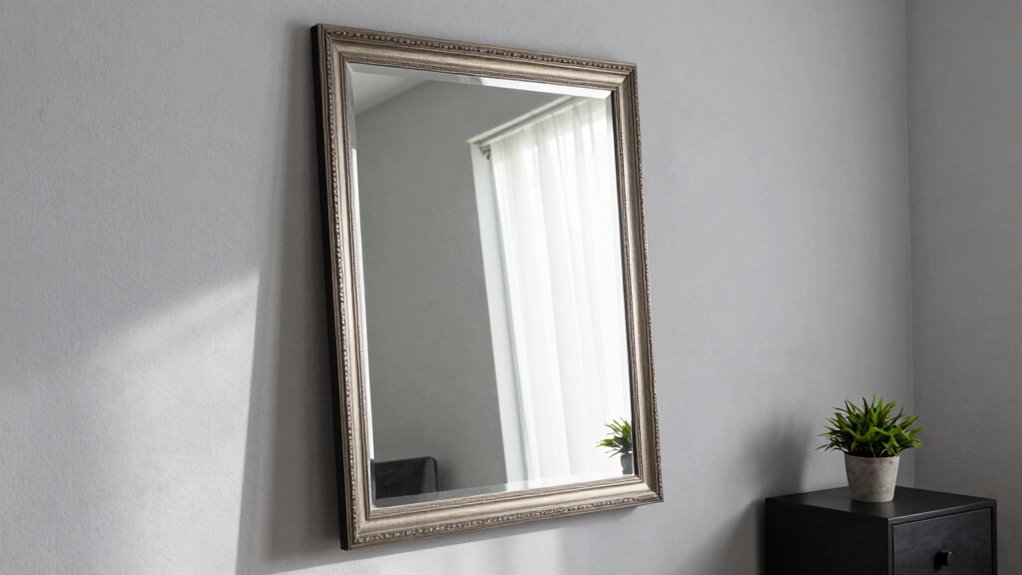
While well-placed mirrors can boost natural light, placing them incorrectly can do the opposite by blocking or dimming the light that enters your space. Common mistakes include positioning mirrors where they reflect clutter or unattractive views, which diminishes the room’s brightness. Avoid using mirrors solely as decorative accents that face dark corners or obstruct windows. Artistic expression is important, but mirrors should enhance light, not hinder it. Here’s a quick guide to avoid these errors:
| Mistake | Effect | Solution |
|---|---|---|
| Facing clutter or dark corners | Blocks natural light, dulls space | Reflect windows or bright walls |
| Placing mirrors opposite windows | Creates glare, reduces brightness | Angle mirrors to diffuse light |
| Using small mirrors in large rooms | Misses light reflection potential | Use larger, strategically placed mirrors |
| Hanging mirrors too high | Limits light reflection | Position at eye level or lower |
| Relying solely on decorative accents | Sacrifices function for style | Balance aesthetics with lighting needs |
Additionally, understanding the importance of light reflection can help you optimize your mirror placement for maximum brightness. Proper mirror positioning is key to ensuring your space remains bright and inviting. A good rule of thumb is to consider the natural light sources in your room when deciding where to place mirrors. Being aware of mirror placement mistakes can prevent unintended shadows and dark spots. To further improve your space, experimenting with adjustable mirror angles can significantly enhance light distribution and overall illumination.
Reflecting Clutter and Its Impact on Brightness
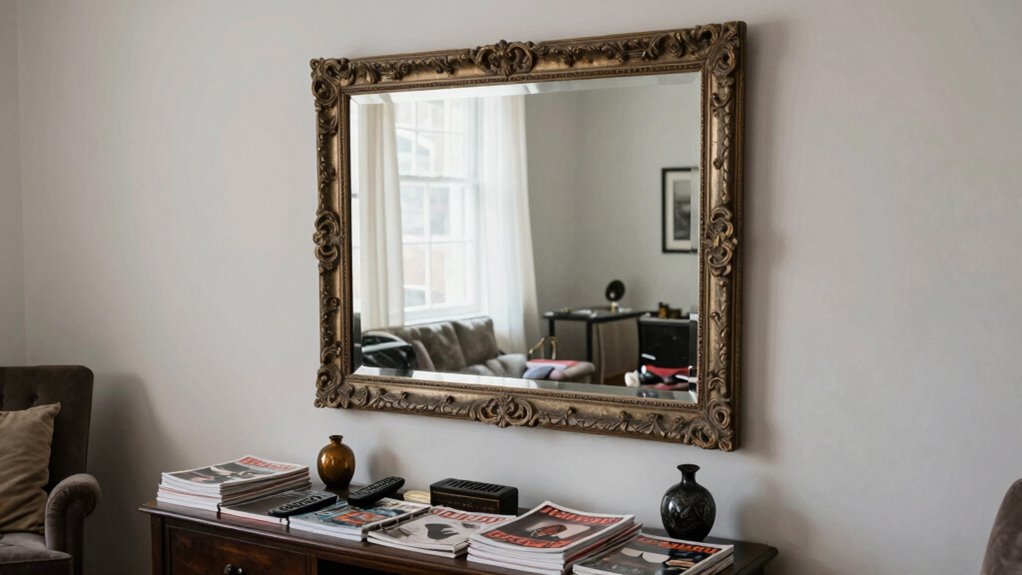
Reflecting clutter in your mirrors can substantially reduce the brightness of your space, as mirrors tend to mirror whatever is directly in front of them. Clutter reflection creates visual noise that distracts the eye and diminishes the sense of openness and light. When your mirrors reflect piles of objects, messy shelves, or unnecessary items, they inadvertently cast a shadow over your room’s brightness. To improve this, focus on mirror organization by keeping the area in front of your mirrors tidy and uncluttered. Clearing the space ensures that only intentional, aesthetic reflections are visible, maximizing light and enhancing the overall atmosphere. Proper mirror organization not only prevents clutter reflection but also helps maintain a brighter, more inviting environment. Additionally, understanding dark psychology tactics can help you recognize and avoid manipulative behaviors that might be subtly reflected in your environment, ensuring your space remains a sanctuary free from psychological clutter. Cultivating awareness of visual distractions can further enhance the impact of your mirror placement and overall decor, especially when paying attention to environmental clutter and its effects on space perception. Recognizing how spatial arrangement influences light reflection can assist in creating a more harmonious and luminous setting. Incorporating lighting techniques can also amplify the effect of well-placed mirrors, making your space appear larger and more luminous.
How to Avoid Dark Corners When Placing Mirrors
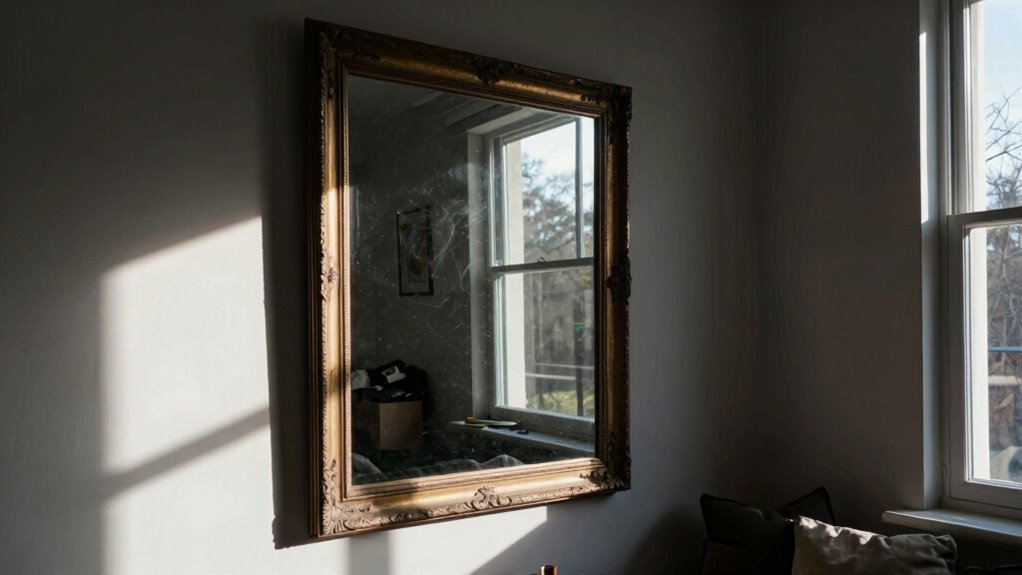
To prevent dark corners, position your mirrors opposite windows to reflect natural light into those areas. Make sure you avoid placing mirrors in cluttered corners, which can trap shadows instead of brightening the space. Proper placement will help you create a well-lit, open environment. Additionally, understanding local traditions and incorporating culturally inspired decor can enhance the overall ambiance and feel of your space. Being mindful of mirror placement techniques can further optimize lighting and create a more inviting atmosphere. Considering light reflection principles can also help you strategically position mirrors for maximum brightness and openness, especially when combined with UST projector placement strategies to ensure balanced lighting. Employing mirror size and angle considerations can significantly improve how effectively light is dispersed throughout your area.
Position Opposite Windows
Have you ever placed a mirror opposite a window only to find your room still feels gloomy? Positioning mirrors directly across from windows can cause glare or unwanted reflections, reducing natural light instead of enhancing it. To avoid this, consider these tips:
- Use mirrors to create artistic reflections that bounce light subtly across the room, brightening dark corners.
- Opt for decorative accents that complement your space without overwhelming the window’s view.
- Adjust the angle of the mirror slightly away from the window to prevent harsh reflections and maximize light flow.
- Remember that natural light optimization is key to creating a bright and welcoming environment, so carefully consider mirror placement to enhance this effect.
- Experiment with different mirror angles to find the best position that amplifies your room’s natural illumination without causing glare.
- Proper mirror placement can significantly improve the overall ambiance, making your space feel larger and more inviting.
Avoid Cluttered Corners
Cluttered corners can turn a well-placed mirror into a missed opportunity for adding light. To avoid dark spots, steer clear of placing mirrors in cramped, cluttered corners that hide wall textures or decorative art. Instead, choose open spaces that reflect light freely and highlight your room’s features. Incorporate mirrors where they complement wall textures, enhancing the overall decor without creating visual chaos. Keep corners clear of unnecessary objects to prevent shadows and darkness, and consider mounting mirrors at eye level for maximum impact. Proper placement ensures your mirrors bounce light around the room, making even small spaces feel brighter and larger. Additionally, understanding light reflection principles can help you position mirrors more effectively for optimal illumination. For example, experimenting with mirror angles can significantly improve how light is dispersed throughout the room. Using smart lighting options combined with well-placed mirrors can further amplify natural light and create a more inviting atmosphere. By avoiding cluttered corners, you turn mirrors into effective tools for enhancing your home’s natural illumination.
Choosing the Right Mirror Size and Orientation
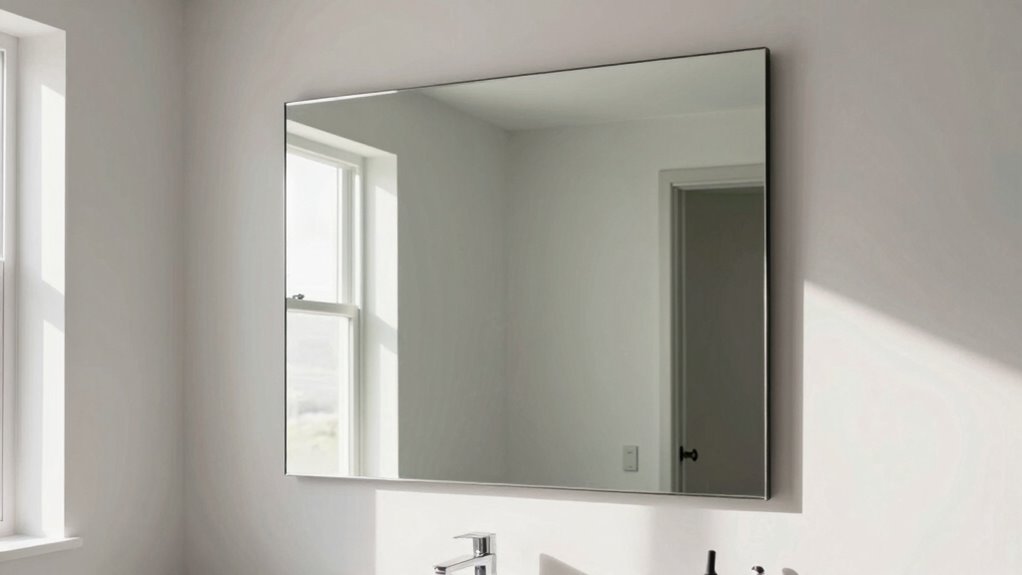
Choosing the right mirror size and orientation is essential for both functionality and style. The mirror shape and frame style can dramatically influence a room’s feel. To get it right, consider these points:
- Match the mirror size to your space—large mirrors work well for expansive areas, while smaller ones suit cozy corners.
- Select a mirror shape that complements your decor—rectangular for modern, round for softer, more inviting spaces.
- Choose a frame style that enhances your room’s design—sleek metal for contemporary, ornate for traditional settings.
Proper sizing and placement ensure maximal light reflection and visual balance. When you pick the right orientation and style, your mirror becomes both a functional element and a statement piece.
Using Mirrors to Brighten Small or Shadowed Rooms
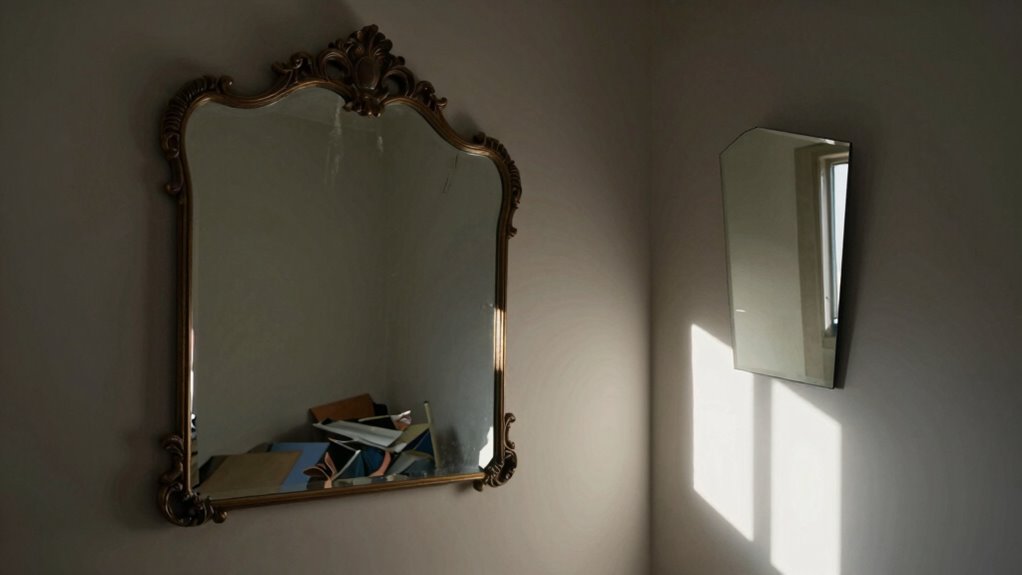
To brighten small or shadowed rooms, strategic mirror placement is key. Position mirrors opposite windows or light sources to reflect natural light and maximize illumination. Choosing the right reflective surfaces and balancing light and shadow will help create a more open and inviting space.
Optimal Mirror Placement Strategies
Strategically placing mirrors can substantially enhance the brightness of small or shadowed rooms, making them feel more open and inviting. To maximize impact, consider these strategies:
- Position mirrors opposite windows or light sources to reflect natural sunlight, boosting illumination and creating a sense of space.
- Place mirrors at angles that direct light toward darker corners, enhancing overall brightness and emphasizing artistic expression within the room.
- Hang mirrors at eye level on walls with architectural or decorative elements that hold historical significance, blending functional lighting with aesthetic appeal.
Reflective Surface Selection Tips
Selecting the right reflective surface is key to maximizing the brightness in small or shadowed rooms. Choose mirror frame styles that complement your space; sleek, minimal frames keep the focus on the reflection, enhancing light distribution. Avoid overly ornate frames that can distract or make the mirror feel heavy. Pay attention to reflective surface textures: smooth, high-gloss finishes reflect more light, making the room appear brighter and more open. Frosted or textured surfaces absorb some light, reducing effectiveness, so opt for clear, polished mirrors. The size and shape matter too—larger mirrors with simple frames work best to spread light evenly. By selecting the right combination of frame styles and surface textures, you create a brighter, more inviting space.
Balancing Light and Shadow
Mirrors are powerful tools for balancing light and shadow in small or dimly lit rooms. To maximize brightness, consider the following tips:
- Place mirrors opposite windows or light sources to reflect natural light throughout the space.
- Use decorative framing to enhance visual interest and draw attention to your mirror’s placement.
- Regular mirror cleaning is essential; smudges or dust can diminish reflected light, so keep your mirror spotless to guarantee maximum brightness.
Placement Tips Near Doors and Hallways
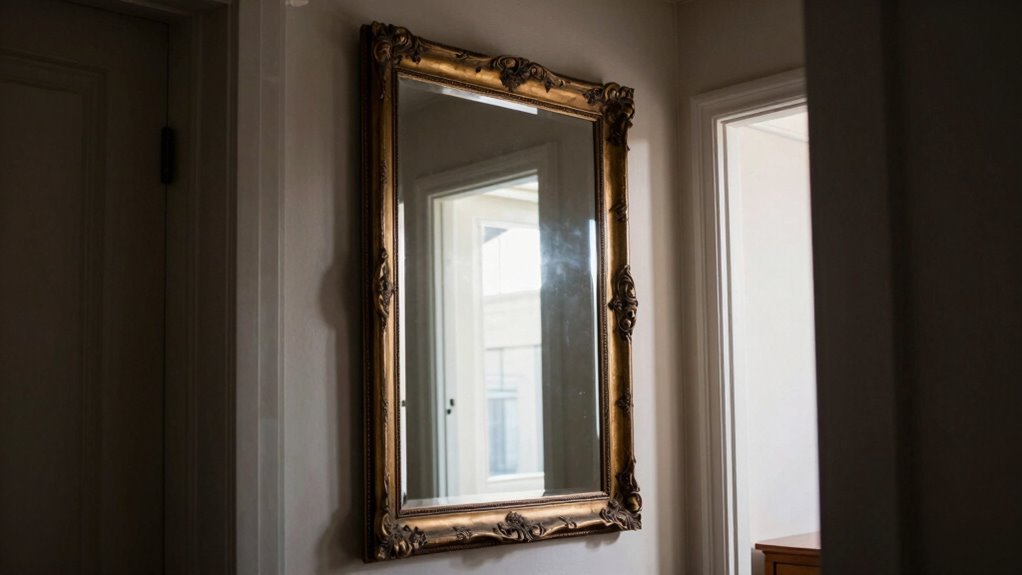
Placing a mirror near doors and hallways can enhance your space, but it’s important to avoid common mistakes that cause inconvenience or visual clutter. Proper placement helps reflect natural or artificial lighting, making the area feel brighter and more inviting. Be mindful of wall colors, as mirrors can amplify or clash with them, affecting the overall look. Consider these tips:
| Tip | Why it matters |
|---|---|
| Avoid obstructing doorways | Ensures smooth traffic flow |
| Position at eye level | Creates a welcoming, functional spot |
| Reflects light effectively | Brightens dark hallways or corners |
| Keep a clear view of decor | Prevents visual clutter |
Choose placement carefully to maximize light and harmony without cluttering the space.
Best Strategies for Mirror Placement in Different Spaces
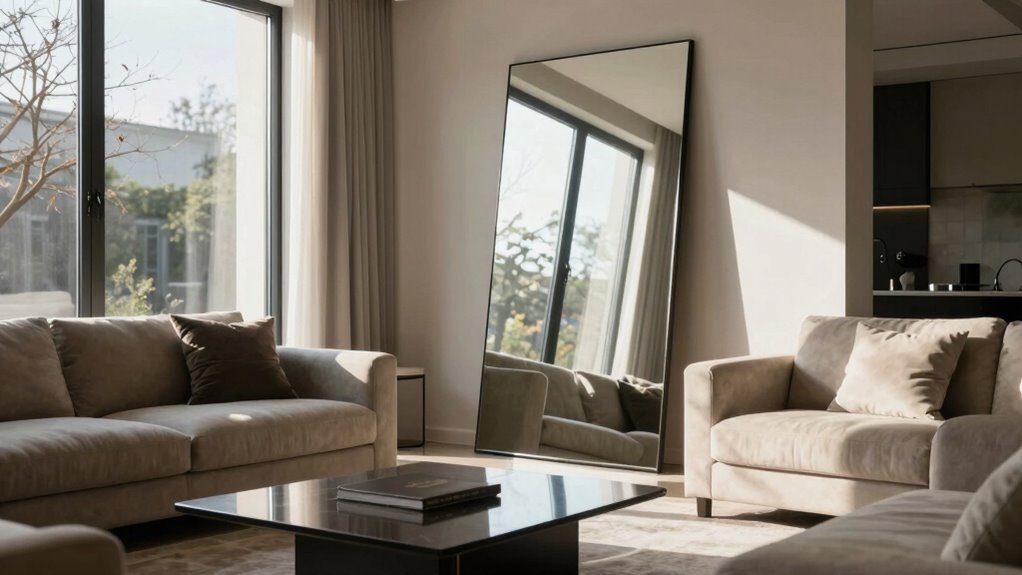
When placing mirrors in different spaces, you want to maximize natural light flow to brighten the room and make it feel more open. Think about how the room’s function influences mirror placement, like positioning a full-length mirror in a bedroom or a decorative piece in the living room. Balancing visual weight is key so that the mirror complements your decor without overwhelming the space.
Optimize Natural Light Flow
Have you ever wondered how to make the most of natural light in your space? Proper mirror placement can markedly enhance light flow, but it requires strategic thinking. First, choose mirrors that are well-maintained; clean mirrors reflect light better and prevent dullness. Second, consider aesthetic considerations—place mirrors where they complement your decor and avoid cluttered or awkward spots. Third, position mirrors opposite or near windows to bounce sunlight throughout the room, maximizing brightness. Avoid blocking windows or creating shadows that trap light. By focusing on these strategies, you can amplify natural illumination without relying solely on artificial light, making your space feel brighter and more inviting. Remember, thoughtful placement combined with regular mirror maintenance ensures you get the best light reflection while enhancing your room’s overall aesthetic.
Consider Room Functionality
To make the most of your mirrors, consider the specific function of each room and how the space is used. In living areas, mirrors can serve as decorative accents, enhancing artistic expression and adding personality. In bathrooms, focus on practical placement for grooming while avoiding reflections that disrupt privacy or comfort. For dining rooms or kitchens, mirrors can reflect natural light and create a sense of openness. Bedrooms benefit from mirrors that promote relaxation and style without overwhelming the space. Always think about the room’s main purpose and how a mirror can complement that function. By tailoring mirror placement to each room’s use, you guarantee they enhance your decor without compromising light or utility, turning them into both functional and artistic elements.
Balance Visual Weight
Effective mirror placement involves balancing visual weight so each piece complements the room without overwhelming it. Achieving symmetry balance helps create harmony, making your space feel cohesive and inviting. To do this, consider these strategies:
- Position mirrors near focal points like fireplaces or artwork to enhance their impact without overpowering the room.
- Use mirrors of similar size and shape to create symmetry balance, especially in living rooms and bedrooms.
- Avoid placing large mirrors opposite cluttered areas, which can disrupt visual harmony and make the space feel unbalanced.
Testing and Adjusting Your Mirror Positions for the Best Light
Getting your mirrors properly positioned is essential for ideal visibility and safety, but it requires some testing and fine-tuning. Start by adjusting each mirror so you can see the lanes alongside and behind your vehicle without excessive head movement. During testing, sit in your normal driving position and look at your mirrors to identify blind spots or areas with poor light. Make small adjustments, then check again until the view is clear and thorough. Remember, mirror maintenance is key—clean lenses improve light reflection and reduce glare. Also, consider aesthetic considerations; well-aligned mirrors look neat and reduce visual clutter. Take your time to tweak your mirrors for maximum brightness and clarity, ensuring they serve both safety and style effectively.
Fixing Common Mirror Placement Errors to Maximize Brightness
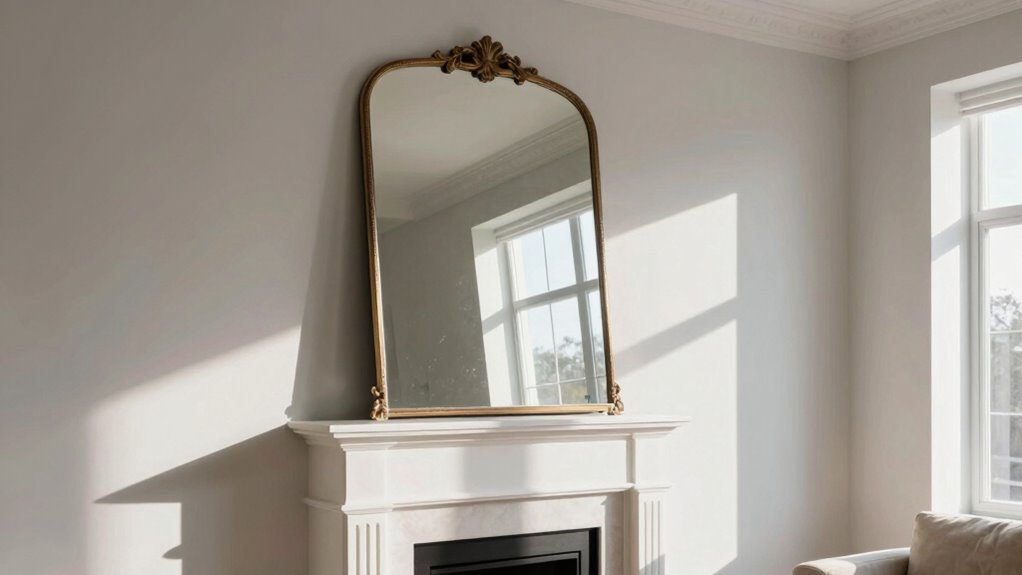
Many common mirror placement errors can substantially reduce brightness and visibility if left uncorrected. To fix these issues and maximize light, consider these tips:
- Adjust mirrors to avoid blocking decorative accents and wall textures that reflect light. Proper positioning ensures reflections bounce light effectively, rather than get trapped or absorbed.
- Avoid placing mirrors against textured walls that can distort reflections or create uneven brightness. Instead, mount them where they reflect smooth surfaces for a clearer, brighter effect.
- Ensure mirrors aren’t too close to walls or furniture that absorb light. Maintaining appropriate distance allows light to spread evenly across the room. Correcting these errors boosts illumination, making your space feel brighter and more inviting.
Frequently Asked Questions
How Does Mirror Placement Affect Energy Efficiency?
You can boost energy efficiency by carefully placing mirrors for ideal lighting optimization. Proper mirror placement reflects natural light deeper into your space, reducing the need for artificial lighting. It also creates visual balance, making rooms feel brighter and more inviting. When you position mirrors strategically, you minimize wasted light and maximize illumination, saving energy while enhancing your home’s overall ambiance. Pay attention to placement to get the most out of your lighting efforts.
Can Improper Mirror Placement Cause Safety Hazards?
Have you considered how mirror misplacement could pose safety hazards? Improperly positioned mirrors can cause glare, leading to accidents or injuries, especially in busy areas. They might also reflect hot surfaces or sharp objects, increasing risk. You should regularly check your mirror placement to guarantee it doesn’t create blind spots or dangerous reflections. Correct mirror positioning isn’t just about aesthetics; it’s essential for maintaining a safe environment.
Do Mirrors Impact Room Acoustics or Sound Reflection?
Mirrors do impact room acoustics and sound reflection. When you place mirrors strategically, they can bounce sound waves, enhancing clarity or creating echoes. However, if you position them poorly, they might cause unwanted sound reflections, muddling the audio experience. So, you should consider their placement carefully, as mirrors influence the acoustic impact and can either improve or hinder your room’s sound quality.
How Often Should I Reassess Mirror Positioning?
You should reassess your mirror alignment every few months to guarantee optimal light and aesthetic balance. Regular checks help you catch any shifts caused by temperature changes or furniture movement. Prioritize both function and aesthetic considerations, making adjustments to maximize light reflection and enhance your space’s look. Staying attentive to mirror placement ensures your room remains bright, visually appealing, and aligned with your evolving style and needs.
Are There Design Styles That Better Support Effective Mirror Placement?
Yes, some design styles better support effective mirror placement. For example, modern minimalism favors clean lines and simple decor, making it easier to position mirrors for maximum light reflection. Decorative framing adds visual interest and can help guide placement, highlighting focal points. When choosing a style, consider how the mirror’s shape, size, and framing complement your space, ensuring it enhances both the aesthetics and functionality of your room.
Conclusion
Now that you know the common mirror placement mistakes, are you ready to transform your space with better light? By avoiding these errors and carefully testing your mirror positions, you’ll create a brighter, more inviting home. Remember, small adjustments can make a big difference—so don’t be afraid to experiment. Isn’t it worth the effort to unleash the true potential of your natural light? Your perfectly illuminated space is just a mirror away!