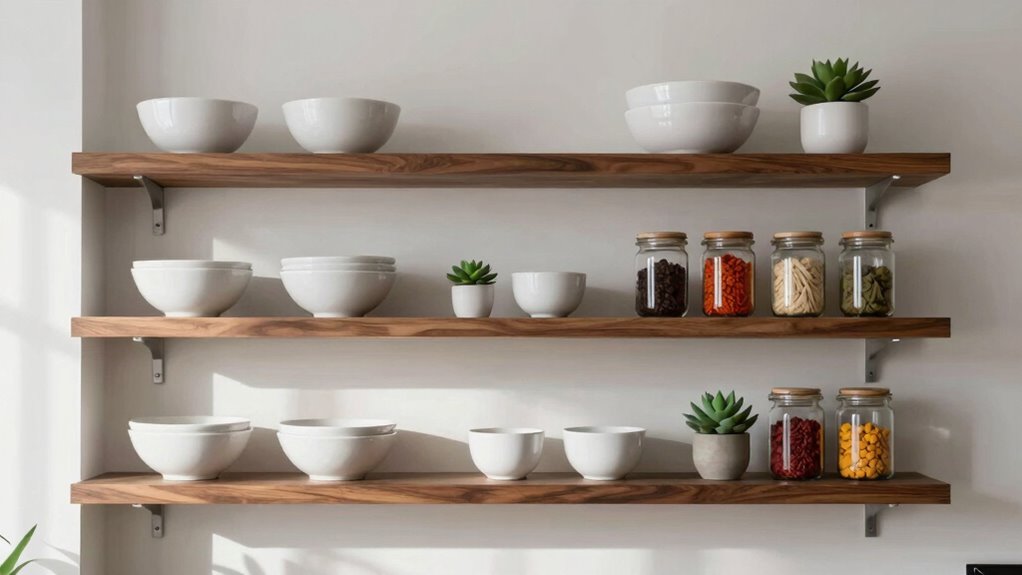

To make open shelving look intentional, start by selecting a few meaningful accessories that complement your space, avoiding clutter. Vary the heights and sizes of items, grouping them in odd numbers for a natural feel. Stick to your color palette and incorporate different textures for visual interest. Leave some negative space to prevent overcrowding and arrange items asymmetrically for a relaxed, purposeful look. Keep the display fresh and aligned with your room’s style to maintain a cohesive, intentional vibe.

Get furniture and decor delivered free with Prime
- Fast, free delivery on millions of items
- Prime Video, Amazon Music and more included
- Member-only deals all year
Key Takeaways
- Select a few meaningful, well-chosen accessories that reflect your style rather than overcrowding the shelves.
- Coordinate accessories with the room’s color palette, using harmony and layered textures for visual interest.
- Vary object height and scale, balancing taller and shorter pieces across the shelves for dynamic composition.
- Arrange items in odd numbers and leave negative space to create a relaxed, intentional look.
- Regularly refresh and update the display to maintain a curated, purposeful appearance.

Open shelving can add a stylish, airy feel to any space, but it’s easy for it to look cluttered or haphazard if not styled thoughtfully. To make your open shelves look intentional, start by choosing a few decorative accessories that complement the overall design of your room. Rather than filling every inch with objects, select pieces that add personality and visual interest without overwhelming the space. Think of decorative accessories like vases, small sculptures, framed photos, or curated books. Grouping these items in odd numbers creates a more natural, appealing look. Keeping in mind that less is often more; a few well-chosen pieces can make a stronger statement than a crowded shelf.
Choose a few meaningful accessories and group in odd numbers for a balanced, intentional open shelf display.
Color coordination plays a vital role in achieving a cohesive look. When arranging items, consider the color palette of your room and select accessories that harmonize with it. Mixing too many contrasting colors can create visual chaos, so aim for a balanced scheme. For example, if your room features neutral tones, add accessories in soft pastel shades or metallic accents to enhance elegance without clashing. If your decor is more vibrant, incorporate accessories that pick up on the existing hues, creating an effortlessly curated appearance. Layering different textures and finishes within your color palette adds depth and interest, making the shelf feel intentional and styled. Additionally, understanding the importance of biodiversity in maintaining healthy ecosystems can inspire you to incorporate natural elements like plants or organic materials into your shelving arrangement, fostering a connection to sustainable living practices.
Pay attention to the height and scale of objects. Varying the size of accessories helps to create a dynamic display that guides the eye naturally across the shelf. Taller items like vases or candlesticks can anchor one side, while shorter objects like bowls or framed photos balance the arrangement. Leave some negative space between items to prevent clutter and allow each piece to stand out. Remember, symmetry is not always necessary—sometimes an asymmetrical arrangement feels more relaxed and purposeful. Incorporating visual balance ensures your display appears harmonious rather than disorganized.
Lastly, don’t forget to periodically refresh your shelves. Swap out accessories seasonally or when you feel the arrangement needs a lift. This ongoing process keeps your open shelving looking fresh, styled, and thoughtfully curated. By selecting decorative accessories with intention and ensuring color coordination, you transform open shelves from a potential clutter zone into a stylish display that enhances your space’s overall design.
Products Worth Considering

Bose TV Speaker (2nd Gen) Compact Soundbar with Bluetooth and HDMI Connectivity

Dyson Cyclone V10 Origin Cordless Vacuum

eufy E25 Robot Vacuum and Mop Combo with HydroJet Roller Mop
As an affiliate, we earn on qualifying purchases.
Frequently Asked Questions
What Are the Best Materials for Open Shelving?
The best materials for open shelving balance durability and aesthetic appeal. Solid wood offers strength and warmth, making it a popular choice. Metal provides a sleek, modern look and withstands daily wear. Plywood is durable and budget-friendly, while glass adds a touch of elegance and openness. Consider your style and how much weight the shelves will hold to choose the ideal material that looks great and lasts.
How Do I Clean Open Shelves Without Damage?
To clean open shelves without damage, start by removing decorative accents gently and setting them aside. Use soft cleaning tools like microfiber cloths or gentle brushes to dust and wipe surfaces. For stubborn spots, mix a mild cleaner with water and gently wipe, avoiding harsh chemicals. Regularly dust your shelves, and handle decorative accents carefully to keep your open shelving looking intentional and well-maintained.
Can Open Shelving Work in Small Spaces?
Absolutely, open shelving can work in small spaces, turning limitations into opportunities. It’s all about smart space optimization and strategic shelving installation. You can maximize vertical space, keep clutter hidden behind stylish containers, and create an airy feel. Using open shelves thoughtfully adds charm without overwhelming your room. With the right approach, open shelving not only fits but enhances small spaces, making them feel more open, organized, and inviting.
How to Style Open Shelves for Different Rooms?
You can style open shelves for different rooms by choosing decorative accessories that suit each space’s purpose and vibe. Use color coordination to create visual harmony—think matching tones or complementary hues. In kitchens, display dishware and cookbooks; in living rooms, showcase books, plants, or art. Keep clutter minimal, and balance decorative items with practical ones to make your open shelves look intentional and cohesive across your home.
What Are Common Mistakes to Avoid With Open Shelving?
Avoid cluttering your shelves like a thrown-together closet; it disrupts the visual flow. Steer clear of overloading with decor organization or shelf accessories, which can make your open shelves look chaotic rather than curated. Instead, curate carefully—balance items and leave breathing space. Think of each shelf as a storybook; each piece should contribute to the narrative, creating harmony rather than a jumble of unrelated objects.
Conclusion
By carefully curating what you display and maintaining a balanced arrangement, your open shelving can feel as purposeful as a well-composed symphony. Think of it as crafting a visual story that reflects your style without chaos. When everything has its place and purpose, your shelves won’t just be functional—they’ll be a striking feature that enhances your space. With intention and a little effort, your open shelving can truly become the centerpiece it’s meant to be.