
To create an inviting home scent strategy, combine candles, diffusers, and ventilation thoughtfully. Use candles with natural ingredients to add warmth and ambiance, choosing complementary fragrances for layering. Place diffusers to provide steady, long-lasting aroma that blends seamlessly with candle scents. Guarantee proper ventilation by opening windows or using exhaust fans, which distributes fragrance evenly and keeps the air fresh. If you continue exploring, you’ll discover how to perfectly balance these elements for a cozy, balanced atmosphere.
Key Takeaways
- Combine candles, diffusers, and ventilation to create a balanced, layered scent environment tailored to your mood and space.
- Use natural, complementary candle scents (e.g., lavender and vanilla) alongside essential oil diffusers for depth.
- Ensure proper ventilation to evenly distribute fragrances and prevent overpowering or dull scents.
- Adjust scent intensity by controlling diffuser settings and candle burn time to maintain a comfortable atmosphere.
- Regularly refresh air and scent layers to sustain a welcoming, nuanced home ambiance.

Creating an inviting home starts with a well-planned scent strategy. When you pay attention to how your space smells, you influence the mood, comfort, and overall ambiance of your environment. One effective way to do this is by understanding aromatherapy benefits, which go beyond just smelling good. Aromatherapy can help reduce stress, improve focus, and even promote better sleep, making a thoughtfully curated scent environment essential. To maximize these benefits, you should consider scent layering—combining different fragrances and scent sources to create a rich, balanced aroma that evolves throughout your space. This technique allows you to tailor the scent experience to your mood and needs, whether you’re relaxing, working, or entertaining.
A well-planned scent strategy enhances mood, comfort, and ambiance through aromatherapy and layered fragrances.
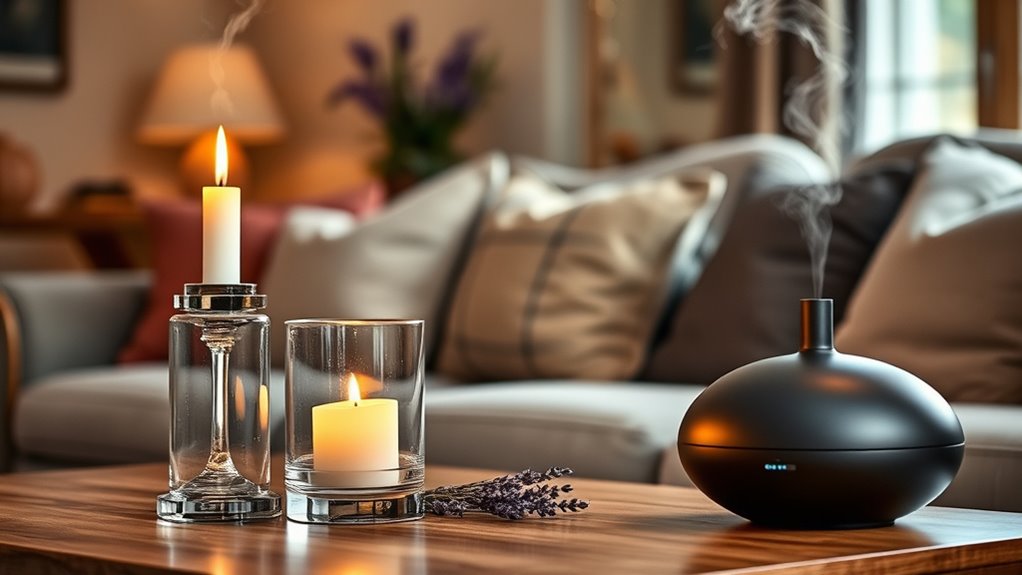
Using candles is a popular method for scent layering because they add warmth and a cozy glow while diffusing fragrance. Choose candles with natural ingredients like soy or beeswax, and opt for scents that complement each other rather than clash. For example, lavender and vanilla can create a calming, inviting atmosphere, while citrus and mint energize a room. The key is to layer candles with other scent sources, such as essential oil diffusers or scented sprays, to create depth. When you light a candle, it releases a gentle, consistent aroma that can serve as a base scent. You can then introduce other elements, like a diffuser with herbal or floral oils, to add complexity.
Diffusers, especially ultrasonic or reed diffusers, are excellent tools for scent layering because they provide a steady, long-lasting fragrance. You can select essential oils that align with your desired mood—like eucalyptus for freshness or sandalwood for grounding—and adjust the intensity to suit your preference. Diffusers work well alongside candles because they fill the room evenly and subtly, enhancing the layered scent profile. Ventilation also plays a pivotal role in your overall scent strategy. Proper airflow helps distribute fragrances evenly, preventing overpowering smells or dullness. You might open windows periodically or use exhaust fans strategically to refresh the space without losing the scent layers you’ve carefully built. Additionally, incorporating yoga practices that focus on mindful breathing can help you fully enjoy and connect with your scented environment, enhancing relaxation and emotional well-being.
Ultimately, creating an inviting home with scent layering involves intentional choices and balance. Combining candles, diffusers, and ventilation allows you to craft a nuanced aroma that enhances your home’s ambiance. When you understand the aromatherapy benefits and master scent layering, your space becomes more than just visually appealing—it becomes a sanctuary that appeals to your senses and elevates your everyday experience. Through thoughtful planning and a mix of scent sources, you can create a welcoming environment that feels just right, every time you walk through the door.
Frequently Asked Questions
How Long Do Home Scent Devices Typically Last Before Needing Replacement?
Your home scent device typically lasts about 6 to 12 months before needing replacement, depending on the device type and usage. For candles, you might replace them every 30 to 50 hours of burn time. Diffusers, on the other hand, generally require refilling every 4 to 6 weeks. Keep an eye on the device lifespan and replacement frequency to maintain a fresh, inviting atmosphere in your home.
Are There Any Safety Precautions for Using Candles Around Children and Pets?
You should always prioritize child safety and pet protection when using candles. Never leave lit candles unattended, especially around children or pets who might knock them over or get too close. Keep candles out of reach, use sturdy holders, and extinguish them when leaving a room. Consider flameless alternatives like diffusers, which eliminate fire hazards and guarantee a safer environment for your family and furry friends.
What Natural Ingredients Are Best for Eco-Friendly Home Fragrances?
You should opt for natural ingredients like plant-based oils and essential herbs for eco-friendly home fragrances. Plant-based oils such as lavender, eucalyptus, and citrus offer clean, sustainable scents that are gentle on your environment. Essential herbs like rosemary, mint, and basil not only smell great but also promote freshness naturally. Using these ingredients helps you create a healthy, eco-conscious space without relying on synthetic chemicals or artificial fragrances.
How Can I Eliminate Persistent Odors Beyond Scent Masking?
To truly tackle persistent odors, you need effective air filtration and odor absorption. Start by sealing smells with HEPA or activated carbon filters, which trap odor molecules. Ventilate regularly to refresh air, and consider natural odor absorbers like baking soda or charcoal. These methods go beyond masking, actively neutralizing odors, so your home feels fresh and inviting. Keep at it consistently for the best, lasting results.
Do Different Scents Influence Mood or Productivity at Home?
Yes, different scents considerably influence your mood and productivity. Scent psychology shows that citrus and peppermint boost alertness, helping you stay focused, while lavender and chamomile promote relaxation, reducing stress. By choosing scents strategically, you can enhance your mood and create an environment conducive to productivity. So, experiment with various fragrances to find what motivates and calms you, making your home a more balanced and inspiring space.
Conclusion
A well-crafted home scent strategy can boost your mood and create a welcoming atmosphere. Did you know that 95% of people notice a home’s scent immediately upon entering? By combining candles, diffusers, and proper ventilation, you’re in control of your space’s ambiance. Keep experimenting to find what feels best for you. Remember, a pleasant scent isn’t just about smelling good — it’s about making your home feel truly yours.