
TL;DR
Livingetc has published five Japanese-inspired kitchen storage lessons: declutter before adding organizers, choose containers for their function, keep frequently used items easy to reach, favor cookware with multiple uses, and limit counter displays. The report presents these as practical design advice, not as a formal study or a universal description of Japanese kitchens.
Livingetc has published five Japanese-inspired kitchen storage lessons aimed at helping households organize cabinets and counters without automatically buying more organizers. The advice, attributed in the report to London-based designer Yoko Kloeden and Nakagawa executive vice president Tasuku Ogino, centers on reducing clutter, matching containers to their contents and keeping only selected items on display.

Get furniture and decor delivered free with Prime
- Fast, free delivery on millions of items
- Prime Video, Amazon Music and more included
- Member-only deals all year
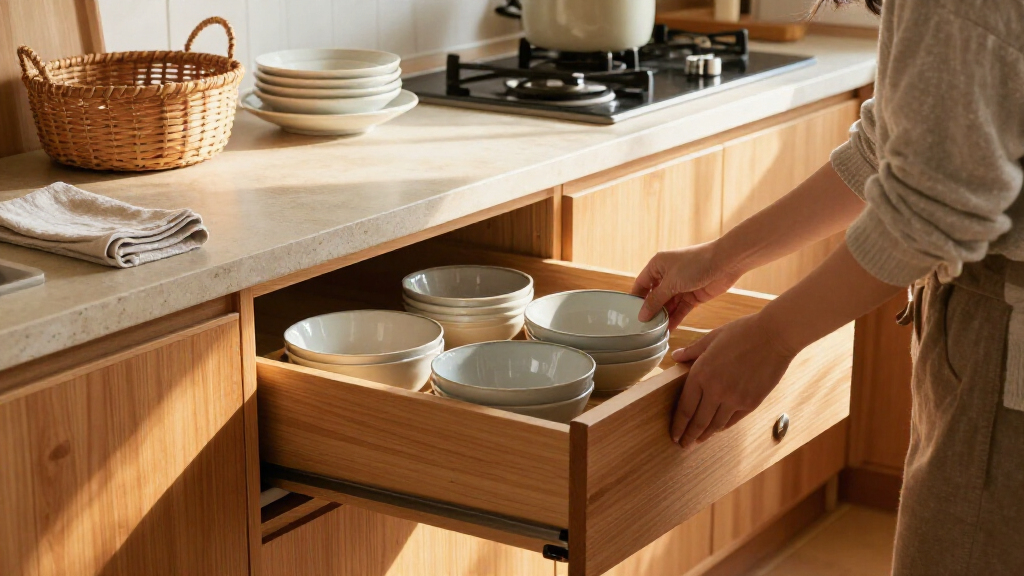
The first recommendation is to declutter before adding storage. Kloeden advises reviewing a shelf and asking what each item is for before buying new containers or organizers. The report says seasonal cabinet clear-outs can save space and money, though it does not quantify either outcome.
The next lessons focus on function. Kloeden recommends choosing containers according to what they hold and how often they are used: clear boxes make contents visible, while the report describes paulownia wood as useful for dried goods and tea. Frequently used cooking ingredients and utensils should be easy to reach. Kloeden says decanting is less about matching jars than choosing lids that are simple to lift while cooking.
The final two ideas are to select cookware that can also serve food, reducing transfers and washing, and to keep counters selective. Kloeden says an item should be used daily and have visual presence to merit a place on the counter. Ogino describes the intended effect as “a deliberate contrast”, rather than leaving every kitchen tool in view.
Less Clutter, More Usable Space
The advice addresses a common household trade-off: extra organizers may contain belongings, but they also take up room and can leave unused or unnecessary items untouched. Starting with a clear-out offers a low-cost first step, while assigning containers and accessible spots according to actual use can make daily cooking more straightforward.
The suggestions also link storage choices to kitchen workflow. Keeping regular ingredients within reach and using cookware that can move from cooking to serving may reduce handling and cleanup. These are practical design principles rather than measured guarantees; the Livingetc report provides no data showing how much time or space readers will save.
Products Worth Considering

Philips Hue Play HDMI Sync Box 4K

Bose Lifestyle Ultra Soundbar and Ultra Subwoofer Bundle

eufy C28 Robot Vacuum and Mop with 15,000 Pa Suction
As an affiliate, we earn on qualifying purchases.
Five Principles in the Report
The Livingetc article frames the ideas as lessons readers can adapt from Japanese kitchen storage. It does not claim that all Japanese households organize kitchens in the same way. Kloeden works through a London architecture and interior design studio that the source says blends Japanese aesthetics with natural, calm elements.
The report’s five principles are: clear out before buying storage; choose containers for their specific purpose; give frequently reached-for items convenient vessels and locations; use cookware that can double as serveware; and leave counters clear except for daily-use items with visual presence. It also mentions the Japanese 5S method as a possible follow-up for clearing clutter, but the source does not explain that method in detail.
“Before you add storage, take one shelf and ask what each thing on it is for.”
— Yoko Kloeden, as quoted by Livingetc
Limits of the Storage Advice
The report offers design guidance and expert commentary, not research comparing storage systems or documenting results across households. It gives no measurements for potential savings in space, money, cooking time or cleanup. The source also does not provide the report’s publication date.
Some recommendations depend on the kitchen, cooking habits and the materials involved. The article does not set out detailed care or food-safety instructions for particular containers, nor does it establish that the suggested materials are suitable for every food or storage period. Readers should follow product guidance for cookware and food containers.
Applying the Ideas at Home
The report sets no formal next milestone. Readers can put its advice into practice by reviewing one shelf or counter area, removing items they do not use, and then deciding whether additional storage is needed. Any organizers added afterward can be chosen for a specific task rather than bought as a general fix.
For a kitchen reset beyond these five principles, Livingetc points readers toward the Japanese 5S method, while noting that its article does not explain the process. The source also invites readers to subscribe to its newsletter for further interiors advice.
Key Questions
What is the first Japanese-inspired kitchen storage lesson?
Declutter before buying organizers. Yoko Kloeden recommends examining a shelf and deciding what each item is for before adding storage products.
How should I choose kitchen containers?
Choose a container for its function and the item it will hold. The report gives visibility as one reason to use clear boxes and says frequently opened containers should have lids that are easy to lift.
What should stay on the kitchen counter?
Kloeden’s test is whether an item is used daily and has visual presence. The report suggests moving branded packaging and other items that do not meet both criteria out of sight.
Can cookware also work as serving ware?
Yes. The report recommends vessels that can cook or reheat food and then be carried to the table, which may reduce transfers and dishes. Suitability depends on the cookware and its manufacturer’s instructions.
Does the report prove these methods save time or money?
No. Livingetc presents the ideas as expert design advice and says a seasonal clear-out can save space and money, but provides no measurements or study results quantifying those effects.
Source: rss