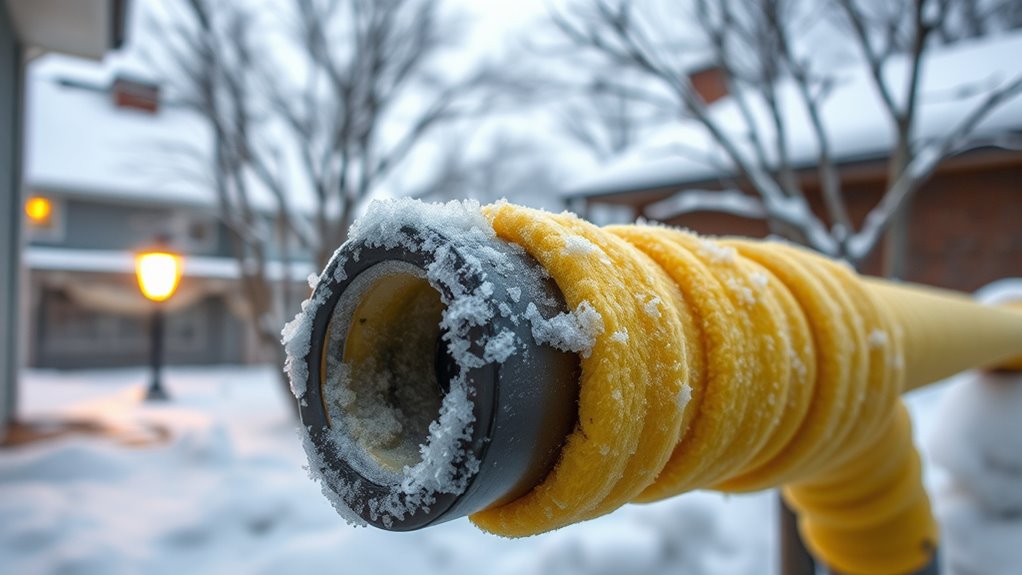
To prevent frozen pipes in cold weather, insulate all vulnerable pipes with foam sleeves or wrap them with self-adhesive tape, especially in unheated areas. Keep your home’s thermostat at least 55°F and open cabinet doors to let warmer air circulate around pipes. Seal gaps around plumbing with caulk or foam sealant to prevent drafts. Regularly check insulation and pay attention to problem spots—more tips await to help you stay protected.
Key Takeaways
- Insulate exposed pipes with foam sleeves, foam board, or fiberglass batts, especially in unheated areas.
- Maintain indoor temperatures above 55°F and open cabinet doors to allow warmer air circulation around pipes.
- Seal gaps and cracks around plumbing with caulk or foam sealant to prevent cold drafts from reaching pipes.
- Use heat tape or self-adhesive wrap on vulnerable pipes for added protection against freezing.
- Regularly inspect and maintain insulation, sealing any gaps or deterioration to ensure continuous pipe protection.
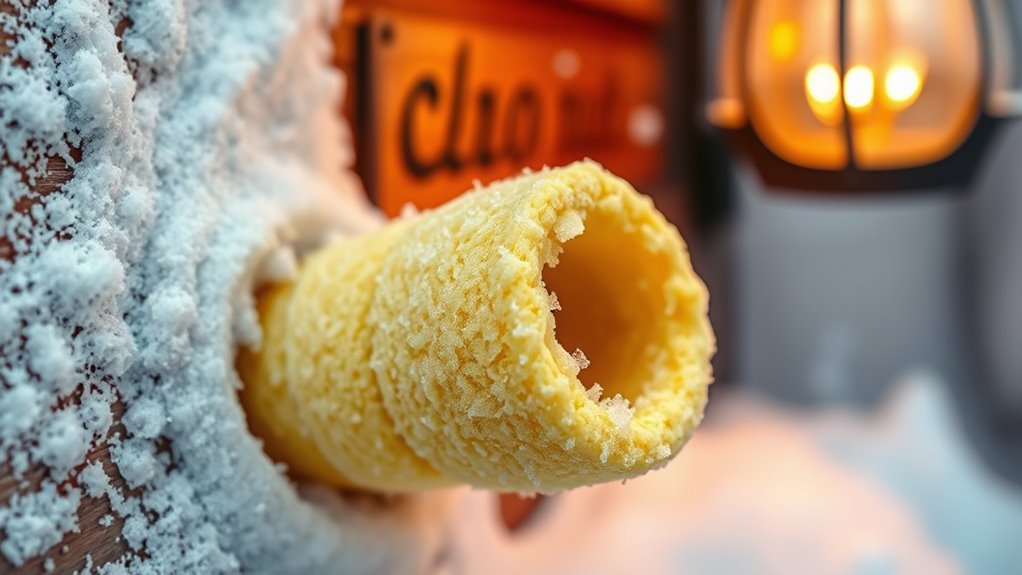
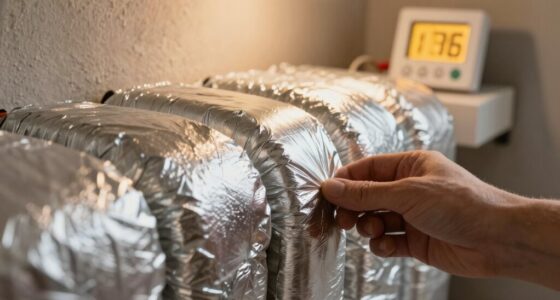
As winter approaches, taking steps to prevent frozen pipes can save you from costly repairs and property damage. One of the most effective strategies is to prioritize insulation techniques. Proper insulation helps keep the temperature around your pipes consistent, reducing the risk of freezing when the weather drops below freezing. You should start by identifying vulnerable piping, especially those located in unheated areas like basements, attics, garages, or exterior walls. Once you’ve pinpointed these spots, applying pipe insulation becomes essential. Foam pipe insulation sleeves are affordable and simple to install; they fit snugly around pipes and create a thermal barrier that slows heat loss. For pipes in particularly cold areas, consider using self-adhesive pipe wrap insulation or even wrapping them with heat tape for added protection.
When implementing pipe insulation, make sure all sections are tightly fitted and sealed to prevent drafts that could cool the pipes. Cover any exposed pipes thoroughly, focusing on joints and bends, which are more susceptible to freezing. Insulation isn’t just about wrapping pipes; it also involves sealing gaps and cracks around plumbing runs where cold air might infiltrate. Use caulk or foam sealant to close these entry points, creating a more insulated environment. Additionally, insulating the walls and ceilings of unheated spaces with foam board or fiberglass batts provides extra warmth and reduces heat transfer. Proper insulation techniques can also help improve the overall efficiency of your home heating system, which is especially important when considering the Best Heat Pump for winter.
Beyond insulation techniques, keep in mind that maintaining a consistent temperature inside your home is essential. Set your thermostat to at least 55°F (13°C), even if you’re away. During extremely cold spells, leaving cabinet doors open under sinks can allow warmer air to reach pipes tucked inside cabinets or behind walls. Opening the doors also helps circulate warmer indoor air around plumbing fixtures. If you plan to be away for an extended period, consider draining your pipes or shutting off the main water supply to prevent any potential leaks or burst pipes.
Regularly inspecting your insulation and pipe protection measures throughout the winter is fundamental. Look for signs of wear or gaps in insulation, and replace or add more where needed. Remember, investing in good pipe insulation and applying effective insulation techniques can dramatically reduce the chances of pipes freezing, saving you money and stress. Properly insulated pipes are less likely to burst, and your home will stay safer and warmer during the coldest months. Taking these proactive steps now ensures you’re prepared for winter’s worst weather and can enjoy a worry-free season.

TUSY 71" H Bookshelf with Storage, 6-Tier Modern Bookshelves with 3 Large Drawer, Display Bookcase with Glass Doors, Modern 5-Tier Curio Cabinet for Home Office, Dining Room (White, ABBA)
[DESIGNYOUR IDEAL STORAGE]: Take complete control of your organization. This modular system lets you mix and match 3...
As an affiliate, we earn on qualifying purchases.
Frequently Asked Questions
How Can I Tell if My Pipes Are Frozen Before They Burst?
You can tell if your pipes are frozen by feeling for unusual stiffness or lack of water flow. Look for frost on exposed pipes or listen for odd sounds when turning on faucets. To prevent emergencies, insulate your pipes with pipe insulation, especially in vulnerable areas, and keep a trickle of water running during cold snaps. Acting early helps avoid burst pipes and costly repairs.
What Are the Best Materials for Insulating Outdoor Pipes?
Like a warm blanket for winter, foam pipe insulation and rubber pipe sleeves are your best choices. Foam pipe insulation is lightweight, easy to install, and provides excellent thermal protection. Rubber pipe sleeves are durable and flexible, making them perfect for outdoor pipes exposed to the elements. Both materials effectively keep pipes from freezing, so you should choose based on your specific needs and ease of installation.
Can I Unfreeze Pipes Safely Without Calling a Professional?
Yes, you can unfreeze pipes safely with DIY methods, but if you’re unsure or the pipe is severely frozen, it’s best to seek professional assistance. Start by turning on the faucet to let water flow once it thaws. Apply gentle heat with a hairdryer or heating pad, avoiding open flames. If the pipe bursts or you’re uncomfortable, call a professional to prevent further damage and guarantee safety.
How Long Does It Typically Take for Pipes to Thaw?
Think of thawing pipes like warming up a frozen pond—slow and steady wins the race. Usually, it takes a few hours, depending on pipe insulation and heating cables you’ve installed. If you use a hairdryer or heating pad, keep the power low to avoid damage. Remember, patience is key; rushing can cause pipes to burst. With proper heat sources, your pipes should thaw safely within a few hours.
Are There Specific Areas in My Home More Prone to Freezing?
You’re more likely to find frozen pipes in areas like your attic, especially if insulation isn’t sufficient, or around crawl space vents where cold air flows freely. These spots lack the warmth of the main living areas, making them prime targets. To prevent freezing, guarantee proper attic insulation and cover or insulate crawl space vents. Keeping these areas warm and insulated helps protect your pipes from freezing during cold weather.
JAHRSTIM Halston Multi-Depth Bookcase, Adjustable Storage Open Display Shelving Unit for Home and Office Space, 31.5”L x 15.75”W x 72.8”H, Cream
Customizable Storage Solutions: Adjustable shelves fit binders, photo albums, and decor, while the pre-drilled back panel creates a...
As an affiliate, we earn on qualifying purchases.
Conclusion
By taking these simple steps, you’ll keep your pipes flowing smoothly through winter’s chill. Remember, a little prevention now can save you from costly repairs later—think of it as giving your home a warm hug. Don’t wait for the ice to cause chaos; instead, stay proactive and protect your haven. After all, isn’t peace of mind worth a few minutes of effort? Stay warm, stay safe, and keep those pipes happy!

Hivone 40X32 LED Bathroom Mirror with Lights, Anti-Fog, Dimmable, Backlit + Front Lit, Smart Bathroom Vanity Mirror, Memory Function, Shatterproof, Tempered Glass (Horizontal/Vertical)
[Double Lighting Sources,Super Bright]: Hivone LED bathroom mirror built-in double light LED strips with backlit and front light...
As an affiliate, we earn on qualifying purchases.

LOAAO 60X36 LED Bathroom Mirror with Lights, Anti-Fog, Dimmable, Backlit + Front Lit, Lighted Bathroom Vanity Mirror for Wall, Memory Function, Tempered Glass, ETL Listed
【Backlit+Front-lit, Double Lighting Sources】: loaao led bathroom mirror is designed with both backlight and front light; Double lighting...
As an affiliate, we earn on qualifying purchases.