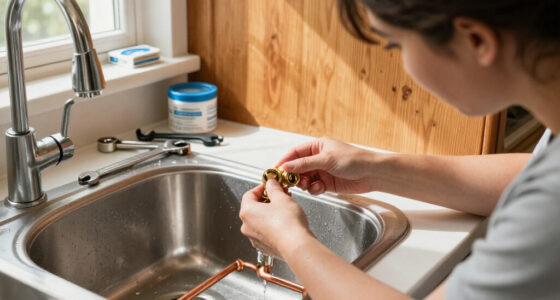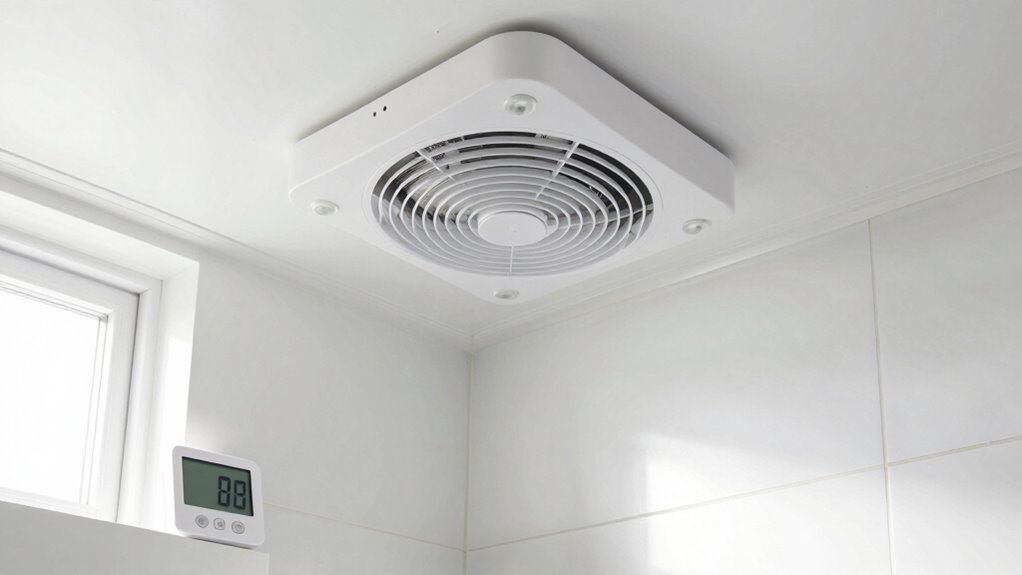

To prevent bathroom moisture damage early, guarantee you have a powerful exhaust fan that runs during and after showers, and open windows when possible to boost airflow. Use moisture-resistant paints and waterproof materials on walls and fixtures. Wipe down surfaces after use and fix leaks promptly to reduce humidity. Installing a dehumidifier can also help control persistent moisture. Taking these steps now can protect your bathroom, and exploring more tips will help you stay ahead of potential damage.

Get furniture and decor delivered free with Prime
- Fast, free delivery on millions of items
- Prime Video, Amazon Music and more included
- Member-only deals all year
Key Takeaways
- Use exhaust fans with sufficient CFM and keep them running during and after showers to reduce humidity.
- Apply moisture-resistant paints and waterproof materials to vulnerable surfaces for early protection.
- Wipe down shower areas after use to remove excess moisture and prevent mold growth.
- Install dehumidifiers in bathrooms with persistent moisture issues for continuous humidity control.
- Regularly inspect and repair cracks, peeling paint, and leaks to prevent moisture from causing damage.
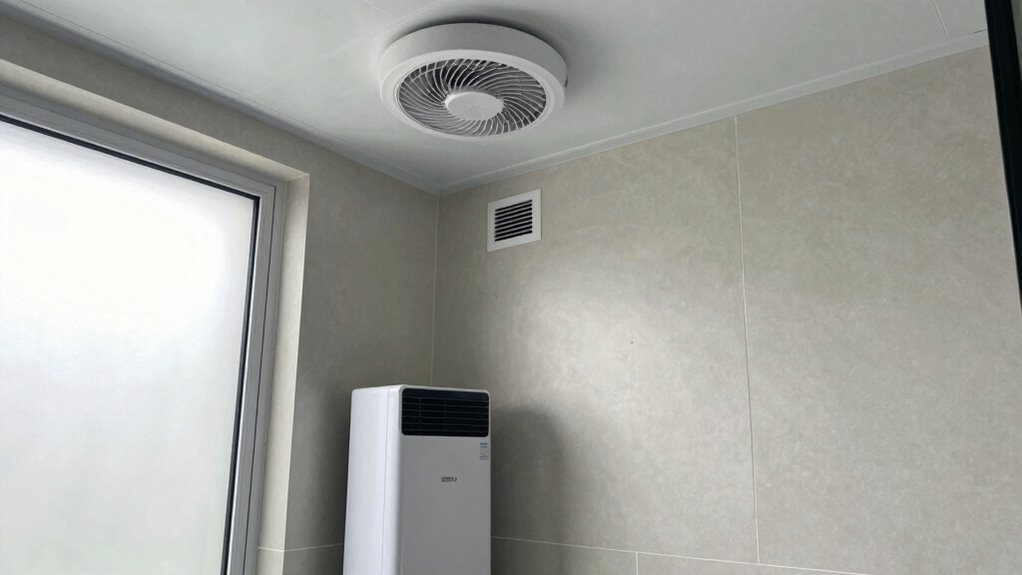
Bathrooms are especially prone to moisture buildup, which can lead to damage if not addressed early. To keep this from happening, focusing on ventilation improvements is vital. You should guarantee your exhaust fan is powerful enough to clear out humidity effectively. Turn it on during and after showers, and consider upgrading to a model with a higher CFM (cubic feet per minute) rating if moisture persists. Good ventilation prevents excess humidity from lingering and condensing on walls and ceilings, reducing the risk of mold growth and structural decay. Additionally, keep windows open when possible to promote air circulation. Installing vents or exhaust fans in windows can also help, especially in bathrooms without natural airflow. Proper ventilation isn’t just about comfort; it’s an essential line of defense against moisture damage. Using moisture resistant paints creates a protective barrier that slows down water absorption and helps prevent the development of mold and rot over time. Regularly inspecting painted surfaces for cracks or peeling and touching them up promptly will also maintain their protective properties. Beyond ventilation improvements and moisture resistant paints, you should pay attention to everyday habits that influence moisture levels. Always use a squeegee or towel to wipe down shower walls and glass doors after use. Fix leaks promptly, as even small drips can increase humidity and damage walls and ceilings. Consider installing a dehumidifier if your bathroom tends to stay humid long after showers. It can quickly lower moisture levels, improve air quality, and prevent long-term water damage. Properly managing indoor humidity is crucial for preventing long-term water damage and maintaining a healthy environment. Incorporating humidity control techniques into your routine can help sustain optimal moisture levels and protect your bathroom’s integrity. Additionally, choosing waterproof building materials for areas prone to moisture can significantly extend the lifespan of bathroom fixtures and surfaces.
Products Worth Considering

Bose SoundLink Max Portable Bluetooth Speaker, IP67 Waterproof, Black

LEVOIT Vital 200S-P Smart Air Purifier for Large Rooms, White

Bose TV Speaker Compact Soundbar with Bluetooth and HDMI-ARC, Black
As an affiliate, we earn on qualifying purchases.
Frequently Asked Questions
Can Moisture Damage Occur Without Visible Mold?
Yes, moisture damage can occur without visible mold. Hidden condensation often develops behind walls or under floors, causing damage that isn’t immediately visible. Poor air circulation traps moisture, leading to wood rot or paint deterioration over time. To prevent this, guarantee proper ventilation, use exhaust fans, and regularly check hidden areas. Addressing hidden condensation early helps protect your bathroom from long-term moisture damage and costly repairs.
How Often Should Bathroom Vents Be Cleaned?
You should clean your bathroom vents at least every six months to guarantee proper ventilation maintenance. Regular cleaning helps maintain ideal airflow, which is essential for reducing excess moisture and preventing damage. If your bathroom has high humidity or frequent use, consider cleaning the vents more often. Proper airflow enhancement through clean vents minimizes mold buildup and keeps your bathroom environment dry and healthy.
Are There Specific Paints Resistant to Moisture?
Are you aware that moisture resistant paints are your best defense against bathroom damage? These specialized bathroom paint options are designed to withstand high humidity and prevent mold growth. Yes, you should choose paints labeled specifically as moisture resistant or mold-proof. By selecting the right moisture resistant paints, you guarantee your bathroom stays fresh and protected longer. Isn’t it worth investing in quality bathroom paint options for peace of mind?
What Are Quick Fixes for Existing Moisture Damage?
To fix existing moisture damage quickly, start by sealing any leaks around pipes or fixtures to prevent further water intrusion. Use a dehumidifier to reduce excess humidity and dry out the affected areas. Clean moldy surfaces with a mixture of bleach and water, then repaint with moisture-resistant paint. These steps help stop ongoing damage and improve air quality, protecting your bathroom from future issues.
How Does Bathroom Size Affect Moisture Control?
Your bathroom size considerably impacts moisture control. Larger bathrooms require stronger bathroom ventilation systems to effectively remove excess moisture, preventing mold and damage. Smaller bathrooms tend to absorb moisture more quickly, but they also need proper ventilation to avoid dampness buildup. Keep in mind, moisture absorption varies with size—larger spaces need continuous airflow, while smaller ones benefit from targeted ventilation. Properly managing moisture absorption through effective ventilation is key to early prevention.
Conclusion
So, next time you marvel at your spotless bathroom, remember—ignoring those tiny leaks and poor ventilation could turn your pristine space into a damp disaster. Ironically, the easiest way to keep your bathroom damage-free is to stay vigilant and proactive. A little effort now saves you costly repairs later. Don’t wait for mold to throw a party or for paint to peel—trust me, your future self will thank you for catching moisture early.