
TL;DR
An Ideal Home report warns that tightly packed clothes storage can restrict airflow and allow moisture to build up, increasing the risk of condensation and mould. Professional organisers recommend leaving space between clothes, checking behind furniture, and improving ventilation; the report does not provide new measurements or research on mould risk.
An Ideal Home report says tightly packed wardrobes and drawers may trap moisture by restricting airflow, raising the risk of condensation and mould in bedrooms during colder months. Professional organisers quoted in the report recommend leaving room between clothes and checking the space behind large furniture, while noting that storage habits are only one factor in damp problems.

Get furniture and decor delivered free with Prime
- Fast, free delivery on millions of items
- Prime Video, Amazon Music and more included
- Member-only deals all year
Shannon Murphy, professional organiser and founder of Simpl Living Co, told Ideal Home that clothes packed closely together can limit air circulation inside wardrobes or chests of drawers. In her account, moisture can then become trapped in the enclosed space, contributing to humidity, condensation and, over time, mould. The report presents this as professional advice; it does not cite a study measuring how often overfilled storage causes mould.
Kate Dufton, a professional organiser at Ace Your Space, advises keeping wardrobes to no more than 80% full, with some space between garments. The article suggests rotating clothes by season and storing items not currently in use elsewhere, such as in vacuum bags or under-bed storage. These are storage suggestions, not a guarantee that damp will be prevented.
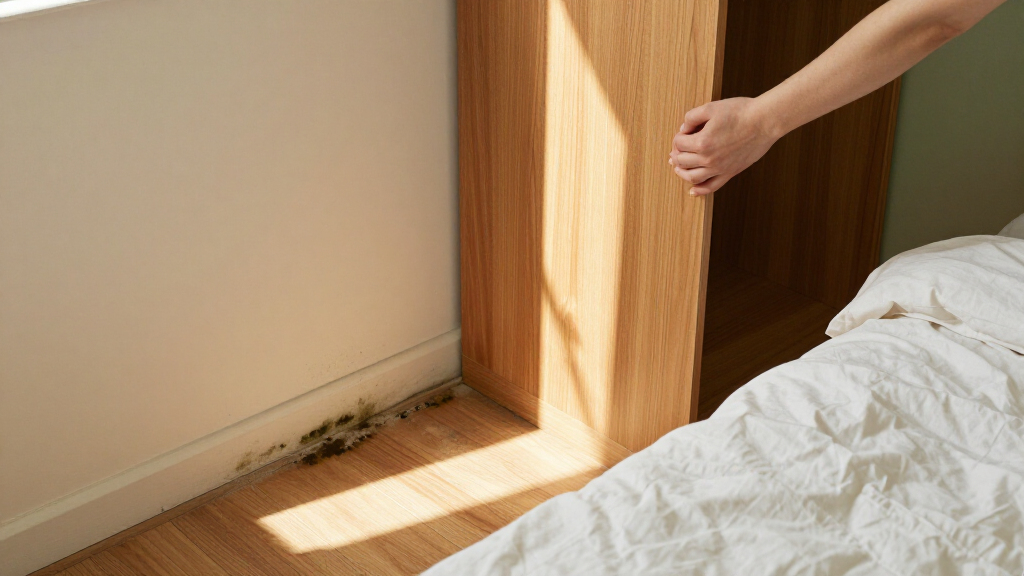
The report also draws attention to furniture placement. Murphy says wardrobes and chests positioned flush against cold external walls can restrict circulation and conceal damp developing behind them. She recommends leaving a gap where possible, ventilating the room and checking hidden areas periodically. For fixed or heavy furniture, the article suggests occasional wardrobe-door opening and considering a dehumidifier.
How Storage Affects Bedroom Airflow
The advice matters because winter can mean both less ventilation and more clothing stored in bedrooms. If air movement is restricted inside a wardrobe or behind furniture, condensation or mould may go unnoticed until it affects clothes or a wall surface. Regular checks can help residents spot a problem earlier, although the report does not establish that packed storage alone causes mould.
For renters and homeowners, the practical changes described—making space between garments, moving seasonal items and checking behind furniture—may be easier than replacing storage or discarding clothes. A dehumidifier or moisture absorber may help manage excess moisture, but the article gives no comparative performance data for the products it lists.
Products Worth Considering

Dyson Ball Allergy Upright Vacuum

Dyson V8 Motorhead Origin Cordless Vacuum

Dyson Ball Animal 3 Upright Corded Vacuum
As an affiliate, we earn on qualifying purchases.
The report focuses on UK autumn and winter, when people may bring thicker clothing into bedrooms and shut windows more often to retain warmth. Those seasonal habits can coincide with increased indoor condensation, though the source provides no figures on seasonal mould levels or the prevalence of the problem.
Its central distinction is between organising a wardrobe and managing moisture in the room. Seasonal swaps and space-saving hangers can make storage less crowded, while ventilation and inspection address airflow and hidden damp. The report lists commercial storage and moisture-absorbing products, but its recommendations are not presented as independent product testing.
“A room can appear clean and organised while damp develops unnoticed behind a chest of drawers or wardrobe.”
— Shannon Murphy, quoted by Ideal Home
What the Report Does Not Establish
The supplied report offers expert advice but provides no research data quantifying the risk associated with a full wardrobe, setting a proven 80% capacity limit, or showing how much a moisture absorber reduces damp. It does not establish that crowded storage is the cause of any particular mould problem.
The article also does not assess how much risk varies with room temperature, ventilation, leaks, insulation or other sources of moisture. Its product recommendations are not accompanied by comparative testing. Anyone facing persistent damp would need to identify the underlying cause rather than assume that reorganising clothes will resolve it.
Practical Checks for Bedroom Storage
Readers can start by creating space between garments, moving out-of-season items to dry storage and leaving a gap behind movable wardrobes or drawers near external walls. The report also advises ventilating rooms and periodically checking concealed wall and furniture areas for signs of damp or mould.
If mould is already present or keeps returning, the storage changes alone may not address the source. The report points readers to a separate guide on removing mould from walls, but the supplied material does not give details on professional assessment or remediation. No follow-up study or further official guidance is announced.
Key Questions
Can an overfilled wardrobe cause mould?
The report says tightly packed clothes can restrict airflow and trap moisture, which may contribute to condensation and mould. It does not show that an overfilled wardrobe alone causes mould in every case.
How full should a wardrobe be?
Kate Dufton advises keeping it to a maximum of 80% full, leaving space between clothes. The source presents this as professional advice, not a scientifically validated threshold.
What can I do if I cannot move a wardrobe?
The report suggests ventilating the room, opening wardrobe doors periodically and checking for damp where possible. It also mentions considering a dehumidifier, but does not compare product performance.
Does a moisture absorber prevent mould?
The article says hanging absorbers can draw moisture from the air, but supplies no test results showing that they prevent mould. They should not be treated as proof that a damp problem has been fixed.
What if mould keeps coming back?
The report does not identify the cause of recurring mould. Its storage advice may improve airflow, but persistent damp may have other causes, so reorganising a wardrobe may not resolve it.
Source: rss