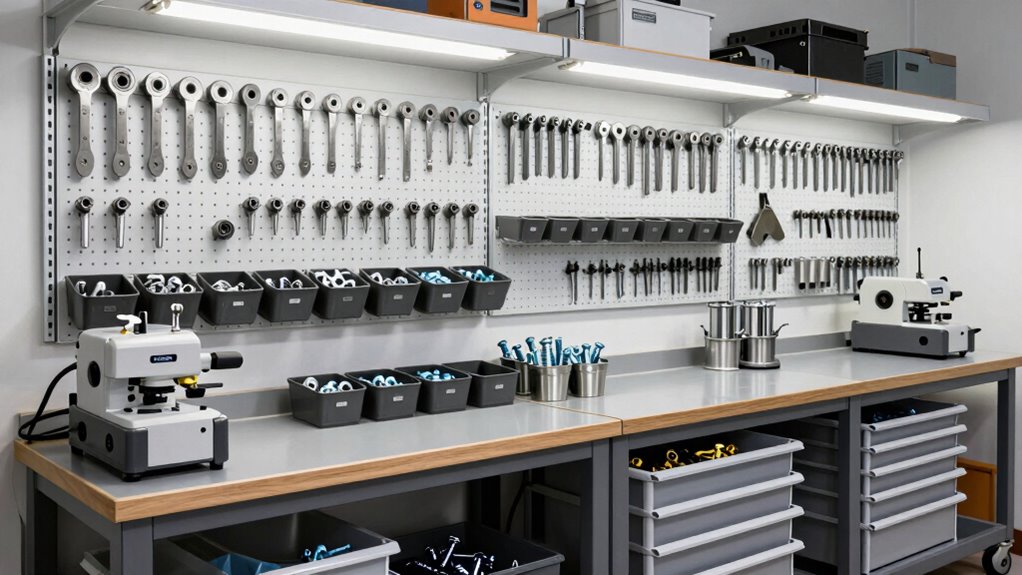

To make your mechanical area more organized and accessible, designate specific zones for different tools like wrenches and screwdrivers, and store them in labeled containers or on wall-mounted racks. Keep pathways clear and arrange tools for easy reach of commonly used items. Use bright, even lighting and visual cues like color coding to enhance visibility. Regularly maintain tools and clean up workspace clutter. If you explore more, you’ll discover additional tips to optimize safety and workflow.

Get furniture and decor delivered free with Prime
- Fast, free delivery on millions of items
- Prime Video, Amazon Music and more included
- Member-only deals all year
Key Takeaways
- Designate specific zones for different tools and store them in labeled containers or racks for quick access.
- Arrange tools and equipment for easy reach, keeping pathways clear for safety and efficient movement.
- Use visual cues like labels, color coding, and mounted racks to enhance organization and quick identification.
- Implement regular maintenance, inspections, and decluttering to keep tools in good condition and workspace tidy.
- Ensure proper lighting and safety protocols are in place to improve visibility and promote a safe environment.
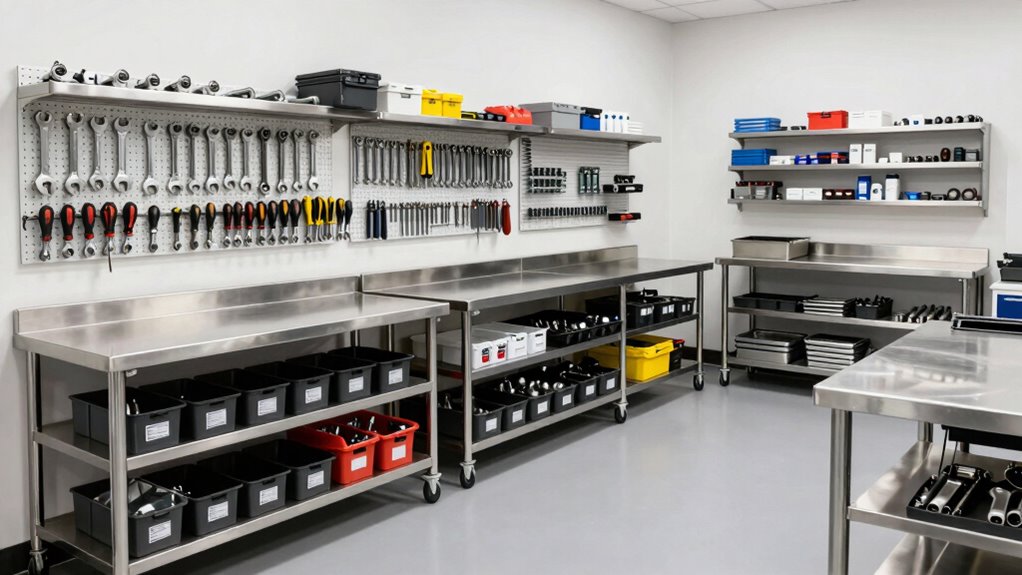
A well-organized mechanical area is vital for safety, efficiency, and ease of maintenance. When you keep your tools properly arranged, you minimize the risk of accidents and save time looking for the right equipment. Tool organization isn’t just about aesthetics; it’s an indispensable safety protocol that prevents injuries caused by misplaced or loose tools. You should designate specific zones for different types of tools—wrenches, screwdrivers, pliers—and guarantee they’re stored in labeled containers or racks. This way, you always know where to find what you need, and you reduce the chances of tools falling or causing tripping hazards. Consistent tool organization also helps you quickly identify missing or damaged tools, so you can replace or repair them promptly, avoiding unsafe situations.
Organize tools by zone and label to enhance safety, efficiency, and quick access in your mechanical workspace.
Implementing safety protocols goes beyond just organizing tools. You need to establish clear procedures for working in the area, such as wearing personal protective equipment and following lockout/tagout procedures for machinery maintenance. These protocols should be visibly posted and routinely reviewed with anyone working in the space. When tools are properly stored, it’s easier to enforce safety measures because cluttered or disorganized areas tend to encourage unsafe habits. For example, loose tools left on workbenches or the floor can be tripping hazards, while scattered tools may cause accidental injuries if someone reaches blindly into a cluttered drawer. By maintaining order, you help create a safer environment for everyone.
To make your mechanical area more accessible, consider optimizing layout for movement and workflow. Arrange tools and equipment so that frequently used items are within easy reach, reducing unnecessary bending or stretching. Clear pathways should be kept free from obstructions, ensuring quick access during emergencies or routine tasks. Using pegboards, wall-mounted tool racks, or magnetic strips can free up bench space while keeping tools visible and accessible. Regularly declutter the space, discarding broken or unused tools, and tidy up after each job to keep the area functional and safe. Proper lighting also plays a key role—bright, even illumination helps you see details clearly, preventing mistakes and accidents. Additionally, understanding the importance of tool safety can significantly enhance overall workspace safety. Incorporating visual organization techniques can further improve efficiency by helping you quickly locate and return tools. Keeping a regular maintenance schedule for your tools ensures they remain in good condition and safe to use over time.
wall-mounted tool racks for garage
As an affiliate, we earn on qualifying purchases.
As an affiliate, we earn on qualifying purchases.
Frequently Asked Questions
What Safety Precautions Should Be Taken in Mechanical Areas?
You should always wear personal protective equipment, like gloves, goggles, and helmets, to protect yourself from hazards. Make certain emergency response plans are in place and that everyone knows the procedures. Keep walkways clear, use proper signage, and regularly inspect tools and equipment for safety. Training staff on safety protocols and reporting hazards promptly helps prevent accidents. Staying vigilant and prepared ensures a safer mechanical workspace for everyone.
How Often Should Mechanical Areas Be Inspected?
You should inspect mechanical areas at least monthly to catch issues early. Studies show that regular inspections can reduce equipment failures by up to 30%. Adhering to maintenance schedules and consistent inspection routines helps identify potential hazards and keeps systems running smoothly. By staying proactive, you prevent costly repairs and guarantee safety. Make it a habit to document inspections and address problems promptly for ideal organization and accessibility.
What Tools Are Essential for Organizing Mechanical Spaces?
You should use essential tools like storage solutions and labeling systems to organize mechanical spaces. Storage solutions such as shelving, bins, and tool cabinets help keep everything in its place, while labeling systems guarantee you can quickly identify tools and parts. These tools make your space more accessible, reduce clutter, and improve safety. With proper organization tools, you’ll find everything easily and maintain a clean, efficient mechanical area.
How Can You Prevent Equipment Corrosion in These Areas?
Did you know that corrosion costs industries over $2.5 trillion annually? To prevent equipment corrosion, you should focus on corrosion prevention strategies like applying protective coatings, which form a barrier against moisture and chemicals. Regular inspections and maintenance are also key. Using high-quality protective coatings helps extend equipment lifespan, reduces downtime, and keeps your mechanical areas safe and efficient. Stay proactive to avoid costly corrosion damages.
What Are Cost-Effective Ways to Upgrade Mechanical Storage?
You can upgrade mechanical storage affordably by installing sturdy, affordable shelving that maximizes space and keeps items accessible. Use clear labeling techniques to identify tools and parts quickly, reducing search time. Reuse or repurpose existing storage units when possible, and invest in modular shelving systems for flexibility. Regularly review and reorganize your storage to maintain efficiency, ensuring your mechanical area stays organized without high costs.
Conclusion
By keeping your mechanical areas tidy, by labeling everything clearly, and by organizing tools systematically, you create a workspace that’s not only efficient but also safe. When everything has its place, when accessibility is a priority, and when maintenance is simple, you’ll save time, reduce frustration, and improve safety. The key is consistency—consistently cleaning, consistently organizing, and consistently maintaining. Make organization a habit, make accessibility a priority, and watch your mechanical space transform into a well-oiled, productive environment.
Columbus Day / Indigenous Peoples' Day Picks
long weekend sales
As an affiliate, we earn on qualifying purchases.