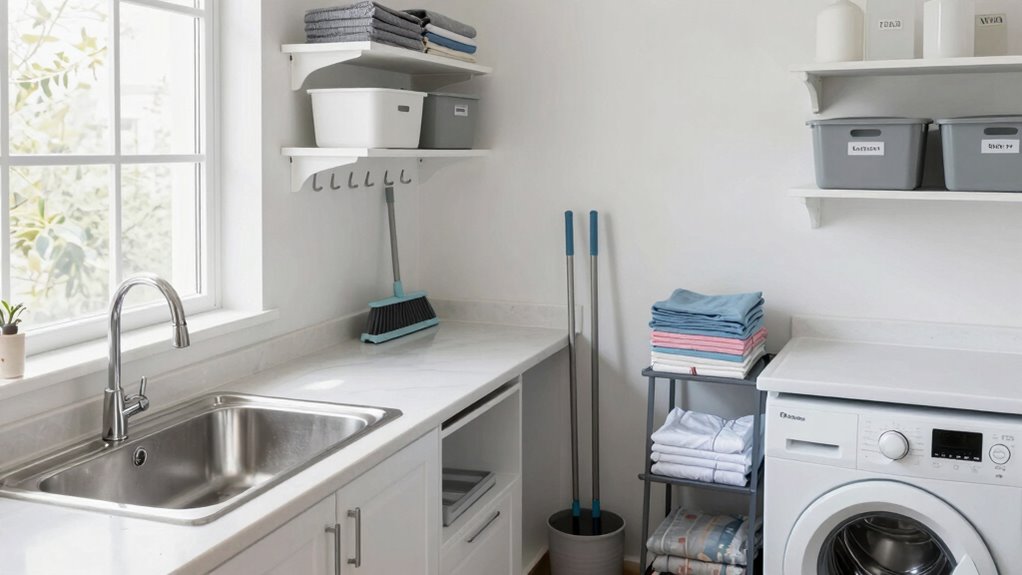

To keep your utility areas clean and functional, regularly clear out unused items and categorize what remains. Use smart storage like labeled bins, adjustable shelving, and wall hooks to maximize space. Establish routine cleaning schedules for surfaces and floors, and disinfect regularly to prevent mold and pests. Keep frequently used items within easy reach and store seasonal or rarely used items out of the way. For more tips on maintaining an organized space, you’ll find helpful strategies ahead.

Get furniture and decor delivered free with Prime
- Fast, free delivery on millions of items
- Prime Video, Amazon Music and more included
- Member-only deals all year
Key Takeaways
- Regularly declutter and categorize items to prevent clutter buildup and improve accessibility.
- Maximize vertical and hidden storage using shelves, hooks, and labeled bins.
- Establish consistent cleaning routines for surfaces, floors, appliances, and sanitation.
- Use clear, labeled containers and transparent bins to easily identify stored items.
- Dedicate a few minutes daily to tidying and inspecting for damages or leaks.
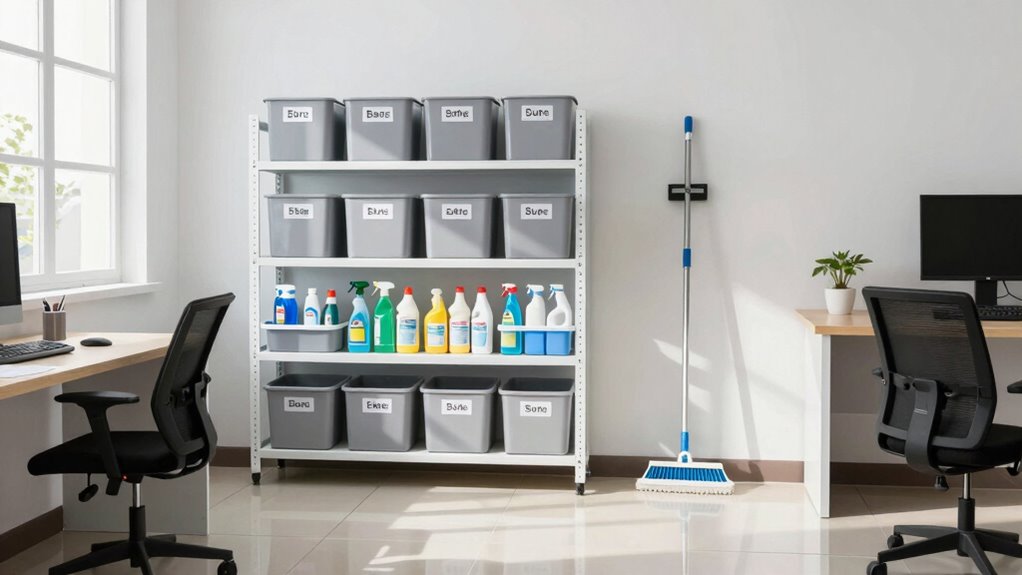
Utility areas often serve as the backbone of your home’s organization and cleanliness, yet they’re frequently overlooked. These spaces, whether laundry rooms, mudrooms, or storage closets, play a vital role in keeping your household running smoothly. To guarantee they stay functional, you need effective storage solutions and consistent cleaning routines. When you organize with purpose, these areas become more than just clutter catch-alls; they transform into efficient hubs that support your daily life.
Start by evaluating what you store in your utility area. Clear out items you no longer need or use, and categorize what remains. Implement smart storage solutions like adjustable shelving, labeled bins, and wall-mounted hooks to maximize space. Using vertical storage frees up floor space, making it easier to move around and access essentials. Keep frequently used items within arm’s reach, and store seasonal or rarely used items higher up or in less accessible spots. This approach prevents clutter from piling up and helps you find what you need quickly.
Develop a cleaning routine that fits your schedule. Regularly wiping down surfaces, sweeping floors, and cleaning appliances prevents dust buildup and keeps everything sanitary. Set a weekly reminder to tidy up and check for leaks or damages. When you maintain a consistent cleaning routine, it becomes a habit rather than a chore, and your utility space stays fresh and organized. Incorporate small tasks into your routine, like wiping down the washer and dryer, cleaning out lint traps, or disinfecting countertops to avoid build-up of grime or mold. Additionally, implementing proper cleaning practices can extend the lifespan of your appliances and reduce repair costs. Incorporating appropriate sanitation methods also helps prevent the growth of mold and bacteria, ensuring a healthier environment in these areas. Ensuring proper biodiversity practices in your home, such as avoiding harsh chemicals, can also contribute to a healthier environment in these areas. Additionally, maintaining good home hygiene is essential for preventing mold and pest issues over time.
Labeling storage containers is another practical step. When everything has a designated place, you reduce the chances of misplacing items or creating chaos. Use clear bins so you can see contents at a glance, and keep similar items grouped together. For example, laundry detergents, fabric softeners, and stain removers should have their own section. This not only improves organization but also speeds up your chores. Remember, maintaining cleanliness is an ongoing process—set aside a few minutes each day to tidy up, and you’ll prevent messes from becoming overwhelming.
In the end, keeping utility areas clean and functional requires intentionality. By investing in the right storage solutions and establishing straightforward cleaning routines, you turn these spaces into efficient, clutter-free zones. When your utility areas are organized and well-maintained, you’ll find it easier to keep your entire home tidy and running smoothly. It’s about creating a system that works for you—one that supports your lifestyle and makes everyday tasks easier.
adjustable shelving units for utility rooms
As an affiliate, we earn on qualifying purchases.
As an affiliate, we earn on qualifying purchases.
Frequently Asked Questions
How Often Should Utility Areas Be Deep Cleaned?
You should deep clean your utility areas at least once every three to six months. Incorporate this into your cleaning schedules by scheduling routines for deep cleaning, ensuring dirt, grime, and clutter don’t build up. Regular deep cleaning keeps the space functional and safe, preventing pests and damage. Stick to your routines consistently, and you’ll maintain a tidy, efficient utility area that’s ready when you need it.
What Are the Best Storage Solutions for Small Utility Spaces?
The best storage solutions for small utility spaces focus on maximizing space optimization through clever storage organization. Use vertical storage like wall-mounted shelves or pegboards to free up floor space. Incorporate stackable bins or pull-out baskets for easy access and neatness. Consider multi-purpose furniture, such as fold-away work surfaces or hidden compartments. These strategies help keep your utility area organized, functional, and clutter-free, even in limited spaces.
How Can I Prevent Pests in Utility Rooms?
You think your utility room’s a pest-free paradise? Think again. To prevent pests, master pest prevention by sealing cracks and fixing leaks—rodent control is no joke. Keep food sealed and clutter minimal to discourage critters. Regularly inspect for signs of pests, and set traps if needed. Remember, in the battle of pests versus utility rooms, proactive steps and vigilance keep unwanted guests at bay.
Are There Eco-Friendly Cleaning Products Suitable for Utility Areas?
Yes, you can use eco-friendly disinfectants and biodegradable cleaners in your utility areas. These products effectively clean and disinfect without harmful chemicals, making your space safer for your family and the environment. Look for labels indicating biodegradable ingredients and eco certifications. Regularly using these eco-friendly options helps maintain a clean, functional utility space while reducing your ecological footprint. They’re a smart choice for sustainable cleaning routines.
How Do I Handle Water Leaks or Moisture Issues in Utility Spaces?
Dealing with water leaks is like stopping a leak before it floods your home. You should act quickly to prevent water damage and utilize moisture control techniques, such as fixing leaks immediately, improving ventilation, and using dehumidifiers. Regularly inspect plumbing and appliances for signs of leaks or moisture buildup. This proactive approach helps you manage water damage prevention effectively, keeping your utility space dry, clean, and functional.
Conclusion
By keeping utility areas clean, organized, and well-maintained, you create a space that’s functional and inviting. Regularly clearing clutter, wiping surfaces, and storing items properly guarantees everything stays in its place. Maintaining these habits helps prevent messes, reduces stress, and saves time. Embrace these simple routines—cleaning regularly, organizing efficiently, and caring consistently—and enjoy a utility area that’s as practical as it is pleasant. Your effort pays off in a space that works for you, every day.
Halloween Picks
halloween
As an affiliate, we earn on qualifying purchases.