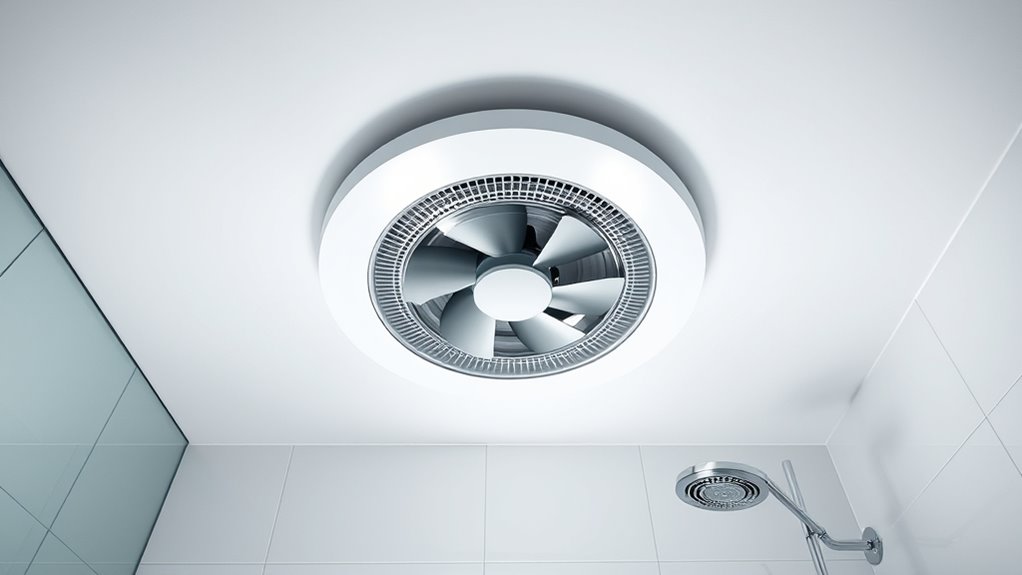

Proper bathroom ventilation is key to controlling humidity, preventing mold, and protecting your home. Make certain your fan is correctly sized in CFM—around 100 or more for larger or moisture-heavy bathrooms—so it handles moisture efficiently. Regular maintenance like cleaning the fan and inspecting the ductwork helps keep airflow strong and energy use low. If you want to guarantee your system is functioning perfectly and lasts long, there’s more to think about below.
Key Takeaways
- Choose a fan with a capacity of at least 50 CFM for small bathrooms, and 100 CFM or more for larger or high-moisture spaces.
- Properly size and install ductwork to ensure unobstructed airflow and prevent efficiency loss.
- Regularly clean the fan and duct system to maintain optimal performance and prevent dust buildup.
- Ensure the fan’s airflow capacity matches the bathroom size for effective humidity control.
- Use energy-efficient fans and perform routine maintenance to prolong lifespan and reduce operating costs.
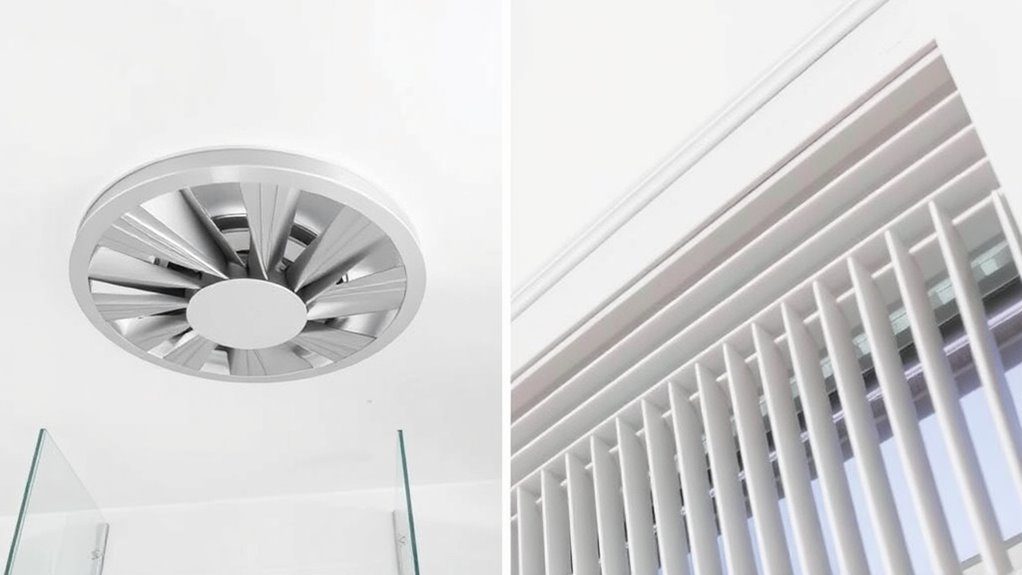
Have you ever wondered why proper bathroom ventilation is vital? It’s not just about keeping the space smelling fresh; it’s about maintaining a healthy environment and protecting your home’s structure. One of the main reasons to prioritize effective ventilation is humidity control. Bathrooms produce a lot of moisture from showers, baths, and even everyday activities like brushing your teeth. Without proper airflow, this excess humidity can lead to mold growth, peeling paint, and rotting drywall. That’s why choosing the right size fan and ensuring it operates efficiently is essential. When you select a fan that’s too small, it won’t be able to handle the moisture load, leaving your bathroom damp and prone to issues. Conversely, an oversized fan can be noisy and waste energy. The key is balancing size and power to match the bathroom’s volume.
Proper bathroom ventilation prevents mold, protects your home, and ensures a fresh, healthy space.
Fan efficiency plays a significant role in maintaining ideal humidity levels. A high-efficiency fan not only clears moisture quickly but also consumes less electricity, saving you money in the long run. When you install a properly rated fan, you’re making sure it runs effectively without overworking, which can lead to wear and reduced lifespan. Regular maintenance is just as important as choosing the right fan. Dust and debris can accumulate in the vent, restricting airflow and decreasing efficiency. This buildup causes the fan to work harder, increasing energy costs and reducing its lifespan. Cleaning the fan and vent regularly keeps it operating at peak performance and maintains humidity control.
Another aspect to consider is the fan’s airflow rate, typically measured in cubic feet per minute (CFM). For a small bathroom, a fan rated around 50 CFM may suffice, but larger spaces or those with high moisture levels might require 100 CFM or more. When you understand the size of your bathroom and its specific needs, you can select a fan that provides the right airflow. Proper sizing ensures that humidity is swiftly removed, preventing mold and mildew. Additionally, maintaining the fan’s efficiency involves inspecting the vent ductwork for kinks or blockages that could impede airflow. An unobstructed duct ensures the fan operates as intended, further enhancing humidity control. Upgrading to an energy-efficient Kia Tuning system can also optimize overall performance and longevity of your ventilation setup.
In essence, the right bathroom ventilation system combines appropriate sizing with ongoing maintenance to keep your space dry, healthy, and odor-free. When you pay attention to fan efficiency and humidity control, you’re investing in your comfort and the longevity of your home. Properly maintained ventilation prevents costly repairs down the line and creates a safer, more pleasant bathroom environment for you and your family.
Frequently Asked Questions
How Often Should Bathroom Vents Be Professionally Inspected?
You should have your bathroom vents professionally inspected at least once every 1-2 years to guarantee they meet ventilation standards and operate efficiently. Regular inspections help identify issues like blockages or malfunctioning fans. Follow maintenance tips such as cleaning the vent covers and checking for proper airflow. Staying on top of these inspections keeps your bathroom fresh, odor-free, and safe by preventing mold and moisture buildup.
Can a Bathroom Vent Cause Mold if Improperly Installed?
Sure, a poorly installed bathroom vent can cause mold growth, ironically turning your ventilation issues into a moisture nightmare. When vents are improperly placed or vented outside, they trap humidity inside, creating the perfect environment for mold. So, if you notice persistent dampness or mold, check your vent’s installation. Properly sized and maintained ventilation helps prevent mold growth by reducing excess moisture and ensuring good air circulation.
What’s the Best Way to Test if My Vent Is Working Properly?
You can test if your vent is working properly by using ventilation sensors to monitor airflow and guarantee proper circulation. Turn on your bathroom fan and hold a tissue or smoke near the vent to observe airflow. For a more accurate check, conduct airflow testing with an anemometer or hire a professional. Consistent airflow indicates your vent is functioning correctly, preventing mold and moisture buildup.
Are There Energy-Efficient Options for Bathroom Ventilation Systems?
Yes, you can choose energy-efficient fans for your bathroom. These fans use less electricity while still providing effective ventilation, helping you save on energy costs. Ventilation upgrades with modern, low-power fans are a smart choice, especially since they reduce your environmental impact without sacrificing performance. Don’t worry about noise or effectiveness—you’ll find many quiet, powerful options that keep your bathroom fresh and eco-friendly.
How Do I Choose Between a Fan Vent and an Window Vent?
You should choose between an exhaust fan and a window vent based on your bathroom’s layout and your preferences. An exhaust fan, especially an energy-efficient model, effectively removes humidity and odors, even in enclosed spaces. A window vent provides natural ventilation and can be a good option if your bathroom has a window that opens easily. Consider factors like noise, energy use, and ease of maintenance when making your decision.
Conclusion
Proper bathroom ventilation isn’t just about comfort—it’s essential for your health. Did you know that inadequate ventilation can lead to mold growth, which affects up to 60% of homes? Regularly sizing and maintaining your exhaust fans helps keep air fresh and mold at bay. By ensuring your ventilation system is up to par, you’re creating a safer, healthier space for you and your family. Don’t overlook this small upgrade; it makes a big difference.