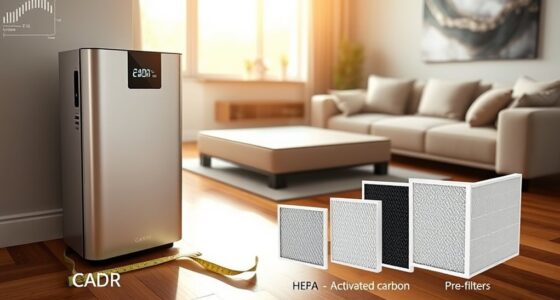

To reduce dust in your bedroom naturally, focus on improving air quality, controlling humidity, and keeping surfaces clean. Use air purifiers with HEPA filters and open windows whenever possible to enhance ventilation. Wash bedding weekly in hot water to kill dust mites, and keep humidity below 50% with a dehumidifier. Regularly dust furniture with a damp cloth and minimize clutter to make cleaning easier. If you want to learn more, you’ll find simple tips to create a healthier sleeping environment.

Get furniture and decor delivered free — and shop member deals
- Fast, free delivery on millions of items
- Access to Prime Big Deal Days deals on October 6–7
- Prime Video, Amazon Music and more included
Key Takeaways
- Use air purifiers with HEPA filters and keep windows open for natural ventilation.
- Wash bedding weekly in hot water and use allergen-proof covers on pillows and mattresses.
- Keep surfaces clutter-free and dust with a damp cloth regularly to prevent dust buildup.
- Maintain indoor humidity below 50% with dehumidifiers or proper ventilation.
- Incorporate houseplants to naturally filter and improve indoor air quality.

Dust can quickly accumulate in bedrooms, affecting air quality and your overall health. It’s a common problem that can lead to allergies, respiratory issues, and even disturbed sleep. One of the most effective ways to combat this is by using air purifiers. These devices filter out dust particles, pollen, pet dander, and even tiny dust mites that often go unnoticed but can trigger allergic reactions. When you run an air purifier regularly, especially in the bedroom, it helps maintain cleaner air, reducing the amount of dust that settles on surfaces and in the air you breathe. Choose a purifier with a HEPA filter, as it can trap particles as small as 0.3 microns, including dust mites, which are a major source of dust in bedrooms.
Using air purifiers with HEPA filters can significantly improve bedroom air quality.
Beyond air purifiers, controlling dust mites is essential because they thrive in bedding, pillows, and upholstered furniture. To keep them at bay, wash your bedding weekly in hot water—above 130°F if possible—to kill off these tiny creatures. Using allergen-proof covers on your pillows and mattresses creates a barrier that prevents dust mites from burrowing into your bedding and releasing allergens into your sleeping space. Additionally, reducing humidity levels in your bedroom to below 50% makes it less hospitable for dust mites, since they prefer humid environments. You can do this with a dehumidifier or by ensuring proper ventilation. Maintaining proper ventilation is key to controlling indoor dust levels. Improving air circulation can also help disperse airborne particles more effectively. Regularly replacing air filters in your HVAC system enhances their ability to capture dust and allergens, further improving indoor air quality. Incorporating natural dust control methods, such as using houseplants that can help filter the air, can also contribute to a healthier environment.
Another natural step is to keep your bedroom surfaces clean and clutter-free. Regularly dust furniture, shelves, and other surfaces with a damp cloth to trap dust rather than just spreading it around. Avoid fluffy or heavily textured textiles that tend to trap dust, and opt for smooth, washable fabrics instead. Vacuuming frequently with a vacuum cleaner equipped with a HEPA filter is also essential, as it helps remove dust and dust mites from carpets and rugs. Remember to wash your vacuum filter regularly to keep it functioning effectively.
Finally, keep the air in your bedroom moving and fresh by opening windows when possible. Good airflow prevents dust from settling and helps disperse airborne particles. Incorporating these natural strategies—using air purifiers, managing humidity, washing bedding, and maintaining a clean environment—can markedly reduce dust and dust mites, creating a healthier, more comfortable bedroom for you. Recognizing the importance of air quality and proper ventilation is crucial to maintaining a dust-free space.
As an affiliate, we earn on qualifying purchases.
Frequently Asked Questions
Can Indoor Plants Help Reduce Dust Effectively?
Indoor plants can help reduce dust effectively, especially certain plant types known for their dust absorption qualities. Plants like spider plants, snake plants, and pothos are excellent choices because they naturally trap dust particles on their leaves. By incorporating these plants into your bedroom, you actively improve air quality and reduce dust accumulation, creating a cleaner, healthier environment. Regularly cleaning the leaves also maximizes their dust absorption benefits.
Are Air Purifiers Necessary for Dust Control?
Air purifiers aren’t always necessary for dust control, especially if you practice dust trapping techniques like regular vacuuming with a HEPA filter, dusting with damp cloths, and maintaining good ventilation. However, if you have allergies or asthma, investing in an air purifier can help, provided you keep the filter maintained and replace it as recommended. Remember, combining an air filter with proper dust management makes a significant difference.
How Often Should I Replace Bedding to Minimize Dust?
Don’t let dust settle under your nose—replace your bedding regularly. Aim to change bed linens and pillowcases at least once a week to keep dust mites and allergens at bay. Regular washing helps remove accumulated dust, dead skin, and pollen. Staying on top of this routine keeps your sleep environment fresh and minimizes dust, making your bedroom healthier. Remember, a clean bed is the foundation of a good night’s sleep.
Do Essential Oils Help in Dust Reduction?
Essential oils don’t directly reduce dust, but using essential oil diffusers can promote a cleaner environment and support dust mite control. Certain oils like eucalyptus or tea tree have antimicrobial properties that may help reduce allergens. Regularly diffusing these oils can improve air quality and make your bedroom less hospitable for dust mites, ultimately helping you breathe easier and maintain a dust-reduced space naturally.
Can Natural Cleaning Products Improve Air Quality?
Yes, natural cleaning products can improve your air quality. They often contain ingredients like vinegar, baking soda, and essential oils, which act as natural repellents and help break down dust particles. Using these products creates dust mite barriers, reducing allergens and improving breathability in your bedroom. Regularly cleaning with natural solutions minimizes chemical fumes and dust buildup, making your space healthier and more comfortable.
Conclusion
Reducing dust naturally in your bedroom is simple and effective. By regularly cleaning with natural solutions, keeping clutter minimal, and maintaining good ventilation, you can breathe easier and enjoy a healthier space. Some might think natural methods aren’t powerful enough, but consistency makes a big difference. Don’t let dust control you—take small steps today, and you’ll notice a fresher, cleaner bedroom in no time. Your lungs will thank you!
Fall Picks
fall essentials
As an affiliate, we earn on qualifying purchases.