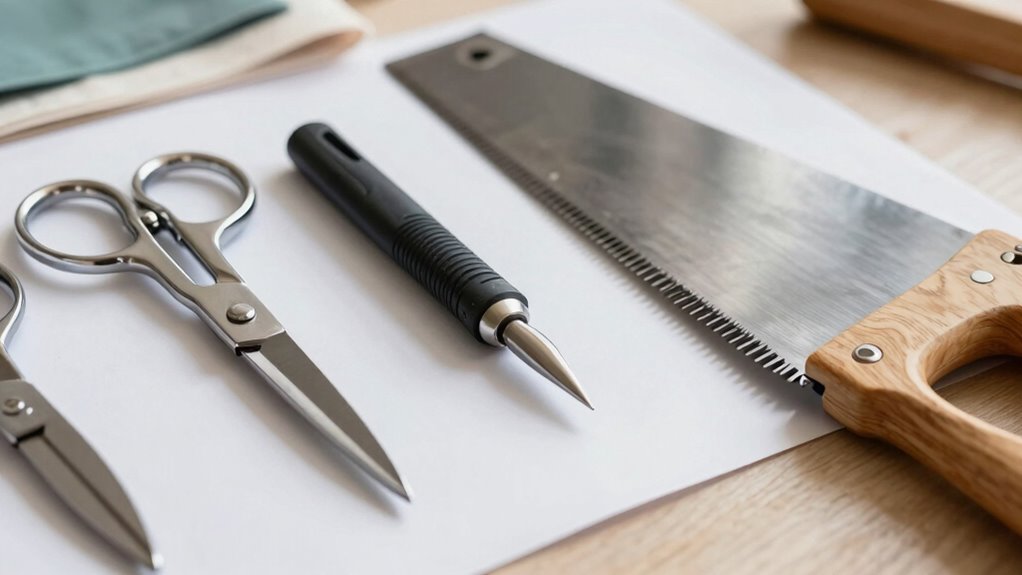

To decide which cutting tools match your project style, consider the material you’re working with and the level of detail needed. For delicate fabrics, opt for sharp, fine blades, while tough hardwood requires sturdy, high-quality saws. Think about the size and scope of your project—fine crafts need finesse tools, whereas larger jobs demand heavy-duty options. Pay attention to handle design and safety features for comfort and protection. Continuing with this guide will help you find the perfect match for your next project.

Get furniture and decor delivered free with Prime
- Fast, free delivery on millions of items
- Prime Video, Amazon Music and more included
- Member-only deals all year
Key Takeaways
- Identify your material type to select blades designed for specific substances and ensure compatibility.
- Match the tool’s durability and features to the project’s complexity and required precision.
- Consider ergonomic design for comfort and control, especially for extended or detailed cutting tasks.
- Choose tools that align with the scale and style of your project, from delicate crafts to large constructions.
- Prioritize safety features to ensure secure handling and reduce the risk of accidents during use.

Are you unsure which cutting tools are best suited for your project? Choosing the right tools involves understanding how they interact with your specific materials and how comfortable they are to use. Material compatibility plays an essential role here; not all blades or cutters work well with every substance. For example, cutting through thick hardwood requires a sturdy, high-quality saw blade designed for dense material, while delicate fabrics need sharp, fine blades that won’t cause tears. Before selecting a tool, consider the material you’re working with and match it with a cutting instrument designed for that purpose. Using incompatible tools can lead to uneven cuts, damage to the material, or even safety hazards. Additionally, understanding your tools’ technology features can help you make more informed choices based on precision and efficiency. Equally important is tool ergonomics, which directly impacts your comfort and precision during the project. A tool that’s awkward to hold or requires excessive force can cause fatigue or slip-ups, especially during prolonged use. When choosing your cutting tools, pay attention to handle design, weight, and grip. Ergonomically designed tools help you maintain control, reduce strain on your hands and wrists, and improve accuracy. If you’re working on detailed or intricate cuts, a lighter, well-balanced tool with a comfortable grip will give you better maneuverability. Conversely, for heavy-duty tasks, you might need a more robust, sturdily built tool that still offers some ergonomic features to prevent fatigue. It’s also beneficial to consider blade materials that enhance durability and cutting performance for your specific project needs. Exploring different cutting techniques can help you achieve cleaner results and work more efficiently. Developing a clear understanding of cutting tool maintenance can extend the lifespan of your tools and ensure consistent results over time. Once you’ve considered material compatibility and tool ergonomics, think about the nature of your project style. Do you prefer precise, delicate cuts or rough, quick trims? Fine projects like jewelry making or intricate carpentry demand specialized, sharp tools that provide finesse. Larger, more industrial projects might require heavy-duty tools that prioritize durability and power. Matching your project style with the right cutting tools ensures efficiency and quality. Take the time to test different tools if possible, and don’t overlook the importance of safety features such as guards, anti-slip grips, or safety locks. Ultimately, the key to selecting the best cutting tools hinges on understanding your material needs and your comfort during use. When you align the tools with your project style, materials, and ergonomic preferences, you’ll find the process smoother, safer, and more satisfying. Proper tool selection not only enhances your craftsmanship but also speeds up your work, minimizes mistakes, and produces cleaner, professional results.
precision craft scissors for detailed cutting
As an affiliate, we earn on qualifying purchases.
As an affiliate, we earn on qualifying purchases.
Frequently Asked Questions
What Safety Equipment Is Recommended When Using Different Cutting Tools?
When using cutting tools, you should always wear personal protective equipment like safety glasses, gloves, and hearing protection. Follow safety guidelines to prevent injuries, such as keeping hands away from blades and ensuring proper tool handling. Depending on the tool, additional gear like dust masks or face shields might be necessary. Always read the safety instructions and check your equipment before starting to stay safe during your project.
How Do I Maintain and Sharpen My Cutting Tools Effectively?
Think of your cutting tools as loyal warriors needing regular armor polishing. To keep blades sharp and ready, practice proper blade maintenance and use effective sharpening techniques like honing stones or grinding wheels. Regularly inspect for dullness or nicks, and sharpen or replace blades as needed. By maintaining your tools diligently, you guarantee clean cuts, safety, and prolong their life—transforming rough edges into sleek, precise lines in your projects.
Are There Eco-Friendly or Sustainable Cutting Tool Options Available?
Yes, eco-friendly blades made from sustainable materials are available, helping you reduce environmental impact. Look for options like bamboo handles, recycled steel blades, or blades with biodegradable coatings. These choices support sustainability without sacrificing performance. When selecting tools, prioritize brands committed to eco-conscious practices. By choosing eco-friendly blades, you contribute to environmental conservation while completing your project efficiently and responsibly.
Can I Use One Tool for Multiple Materials or Projects?
Using one tool for multiple materials is like carrying a Swiss Army knife—great for versatility, but it depends on material compatibility. You can often use a single tool for different projects if it’s designed for tool versatility, but only if it suits the specific material you’re working with. Always check the manufacturer’s recommendations to avoid damaging your tool or compromising your project’s quality.
How Do I Choose the Right Cutting Tools for Beginners?
To choose the right cutting tools for beginners, start by considering blade types suited for your projects, like utility blades or scissors for general use. Check handle ergonomics to guarantee comfort and control during cutting. Opt for tools with easy-to-grip handles and simple mechanisms. As you gain experience, explore different blade types and handle designs, but initially, prioritize comfort and versatility to build confidence in your skills.
Conclusion
Choosing the right cutting tools can transform your project and guarantee precision. Did you know that 70% of DIY enthusiasts report faster, cleaner results when using the correct tools? By understanding your project style and matching it with the right blades, bits, or saws, you’ll save time and avoid costly mistakes. So, take the time to select wisely—your craftsmanship will thank you, and the results will speak for themselves.
Fall Picks
fall essentials
As an affiliate, we earn on qualifying purchases.