To organize your medication and wellness supplies safely, choose a specific, easily accessible spot like a cabinet or drawer and use clear containers or bins labeled for easy identification. Store medications away from moisture, heat, and out of reach of children and pets. Keep an updated master list and discard expired items regularly. Follow storage instructions, especially for temperature-sensitive products, to keep everything effective. If you want to discover more tips on maintaining safe and organized supplies, keep exploring.

Get furniture and decor delivered free — and shop member deals
- Fast, free delivery on millions of items
- Access to Prime Big Deal Days deals on October 6–7
- Prime Video, Amazon Music and more included
Key Takeaways
- Designate specific, consistent storage areas with clear containers and labels for easy identification and access.
- Store medications away from humidity and heat, in childproof containers, and out of children’s and pets’ reach.
- Create and regularly update a master list of supplies and medication details for quick reference.
- Properly dispose of expired or unused medications using pharmacy take-back programs or disposal instructions.
- Maintain organization by routinely reviewing, decluttering, and ensuring supplies are safe, labeled, and accessible.
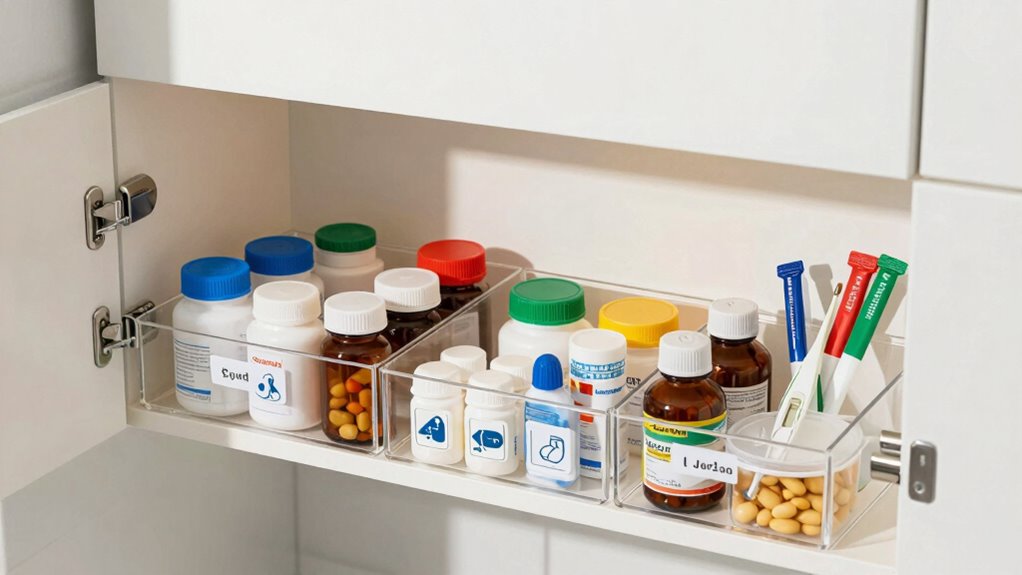
Keeping your medication and wellness supplies organized is vital for safety and efficiency. When it comes to medication storage, you want to guarantee everything is in its proper place, easy to access, and clearly identifiable. Start by designating a specific area in your home — such as a cabinet or a drawer — for all your wellness supplies. This way, you minimize the risk of misplacing items or accidentally grabbing the wrong product. Use clear containers or bins to hold your medications and wellness products, which makes it easier to see what you have at a glance. Labeling these containers can further improve organization, especially if you have multiple medications or supplements. Wellness product labeling should include the product name, dosage instructions, expiration date, and any special storage requirements, like refrigeration or protection from light. Proper labeling helps prevent medication errors, guarantees you follow the correct dosage, and keeps you aware of when to discard expired items.
In addition to labeling individual products, consider creating a master list of your medications and wellness supplies. Keep this list updated, and store it somewhere accessible but separate from the supplies. This list can be invaluable in emergencies or if someone else needs to assist you. When storing medications, always follow the instructions provided on the labels. For example, some medicines need to be kept in a cool, dry place, away from direct sunlight and moisture. Avoid storing medications in bathrooms, where humidity and temperature fluctuations are common, or in places where children or pets can reach them. Use childproof containers and store medicines out of their reach for added safety. Regularly reviewing your storage setup can help ensure your supplies remain safe and effective, and that you are always aware of their condition. Incorporating proper medication storage practices can also extend the shelf life of your supplies and prevent spoilage. Additionally, understanding medication safety principles can help you respond appropriately in case of accidental ingestion or other emergencies. Implementing these storage guidelines can further enhance your safety measures and ensure your medications stay in optimal condition.
Furthermore, utilizing ventilation in your storage areas can help reduce humidity and maintain optimal conditions for certain medications and wellness products. To keep your supplies organized over time, regularly review and declutter. Discard expired medications and wellness products that are no longer needed or have changed in appearance. Proper disposal of expired or unused medications is vital for safety; many pharmacies offer take-back programs or specific disposal instructions. When you restock, double-check your labeling and storage conditions to guarantee everything remains in good condition. By maintaining this routine, you’ll reduce the risk of accidental ingestion, medication errors, and confusion, making your health management safer and more streamlined. Staying organized with proper medication storage and wellness product labeling helps you stay on top of your health, saves you time, and provides peace of mind that your supplies are safe, accessible, and correctly maintained.
medication storage containers with labels
As an affiliate, we earn on qualifying purchases.
As an affiliate, we earn on qualifying purchases.
Frequently Asked Questions
How Often Should I Check Medication Expiration Dates?
You should check medication expiration dates at least every three to six months to guarantee safety. Regular shelf life monitoring helps prevent using expired meds, which can be ineffective or harmful. When you find expired medications, dispose of them properly through medication disposal programs. Keeping an organized system makes it easier to track expiration dates, ensuring your supplies stay safe and effective. Consistent checks protect your health and keep your wellness supplies current.
What Should I Do With Expired or Unused Medicines?
When you find expired or unused medicines, don’t keep them. Dispose of them through proper disposal methods like take-back programs or pharmacy drop-off sites. Never flush medications unless directed, as it can harm the environment. Before disposal, confirm proper labeling to identify the medicines clearly. This keeps your home safe and prevents accidental ingestion. Regularly checking and responsibly disposing of medicines helps maintain a safe, organized wellness space.
Are There Specific Storage Requirements for Herbal Supplements?
For herbal supplements, you should follow proper herbal storage by keeping them in a cool, dry, and dark place to preserve potency. Make sure to use supplement labeling that clearly indicates the contents and expiration date. Store each type separately to prevent cross-contamination. Avoid storing herbal supplements in the bathroom or near heat sources, as moisture and heat can degrade their quality, ensuring they remain effective and safe to use.
How Can I Prevent Children From Accessing Medicines?
Think of childproofing your home like building a fortress—you’re protecting precious treasures. To prevent kids from accessing medicines, use childproof containers and locks. Store medications on high shelves, out of their reach, and always in a locked cabinet. Incorporate childproofing strategies like outlet covers and safety latches. Follow medication safety tips diligently, and regularly check that all containers are secure. This way, you create a safer environment where curious little explorers stay safe.
Is It Safe to Store Medications in the Bathroom?
Storing medications in the bathroom isn’t the safest choice because bathroom hazards like humidity and heat can degrade medicines. Instead, follow storage tips by keeping medications in a cool, dry place away from children and pets. Use a locked cabinet or a high shelf to prevent access. Always guarantee medicines are stored in their original containers and away from moisture, heat, and direct sunlight to maintain their effectiveness and safety.
Conclusion
By organizing your medication and wellness supplies carefully, you create a safe haven, shielding loved ones from accidental spills or misuse. It’s like building a fortress of safety in your home—peace of mind standing guard. Just as a tidy space promotes clarity, a well-organized stash keeps essentials accessible yet secure. Remember, a little effort now guarantees you’re prepared and protected, turning chaos into calm and uncertainty into confidence. Your health and safety deserve nothing less.
Halloween Picks
halloween
As an affiliate, we earn on qualifying purchases.