To integrate air quality tracking into your daily wellness, start by using smartphone apps and portable sensors to monitor indoor and outdoor air. Keep logs of your readings to identify patterns and adjust your routines, like opening windows or choosing outdoor activities during cleaner air days. Consider smart home devices that automatically respond to air quality levels. By consistently paying attention to pollution data, you can create healthier habits and environments, enhancing your overall well-being—if you keep exploring, you’ll discover even more ways to optimize your health.
Key Takeaways
- Use smartphone apps and portable sensors to monitor indoor and outdoor air quality regularly.
- Incorporate air quality data into daily routines, adjusting activities like outdoor exercise based on pollution levels.
- Set up smart home devices to automatically improve air quality when pollutant levels rise.
- Log air quality readings to identify patterns and triggers affecting your health and wellness.
- Develop habits such as ventilating spaces or choosing cleaner environments during high pollution days.
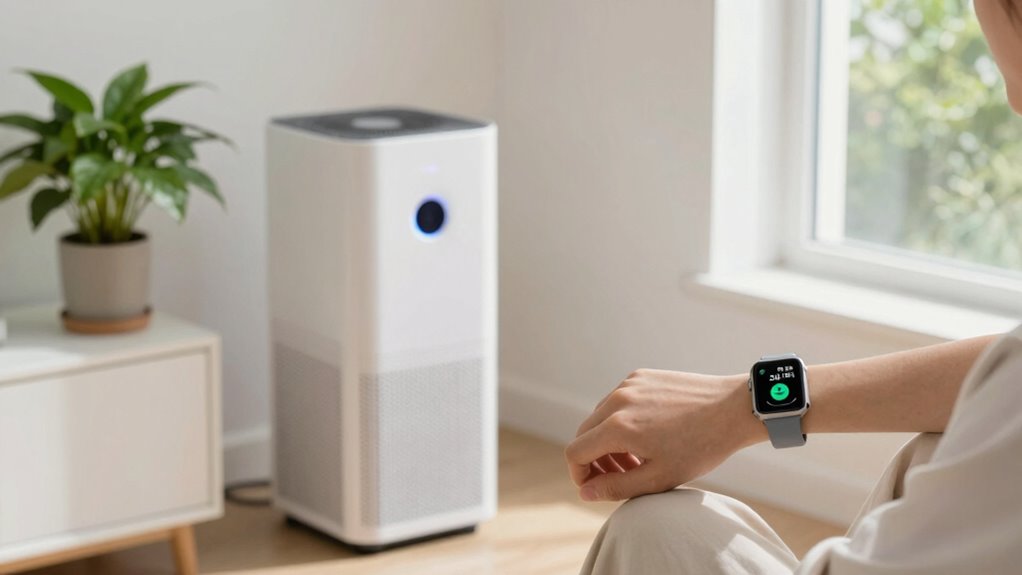
With increasing awareness of how air quality impacts health, tracking the air you breathe has become essential for wellness. Whether you’re inside or outside, understanding your air environment helps you make smarter choices and maintain better health. Indoor air quality can often be more controlled than outdoor pollution, but it’s still vital to monitor. Dust, mold, pet dander, and household chemicals can all degrade indoor air, leading to allergies or respiratory issues. By integrating air quality tracking into your daily routine, you can identify problem areas inside your home and take steps to improve ventilation, add air purifiers, or reduce pollutants. For example, if your sensor detects high levels of volatile organic compounds (VOCs), you might choose to open windows or eliminate sources like certain cleaning products. This real-time data empowers you to make immediate adjustments, creating a healthier indoor environment.
When it comes to outdoor pollution, the challenge lies in its variability. Traffic, industrial activity, weather, and seasonal changes all influence outdoor air quality. By regularly checking air quality reports or using portable monitors, you can determine the best times to exercise outdoors or plan outdoor activities. On days with high pollution levels, you might opt for indoor workouts or visit places with cleaner air, such as parks away from busy roads. Learning to read air quality indexes (AQI) helps you avoid exposure to harmful pollutants like particulate matter (PM2.5 and PM10), nitrogen dioxide, or ozone, which can all impact respiratory health. Combining outdoor air quality data with indoor monitoring gives you a comprehensive picture of your overall exposure. Additionally, understanding air quality monitoring can help you better interpret sensor data and make informed decisions about your environment. Developing an awareness of pollution sources can also guide you in reducing your overall exposure and advocating for healthier environments in your community. Recognizing the importance of air quality standards can further assist you in understanding safe levels and necessary precautions. Staying informed about air quality variations can help you adapt your habits to protect your health during different seasons or weather conditions. Moreover, understanding the health effects of pollutants enables you to prioritize actions that minimize health risks.
To effectively integrate air quality tracking into your daily wellness, start with simple tools like smartphone apps and portable sensors. Keep a log of your readings to notice patterns or triggers that affect your health. Consider setting alerts for high pollution levels, so you’re prompted to take action. You can also use smart home devices that automatically adjust air filters or activate ventilation systems based on real-time data. Incorporating these measures into your routine becomes second nature, allowing you to respond proactively to changes in your environment. Over time, you’ll develop a better understanding of how indoor air and outdoor pollution affect your well-being, empowering you to create a healthier lifestyle. Tracking the air you breathe isn’t just about data; it’s about taking control of your environment to support your long-term health.
As an affiliate, we earn on qualifying purchases.
Frequently Asked Questions
What Types of Air Quality Monitors Are Most Accurate?
You should look for air quality monitors with high sensor calibration and advanced pollutant detection capabilities. Accurate devices often feature electrochemical sensors for gases like CO and NO2, and laser particle counters for particulate matter. Regular calibration guarantees precision over time. By choosing monitors with these features, you get reliable readings that help you better understand your environment and make informed decisions for your wellness.
How Often Should I Check My Indoor Air Quality?
You should check your indoor air quality at least once a day, especially if you notice symptoms like allergies or respiratory issues. Regular monitoring helps you stay aware of indoor pollutants and air pollution levels, so you can take action to improve ventilation or reduce sources of indoor pollutants. If you have sensitive individuals at home, consider checking more frequently, such as twice daily, to maintain a healthier environment.
Can Air Quality Data Influence My Exercise Routines?
Did you know outdoor air pollution can reduce exercise performance by up to 20%? Yes, air quality data can markedly influence your exercise routines. When outdoor air quality is poor, you should reschedule or opt for indoor workouts to optimize your exercise. Tracking air quality helps you avoid polluted outdoor air, ensuring you breathe cleaner air, which enhances your workout efficiency and overall wellness.
Are There Affordable Air Quality Tracking Options?
Yes, there are affordable options available. Budget-friendly monitors like the Atmotube, AirVisual Mini, and Temtop M10 provide accurate air quality data without breaking the bank. These devices are compact, easy to use, and help you track indoor and outdoor air quality levels efficiently. By choosing these options, you can stay informed about air quality conditions daily, making it easier to adjust your activities for better health and wellness.
How Does Air Quality Impact Mental Health?
Did you know that poor air quality is linked to a 25% increase in mental health issues? You might notice that environmental stress from pollutants worsens anxiety, depression, and cognitive function. When air quality drops, your brain receives less oxygen, leading to fatigue and mood swings. Tracking air quality helps you understand these impacts, so you can take steps to improve your environment and support your mental health daily.
Conclusion
By integrating air quality tracking into your daily routine, you’re opening the door to a gust of fresh air for your overall wellness. Think of it as your personal weather vane, guiding you to healthier choices and cleaner environments. When you stay aware of the air you breathe, you’re steering your health in the right direction—like a compass pointing toward well-being. Embrace this habit, and let your breath be a steady breeze of energy.