
To improve your bedroom airflow for better sleep, position your air purifier in the center or near your sleeping area, avoiding corners and furniture to prevent airflow blockages. Open windows when weather allows and use ceiling fans to help circulate air naturally. Upgrade ventilation systems like HRV or ERV for fresh air exchange, and keep filters clean. Regularly dust, vacuum, and maintain your space to guarantee ideal airflow. To discover more effective tips, continue exploring proven strategies for a healthier sleep environment.

Get furniture and decor delivered free — and shop member deals
- Fast, free delivery on millions of items
- Access to Prime Big Deal Days deals on October 6–7
- Prime Video, Amazon Music and more included
Key Takeaways
- Place the air purifier centrally or near the sleeping area, slightly above eye level for optimal airflow.
- Use natural ventilation by opening windows when weather permits to refresh indoor air.
- Upgrade ventilation systems like HRV or ERV for continuous fresh air exchange.
- Keep the bedroom clean, dust-free, and regularly maintain filters in purifiers and ventilation systems.
- Use ceiling fans and proper ventilation techniques to promote even air circulation throughout the room.
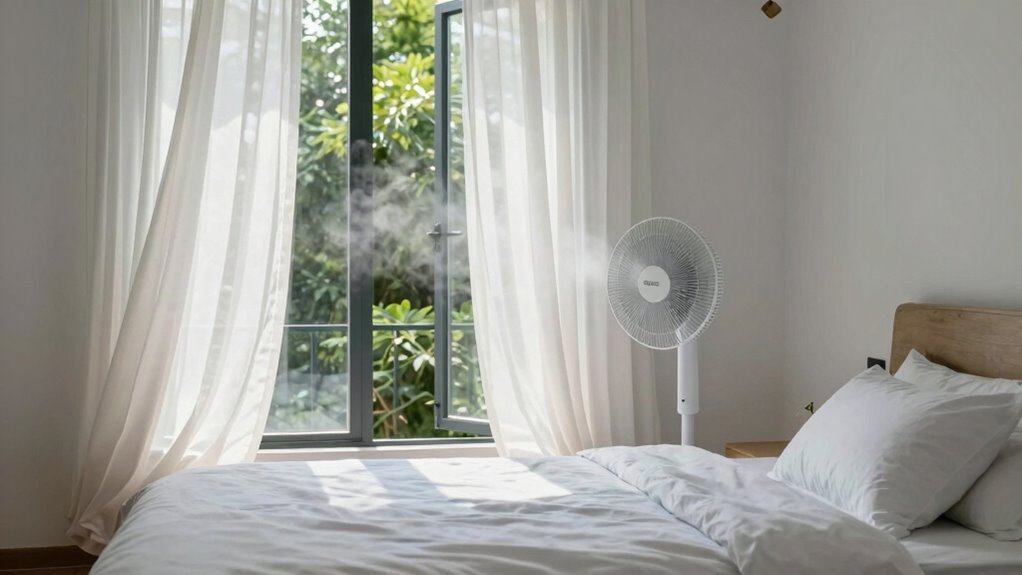
Poor airflow in your bedroom can lead to stuffiness, bad odors, and even health issues. When fresh air doesn’t circulate properly, it becomes easier for dust, allergens, and pollutants to build up. To combat this, you need to focus on how you position your air purifier and consider upgrading your ventilation system. Proper air purifier placement is key; place it in the center of the room or near your sleeping area to maximize its efficiency. Avoid corners or behind furniture, as these spots can block airflow and reduce its effectiveness. Keep the purifier at an appropriate height—ideally at or slightly above eye level—to ensure it captures airborne particles effectively.
Position your air purifier centrally or near your bed for maximum efficiency and improved airflow.
Beyond using an air purifier, upgrading your ventilation system can greatly improve airflow. If your current system is outdated or inadequate, consider installing a more advanced ventilation setup, such as a heat recovery ventilator (HRV) or energy recovery ventilator (ERV). These systems introduce fresh air from outside while exhausting stale indoor air, maintaining a steady flow without sacrificing energy efficiency. Proper ventilation helps eliminate indoor pollutants and keeps the air fresh, which is essential for restful sleep. When upgrading, make sure the ducts are clean and unobstructed to prevent musty odors or dust from circulating. Regular maintenance of your ventilation system, including cleaning or replacing filters, is also crucial for optimal airflow.
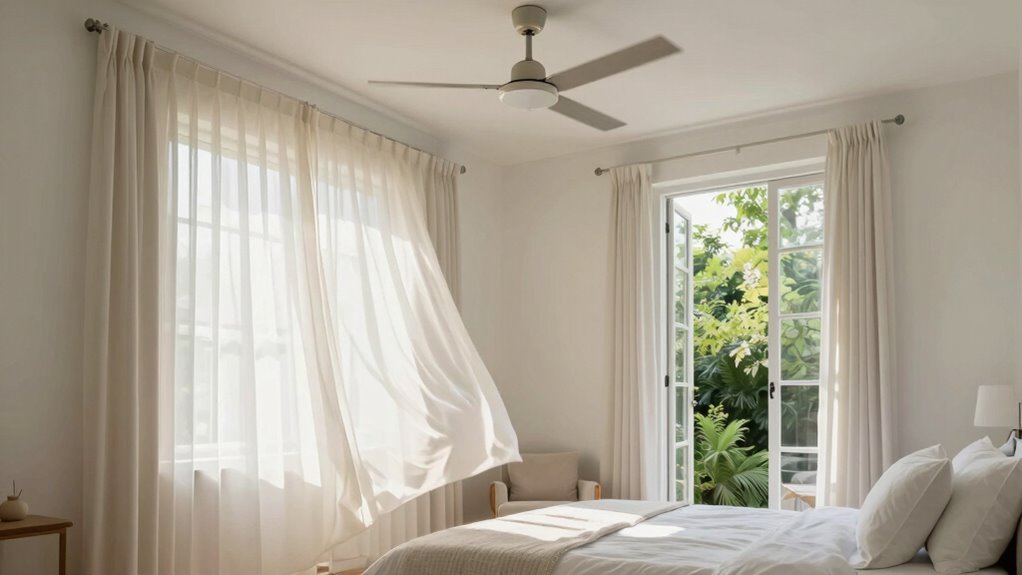
In addition to strategic placement and system upgrades, you can improve airflow naturally by opening windows when weather permits or using ceiling fans to create a gentle breeze. Opening windows during the day allows fresh air to replace stale indoor air, reducing indoor pollution levels. Ceiling fans help circulate air evenly throughout the room, preventing stagnation. If your room lacks windows or natural ventilation, focus more on mechanical solutions like high-quality exhaust fans or ventilation upgrades. Improving indoor airflow naturally can also be achieved by choosing plants that help filter the air, contributing to a healthier bedroom environment. Incorporating proper ventilation techniques enhances overall air circulation and quality. Using ventilation strategies effectively ensures a continuous flow of fresh air, which is vital for maintaining good air quality. Additionally, selecting the right air exchange rate can optimize the balance between incoming fresh air and exhausting stale air for maximum comfort. Ensuring your space has adequate air circulation can significantly impact sleep quality and overall health.
It’s also important to keep your bedroom clean and dust-free, as dust particles can hinder airflow and compromise indoor air quality. Regularly change filters in your air purifier and ventilation system, and vacuum carpets or rugs thoroughly. These simple maintenance steps prevent the buildup of airborne allergens and guarantee your airflow improvements are effective. By combining proper placement of your air purifier, upgrading your ventilation system, leveraging natural ventilation, and maintaining a clean environment, you set the stage for better airflow. This creates a healthier, more comfortable space where you can sleep soundly and wake up refreshed.
As an affiliate, we earn on qualifying purchases.
Frequently Asked Questions
What Are the Best Plants to Improve Bedroom Air Quality?
You should choose air-purifying plants like snake plants, pothos, or peace lilies to boost your bedroom air quality. Place them strategically near windows or in corners to maximize airflow and plant benefits. These plants naturally filter toxins and improve oxygen levels, creating a healthier sleeping environment. Proper plant placement guarantees you get the most air-purifying advantages, making your bedroom more comfortable and conducive to restful sleep.
How Does Humidity Affect Bedroom Airflow and Sleep Quality?
Humidity acts like a gentle conductor, orchestrating your bedroom’s airflow patterns and influencing sleep quality. When humidity regulation is not maintained, the air becomes thick or too dry, cluttering your space like fog and disrupting smooth airflow. This imbalance can cause discomfort, making it harder to breathe and fall asleep. Keeping humidity at a comfortable level guarantees airflow moves effortlessly, creating a crisp, inviting atmosphere that invites restful, uninterrupted sleep.
Can Air Purifiers Improve Airflow in the Bedroom?
Air purifiers can improve airflow in your bedroom by enhancing air circulation, making the space feel fresher and reducing airborne pollutants. To maximize their effectiveness, place the purifier near the source of pollutants or in a central location, ensuring unobstructed airflow. Regularly change filters and maintain proper settings. This setup helps circulate cleaner air, contributing to a healthier, more comfortable sleeping environment.
What Are Common Airflow Mistakes in Small Bedrooms?
You often block airflow in small bedrooms with poor furniture placement, like placing beds or large pieces against windows or vents, which creates ventilation barriers. You might also overlook the importance of clear pathways for air to circulate freely. Avoid crowding the room with bulky furniture or stacking items near vents. By reorganizing furniture and ensuring unobstructed ventilation, you can considerably improve airflow and enjoy better sleep quality.
How Often Should I Clean Vents and Filters for Optimal Airflow?
You should clean your vents and replace filters every 1 to 3 months to maintain ideal airflow and ventilation efficiency. Regular filter maintenance prevents dust buildup, which can hinder airflow and reduce air quality. If you notice reduced airflow or increased dust, consider cleaning vents more frequently. Proper maintenance keeps your bedroom fresh, improves sleep quality, and guarantees your HVAC system runs efficiently without unnecessary strain.
Conclusion
Improving your bedroom airflow can considerably boost your sleep quality. By keeping windows open, using fans, and maintaining clean air filters, you create a healthier sleeping environment. Did you know that poor air quality can decrease sleep quality by up to 30%? So, don’t overlook your bedroom’s airflow—small changes can lead to big improvements in how well you rest. Better airflow means fresher air, fewer allergies, and more restful nights ahead.
Fall Picks
fall essentials
As an affiliate, we earn on qualifying purchases.