To plan your home workshop around larger power tools, start by measuring each tool and creating a layout that offers ample space for safe operation and easy access. Consider Eco-friendly materials and smart storage solutions like wall-mounted racks or cabinets to keep tools organized and visible. Incorporate safety features such as proper lighting, ventilation, and safety equipment from the beginning. Keep workflow in mind to make tasks efficient. Keep going to discover more tips for designing a safe, functional space.

Get furniture and decor delivered free with Prime
- Fast, free delivery on millions of items
- Prime Video, Amazon Music and more included
- Member-only deals all year
Key Takeaways
- Measure each large tool accurately and allocate sufficient space for safe operation and movement.
- Prioritize layout for easy access to frequently used tools while maintaining clear walkways.
- Incorporate sturdy, purpose-built storage solutions to keep tools organized and secure.
- Ensure proper lighting and ventilation tailored to the workspace and tool requirements.
- Design safety features, including protective equipment storage and emergency access, around larger power tools.
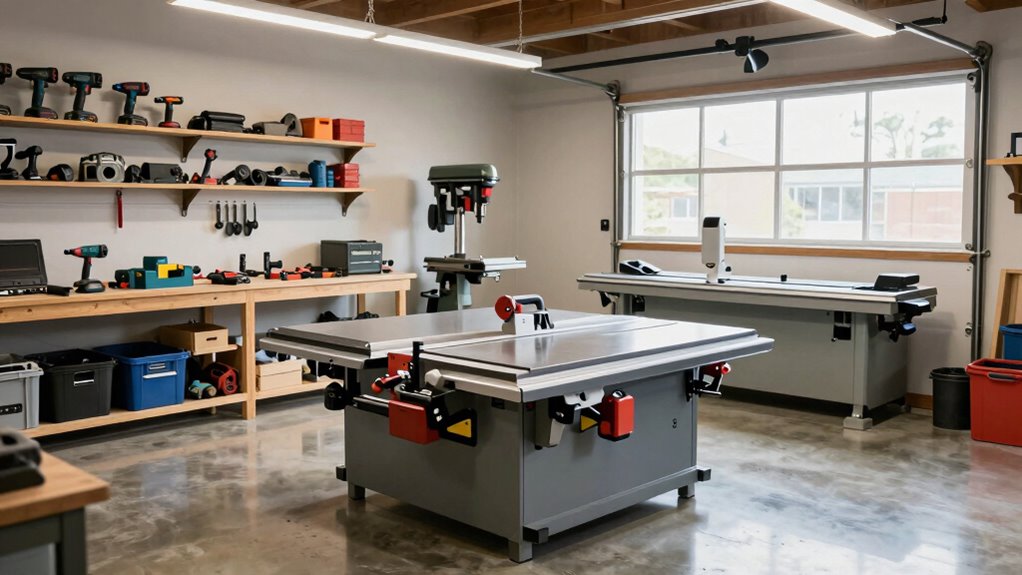
Ever wondered how to transform a corner of your home into a functional workshop? When you’re working with larger power tools, it’s essential to plan your space carefully. Start by considering the size and placement of your tools. You want enough room to operate safely and comfortably without feeling cramped. Measure each tool, including saws, drills, or sanders, and map out a layout that allows easy access while keeping everything within comfortable reach. This planning helps prevent accidents and keeps your workflow smooth. Additionally, incorporating biodiversity-friendly materials and practices into your workshop setup can promote a more sustainable environment. Using eco-friendly materials can also contribute to a healthier workspace for you and your family.
Plan your workspace carefully to ensure safety, accessibility, and smooth workflow with larger power tools.
A key aspect of setting up your workshop is organizing tool storage. Larger power tools can take up a significant amount of space, so investing in sturdy, purpose-built storage solutions makes a big difference. Shelves, cabinets, or dedicated workbenches with integrated storage help keep your tools organized and accessible. When planning, think about where each tool will go and leave enough space for movement. Consider wall-mounted racks or pegboards for frequently used items, which saves valuable floor space and keeps tools visible. Proper tool storage not only boosts efficiency but also reduces the risk of damaging your equipment or causing injury from clutter. Incorporating safety considerations into your storage design can further enhance your workshop’s safety. Being mindful of workplace safety standards during setup can prevent hazards and ensure a secure environment.
Safety should be your top priority when designing your home workshop. You’ll need to incorporate safety equipment into your plan from the start. Make sure you have a well-ventilated area, especially if you’re working with dust or fumes. Install smoke detectors and a fire extinguisher nearby for quick access. Set aside a designated space for personal protective equipment—such as goggles, ear protection, gloves, and masks—so you can grab what you need without delay. It’s also wise to position your power tools on sturdy, non-slip surfaces that can handle their weight and vibrations. Keep cords organized and out of the way to prevent tripping hazards. Consider adding safety features like blade guards, push sticks, and emergency shutoff switches on your larger tools to minimize accidents. Incorporating proper lighting and ventilation**** ensures your workspace remains safe and conducive to detailed work.
large power tool storage cabinets
As an affiliate, we earn on qualifying purchases.
As an affiliate, we earn on qualifying purchases.
Frequently Asked Questions
How Much Space Do I Need for a Home Workshop?
You’ll need at least 200 square feet for a functional home workshop, but more space is better for larger tools and mobility. Make sure to plan for adequate workshop lighting to illuminate your work area and storage solutions to keep tools organized. Consider leaving extra room for safety, movement, and future equipment, ensuring you have a comfortable, efficient workspace that meets your project needs and keeps everything within reach.
What Safety Equipment Is Essential for Larger Power Tools?
You need essential safety equipment like protective eyewear and hearing protection when working with larger power tools. Protective eyewear shields your eyes from flying debris and dust, while hearing protection prevents long-term hearing damage from loud noise. Always wear these safety items, especially when operating powerful tools, to keep yourself safe. Additionally, consider dust masks and gloves for added protection, ensuring your workshop remains a safe environment for your projects.
How Should I Organize Tools for Easy Access?
Your workshop’s organization can be a game-changer—it’s like having a superpower! Use smart tool storage solutions like wall-mounted racks, labeled drawers, and mobile carts to keep everything tidy. Place frequently used tools at arm’s reach and arrange them by workflow, so your project moves smoothly from start to finish. This setup boosts workflow efficiency, saves time, and keeps your workspace safe and clutter-free.
What Are the Best Electrical Requirements for Large Tools?
For large tools, make certain your electrical wiring can handle their power demands by installing dedicated circuits. Check each tool’s circuit capacity and avoid overloading your system. Use heavy-duty outlets and proper wiring gauges to support high amperage. This setup prevents tripping breakers and maintains safety. Consulting a professional electrician can help you determine the right electrical requirements, guaranteeing your workshop runs smoothly and safely with your larger power tools.
How Do I Ensure Proper Ventilation in My Workshop?
You guarantee proper ventilation by installing an effective air filtration system that captures dust and fumes from your tools. Incorporate exhaust fans or vents to promote airflow and reduce humidity, preventing moisture buildup. Keep windows open when possible, and consider a dehumidifier for humidity control. Regularly maintain your ventilation setup to keep the air clean and comfortable, creating a safer, healthier workspace for you to work efficiently.
Conclusion
Setting up your home workshop around larger power tools can transform your DIY projects and bring your creative ideas to life. Remember, a well-planned space boosts safety, efficiency, and enjoyment. Did you know that a cluttered workspace increases accident risk by over 50%? So, take the time to organize and prioritize safety. With thoughtful planning, you’ll create a functional, inspiring environment where your craftsmanship can truly shine. Happy building!
Fall Picks
fall essentials
As an affiliate, we earn on qualifying purchases.