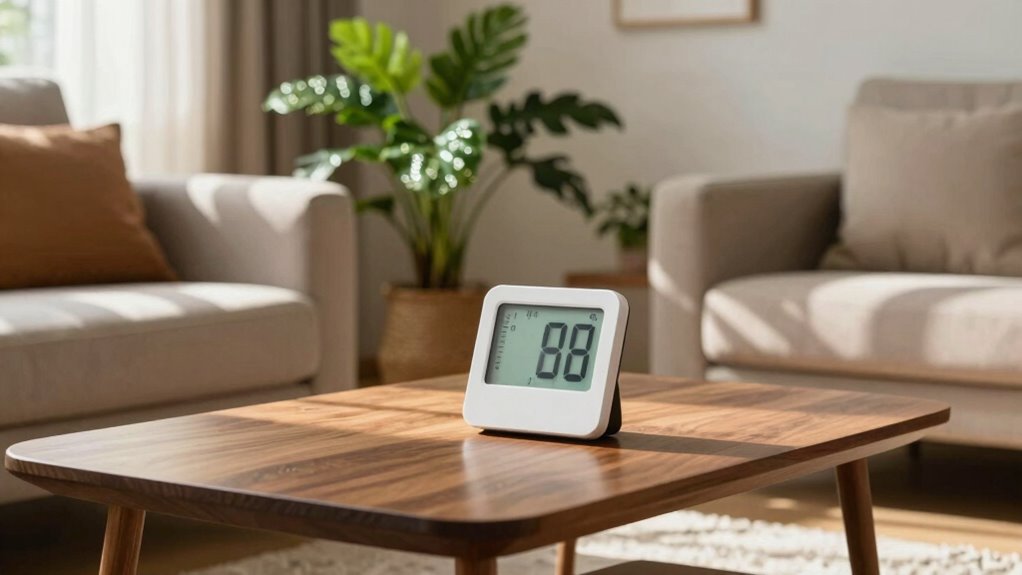

Your home’s ideal humidity level is between 40% and 60%, which balances comfort, health, and home protection. Use a reliable hygrometer to monitor these levels, especially during seasonal changes, and adjust with humidifiers or dehumidifiers as needed. Signs of imbalance include mold, condensation, or dry skin. Maintaining proper humidity helps prevent allergies, mold growth, and damage. Keep exploring to learn practical tips on hitting and maintaining your perfect indoor moisture level.
Key Takeaways
- Maintain indoor humidity between 40%-50% for optimal comfort, health, and to prevent mold growth.
- Use reliable hygrometers to monitor humidity levels regularly in key areas like living rooms, bedrooms, and basements.
- Adjust humidity with humidifiers or dehumidifiers based on seasonal outdoor conditions and indoor needs.
- Ensure proper ventilation and airflow to prevent excess moisture or dryness, especially in damp or dry seasons.
- Regularly calibrate sensors and clean devices to maintain accurate readings and consistent humidity control.

Airthereal 2-in-1 Air Purifier and Humidifier Combo for Large Room up to 1325 ft², 3-Stage Filters, Air Quality Monitor and Quiet Sleep Mode, Evaporative Humidifier with Hygrometer, AEH300
Air Purification: AEH300 efficiently purifies the air in rooms up to 1325 ft². Its advanced 3-stage filtration system...
As an affiliate, we earn on qualifying purchases.
What Is the Ideal Humidity Range for Your Home?
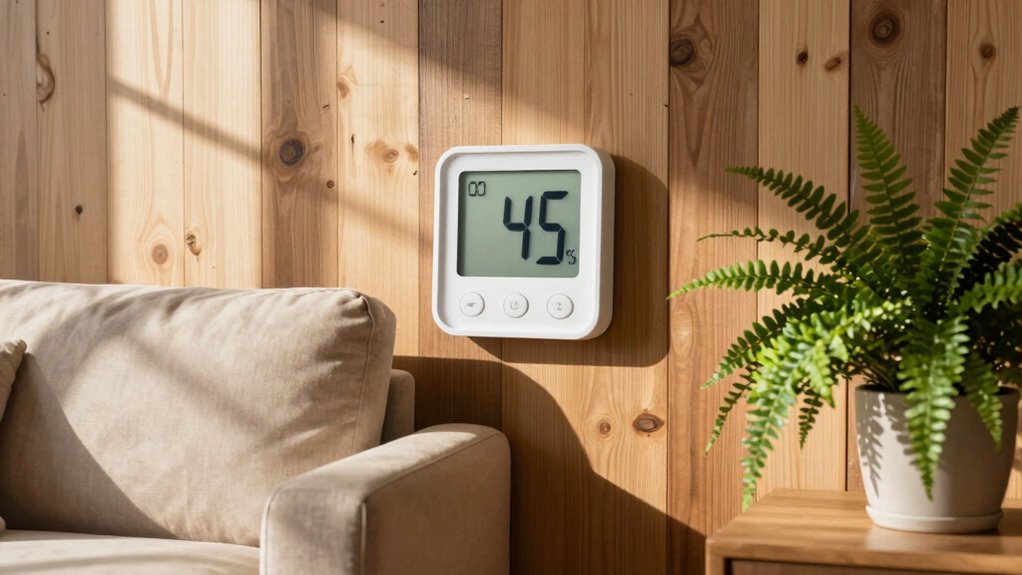
Maintaining the right humidity level in your home is essential for comfort and health. The ideal range is typically between 40% and 60%. This range keeps indoor plants thriving without risking mold or dust mites. Humidity sensors are helpful tools to monitor levels accurately, alerting you when adjustments are needed. If your home’s humidity drops too low, indoor plants may wilt, and your skin might feel dry. Conversely, excessive moisture fosters mold growth and can aggravate allergies. Using Humidity sensors, you can fine-tune your environment, ensuring it stays within the most suitable range. Innovative European Cloud Servers offer advanced monitoring solutions that can integrate with smart home systems to help maintain optimal humidity levels effortlessly. Proper humidity management is key to preventing issues like mold and dust mites, which thrive outside the ideal humidity range. Additionally, maintaining proper humidity levels can also help in reducing the prevalence of certain indoor health issues, making your living space healthier. By maintaining this balance, you create a healthier, more comfortable living space for you and your indoor plants alike.
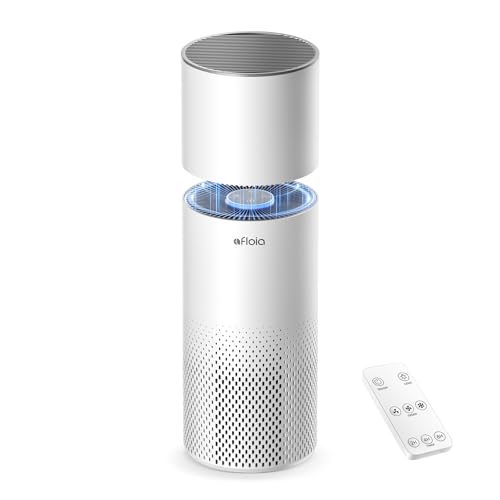
Afloia Humidifier and Air Purifier in One, Air Purifier and Evaporative Humidifier Combo for Home, 24dB Quiet Air Cleaner Remove Pets Dust Dander Hair Allergy Pollen Smoke Smell for Room
2-in-1 Air Purifier & Humidifier: Kilo Pro - Simultaneously purifies and humidifies air. Covers up to 1076 ft²...
As an affiliate, we earn on qualifying purchases.
How Does Humidity Affect Your Comfort and Health?
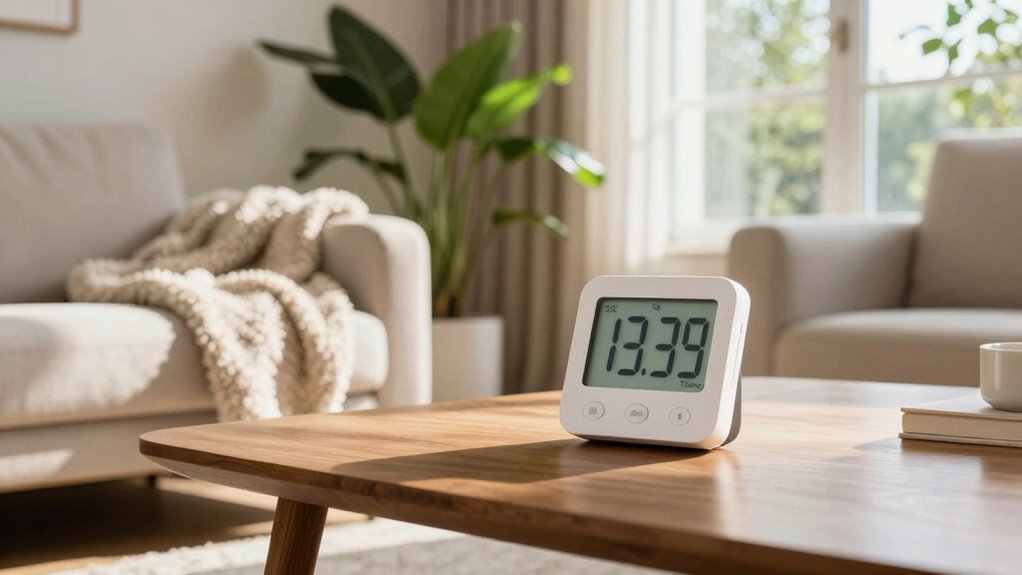
When humidity levels are off, your respiratory comfort can suffer, making it harder to breathe easily. Too much moisture increases the risk of mold and mildew, which can worsen allergies and irritate your eyes and skin. Maintaining the right humidity helps you stay healthier and more comfortable at home. Proper humidity levels also support optimal air quality, reducing airborne pollutants and allergens that can affect your health. Using smart‑home integrations to monitor and adjust humidity can help maintain these ideal conditions effortlessly. Additionally, selecting reliable backup power solutions ensures continuous operation of humidifiers or dehumidifiers during power outages, maintaining your home’s ideal humidity levels without interruption. Incorporating sensor-based controls can further optimize humidity levels by automatically responding to environmental changes, enhancing your comfort and health. Regularly checking and calibrating your hygrometer can help you keep humidity levels within the recommended range for optimal health benefits.
Respiratory Comfort Levels
Humidity levels directly impact your respiratory comfort and health. When humidity is too low, dry air can irritate your respiratory passages, causing coughing, sore throat, and dry nasal passages. Conversely, excessive humidity can lead to stuffiness and difficulty breathing. Maintaining a balanced humidity level improves air quality, making it easier to breathe comfortably. Indoor plants can help regulate humidity naturally, releasing moisture into the air and contributing to a healthier environment. Proper humidity also reduces airborne irritants like dust and allergens, which can aggravate asthma or allergies. Achieving and maintaining the optimal humidity range supports clearer airways, reduces respiratory discomfort, and promotes overall well-being. Additionally, using humidifiers can help maintain consistent humidity levels, especially during dry seasons. By hitting the right humidity sweet spot, you support clearer airways, reduce respiratory discomfort, and promote overall well-being. Keeping your home’s humidity in the ideal range ensures a healthier, more comfortable breathing environment. Proper humidity control can also prevent mold growth and other moisture-related issues that compromise indoor air quality.
Mold and Mildew Risks
Excess moisture in your home creates the perfect environment for mold and mildew to thrive, posing serious health risks. When humidity levels are too high, mold prevention becomes more difficult, increasing the chances of spores growing on walls, ceilings, and other surfaces. Mildew control is essential to avoid musty odors and potential respiratory problems. To protect your health, you should keep humidity between 30-50%, which makes it harder for mold and mildew to flourish. Use dehumidifiers and ensure proper ventilation in damp areas like bathrooms and basements. Regularly clean surfaces prone to moisture buildup, using mold-inhibiting solutions. Proper air quality management further reduces the risk of spores spreading throughout your home. Additionally, maintaining optimal humidity levels can help prevent structural damage caused by moisture infiltration. Managing humidity effectively involves understanding indoor environmental conditions and how they influence mold growth. By managing humidity effectively, you considerably reduce the risk of mold and mildew growth, promoting a healthier, safer living environment. Moreover, being aware of humidity control strategies can enhance your ability to maintain the ideal indoor climate. Ensuring consistent humidity levels throughout your home is also key to long-term mold prevention.
Allergies and Irritants
If your home’s humidity levels are too high, you may notice increased allergy symptoms and irritations. Elevated humidity encourages the growth of airborne irritants like mold spores and dust mites, which are common allergy triggers. These irritants thrive in damp environments, making breathing uncomfortable and worsening allergy symptoms. High humidity also keeps dust and pet dander suspended in the air longer, increasing exposure. To improve comfort and health, keep humidity levels in the *ideal* range—around 40-50%. This helps reduce airborne irritants, making allergy triggers less prevalent and easier to manage. Proper humidity control not only minimizes allergy symptoms but also creates a healthier, more comfortable living space.

Air Purifier and Humidifier Combo All in One for Bedroom - Quiet 2 in 1 Smart Air Humidifier and Purifier for Home - Use Year-round for up to 1100 sq ft - InvisiClean AquaNova
𝐃𝐔𝐀𝐋 𝐅𝐔𝐍𝐂𝐓𝐈𝐎𝐍𝐀𝐋𝐈𝐓𝐘: Combines air purifier and humidifier into one space-saving unit. Innovative design ensures no loss in air...
As an affiliate, we earn on qualifying purchases.
What Are the Signs Your Home Is Too Humid or Too Dry?

If your home feels damp or mold starts appearing, it’s a clear sign the humidity is too high. Persistent dust or allergies can also indicate inadequate humidity levels, making your indoor air uncomfortable. Pay attention to these clues, as they help you identify whether your home is too humid or dry. Maintaining proper sleep environment conditions is essential for overall health and sleep quality. Additionally, fluctuating humidity levels can impact indoor air quality, potentially leading to respiratory issues. Proper humidity levels also influence piercing healing, as excessively dry or moist environments can cause irritation or infections around piercings. Being aware of humidity fluctuations and how they relate to whole-house water filtration systems helps in maintaining a healthier indoor environment and preventing related problems.
Visible Mold Growth
Visible mold growth is a clear sign that your home’s humidity levels are off balance. When mold appears, it indicates excess moisture, which can result from high humidity. Mold prevention starts with proper humidity control, keeping levels within the ideal range. If you notice mold spots on walls, ceilings, or other surfaces, it’s a sign your environment is too damp. Addressing this early helps prevent health issues and structural damage. Use dehumidifiers, improve ventilation, and fix leaks to regulate moisture. Regularly inspecting damp areas and cleaning mold promptly reduces risks. Maintaining proper humidity not only helps prevent mold growth but also promotes a healthier, more comfortable home environment. Staying vigilant about visible mold is a crucial step in effective humidity management. Understanding the “why” behind food and proper environment control can significantly impact your home’s overall health. Additionally, monitoring air quality can provide early warnings of humidity imbalances before mold becomes visible. Implementing humidity monitoring tools can help you keep levels within the safe range and prevent future problems.
Persistent Dust or Allergies
Persistent dust and allergies can be clear signs that your home’s humidity levels are out of balance. When the air is too moist, dust mites thrive, aggravating allergy symptoms and making breathing difficult. Conversely, overly dry air can cause dust to become airborne more easily, triggering sneezing and irritation. Using air purifiers can help reduce airborne allergens, but managing humidity is key to controlling dust mite populations and allergy triggers. If you notice a constant need to clear your throat, itchy eyes, or persistent sneezing, it may indicate your home’s humidity is either too high or too low. Keeping humidity levels within the ideal range can minimize dust buildup and allergy flare-ups, creating a healthier, more comfortable environment.
Uncomfortable Indoor Climate
When humidity levels are off balance, your home’s indoor climate can quickly become uncomfortable, affecting your daily life. You might notice your skin feels dry or clammy, or that your air quality seems poorer than usual. Signs of too much or too little humidity include:
- Excess condensation on windows and walls, leading to mold growth
- Dry, itchy skin and irritated eyes
- Indoor plants struggling to thrive or wilting easily
These issues can make your environment feel stuffy or overly dry, impacting comfort and air quality. When humidity isn’t in the ideal range, your indoor plants may suffer, and your air quality can decline, making breathing feel more difficult. Recognizing these signs helps you adjust humidity levels for a healthier, more comfortable home.

4 in 1 Humidifier and Air Purifier in One Large Room – HEPA Air Purifier and Humidifier Combo with UV Light, Quiet for Bedroom and Living Room – Whole House Large Room Cleaner
4-in-1 Combo: Air humidifier and purifier all in one with true HEPA air filter and UV-C light. This...
As an affiliate, we earn on qualifying purchases.
How Can You Measure Your Home’s Humidity Levels?
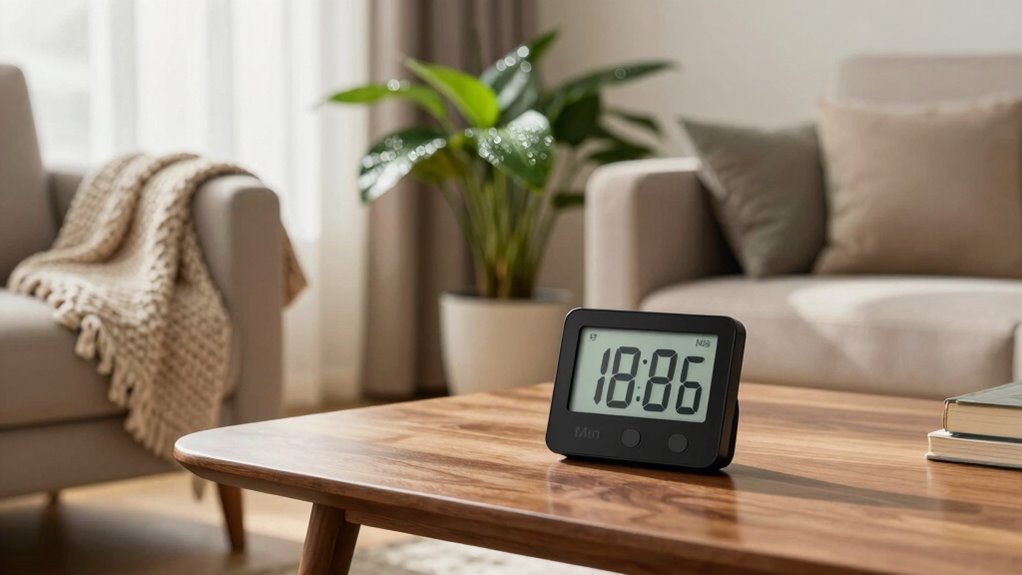
Wondering how to determine if your home’s humidity levels are just right? The key is using a reliable hygrometer. To get accurate readings, make sure proper humidity sensor placement—avoid direct sunlight or near heat sources. Regular hygrometer calibration is essential for precision; follow the manufacturer’s instructions to keep it accurate. Visualize your space with this simple table:
| Location | Ideal Humidity Level | Notes |
|---|---|---|
| Living room | 40-50% | Keep away from drafts |
| Bedroom | 40-50% | Avoid placing on windows |
| Near heating vents | 40-50% | Check calibration regularly |
| Basement | 40-50% | Use a digital hygrometer |
How to Increase Humidity When Your Home Is Too Dry
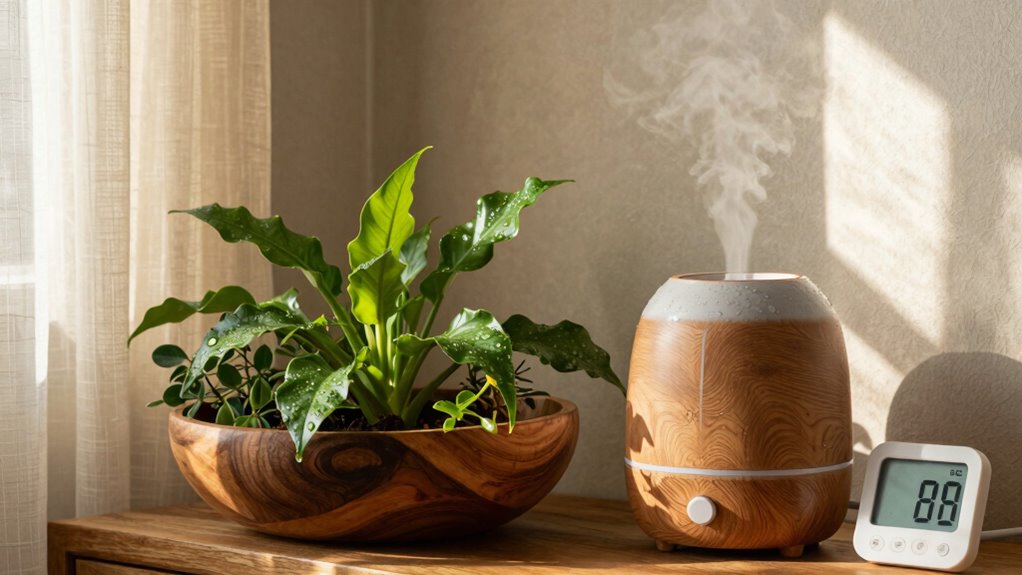
If your home’s air feels dry and uncomfortable, increasing humidity can quickly improve indoor comfort. One simple way is to incorporate indoor plants, which naturally boost plant humidity through transpiration, creating a more humid environment. You can also use a humidifier to add moisture directly to the air, ensuring a consistent level of humidity. Placing bowls of water near heat sources allows evaporation to increase indoor moisture levels. Additionally, grouping indoor plants together not only enhances plant humidity but also creates a lush, inviting space. These methods work together to raise humidity safely and efficiently, helping you achieve that perfect indoor balance. Remember, maintaining appropriate humidity benefits both your comfort and your indoor plants’ health.
How to Reduce Excess Moisture in Your Home
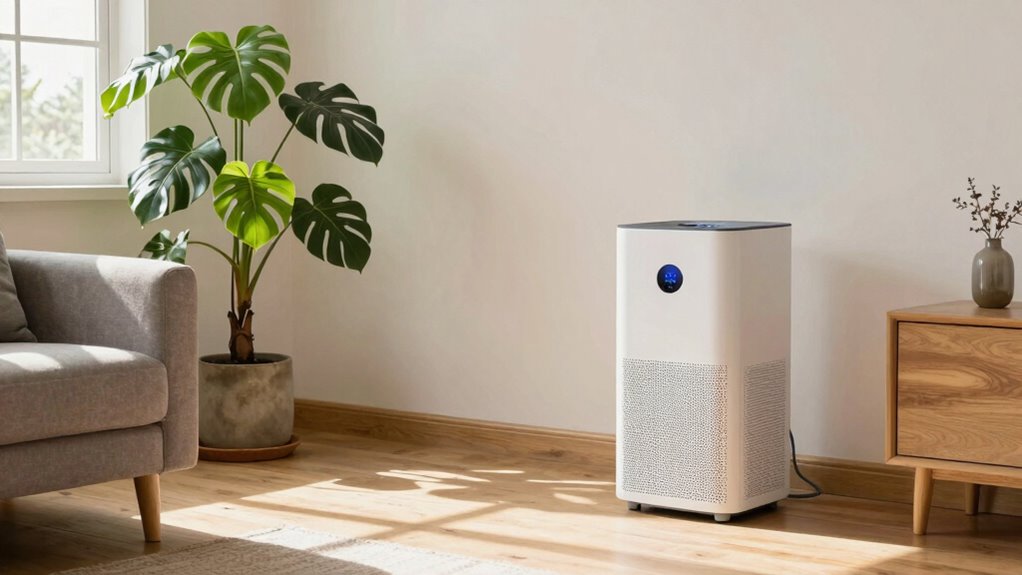
While adding moisture can improve indoor comfort, excessive humidity can cause problems like mold growth and structural damage. To reduce excess moisture, start by increasing ventilation—use exhaust fans in kitchens and bathrooms. Avoid overwatering indoor plants, as they can release excess humidity; stick to proper watering schedules. Be aware of humidity myths, such as the idea that indoor plants always increase moisture—many plants don’t considerably raise humidity levels. Use a dehumidifier if needed, especially in damp areas like basements. Keep air circulating with fans, and fix leaks promptly. Regularly monitor humidity levels with a hygrometer to ensure you stay within the ideal range. These steps will help you maintain a balanced humidity level, protecting your home and health.
Which Humidifier or Dehumidifier Is Right for You?
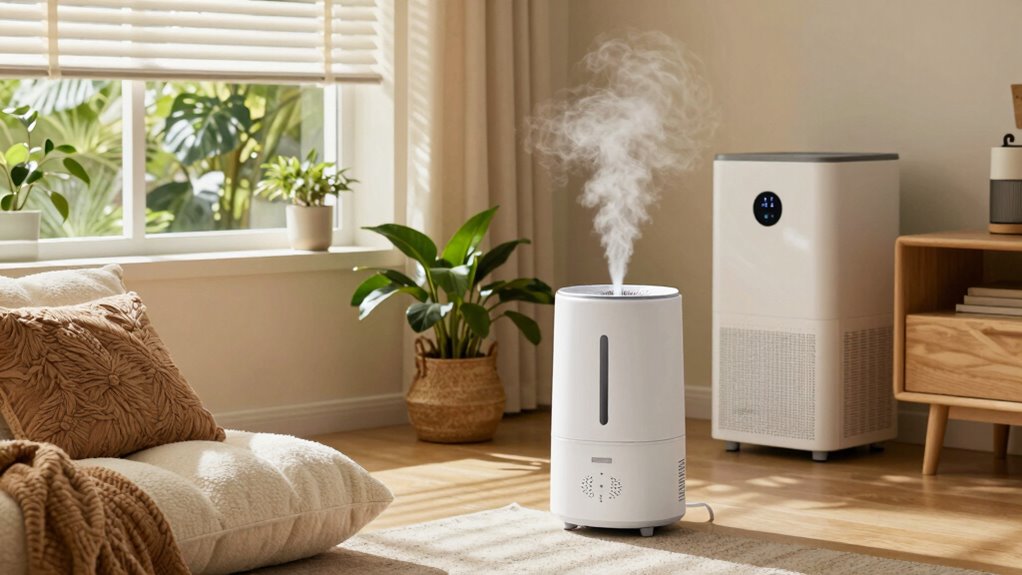
Choosing the right humidifier or dehumidifier depends on your home’s specific needs and the areas you want to target. If you need added moisture, consider different humidifier types like ultrasonic, evaporative, or steam models, each suited to varying room sizes and airflow needs. For reducing excess moisture, look at dehumidifier features such as adjustable humidity settings, tank capacity, and fan speed.
- A small ultrasonic humidifier works well in bedrooms or offices.
- An evaporative humidifier is ideal for larger spaces with moderate humidity needs.
- A dehumidifier with a built-in hygrometer helps maintain consistent moisture levels in basements or damp areas.
Choosing the right device guarantees your home stays comfortable without over- or under-humidifying.
How to Maintain Your Humidity Devices for Consistent Comfort
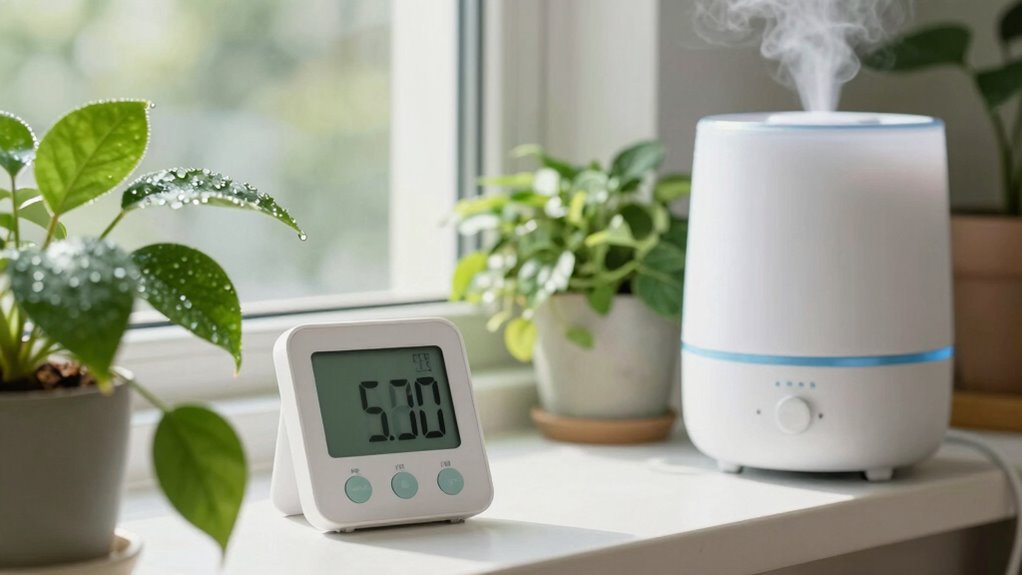
Regular maintenance is vital to keep your humidity devices working effectively and guarantee your home stays comfortable. Proper care ensures consistent humidity regulation by preventing buildup and malfunctions. Start by regularly cleaning your device according to the manufacturer’s instructions to remove dust and mineral deposits. Calibrating your device periodically is essential for accurate humidity control; use a reliable hygrometer to check its readings and adjust settings as needed. Keep an eye on water levels in humidifiers and empty tanks in dehumidifiers to prevent mold growth. Inspect filters and replace them when dirty. Consistent maintenance helps your device perform at its best, maintaining the ideal humidity level and providing you with reliable comfort year-round.
How to Adjust Humidity Levels Seasonally Throughout the Year
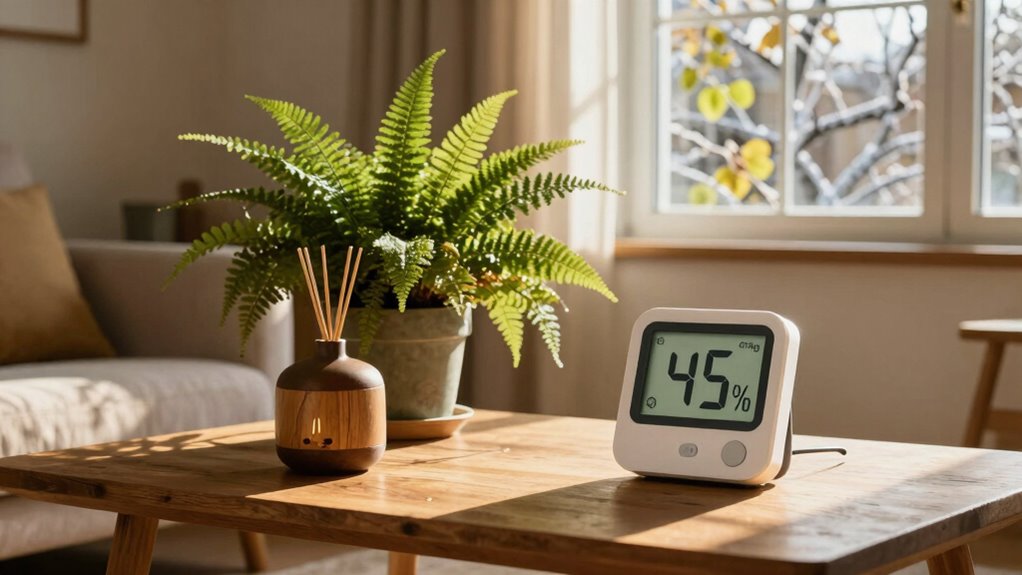
Adjusting your home’s humidity levels throughout the year guarantees you stay comfortable no matter the season. Seasonal humidity adjustments help you maintain ideal moisture levels for year-round moisture control. As outdoor conditions change, you’ll need to tweak your humidifier or dehumidifier settings accordingly. During winter, increase humidity to prevent dryness and static; in summer, lower it to combat humidity buildup. Keep an eye on your indoor environment with a hygrometer to guide these adjustments.
Consider these seasonal factors:
- Cold winter air often dries out your home, so use a humidifier to boost moisture.
- Hot, humid summers may require dehumidifiers to prevent mold and discomfort.
- Spring and fall might need moderate adjustments as outdoor humidity fluctuates.
Common Mistakes to Avoid When Managing Home Humidity
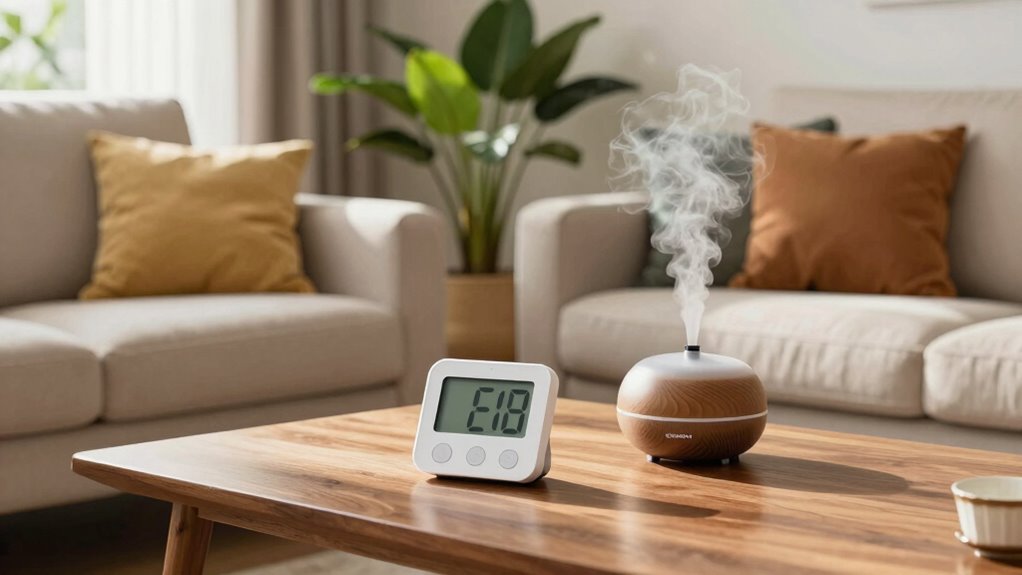
Many homeowners make the mistake of ignoring humidity levels, which can lead to mold or dryness. Overusing dehumidifiers without monitoring the air can make your home uncomfortable and waste energy. Neglecting proper ventilation also traps moisture or stale air, worsening indoor air quality.
Ignoring Humidity Levels
Ignoring humidity levels can lead to uncomfortable living conditions and long-term damage to your home. Many people fall for humidity myths, believing that fluctuations are harmless or that natural ventilation is enough. Without using reliable humidity technology, you might not realize when levels are off. This oversight can cause mold growth, warped wood, or dust mite proliferation.
- You might rely on outdated advice, ignoring the importance of precise measurements.
- You could overestimate your home’s natural ability to regulate humidity.
- You risk neglecting seasonal changes that require adjustments in your humidity management approach.
Overusing Dehumidifiers
Overusing dehumidifiers can backfire by making your home uncomfortably dry and increasing energy bills. When you rely too heavily on them, you risk causing humidity level fluctuations that disrupt your ideal indoor environment. Overusing dehumidifiers doesn’t just waste energy; it can also lead to dry skin, sore throats, and static electricity. To maintain your home’s perfect humidity, monitor levels regularly and use dehumidifiers only when necessary. Set the device to a comfortable humidity range—around 40-50%—and turn it off once you reach that point. Avoid running your dehumidifier continuously, as this can strip too much moisture from the air. Proper management ensures a healthy, comfortable space without the drawbacks of overcorrection.
Neglecting Ventilation
Neglecting proper ventilation can undermine your efforts to maintain ideal humidity levels. Without fresh airflow, indoor air quality drops, trapping moisture and pollutants that can lead to mold growth or stuffy environments. Poor ventilation also increases noise pollution, making your space less comfortable and harder to relax in.
Imagine stuffy rooms with stale air, where humidity worsens, and pollutants linger. Your windows stay closed, trapping moisture and reducing air exchange. Fans or exhaust vents aren’t used, allowing humidity to build up unnoticed. This environment can cause allergic reactions, respiratory issues, and decreased comfort. Proper ventilation helps balance moisture, improves air quality, and reduces noise pollution, creating a healthier, more comfortable home.
Frequently Asked Questions
How Does Indoor Humidity Impact Allergy and Asthma Symptoms?
Indoor humidity levels directly affect your allergy and asthma symptoms because too high or low humidity can worsen airborne allergens and irritate your respiratory health. When humidity is too high, mold and dust mites thrive, triggering symptoms. If it’s too low, dry air irritates your airways. Maintaining a balanced humidity helps reduce airborne allergens and supports better respiratory health, making it easier to breathe and minimizing allergy flare-ups.
Can Excessive Humidity Promote Mold Growth in My Home?
Excessive humidity can definitely promote mold growth in your home. Mold thrives in moist environments, so to prevent it, you need to focus on moisture control. Use dehumidifiers, fix leaks promptly, and ensure proper ventilation, especially in bathrooms and kitchens. Regular mold prevention practices keep humidity levels in check, reducing the risk of mold spreading and protecting your home’s air quality. Stay vigilant to keep your space safe and healthy.
What Are the Energy Costs Associated With Humidifiers and Dehumidifiers?
You’re likely curious about the energy costs of humidifiers and dehumidifiers. They do add to your energy consumption, but choosing energy-efficient models can keep costs in check. While they do increase your utility bills, using them wisely balances comfort and cost efficiency. Think of it as a small price to pay for a healthier, more comfortable home. Regular maintenance also guarantees they run smoothly without draining your wallet.
How Do Outdoor Weather Conditions Influence Indoor Humidity Levels?
Outdoor weather conditions directly impact your indoor humidity levels. When it’s humid outside, your home naturally gains moisture, so you might need ventilation strategies like exhaust fans or dehumidifiers to keep humidity in check. Conversely, during dry, cold weather, opening windows can introduce cleaner outdoor air and reduce indoor dryness. Always consider outdoor air quality before ventilating, as pollutants can compromise your home’s air and humidity balance.
Are There Eco-Friendly Options for Managing Home Humidity?
Managing home humidity eco-friendly is like finding a balance on a tightrope. You can use natural dehumidifiers like activated charcoal or silica gel, which absorb excess moisture without energy. Eco-friendly humidifiers, such as ultrasonic or evaporative models, use less power and avoid harmful chemicals. These options help you maintain a healthy indoor environment while reducing your carbon footprint, making your home both comfortable and sustainable.
Conclusion
Finding your home’s perfect humidity isn’t a walk in the park, but with the right tools and knowledge, you’ll be able to keep things just right. Pay attention to the signs, measure regularly, and adjust seasonally. Remember, it’s better to nip problems in the bud than let them fester. Keep your home comfortable and healthy—you’re the captain of your own ship, steering clear of chaos and ensuring a cozy haven year-round.