
To create a low-stimulation evening environment, start by dimming your lights and using soft, warm lamps to set a calming mood. Keep noise levels low, perhaps with gentle background sounds like music or nature recordings. Avoid screens and stimulating activities, opting instead for relaxing routines like journaling or gentle stretches. Make sure your space is tidy, with soothing scents and comfortable textures. Managing temperature and airflow also helps, and you’ll discover even more tips to enhance your relaxation efforts.

Get furniture and decor delivered free with Prime
- Fast, free delivery on millions of items
- Prime Video, Amazon Music and more included
- Member-only deals all year
Key Takeaways
- Use dim, warm lighting and blackout curtains to reduce visual stimulation and promote relaxation.
- Keep noise levels low by minimizing background sounds and using white noise or nature recordings.
- Limit screen time before bed to avoid blue light interference with melatonin production.
- Incorporate calming scents like lavender or chamomile to create a soothing atmosphere.
- Keep the bedroom tidy, clutter-free, and filled with soft textures to reduce subconscious stress.
Creating a low-stimulation evening environment can markedly improve your ability to relax and prepare for restful sleep. If you often find yourself overwhelmed by sensory overload, establishing calm evening routines becomes essential. Sensory overload happens when your brain receives too much information from sights, sounds, or physical sensations, making it hard to unwind. By intentionally reducing these stimuli, you give your nervous system a chance to settle down, making sleep more accessible.
Start by simplifying your surroundings. Dim the lights as the evening progresses; bright lighting can keep your brain alert when it should be winding down. Use warm, soft bulbs or lamps instead of harsh overhead lighting. Keep noise levels low, and consider using background sounds like gentle music, white noise, or nature recordings. These help mask sudden or loud noises that could jolt you awake or increase your sensory input.
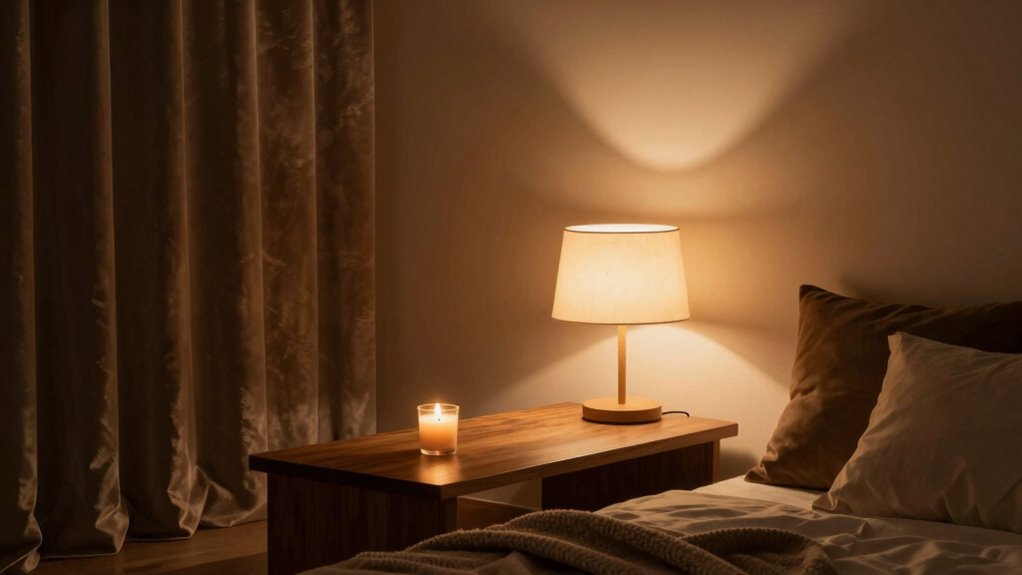
Dim lights and use soft, warm lamps to create a calming, sensory-reducing evening environment.
Your evening routines play an essential role in signaling to your body that it’s time to relax. Create a consistent sequence of calming activities that you follow each night. For instance, you might start with a warm bath or shower, which not only relaxes your muscles but also helps lower your core body temperature—an important step in preparing for sleep. Avoid stimulating activities such as vigorous exercise or intense mental work close to bedtime, as they can increase alertness and sensory overload.
Limit screen time well before bed. The blue light emitted by phones, tablets, and computers can interfere with your body’s production of melatonin, the hormone that regulates sleep. Instead, opt for quiet activities like reading a physical book, journaling, or practicing gentle stretches. These activities help you shift smoothly from wakefulness to rest without bombarding your senses.
Creating a peaceful environment also involves managing your physical space. Keep your bedroom tidy and free of clutter, which can subconsciously stress you out. Use calming scents such as lavender or chamomile through diffusers or sprays, as these can promote relaxation. Soft textures in your bedding and surroundings can also add to the sense of calm, making it easier to settle in. Incorporating sensory reduction techniques can further enhance your ability to unwind and improve sleep quality. Additionally, incorporating light control methods can help reinforce your body’s natural sleep cues, supporting a more restful night. Engaging in mindfulness practices can also assist in calming your mind and reducing sensory input before bedtime. Ensuring your environment minimizes sensory overload can make a significant difference in how quickly and easily you transition into sleep. Paying attention to environmental factors such as temperature and airflow can also contribute to an optimal sleep setting, further reducing potential disturbances.
As an affiliate, we earn on qualifying purchases.
Frequently Asked Questions
Can a Low-Stimulation Environment Improve Sleep Quality?
Yes, a low-stimulation environment can improve your sleep quality. It enhances your sleep hygiene by reducing distractions and calming your mind before bed. Incorporate calming bedtime routines, like dimming lights or reading, to signal your body it’s time to rest. This peaceful setting helps you fall asleep faster and stay asleep longer, making your nights more restful and your mornings more refreshed.
What Are Common Mistakes to Avoid When Creating a Calming Evening Space?
Avoid common mistakes like neglecting lighting adjustments, which can make your space too bright or harsh. Instead, opt for soft, warm lighting to promote relaxation. Also, don’t overlook clutter reduction—keep your environment tidy to minimize overstimulation and create a peaceful atmosphere. Rushing these steps can hinder your efforts to wind down. Focus on gentle lighting and a clutter-free space to craft a calming evening environment that promotes better sleep.
How Do I Personalize a Low-Stimulation Environment for My Needs?
You can personalize your low-stimulation environment by incorporating sensory preferences that soothe you, like soft lighting or calming scents. Use personalization techniques such as adjusting noise levels with headphones or choosing tactile objects that feel comforting. Experiment with gentle textures, favorite calming colors, or familiar sounds to make the space uniquely yours. Regularly refine these elements based on what helps you unwind best, ensuring your evening environment truly supports your relaxation needs.
Are There Specific Scents That Promote Relaxation in the Evening?
Yes, specific scents can promote relaxation in the evening. You can try aromatherapy blends with calming scents like lavender, chamomile, or vanilla. These fragrances help reduce stress and prepare your mind for rest. Use a diffuser or apply essential oils to your pillow or bath to create a soothing atmosphere. Incorporating these calming scents into your evening routine makes it easier to unwind and enjoy a peaceful, low-stimulation environment.
How Long Should I Spend in a Low-Stimulation Environment Before Bed?
You should spend about 30 to 60 minutes in a low-stimulation environment before bed, allowing your mind to settle like a calm lake. During this time, stick to your bedtime routines and keep ambient lighting dim to signal your body it’s time to wind down. This peaceful window helps your body prepare for restful sleep, making it easier to drift off naturally and wake up refreshed.
Conclusion
As you dim the lights and silence your devices, you’re planting seeds of calm in your evening garden. Each gentle step you take toward simplicity is like closing the petals of a vibrant flower, inviting serenity to bloom. This quiet space becomes your sanctuary, a lighthouse guiding you safely through the night’s gentle waves. Embrace this peaceful environment as your trusted anchor, helping you drift into restful sleep, ready to greet tomorrow’s new dawn with clarity and calm.
Halloween Picks
halloween
As an affiliate, we earn on qualifying purchases.