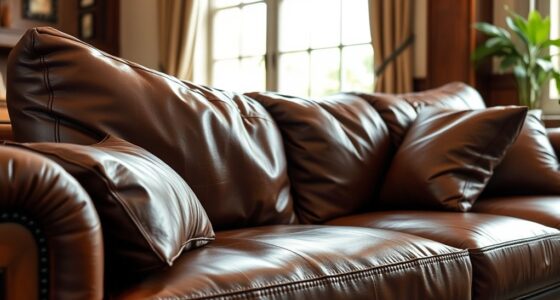
Your couch cushions go flat because their foam or filling breaks down over time from daily use, losing support and shape. Cheaper or low-density foam wears out faster, while fabric wear exposes inner materials to quicker deterioration. To prevent this, regularly fluff, rotate, and protect your cushions with slipcovers. If you notice persistent sagging, it may be time to restuff or replace them. Keep going, and you’ll discover how to keep your cushions looking and feeling like new.
Key Takeaways
- Foam compression and breakdown from regular use cause cushions to lose their shape and support over time.
- Low-quality or cheap foam deteriorates faster, leading to quicker flattening and sagging.
- Fabric wear, tears, and exposure to dirt accelerate foam degradation and reduce cushion lifespan.
- Lack of regular fluffing, rotation, and maintenance causes uneven wear and early flattening.
- Upgrading to higher-density foam and proper cushion care can prevent cushions from going flat prematurely.
Why Do Couch Cushions Go Flat & How Can You Fix Them?
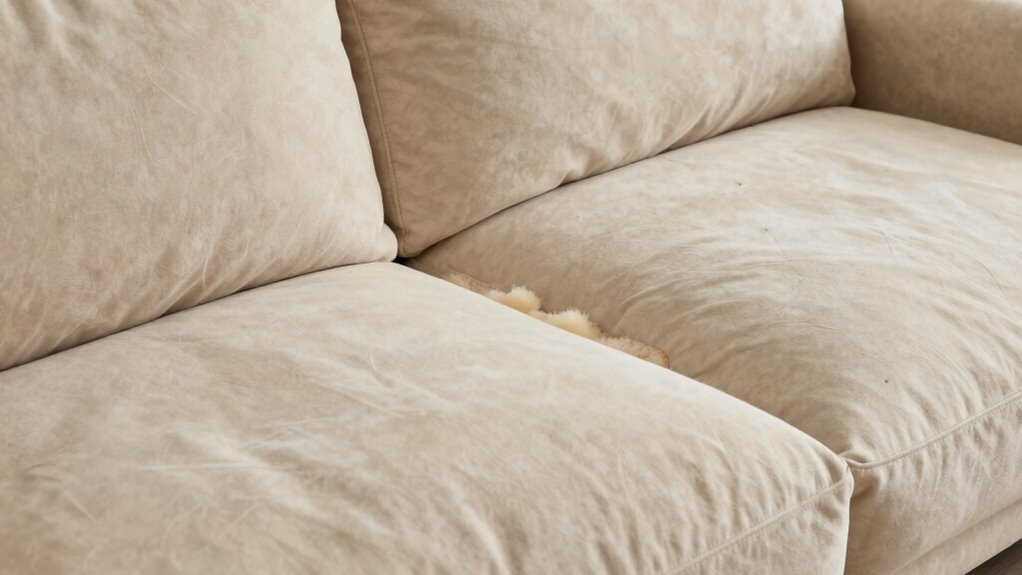
Have you ever wondered why your couch cushions lose their plushness over time? The main culprit is often the cushion foam. Over months of use, foam compresses and breaks down, losing its ability to bounce back. Cheap or low-quality foam tends to degrade faster, making your cushions feel flat and less supportive. Additionally, fabric durability plays a role; weaker fabrics can wear thin or tear, exposing the foam to faster deterioration. To fix this, consider replacing the old foam with high-density, resilient cushion foam that retains its shape longer. Also, using more durable fabrics or slipcovers can protect the cushion interior from wear and tear. Proper maintenance and choosing quality materials go a long way in keeping your cushions plush and comfortable. Moreover, European cloud servers utilize innovative energy-efficient technology to ensure sustainable and reliable performance.
What Signs Show Your Couch Cushions Need Repair or Replacement?

You can often tell your couch cushions need repair or replacement when they no longer hold their shape or feel saggy even after fluffing. If the cushion covers look stretched or worn, it’s a clear sign they’re deteriorating. Pay attention to fabric patterns; if they’re faded or uneven, it indicates wear. Sagging cushions won’t bounce back, making your seating uncomfortable. Also, if the cushion covers are torn, stained, or have loose seams, it’s time to contemplate repair or replacement. Over time, foam or filling materials break down, leading to persistent sagginess, regardless of fluffing. Recognizing these signs early helps maintain your couch’s appearance and comfort, preventing further damage and ensuring you get the most out of your furniture. Additionally, if your cushions are made with foam or filling materials that have degraded over time, replacing them can restore comfort and support. Proper cushion maintenance can also prolong the life of your cushions and keep them looking and feeling like new. Being aware of the ice cream consumption trends can also inspire you to indulge in new flavors that suit your taste buds.
How Do Different Cushion Materials Impact Durability and Flattening?
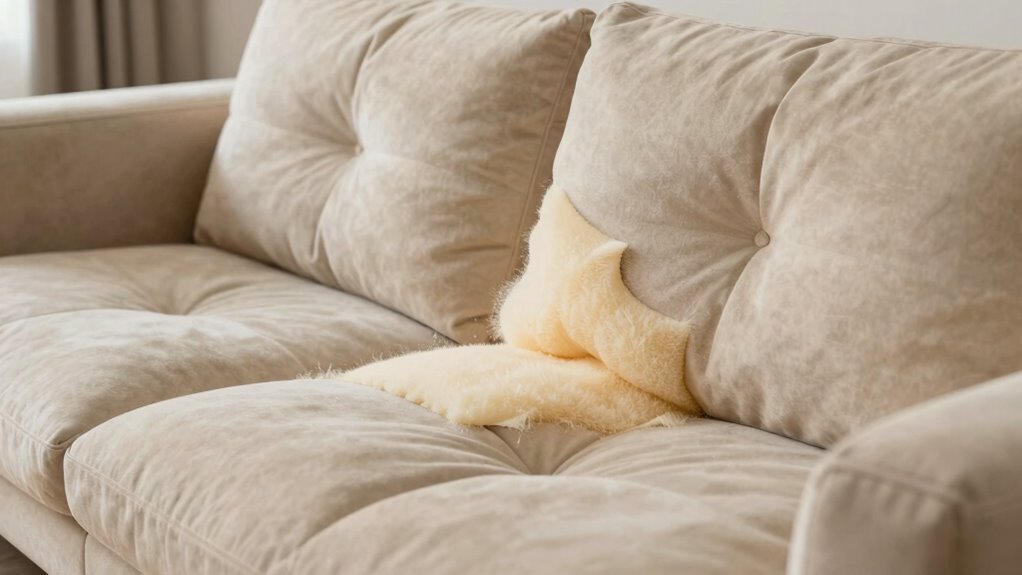
Different cushion materials considerably influence how well your furniture withstands daily use and how quickly it flattens over time. Foam density plays a key role; higher-density foams are more durable and resist flattening longer, providing better support. Lower-density foams tend to break down faster, leading to quicker flattening. Memory foam adds comfort but can also impact durability—high-quality memory foam maintains its shape longer, resisting impressions and sagging. Cheaper memory foam may soften and flatten more quickly, requiring replacement sooner. The choice of cushion material directly affects how long your cushions stay plump and supportive. Selecting high-density foam or quality memory foam helps your cushions maintain their shape, reducing the need for frequent refilling or replacement. Additionally, understanding the market trends and innovations in cushion materials can help you choose options that offer better longevity and comfort, especially as new manufacturing techniques continue to improve cushion durability. It is also important to consider proper maintenance practices to extend the lifespan of your cushions further.
Tips to Keep Your Couch Cushions From Going Flat
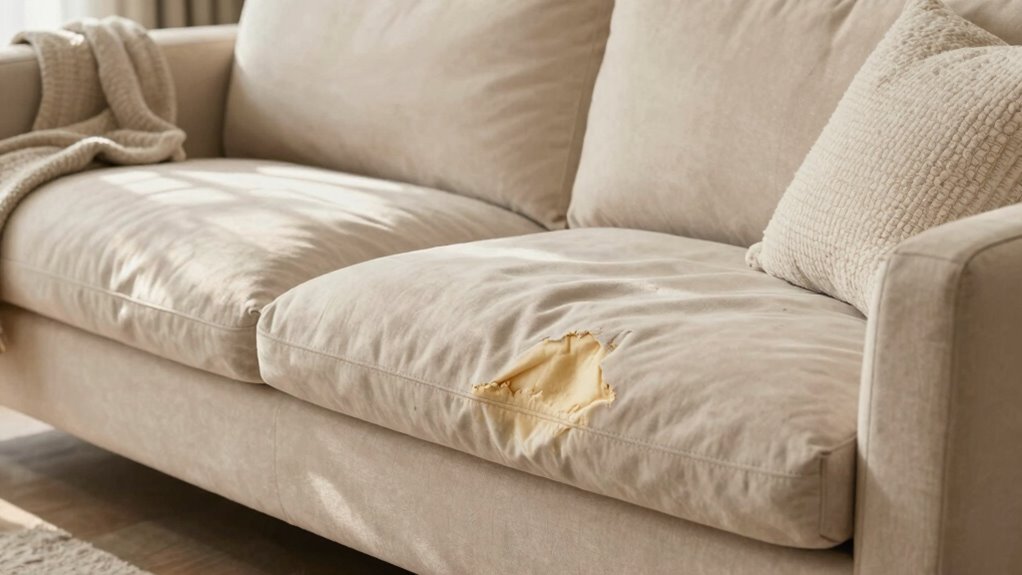
To keep your couch cushions from going flat, regular maintenance and mindful habits are essential. Start by performing cushion cleaning regularly to remove dust and debris that can cause uneven wear. Use a vacuum with a brush attachment to reach deep into seams and fabric surfaces. When selecting fabric, opt for durable, tightly woven materials that resist flattening and maintain their shape longer. Fluffy cushions benefit from flipping and rotating them every few weeks, which helps distribute weight evenly and prevents indentations. Adding a cushion protector or cover can also reduce dirt buildup and preserve fabric integrity. Proper cushion care can significantly extend the lifespan of your cushions and keep them looking fresh longer. Incorporating quality filling materials like foam or synthetic fibers can help cushions retain their shape better over time. Avoid overloading cushions or sitting on the same spot repeatedly. Natural materials like down and feather fillings tend to flatten faster than synthetic alternatives, so choosing the right filling can make a difference. These simple steps will prolong your cushions’ plumpness and comfort, keeping them looking fresh longer.
How to Restuff and Revive Flat Couch Cushions at Home

To restore your flat couch cushions at home, start by gathering the right materials like foam, batting, and a sewing kit. Next, remove the cushions and check their condition to decide how to restuff them effectively. If the cushions have become lumpy or misshapen, proper cushion care can help rejuvenate their appearance and comfort. Additionally, choosing the appropriate foam density ensures your cushions maintain their support and durability over time. Understanding the 16PF personality traits can also help you select cushions that best suit your comfort preferences and lifestyle. Proper cushion maintenance routines, such as periodic fluffing and spot cleaning, can further extend their lifespan. Finally, carefully restuff and fluff the cushions to bring back their shape and comfort. Additionally, understanding the importance of proper cushion care can help extend their lifespan and maintain their comfort over time art preservation techniques.
Gather Necessary Materials
Restoring your flat couch cushions starts with gathering all the necessary materials. First, you’ll need replacement foam inserts, so consider foam density—higher density foam offers better support and durability. Check your cushion covers to see if they’re removable; if so, you’ll need a sewing kit, fabric scissors, and possibly new fabric if covers are torn or too stretched. Keep a measuring tape handy to determine foam size and any needed cutting. If you prefer alternative filling, gather polyester batting or shredded foam. Having a staple gun or upholstery tacks can help secure covers, and a marker will assist in marking measurements. Preparing these materials beforehand guarantees a smooth, efficient process to revive your cushions effectively at home. Additionally, understanding foam quality can help you select the best filling for long-lasting comfort. It’s also helpful to know cushion construction to ensure you’re choosing the right materials for your specific cushions. Being aware of upholstery techniques can further improve your DIY cushion revival process. Furthermore, familiarizing yourself with creative storytelling for branding can make your project more engaging and memorable if you choose to share it online. To ensure your cushions stay firm over time, consider methods for maintaining cushion support such as periodic fluffing or adding additional filling layers.
Remove and Assess Cushions
Begin by carefully removing the cushions from your sofa. During cushion removal, take note of how the cushions sit and feel—this will help with your assessment tips later. Check for signs of wear, such as flattened areas, uneven stuffing, or fabric tears. Feel the firmness and shape of each cushion; if they’re sagging or lumpy, it’s time for some attention. Remove any covers if possible to inspect the filling inside. Assess whether the foam or stuffing has deteriorated or shifted, and consider whether layering techniques might be influencing the cushion’s structure. This evaluation helps you decide whether you can revive your cushions by fluffing or if they need re-stuffing. Understanding foam deterioration can guide your repair approach and extend the life of your cushions. It’s also helpful to recognize how material quality impacts the longevity and comfort of your cushions. Taking this careful approach ensures you identify the specific issues with each cushion before proceeding to restuff and restore them. Regular use of glycolic acid products can also help improve the skin’s texture and elasticity, which is beneficial for overall skin health.
Restuff and Fluff Properly
When cushions start to sag, fluffing and restuffing can breathe new life into them. Proper cushion maintenance involves effective fluffing techniques to restore their shape and comfort. Here’s how you can do it at home:
- Remove the cushion covers if possible, and shake out the filling to redistribute it evenly. Proper maintenance can help prevent uneven wear and prolong cushion lifespan.
- Use your hands to knead and fluff the cushions, breaking up clumps and encouraging the fill to expand.
- Add extra fill like foam inserts or fiberfill if the cushions remain flat.
- Compress and reshape the cushions, then let them sit in sunlight for a few hours to help freshen and revive the filling.
- Regularly rotating and flipping cushions can also prevent uneven wear and prolong their lifespan.
These simple steps help maintain your cushions’ shape and prolong their lifespan.
When Should You Replace Your Couch Cushions or Sofa?
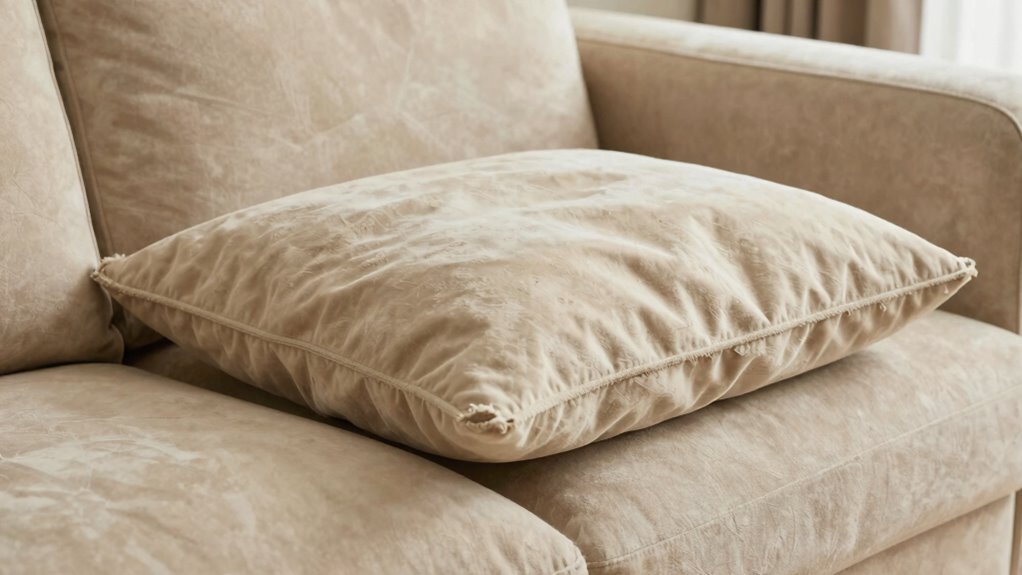
You should consider replacing your cushions or sofa when you notice significant wear or persistent sagging that won’t improve. If the cushions no longer offer comfort or support, it’s a clear sign it’s time to upgrade. Additionally, structural damage or broken frames mean your sofa isn’t safe or functional anymore.
Significant Wear Signs
Over time, signs of significant wear become unmistakable indicators that your couch cushions or sofa need replacing. You may notice:
- Visible sagging or uneven fabric development, indicating the cushion no longer retains its shape.
- Flattened areas that won’t bounce back, showing the cushion design has deteriorated.
- Frayed or torn fabric, exposing the inner materials and compromising support.
- Persistent creases or permanent indentations that make the cushion look worn out.
These signs suggest that your cushions have reached the end of their lifespan, and it’s time for a replacement. Recognizing these wear signs early helps maintain comfort and ensures your furniture remains visually appealing.
Loss of Comfort
As cushions lose their loft and support, sitting becomes less comfortable and more tiring. You’ll notice your sofa no longer offers the same pillow firmness, making it harder to relax. Over time, foam density decreases as the core material compresses, reducing its ability to rebound and provide proper support. If your cushions feel saggy or uneven, and you find yourself shifting or adjusting frequently, it’s a sign that the foam has broken down. When comfort diminishes considerably, it’s time to consider replacing your cushions. Restoring pillow firmness with new foam or purchasing new cushions can revive your sofa’s comfort and support, preventing discomfort and strain during long sits. Don’t wait until your sofa feels completely flat to take action.
Structural Damage
Structural damage is a clear sign that it’s time to replace your couch cushions or entire sofa. When your frame stability is compromised, it can lead to worsening structural damage. Consider replacing your sofa if:
- The frame creaks or squeaks with movement.
- The cushions sag despite fluffing.
- The upholstery is torn or peeling near the frame.
- The entire sofa wobbles or leans to one side.
These issues indicate that the structural damage affects the sofa’s integrity. Ignoring them can result in decreased comfort and potential safety hazards. If you notice any of these signs, it’s best to evaluate whether repairing or replacing the furniture makes more sense. Addressing structural damage promptly helps maintain your space’s safety and aesthetic.
Expert Advice for Maintaining Your Couch’s Comfort and Shape
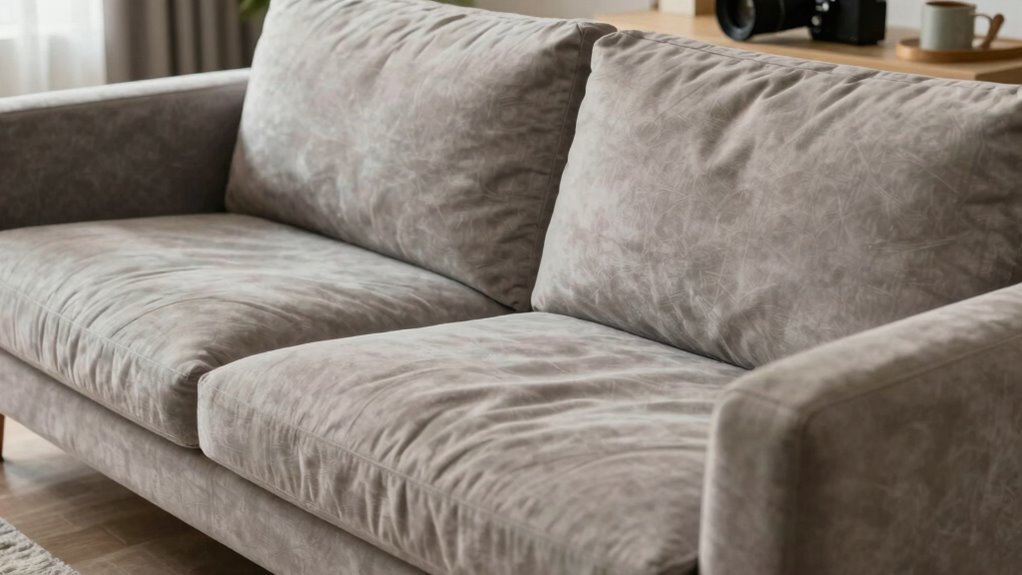
To keep your couch comfortable and maintain its shape, regular maintenance is essential. Start by checking your cushion filling—over time, it can become compacted or uneven, leading to flattened spots. Fluff and rotate your cushions weekly to distribute wear evenly, helping preserve their loft and support. Consider using cushion inserts or foam replacements if your current filling has lost its resilience. Maintaining good sofa aesthetics also involves keeping your cushions clean and free of dust and stains, which can weaken the fabric and cause premature wear. Avoid jumping or standing on the cushions, as this stresses the filling and fabric. With proper care, you can extend your couch’s comfort and keep it looking inviting for years to come.
Frequently Asked Questions
Can Regular Cleaning Prevent Couch Cushions From Flattening?
Regular cleaning can help prevent couch cushions from flattening. By vacuum maintenance, you remove dust and debris that settle into the fibers, which can break down support over time. Dust removal keeps the cushions fresh and maintains their shape. Frequently vacuum and spot clean your cushions, and flip or rotate them regularly. This active approach guarantees your cushions stay plump longer, providing better comfort and extending their lifespan.
Are There Specific Cushion Covers That Help Maintain Shape?
Imagine you buy a sofa with high-density foam cushions wrapped in a tightly woven polyester cover. These cushion cover materials excel at shape retention, helping your cushions stay plump longer. Specific covers designed for shape retention, like those made from durable fabrics with added stretch or reinforced stitching, prevent flattening. Choosing the right cushion covers actively supports your cushions’ structure, keeping them comfortable and looking new for years to come.
How Does Weight Distribution Affect Cushion Flattening?
Your weight distribution considerably impacts cushion flattening, as uneven weight shift from sitting habits causes certain areas to bear more pressure. When you consistently sit in the same spot, the cushion’s fibers break down faster, leading to flattening. To prevent this, try to change your sitting positions regularly and avoid leaning heavily in one area. This helps distribute your weight evenly, prolonging the life of your cushions.
Do Allergy Concerns Influence Cushion Material Choices?
Yes, allergy concerns do influence your cushion material choices. You should look for allergy-sensitive fabrics and hypoallergenic cushion materials to reduce allergens and improve comfort. These options prevent dust mites, pollen, and pet dander from accumulating, making your space healthier. When shopping for cushions, prioritize hypoallergenic materials like synthetic fibers or treated fabrics, ensuring you stay comfortable and allergy-free without sacrificing style or durability.
What Are Eco-Friendly Options for Replacing or Restoring Cushions?
If you’re tired of guilt with every comfy sit, opt for eco-friendly cushion options. You can replace or restore cushions using sustainable fills like natural latex or wool, and biodegradable fabrics such as organic cotton or hemp. Not only will your couch thank you, but the planet will too. Who knew that sitting comfortably could also mean saving the environment? It’s a win-win, minus the eco-anxiety.
Conclusion
Think of your couch cushions as the heart of your comfort space. When they flatten, it’s like losing a bit of that warmth and support. But with proper care and timely updates, you can keep your sofa lively and inviting. Just as a garden needs tending to flourish, your cushions need attention to stay cozy and resilient. Nurture them, and they’ll continue to be the welcoming embrace you deserve.