
To save money on your DIY project, follow a simple 5-step checklist. Start by planning carefully—break down tasks, estimate materials, and set clear goals to spot potential challenges early. Then, create a realistic budget and choose affordable, durable materials and tools. Develop a timeline to stay organized, track your expenses regularly, and avoid common mistakes like overspending or rushing. Mastering these steps helps keep costs low and your project on track; keep going to learn how!
Key Takeaways
- Plan your project thoroughly to identify tasks, resources, and potential challenges, reducing costly mistakes.
- Set a detailed budget, compare materials and tools, and track expenses to stay within financial limits.
- Source supplies from reputable vendors, compare prices, and look for discounts or bulk deals to save costs.
- Create a clear timeline with milestones, contingencies, and scheduled supply orders to stay organized and on schedule.
- Regularly monitor expenses and quality, double-check measurements, and incorporate safety precautions to prevent errors and delays.
As an affiliate, we earn on qualifying purchases.
Why Planning Your DIY Project Saves You Money
Planning your DIY project in advance can substantially reduce unexpected costs and prevent overspending. Effective project management involves breaking down tasks, estimating materials, and setting clear goals. By mapping out each step beforehand, you identify potential challenges and allocate resources efficiently. Conducting a risk assessment early on helps you spot possible issues, such as unforeseen material needs or delays, allowing you to create contingency plans. This proactive approach minimizes last-minute purchases and costly mistakes. When you plan thoroughly, you avoid impulsive decisions that can inflate expenses. Additionally, visualizing the project scope helps you better understand the overall process and necessary resources. Incorporating home cleaning considerations into your planning can also prevent future messes and additional expenses. Recognizing potential setbacks during the planning phase allows you to adjust your approach proactively. Understanding project timelines ensures you stay on schedule and avoid rushed, costly decisions. Being aware of personality traits that influence decision-making can also help you stay disciplined and focused during the planning process. Overall, careful planning ensures you stay on track financially, making your DIY project more affordable and enjoyable. Proper project management combined with risk assessment is your best strategy to save money and achieve successful results.
Set a Realistic Budget and Prioritize Your Expenses
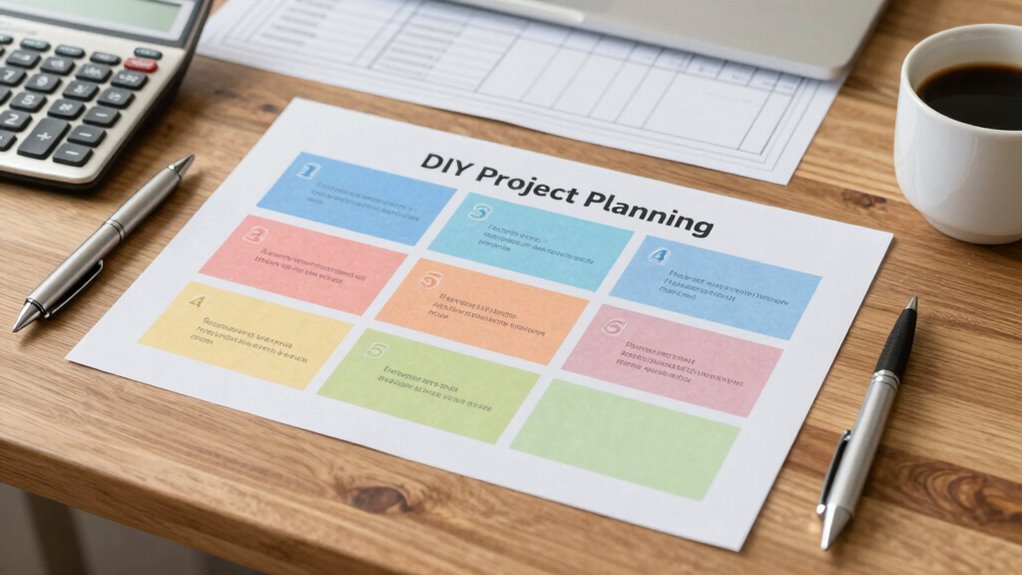
Once you’ve outlined the steps for your DIY project, the next step is to establish a realistic budget and prioritize your expenses. Start by comparing materials to find the best balance between quality and cost—this material comparison helps you avoid overspending. Next, list all essential items and rank them by importance, focusing on expense prioritization to ensure critical resources are covered first. Incorporating cost-effective options can significantly stretch your budget and provide better value. Here are four key tips: 1. Determine your total budget based on available funds. 2. Identify must-have materials versus optional extras. 3. Look for cost-effective alternatives without sacrificing quality. 4. Track your expenses regularly to stay within your budget.
Choose Affordable Materials and Tools for Your DIY Project
To keep your project within budget, explore affordable material options like repurposed or locally sourced supplies. Choosing cost-efficient tools can also save you money without sacrificing quality. Make certain to source quality supplies wisely to ensure durability and a professional finish. Additionally, researching cost-effective alternatives can help you identify budget-friendly options that meet your project needs. Incorporating visual and auditory cues can further enhance your project’s success and clarity. Considering the use of compact cleaning equipment can also optimize storage space and ease of use during your project. Furthermore, selecting natural or eco-friendly materials can contribute to sustainable and cost-effective backyard transformations.
Budget-Friendly Material Options
Are you looking to save money while still creating a quality DIY project? Choosing budget-friendly materials can make a big difference. Consider these options:
- Recycled materials like old pallets or scrap wood reduce costs and are eco-friendly.
- Reclaimed hardware and fixtures save money and add character.
- Budget-friendly alternatives like MDF or particleboard mimic expensive woods without the high price.
- Thrift stores or online marketplaces often offer affordable, gently used supplies.
- Incorporating electric bike conversion kits can be a cost-effective way to upgrade an existing bicycle for electric mobility, saving money compared to purchasing a new e-bike.
- Focusing on material durability ensures that your project remains cost-effective over time by reducing the need for frequent replacements. Additionally, selecting water-resistant and weatherproof materials can extend the lifespan of your project, minimizing maintenance costs in the long run. Using eco-friendly building materials can further reduce environmental impact and often provide long-term savings through energy efficiency.
- Considering versatile and inexpensive items allows for greater flexibility in your design choices while keeping costs low.
Using recycled materials and affordable alternatives helps you stay within your budget without sacrificing quality. Plus, it gives your project a unique touch. Focus on sourcing versatile, inexpensive items that fit your design. This approach keeps your project affordable and environmentally conscious, making your DIY journey both budget-friendly and satisfying.
Cost-Efficient Tool Choices
Choosing affordable tools doesn’t mean you have to compromise on quality or safety. When it comes to power tool selection, focus on versatile models that can handle multiple tasks, reducing the need for individual tools. Look for reliable brands offering durable options at lower prices, and don’t hesitate to negotiate with suppliers—many are open to discounts, especially if you buy in bulk or during sales. Consider purchasing refurbished tools, which often work like new but cost less. Comparing prices across different stores or online retailers helps you find the best deals. Remember, investing in affordable yet quality tools ensures your project stays on budget without sacrificing safety or efficiency. Effective supplier negotiations and smart power tool selection are key to saving money in your DIY planning. Cote de Pablo and Ziva David‘s portrayal on NCIS demonstrates how versatility and depth in characters can be achieved without extensive resources, much like selecting multi-purpose tools that serve multiple functions efficiently. Additionally, researching essential oils for diffusion can enhance your project’s ambiance and overall success, emphasizing the importance of quality in every aspect of your DIY efforts. Developing a thorough understanding of quality assurance practices can also help you identify reliable tools and materials, reducing the risk of costly mistakes. Incorporating proper piercing care and hygiene practices into your routine can prevent costly infections and complications, helping to maintain the integrity of your work and save money on medical expenses. Being aware of informal language can also help you communicate more effectively during collaborative projects, avoiding misunderstandings and ensuring smoother teamwork.
Sourcing Quality Supplies
Ever wonder how to get quality supplies without breaking your budget? The key is smart supplier selection and prioritizing quality assurance. First, research local stores and online vendors for reviews and reputation. Second, compare prices and check for discounts or bulk deals to save money. Third, verify the supplier’s quality assurance policies—look for guarantees or return options to ensure durability. Fourth, ask for recommendations from fellow DIYers or community groups to find trusted sources. Additionally, consulting digital resources like supplier apps or online platforms can help streamline your sourcing process. Paying attention to product certifications can also ensure the supplies meet safety and quality standards. Incorporating AI ethics considerations can guide responsible sourcing practices that align with broader industry standards. By focusing on reputable suppliers and confirming quality standards, you guarantee your materials will stand the test of your project. This approach helps you avoid costly mistakes and guarantees a successful, budget-friendly build. Good supplier choices make all the difference in sourcing affordable, high-quality supplies. For instance, understanding the horsepower of electric dirt bikes can help you select appropriate tools or parts for your project needs. Additionally, considering the physical healing and recovery time from medical sources can be useful if your project involves potentially hazardous work that requires safety precautions.
Create a DIY Timeline to Keep Costs Under Control
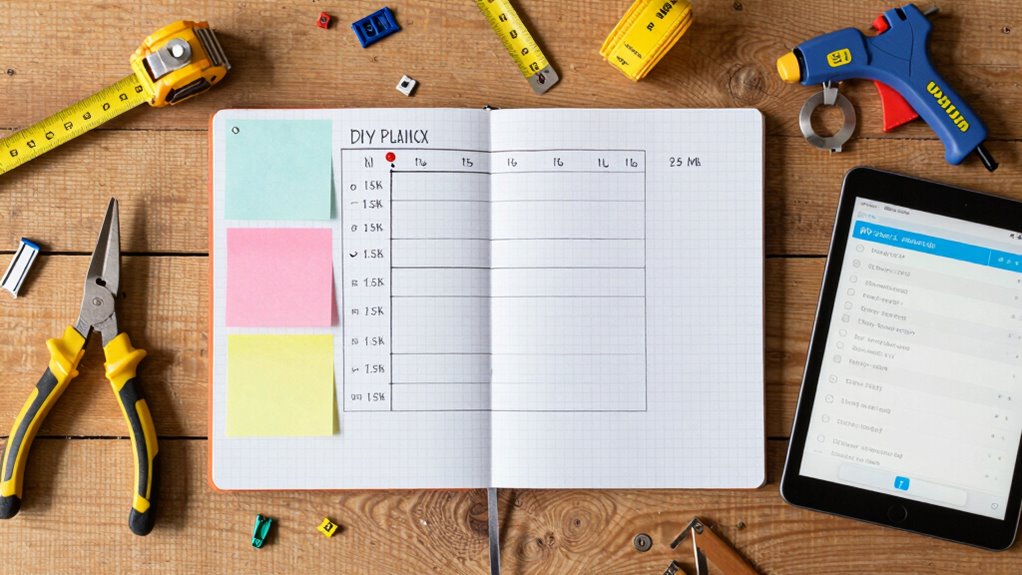
Wondering how to keep your DIY project on budget? Creating a detailed timeline helps you stay on track and control costs. Break your project into clear timing milestones, so you know when each phase should start and finish. This keeps you focused and prevents costly delays. Incorporate contingency planning into your timeline by allocating extra time for unexpected issues. This way, if something goes wrong, you won’t need to rush or overspend to meet deadlines. A well-structured timeline ensures you have a realistic view of your project’s flow and expenses. It also helps you prioritize tasks, order supplies efficiently, and avoid last-minute purchases. Ultimately, a carefully planned DIY timeline keeps your project organized, on schedule, and within budget.
Track Your Spending to Stay on Budget
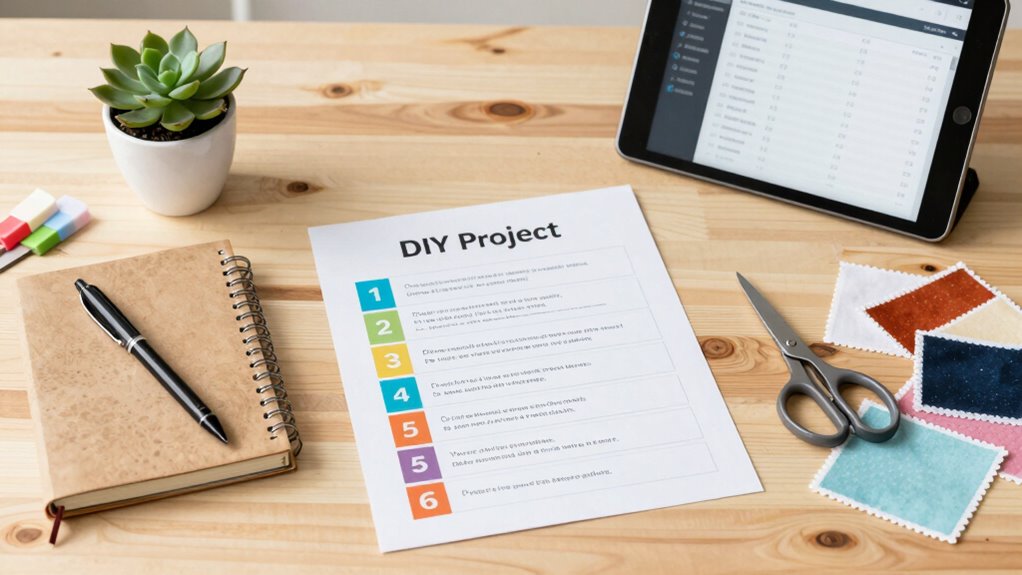
To stay on budget, you need to track all your expenses carefully. Using budgeting tools can make this process easier and more accurate. By keeping a close eye on your spending, you’ll guarantee your project stays within financial limits.
Track All Expenses
Keeping track of your expenses is essential to staying on budget and ensuring your project stays financially on track. By monitoring every cost, you can spot areas where you might save, like making material substitutions or improving supplier negotiations.
Here are four tips to help you stay on top:
- Record every purchase immediately to avoid forgetting costs.
- Compare prices regularly to find the best deals and possible material substitutions.
- Track receipts and invoices to ensure accuracy.
- Review your expenses weekly to identify spending patterns and adjust your plan accordingly.
Staying organized with your expense tracking allows you to make informed decisions and prevent overspending. This proactive approach keeps your project financially sound and helps you stick to your budget.
Use Budgeting Tools
Using budgeting tools makes it easier to monitor your spending and stay within your financial limits. With the right tools, you can compare material costs quickly, ensuring you choose the best options without overspending. These tools also help you track expenses related to tool durability, so you avoid costly replacements by selecting high-quality items upfront. By regularly updating your budget, you gain a clear view of how much you’ve spent on materials and tools, preventing surprises. Digital apps or spreadsheets allow you to categorize expenses and review spending patterns, making adjustments as needed. Staying disciplined with these tools means you’re less likely to go over budget, saving money and ensuring your project stays on track financially.
Avoid Common DIY Planning Mistakes
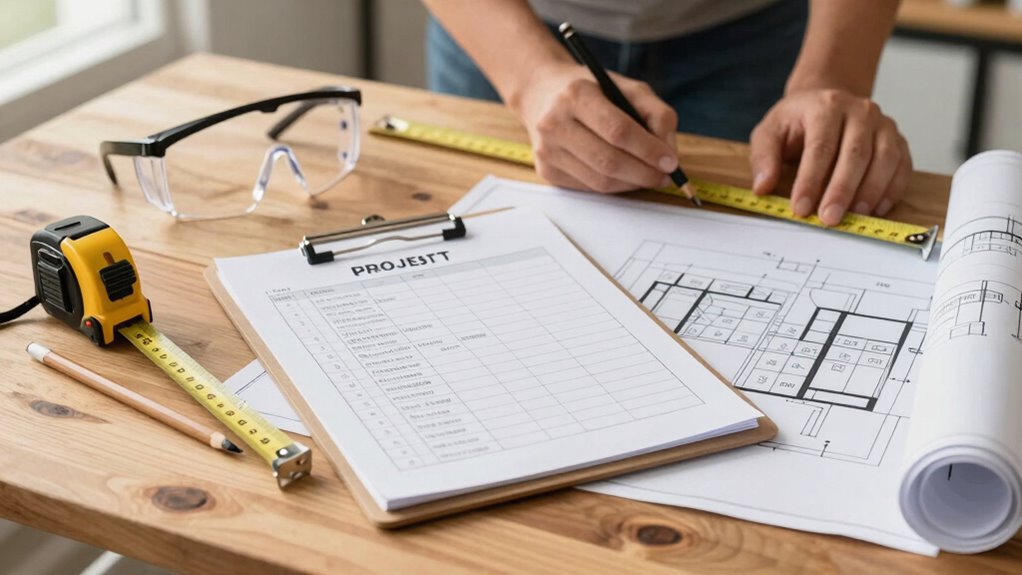
Many DIY projects stumble right from the start because planners overlook common mistakes that can derail progress. One key error is ignoring material durability, which affects the project’s longevity and safety. Another is underestimating the project scope, leading to incomplete work or unexpected costs. Additionally, failing to plan for proper tools can cause delays. Finally, skipping detailed measurements can result in ill-fitting components and wasted materials. By paying close attention to material durability, you guarantee your project withstands time and wear. Clearly defining the project scope helps prevent scope creep and budget overruns. Always double-check measurements for accuracy, and gather all necessary tools beforehand. Avoiding these mistakes keeps your project on track and within budget, ensuring a successful outcome.
Frequently Asked Questions
How Do I Handle Unexpected Costs During My DIY Project?
When unexpected costs pop up during your DIY project, stay calm and use your cost contingency fund to cover the expenses. If that’s not enough, rely on your emergency funds to handle surprises without derailing your project. Always keep a small reserve budget in mind, and be ready to adjust your plans if necessary. This proactive approach helps you manage surprises efficiently and keeps your project on track financially.
What Are the Best Ways to Find Discounts on Materials?
Ever feel like you’re chasing a rainbow for discounts? You should! You can find great deals by using coupon codes online and signing up for store newsletters. Also, check out wholesale suppliers—they often offer bulk discounts that save you a lot. Comparing prices across different stores and shopping during sales or clearance events can stretch your budget further. Stay savvy, and your project will pay off in more ways than one!
How Can I Accurately Estimate the Time Needed for Each Task?
You can accurately estimate the time needed for each task by doing thorough time tracking and task analysis. Start by recording how long similar tasks take you in past projects. Break each task into smaller steps and analyze how long each step typically takes. This method helps you set realistic expectations, identify potential delays early, and keep your project on schedule, saving you both time and frustration.
Should I Consult Professionals for Certain Parts of My Project?
Yes, you should consult professionals for certain parts of your project. Getting professional advice guarantees you follow safety considerations and proper techniques, reducing risks and potential mistakes. For complex tasks like electrical work or plumbing, expert input is vital. It saves you time and money in the long run, and guarantees your project meets safety standards. Don’t hesitate to reach out to specialists—they can provide valuable insights and peace of mind.
How Do I Adjust My Budget if Plans Change Halfway Through?
When plans pivot, prioritize proactive budget reallocation and precise cost monitoring. You should re-assess your expenses, cut costs where possible, and redirect funds to essential needs. Communicate clearly with any helpers or suppliers to avoid surprises. Staying flexible and vigilant helps you adapt smoothly, saving money and minimizing stress. This strategic shift guarantees your project stays on track, even when surprises surface, making your DIY journey more manageable and satisfying.
Conclusion
By following this 5-step checklist, you’ll master your DIY project like a seasoned craftsman and avoid costly pitfalls. Remember, careful planning is your secret weapon—think of it as your modern-day squire guiding you through the chaos. With a clear budget, smart choices, and diligent tracking, you’ll save money and create something truly your own, all without the stress of a future where you wish you’d planned better. Happy building!