
To stop squeaking, start by tightening all bolts, nuts, and joints to secure your bed frame. Apply lubricant like WD-40 or baby oil to moving contact points, then add rubber or felt pads between metal or wood parts to dampen vibrations. Check if your mattress and foundation are compatible and well-supported, and consider upgrading worn hardware or the frame itself if needed. For more tips on quieting your bed, keep exploring simple solutions that work.

Get furniture and decor delivered free — and shop member deals
- Fast, free delivery on millions of items
- Access to Prime Big Deal Days deals on October 6–7
- Prime Video, Amazon Music and more included
Key Takeaways
- Tighten all bolts, nuts, and joints to eliminate loose connections causing squeaks.
- Apply lubricant like WD-40 or baby oil to frame contact points and moving joints.
- Place rubber or felt pads between frame components and the mattress or headboard to dampen noise.
- Inspect and replace worn hardware with sturdier, quieter alternatives for better stability.
- Ensure foundation or box spring is properly aligned and compatible to reduce contact noise.
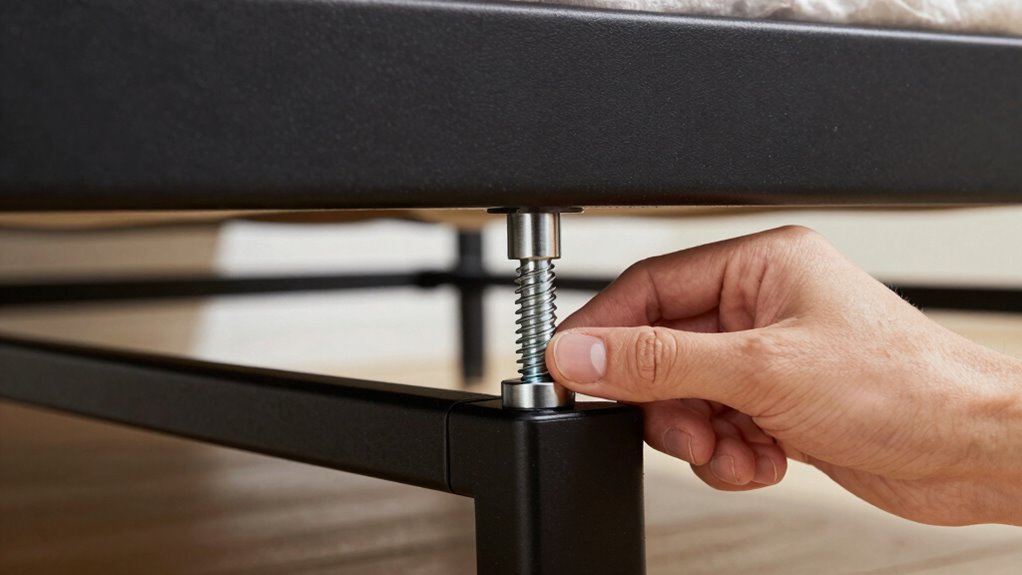
A squeaking bed frame can disrupt your sleep and become a constant annoyance, especially when it happens at night. That incessant noise not only disturbs your rest but can also make you feel frustrated and restless. The good news is, there are simple steps you can take to silence that squeak. One of the first things to contemplate is the type of mattress you have, as different mattress types can influence the stability of your bed frame. For example, memory foam mattresses tend to be heavier and may require additional support or reinforcement for the frame, while latex or spring mattresses may shift more easily if the frame isn’t properly secured. Knowing your mattress type helps you determine the best strategies for nighttime noise reduction.
To start, examine your bed frame thoroughly. Many squeaks originate from loose bolts, nuts, or joints. Tighten all screws and connections with a screwdriver, ensuring everything is snug but not overly tight, which could cause warping or damage. If tightening doesn’t work, try applying a lubricant like WD-40 or baby oil to the joints or metal-on-metal contact points. Be careful to wipe away any excess to prevent staining your mattress or bedding. Additionally, inspecting the bed frame stability can help you identify issues that contribute to squeaking and address them effectively. Using appropriate lubricants can also help reduce metal-on-metal friction that causes noise. Regular maintenance and checking for worn hardware can prevent squeaks from worsening over time. Incorporating proper maintenance practices can extend the longevity of your bed frame and keep it quiet for longer periods.
Another effective approach for nighttime noise reduction involves adding padding or cushioning. Place rubber or felt pads between the frame and the headboard, footboard, or side rails. These pads dampen vibrations and prevent metal or wood from rubbing directly against each other. Sometimes, replacing worn-out hardware or brackets with sturdier, quieter alternatives can make a significant difference. If your bed frame is particularly old or worn, investing in a new, more stable frame might be the most straightforward solution. Furthermore, considering the type of mattress and how it interacts with the frame can help you choose the most appropriate fixes for your specific setup.
Lastly, think about the placement of your mattress and frame. If you’re using a box spring or a foundation, make sure it’s compatible with your mattress type and properly aligned. A well-fitted foundation provides better support and can minimize squeaking. When all else fails, look into specialized noise-reducing accessories designed for bed frames. These products are designed to absorb movement and vibrations, offering an additional layer of nighttime noise reduction. Taking these steps ensures your sleep environment becomes quieter and more restful, allowing you to drift off without the distraction of squeaks and creaks.
As an affiliate, we earn on qualifying purchases.
Frequently Asked Questions
Can Using a Mattress Topper Reduce Bed Frame Squeaking?
Using a mattress topper can help reduce bed frame squeaking by adding a layer of mattress padding that minimizes movement and friction. This extra cushioning absorbs some noise, making the squeaks less noticeable. While it may not completely eliminate squeaking, it’s an effective step for noise reduction. Just make certain the topper fits well and stays in place to maximize its benefits for a quieter, more comfortable sleep.
Are Certain Bed Frame Materials More Prone to Squeaking?
Some bed frame materials, like metal, tend to whisper more than others, especially if their material durability isn’t premium. Metal frames often produce more noise because they lack effective noise insulation, making squeaks more noticeable. Wooden frames generally offer better sound absorption, creating a quieter, more peaceful sleep. Choosing a sturdy, well-made frame with good noise insulation can help you enjoy nights free from squeaking disruptions.
How Often Should I Check for Squeaks and Tighten Bolts?
You should check your bed frame for squeaks and tighten bolts every three to six months as part of a regular maintenance schedule. Common causes of squeaking include loose joints or bolts, worn-out hardware, or frame misalignment. Regular inspections help catch these issues early, preventing more significant problems. By staying proactive, you guarantee your bed stays quiet and stable, extending its lifespan and improving your comfort during sleep.
Does Bed Frame Size Affect the Likelihood of Squeaking?
Like a ship steering through choppy waters, your bed frame size can sway its stability, influencing squeak frequency. Larger frames often feel more like a boat in stormy seas, prone to creaks if not properly tightened. Smaller frames, like a sturdy dinghy, tend to stay quieter. To prevent noise, apply noise prevention techniques such as tightening bolts and adding padding, ensuring your sleep voyage remains smooth and silent regardless of bed size.
Can Bedding or Mattress Placement Cause or Worsen Squeaks?
Yes, bedding and mattress placement can cause or worsen squeaks. Pillow placement can shift weight unevenly, creating friction against the bed frame and intensifying squeaks. Additionally, bed sheet tension affects how tightly everything stays together; loose sheets can rub against the frame, causing noise. To reduce squeaks, guarantee pillow placement is balanced, and keep bed sheet tension even and snug, preventing unnecessary movement and friction.
Conclusion
Think of your bed frame as the steady ship in your nightly voyage. When it squeaks, it’s like a storm rocking your calm waters. By tightening bolts, adding lubricant, or replacing worn parts, you’re steadying the ship against the restless waves. With each fix, you’re restoring peace to your sleep sanctuary. Soon, your nights will be as tranquil as a calm sea, allowing you to drift into peaceful dreams without the noise of a troubled voyage.
Fall Picks
fall essentials
As an affiliate, we earn on qualifying purchases.