Before cleaning your sofa, always perform a spot test on a hidden, small fabric area first. Apply a diluted cleaning solution, then wait a few minutes to check for any discoloration or damage. This quick step helps prevent costly mistakes and preserves your sofa’s look and longevity. Want to learn the full process and expert tips? Keep going to discover how to clean safely and effectively.
Key Takeaways
- Always perform a spot test on hidden fabric areas to check for discoloration or damage before cleaning the entire sofa.
- Use a small, inconspicuous spot like under cushions or along a back seam for testing cleaning solutions.
- Apply a diluted amount of the cleaning product and wait a few minutes to observe any adverse reactions.
- Confirm fabric type and care tags to choose the appropriate cleaning method and avoid damage.
- If discoloration or damage occurs during testing, seek professional help or try alternative cleaning approaches.
Why Performing a Sofa Spot Test Can Save You From Damage

Before you reach for your cleaning supplies, it is vital to test a small, hidden area of your sofa. Different fabric types respond uniquely to cleaning agents, so testing helps prevent damage or discoloration. For example, delicate fabrics like silk or velvet require gentle cleaning tips, while sturdier materials like microfiber or cotton may tolerate more aggressive methods. By performing this spot test, you can see how the fabric reacts to cleaning products before treating the entire sofa. This step saves you from costly mistakes, such as fading, shrinking, or fabric deterioration. Additionally, understanding your sofa’s fabric response can help you choose the most suitable cleaning method and products. Conducting a fabric compatibility check through a spot test is a crucial part of effective sofa cleaning, especially since color accuracy can vary based on cleaning methods and fabric types. Being aware of free floating tendencies in your fabric can also influence how you approach cleaning, ensuring you avoid unnecessary damage. Moreover, knowing the material composition can guide you toward using the safest cleaning techniques.
Know Your Sofa Fabric: Essential for Safe Cleaning

Understanding your sofa’s fabric is key to cleaning it safely and effectively. Knowing the sofa fiber helps you choose the right cleaning method and products, preventing damage. Different fabrics, like leather, microfiber, or cotton, require specific care. Check the care tag for fabric compatibility and cleaning instructions. Recognizing your sofa fiber allows you to avoid costly mistakes and preserve its appearance. Additionally, understanding fabric care labels ensures you follow manufacturer recommendations for maintenance. Being aware of fabric types can also guide you in selecting suitable cleaning solutions and techniques. Being informed about fabric characteristics can help tailor your cleaning approach to avoid mishaps. Moreover, understanding fabric durability can assist in selecting cleaning methods that maintain your sofa’s longevity.
Knowing your sofa’s fabric helps you clean safely and preserve its appearance.
To further ensure safe cleaning, familiarize yourself with fabric testing procedures to confirm that your chosen method won’t cause damage. Remember, rushing can lead to damage. Take a moment to identify your fabric type and understand its needs:
- Feel the texture to gauge softness or durability
- Look for labels indicating fabric compatibility
- Test a small, hidden area before cleaning
- Use appropriate cleaning solutions for your sofa fiber
This knowledge ensures safe, effective cleaning every time.
How to Safely Conduct a Sofa Spot Test

Start by choosing a hidden spot on your sofa to avoid visible damage. Apply a small amount of your cleaning solution to this area and wait a few minutes. If there’s no discoloration or damage, it’s safe to proceed with cleaning the rest of your sofa. Being aware of trusted reputation can help you select appropriate cleaning products and techniques. Additionally, understanding modern cleaning techniques can enhance your safety and effectiveness during your cleaning routine. Incorporating air purifier maintenance dos and don’ts into your cleaning process can also improve overall air quality and safety during cleaning. Being familiar with filtration systems can help you choose products that won’t compromise indoor air quality. Incorporating auditory processing skills into your cleaning routine can also improve your attention to detail and result in better outcomes.
Choose Hidden Area
To safely test a cleaning product on your sofa, you need to choose a hidden area that’s out of sight. This spot should be discreet, like underneath a cushion or along the back seam, where stains or damage won’t be visible. Picking the right spot helps protect your sofa’s fabric protection and stain resistance, ensuring you don’t accidentally ruin its appearance. Additionally, consider the wall surface finish of your furniture material, as different finishes may react differently to cleaning agents. Look for an area that:
- Is less exposed to sunlight and daily wear
- Shares the same fabric and color as the main surface
- Won’t be noticed if a test goes wrong
- Maintains the sofa’s overall look and longevity
- considering your sofa’s material composition to prevent unexpected damage during cleaning. Being aware of the fabric type can further guide your choice of cleaning method and products. Conducting a spot test on a small, inconspicuous area helps minimize risk and keeps your furniture looking fresh and undamaged, especially when professional cleaning services are considered for more thorough results.
Test Cleaning Solution
How can you guarantee the cleaning solution won’t damage your sofa? The key is testing it first. Use a small amount of your chosen cleaning chemicals on a hidden fabric area. Knowing your fabric awareness helps you select the right solution—some materials react badly to certain chemicals. To visualize, consider this table:
| Fabric Type | Suitable Cleaning Solution | Reaction to Chemicals | Recommended Action | Result |
|---|---|---|---|---|
| Cotton | Mild soap and water | No discoloration | Proceed with cleaning | Safe to clean |
| Wool | Specialized wool-safe cleaner | Possible shrinkage | Test first, then clean | Caution needed |
| Synthetic | All-purpose cleaner | Usually safe | Use sparingly | Usually safe |
| Silk | Gentle, pH-neutral solution | Easy to damage | Avoid harsh chemicals | Proceed with caution |
| Linen | Mild detergent | Usually safe | Test spot | Safe if no change |
Additionally, always consider the fabric’s durability before applying any cleaning method. It is also beneficial to check fabric type classifications to better understand how your sofa might react. For example, some natural fibers can be more sensitive than synthetic ones. Being aware of fabric reactions can help prevent unexpected damage and prolong the lifespan of your furniture. Moreover, understanding fabric care labels can provide valuable guidance for cleaning procedures. This approach guarantees your sofa stays undamaged.
Choosing the Right Cleaning Products for Your Sofa
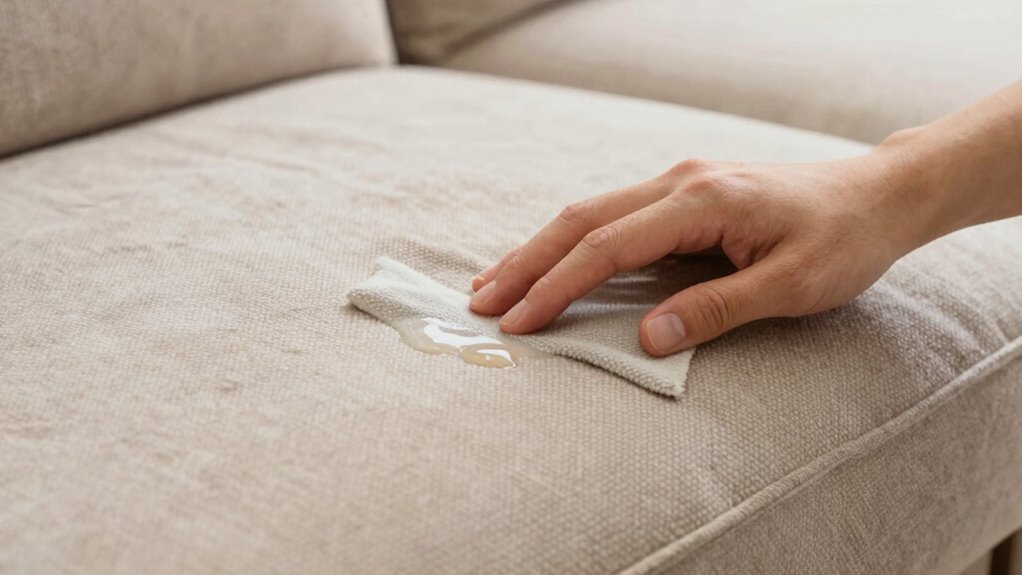
Choosing the right cleaning products for your sofa is essential to guarantee damage and ensure effective cleaning. You need to contemplate fabric durability and chemical sensitivity to avoid costly mistakes. Using the wrong product can weaken fibers or trigger allergic reactions. Look for gentle, pH-balanced cleaners that match your sofa’s material. Additionally, selecting products that align with your sofa’s architectural needs can help maintain its structural integrity over time. Be mindful to:
Choosing the right cleaning products protects your sofa’s fabric and keeps your home safe.
- Protect sensitive skin with hypoallergenic options
- Choose products designed for your sofa’s fabric type
- Avoid harsh chemicals that weaken fabric durability
- Use eco-friendly, non-toxic solutions for peace of mind
Selecting appropriate products can prevent discoloration, fabric damage, and allergic reactions. Taking the time to choose wisely ensures your sofa stays beautiful and safe for everyone in your home.
Step-by-Step: Testing Different Cleaning Solutions
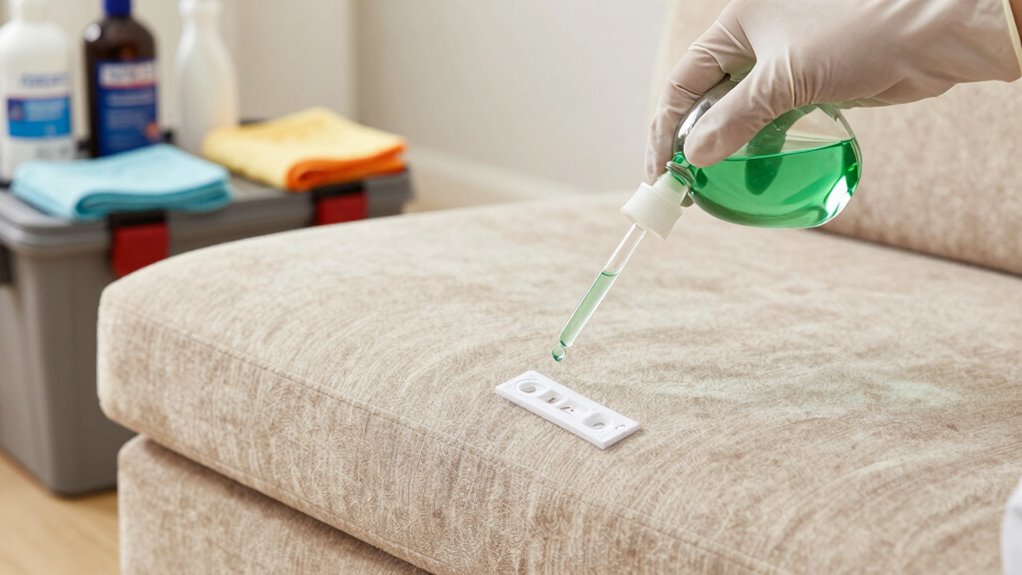
Start by choosing a hidden spot on your sofa to perform the spot test. Mix your cleaning solution at the recommended dilution and apply a small amount to that area. Watch closely for any material reaction before proceeding with full cleaning.
Spot Test Location
Before applying any cleaning solution to your sofa, it’s vital to identify a discreet spot to perform the test. Choosing the right location ensures you avoid damage and discover how your fabric reacts. Look for an inconspicuous area, like the back or underside, where fabric sensitivity won’t cause visible harm. This step is essential to maintain your sofa’s appearance and prolong its cleaning frequency.
- Feel confident knowing you’re protecting your investment
- Prevent unexpected discoloration or damage
- Gain peace of mind before deep cleaning
- Ensure your chosen solution is safe for your specific fabric
Test Solution Dilution
Testing different cleaning solutions requires diluting each one properly to guarantee they’re safe for your sofa’s fabric. To do this, start by preparing a small amount of the test solution, mixing it with water according to the manufacturer’s instructions. This ensures you achieve the right dilution safety, minimizing the risk of damage. Always use a clean container to mix your solutions, and avoid undiluted cleaners unless specified. Once prepared, apply a tiny amount of the test solution to a hidden area of your sofa. Wait a few minutes to observe any adverse reactions. Proper dilution is essential to prevent discoloration or fabric harm, giving you confidence that your chosen cleaner is safe for your sofa before proceeding with a full cleaning.
Observe Material Reaction
Once you’ve applied a small amount of the diluted cleaning solution to a hidden area of your sofa, closely observe how the material reacts. Watch for signs of change that could indicate damage or altered fabric properties. You want to protect your sofa’s fabric durability and stain resistance.
- Notice if the fabric softens or stiffens unexpectedly, risking damage.
- Check for color fading or bleeding, which compromises appearance.
- Look for any discoloration or water marks that might ruin the fabric.
- Feel if the material becomes sticky or greasy, reducing stain resistance.
This step helps you ensure your cleaning method won’t cause long-term harm, preserving the sofa’s integrity and beauty. Proper observation safeguards your investment while keeping your sofa pristine.
What Your Test Results Mean and How to Respond

When you review your test results, understanding what they indicate is essential for determining the right course of action. If the fabric shows no discoloration or damage, it’s a good sign that your cleaning method is compatible. Successful stain removal without affecting the fabric’s color or texture confirms fabric compatibility. However, if the test reveals fading, bleeding, or fabric damage, you should reconsider your cleaning approach. In such cases, avoid aggressive cleaners and opt for gentler solutions or professional help. Remember, the goal is to preserve your sofa’s integrity while effectively removing stains. Always respond to your test results by adjusting your cleaning techniques accordingly, ensuring you protect your furniture and achieve the best cleaning outcome.
Common Mistakes to Avoid During Testing
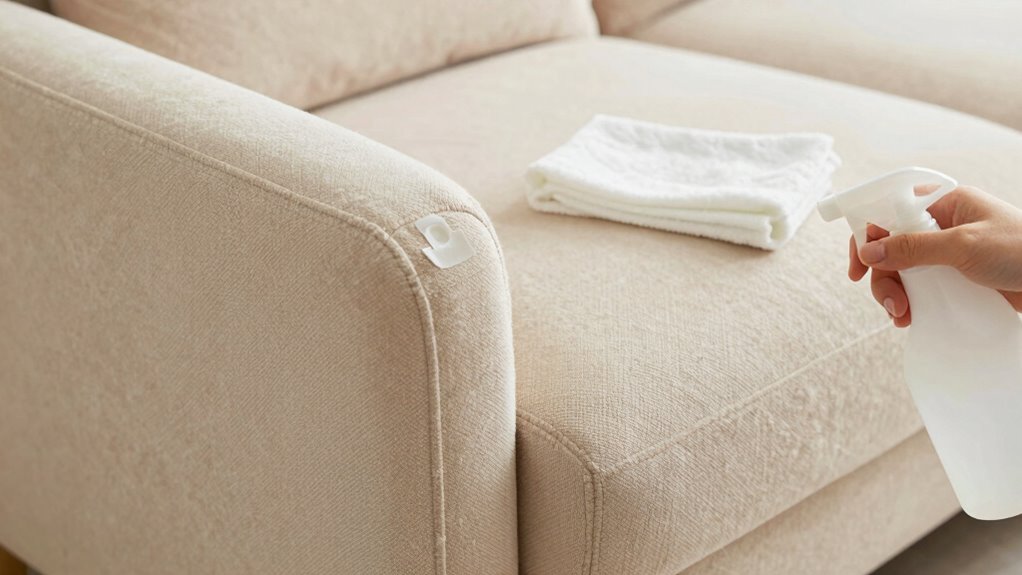
Avoiding common mistakes during the testing process can save you from unnecessary damage and frustration. First, don’t skip fabric identification—using the wrong cleaning method can harm delicate fibers. Be cautious with stain removal; aggressively scrubbing can spread or deepen stains. Remember, testing in an inconspicuous area is essential—skipping this step risks discoloration or fabric damage. Avoid over-wetting the sofa, as excess moisture can lead to mold or fabric warping. Also, don’t ignore the manufacturer’s cleaning instructions—each sofa responds differently, and following guidelines guarantees safer results. By being mindful of these pitfalls, you protect your furniture while effectively preparing for cleaning. Proper testing helps you avoid costly mistakes and ensures your sofa remains vibrant and intact.
When to Call in Professionals After Testing
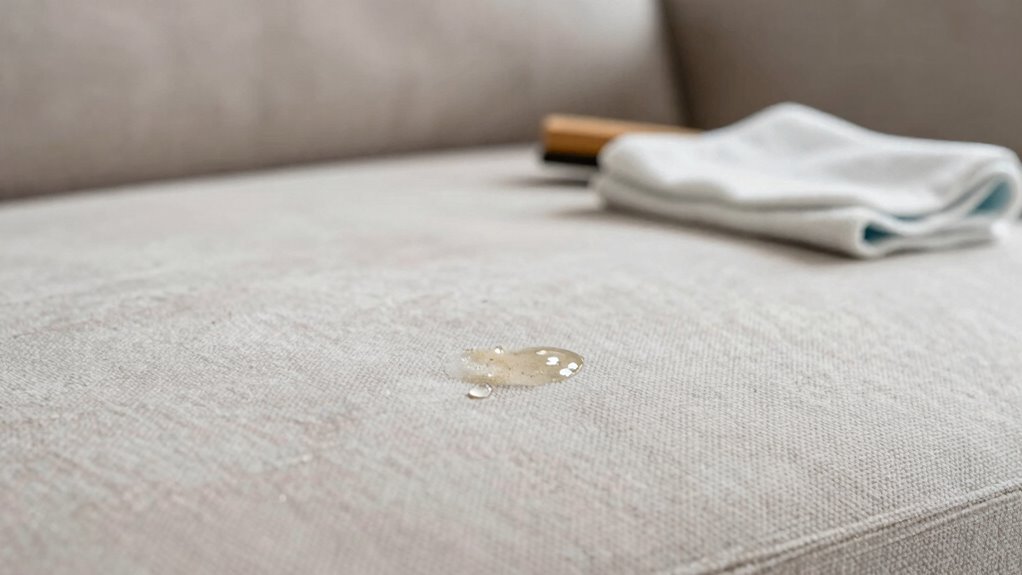
After completing your initial test, it’s important to recognize signs that professional help is needed. If your DIY cleaning efforts don’t remove stubborn stains or if the fabric shows signs of damage, it’s time to call in professional intervention. Persistent odors or discoloration that don’t improve after testing indicate that specialized equipment or cleaning solutions are necessary. Additionally, if you notice mold, mildew, or extensive water damage, don’t delay—these issues require expert attention to prevent health risks and further harm. Attempting to fix these problems yourself could make things worse. Knowing when to seek professional help ensures your sofa gets thoroughly cleaned without risking damage or ineffective results. Trusting the pros can save you time and give you peace of mind.
Post-Cleaning Tips to Keep Your Sofa Looking Its Best
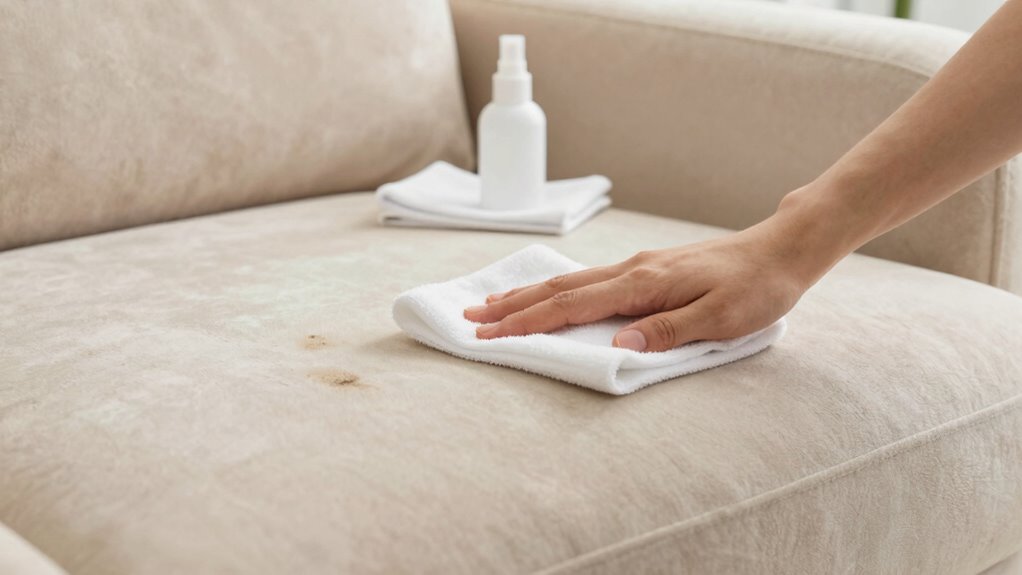
To keep your sofa looking its best, establish a regular vacuuming routine to remove dust and debris. Spot cleaning techniques can quickly address spills before they set in, preserving your fabric’s appearance. Consistently applying these tips helps maintain your sofa’s freshness and prolongs its lifespan.
Regular Vacuuming Routine
Regular vacuuming is essential for maintaining your sofa’s appearance and extending its lifespan. It helps preserve fabric care and maximizes vacuum efficiency, ensuring dirt and debris don’t settle deep into the fibers. By sticking to a consistent routine, you protect your sofa from dust buildup and allergens that can cause deterioration over time. Imagine your sofa always looking fresh, inviting, and spotless—your effort makes that possible. To keep your sofa in top shape, consider these tips:
- Remove surface dust weekly to prevent it from settling deeper
- Use the right attachment for delicate fabrics to avoid damage
- Adjust suction settings for ideal vacuum efficiency
- Pay special attention to crevices and seams where dirt hides
A regular vacuuming routine keeps your sofa vibrant and comfortable, ensuring it stays beautiful for years.
Spot Cleaning Techniques
Keeping your sofa looking its best often means tackling spots and stains promptly. When spot cleaning, consider fabric durability to choose the right cleaning method, preventing damage. Always test a small, hidden area first to observe any chemical reactions that could discolor or weaken the fabric. Use a gentle cleaner suitable for your sofa’s material—avoid harsh chemicals that could cause unwanted reactions. Blot stains instead of rubbing, which can spread the mess or damage fibers. For stubborn spots, apply a cleaner sparingly and let it sit briefly before blotting again. Remember, quick and careful action preserves your sofa’s appearance and longevity. Proper spot cleaning not only removes immediate stains but also helps maintain your furniture’s overall health and durability.
FAQs: Sofa Testing and Cleaning Safety

Before you start cleaning your sofa, make sure to test a small, hidden area to guarantee the cleaning method won’t cause damage or discoloration. Proper fabric identification is essential to choose the right cleaning product and avoid costly mistakes. Always check the manufacturer’s cleaning instructions before proceeding. Here are some FAQs to consider:
Always test a hidden area first to ensure cleaning methods won’t damage your sofa.
- Will this cleaning product work safely on my fabric type?
- How do I identify my sofa’s fabric to select the right cleaner?
- What signs indicate I should avoid certain cleaning methods?
- How can I prevent accidental damage during cleaning?
Taking these precautions ensures your sofa stays beautiful and undamaged. Remember, testing first and understanding your fabric type makes all the difference in safe, effective cleaning.
Frequently Asked Questions
How Often Should I Perform a Sofa Spot Test?
You should perform a sofa spot test every time you plan to clean your sofa, especially if you’re using a new cleaning product. This helps you check fabric compatibility and stain resistance, preventing damage or discoloration. By testing in an inconspicuous area first, you verify your cleaning method is safe and effective, keeping your sofa looking its best while avoiding costly mistakes.
Can DIY Cleaning Damage My Sofa?
Did you know that 30% of DIY cleaning attempts can damage sofas? Yes, improper stain removal methods or using the wrong cleaning solutions can harm your fabric compatibility, leading to discoloration or tears. To avoid damage, always test cleaning products on a hidden spot first, and choose methods suited for your sofa’s fabric. Properly caring for your sofa guarantees it stays beautiful and lasts longer.
What Signs Indicate I Need Professional Cleaning?
You should consider professional cleaning if your sofa shows signs like fabric compatibility issues or loss of stain resistance. If stains persist despite DIY efforts, or the fabric feels overly dirty or stained, it’s time to call in experts. Also, any discoloration or unusual odors indicate deep-seated dirt that needs specialized treatment. Professional cleaners guarantee your sofa is thoroughly cleaned without damaging its fabric or compromising stain resistance.
Are There Natural Cleaning Solutions Safe for All Fabrics?
You’ll be pleased to know that some natural cleaning solutions are gentle yet effective for your sofa’s fabric sensitivity and stain resistance. Look for options like white vinegar, baking soda, or mild plant-based detergents. These solutions are safe for most fabrics and free from harsh chemicals. Always test a small hidden area first, ensuring your sofa stays beautiful while enjoying the benefits of eco-friendly cleaning that’s safe for your home.
How Long Should I Wait After Testing Before Cleaning?
You should wait at least 24 hours after testing a stain removal method on your sofa to guarantee fabric compatibility. This waiting period allows you to observe any adverse reactions or discoloration. If there’s no damage, you can confidently proceed with cleaning. Always monitor the test spot closely during this time, as it helps confirm that your chosen stain removal methods won’t harm your sofa’s fabric before you clean the entire piece.
Conclusion
Now that you know the secret test before cleaning, imagine the peace of mind you’ll have knowing your sofa is safe from damage. One careful test could mean the difference between a fresh, spotless couch and a costly mistake. Are you ready to open the confidence and protect your favorite furniture? Take that extra step, and your sofa will thank you with years of comfort and beauty—if you dare to try, the results might surprise you.