Humidity fluctuations can cause your wood furniture to warp, crack, or peel over time. To protect it, keep indoor humidity between 40% and 55%, adjusting with humidifiers or dehumidifiers as needed. Use reliable sensors to monitor levels and look for signs like warped surfaces or cracks. Proper placement away from heat or sunlight also helps. To learn effective tips for maintaining ideal moisture, continue exploring these essential strategies.
Key Takeaways
- Maintain indoor humidity between 40-55% using humidifiers or dehumidifiers to prevent wood warping and cracking.
- Regularly monitor humidity levels with calibrated sensors placed away from direct sunlight or vents.
- Avoid placing furniture near heat sources or in direct sunlight to reduce drying and swelling.
- Reapply protective finishes and use coasters to shield wood from moisture damage.
- Address humidity fluctuations promptly to preserve your furniture’s structural integrity and appearance.
Why Humidity Control Is Essential for Your Wooden Furniture

Maintaining proper humidity levels is essential if you want your wooden furniture to stay in good shape. Fluctuations in humidity can cause wood to expand or contract, leading to cracks, warping, or loosened joints. Wooden finishes, such as varnish or lacquer, can crack or peel when exposed to excessive moisture or dryness. Using humidity sensors allows you to monitor indoor conditions accurately and respond promptly to changes. These devices help you maintain a stable environment, preventing damage caused by too much or too little moisture. Proper humidity management isn’t just about comfort—it’s a crucial step in protecting your investment and keeping your wooden furniture looking its best. Additionally, understanding the concept of Free Floating can help you optimize your space and maintain a healthy environment for your furniture. Maintaining consistent humidity levels can also prevent the development of mold and mildew, which can further damage wooden surfaces and finishes. Regularly using whole-house humidity control systems can further enhance your ability to keep humidity levels steady throughout your home. Implementing calibration of humidity sensors ensures more accurate readings, which is vital for effective humidity control. Maintaining a stable indoor climate also helps mitigate the risks of wood deterioration, ensuring your furniture remains durable over time.
What Is the Ideal Humidity Range to Protect Wood?

To keep your wood furniture safe, aim for a humidity level between 40% and 55%. This range helps prevent cracking, warping, and other damage caused by seasonal changes. Staying within this range guarantees your furniture remains beautiful and intact year-round. Additionally, monitoring indoor air quality with air purifiers can help maintain a stable environment and protect your belongings from pollutants that may affect humidity levels. Proper humidity control techniques can further ensure your furniture stays in optimal condition regardless of seasonal fluctuations. Incorporating innovative European cloud servers for data management can also support smart home systems that help monitor and regulate indoor humidity effectively.
Optimal Humidity Levels
Since wood is sensitive to moisture changes, keeping indoor humidity within a specific range is essential for its protection. The ideal humidity level for your home’s wood furniture is between 40% and 55%. Maintaining this range helps preserve the wood finish and prevents warping, cracking, or swelling. Proper humidity levels also reduce the risk of damage caused by fluctuations, which can happen if furniture is placed near heating vents or windows. To keep humidity steady, use a humidifier or dehumidifier as needed, and avoid placing furniture in direct sunlight or near heat sources. Monitoring with a reliable hygrometer ensures you maintain the most suitable range. Additionally, choosing the right wood type for your space can influence how well your furniture withstands humidity changes. Being aware of environmental factors that affect indoor moisture levels can further help in maintaining optimal conditions. For example, ventilation plays a crucial role in regulating indoor humidity and preventing excess moisture buildup. Proper airflow can help disperse humidity and maintain a consistent environment. By controlling humidity, you help your wood furniture stay beautiful and durable for years to come.
Seasonal Humidity Changes
Seasonal changes can cause significant shifts in indoor humidity levels, putting your wood furniture at risk if you’re not prepared. During dry winters, low humidity can cause wood grain to crack and furniture finishes to dry out. Conversely, high humidity in summer can lead to swelling and warping. To protect your furniture year-round, aim for an ideal humidity range of 40-55%. Keep it steady to prevent expansion and contraction that damage the wood. Use a humidifier or dehumidifier as needed. Here’s a quick reference:
| Season | Humidity Range | Effect on Wood |
|---|---|---|
| Winter | 40-45% | Prevents cracks and splits |
| Summer | 50-55% | Avoids swelling and warping |
| Shift | 45-50% | Maintains wood grain integrity |
| Low humidity | below 40% | Drying, cracking, finish damage |
| High humidity | above 55% | Warping, mold, finish issues |
Maintaining stable humidity preserves your furniture’s beauty and longevity. Proper humidity control is especially important because AI-powered climate monitoring devices can help you maintain consistent conditions effortlessly. Additionally, monitoring indoor air quality can alert you to humidity fluctuations before they cause damage. Incorporating smart home automation can further optimize humidity levels automatically, reducing the risk of damage from seasonal changes. Regularly checking your humidity levels ensures your efforts are effective and your furniture remains protected. Being aware of seasonal humidity shifts can help you take proactive steps to safeguard your belongings.
How to Measure Indoor Humidity Levels
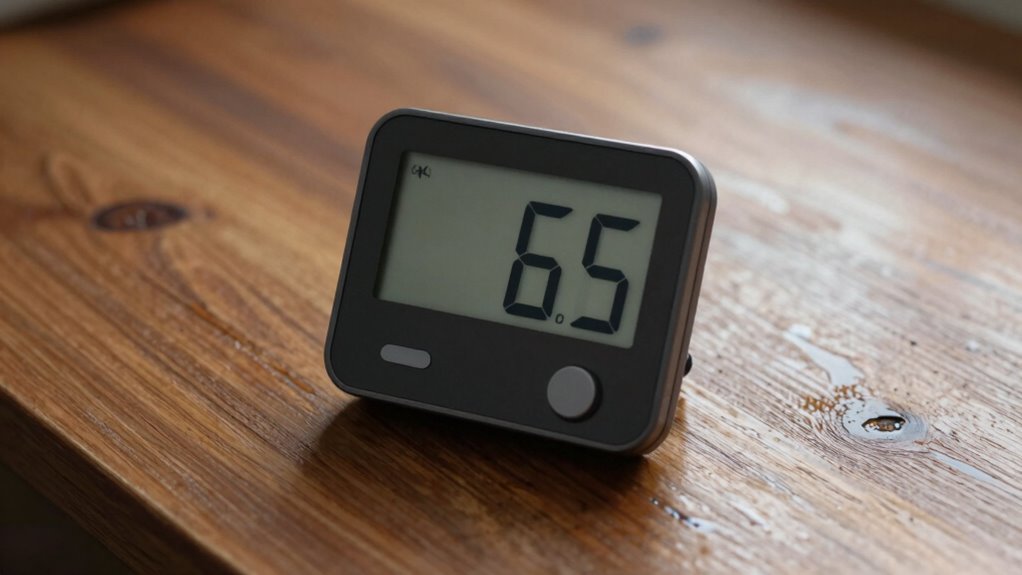
Measuring indoor humidity levels is essential for protecting your wood furniture from damage caused by excess moisture or dryness. To get accurate readings, use reliable humidity sensors designed for home use. These devices are straightforward: place the sensor in the room, and within moments, you’ll see the current humidity level. To guarantee accuracy, regularly calibrate your humidity sensors with calibration tools, which help fine-tune the device’s readings. Keep the sensor away from windows, vents, or direct sunlight, as these can skew results. Monitoring humidity levels consistently helps you maintain a stable environment, ideally between 40% and 60%. Additionally, understanding optimal humidity ranges allows you to better control indoor conditions and prevent damage. Using appropriate placement techniques for your sensors ensures more precise measurements. Proper measurement techniques include placing sensors away from sources of drafts or heat, which can affect readings and lead to improper adjustments. Consistent measurement and awareness of humidity fluctuations enable you to take informed steps to adjust humidity levels and shield your furniture from unnecessary wear and tear. Incorporating proper measurement techniques ensures you maintain optimal conditions for your wood belongings.
Recognizing the Signs of Humidity Damage in Wooden Furniture
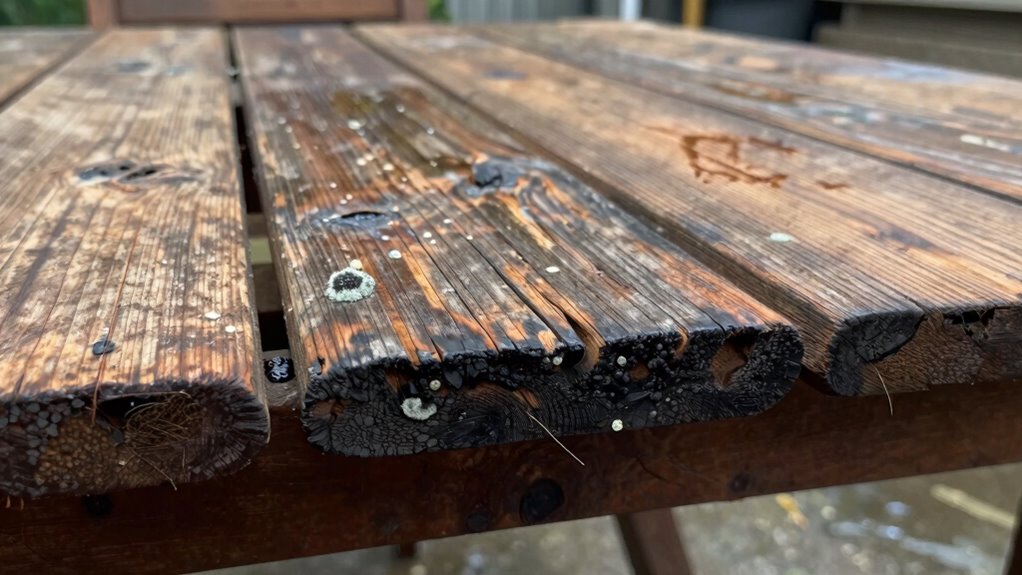
You can spot humidity damage by looking for warped surfaces or cracks that weren’t there before. Discoloration or stains on the wood also indicate excess moisture. Keep an eye out for these signs to protect your furniture from further harm. Monitoring water chemistry levels in your environment can help prevent ongoing damage caused by humidity fluctuations. Regularly checking your home’s electrical system, including proper grounding and insulation, can also reduce humidity-related issues. Additionally, using humidity control devices like dehumidifiers or air purifiers can maintain optimal moisture levels in your space.
Warped Surfaces or Cracks
Warped surfaces and cracks are clear signs that humidity has taken a toll on your wooden furniture. When wood absorbs excess moisture, it expands unevenly, causing surfaces to warp or develop cracks. Look for edges that are no longer straight or panels that seem misshapen. To prevent further damage, understanding wood expansion and crack prevention is essential. Use this table as a quick reference:
| Sign | Cause | Solution |
|---|---|---|
| Warped surfaces | Excess moisture, uneven expansion | Control humidity, use dehumidifiers |
| Cracks in wood | Rapid moisture fluctuations | Maintain steady humidity levels |
| Gaps between panels | Wood shrinking or swelling | Proper climate control |
| Surface splits | Overexposure to humidity | Regular sealing and drying |
| Bowed or twisted wood | Excessive expansion | Reinforce or replace warped parts |
Addressing these signs early helps preserve your furniture and prevent future damage.
Discoloration or Stains
Discoloration or stains on your wooden furniture are clear indicators that humidity levels have fluctuated or been excessive. These marks often appear as dark spots, white rings, or uneven patches, signaling moisture damage. To address existing stains, stain removal techniques like gentle sanding or using specialized cleaners can help restore your furniture’s appearance. Preventing further discoloration involves controlling indoor humidity, using coasters, and applying protective finishes. Acting quickly is key to minimizing damage; the longer moisture sits, the harder it becomes to remove stains effectively. By maintaining consistent humidity levels and using protective measures, you can prevent discoloration and keep your wooden furniture looking beautiful for years to come.
Easy Ways to Keep Humidity in Check Year-Round

Maintaining consistent humidity levels is essential for protecting your wood furniture from damage caused by moisture fluctuations. To do this easily year-round, start by placing a hygrometer in your room to monitor humidity levels. Keep indoor humidity between 40-45%, adjusting with simple solutions like opening windows or using fans when needed. Regularly applying wood treatment and maintaining proper furniture finishing can help create a protective barrier that resists moisture changes. Avoid overexposure to direct sunlight, which can dry out or warp your furniture. Using natural humidifiers like bowls of water or houseplants can also stabilize humidity. These small steps make a big difference in preserving your furniture’s appearance and structure, preventing warping, cracking, or swelling over time.
Using Dehumidifiers and Humidistats to Manage Moisture

Dehumidifiers and humidistats are effective tools for controlling indoor moisture levels, especially in environments prone to high humidity. Proper dehumidifier placement ensures maximum moisture extraction without over-drying your space. Regular humidity sensor calibration is essential for accurate readings and maintaining the desired humidity level. Use the humidistat to set and monitor target humidity, adjusting as needed. Here’s a quick guide:
| Dehumidifier Placement | Humidity Sensor Calibration | Ideal Humidity Level |
|---|---|---|
| Away from walls & vents | Follow manufacturer instructions | 40-50% RH |
| Central location | Test sensor accuracy periodically | |
| Avoid direct sunlight | Replace batteries as needed |
This setup helps protect your wood furniture from excess moisture damage effectively.
Tips for Maintaining Proper Humidity During Humid Seasons
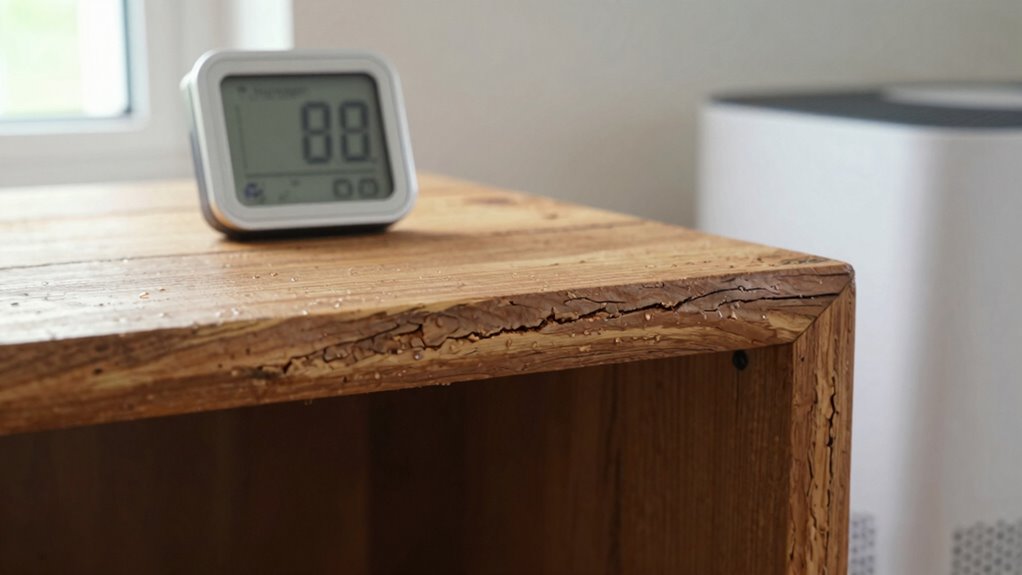
When the humidity levels rise during the humid seasons, taking proactive steps is essential to protect your wood furniture. Start by maintaining consistent humidity regulation within your home, ideally between 40-55%. Use a hygrometer to monitor levels regularly. Keep your wood finish in mind; applying a protective sealant or wax can help create a barrier against moisture fluctuations. Avoid placing furniture near windows or in direct sunlight, which can cause uneven humidity exposure. Use fans or air conditioning to circulate air and prevent excess moisture buildup. If needed, incorporate a dehumidifier to help control indoor humidity. These simple measures will help preserve your furniture’s finish and prevent warping, cracking, or swelling caused by seasonal humidity changes.
Simple Habits to Protect Your Furniture From Humidity Damage
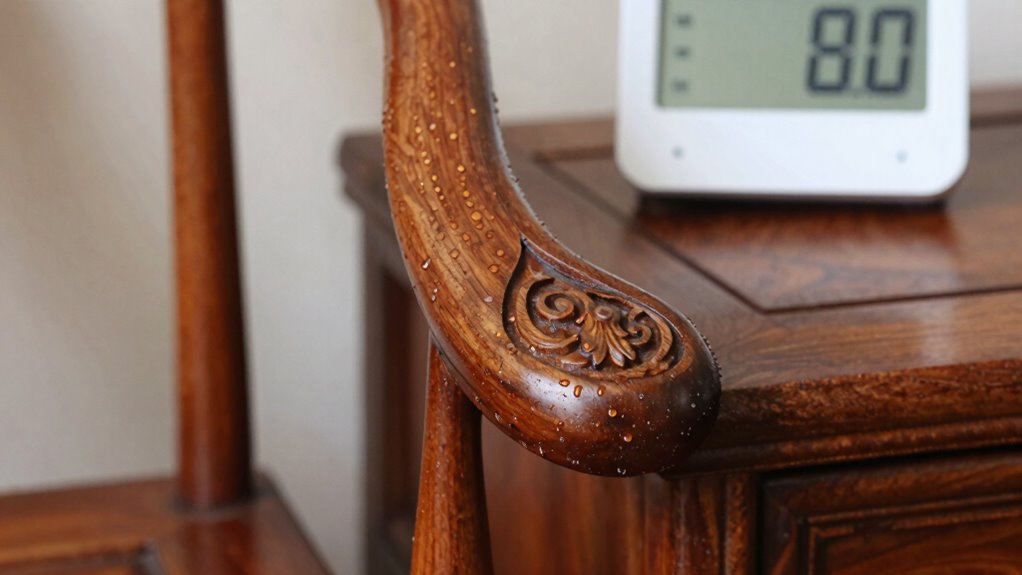
Simple habits can make a significant difference in protecting your wood furniture from humidity damage. Regular humidifier maintenance ensures your device functions properly, preventing excess moisture that can warp or crack wood. Additionally, optimizing airflow around your furniture helps maintain consistent humidity levels and reduces trapped moisture. To emphasize, consider this table:
| Practice | Benefit | Tips |
|---|---|---|
| Humidifier maintenance | Prevents over-humidification | Clean filters and check settings regularly |
| Airflow optimization | Promotes even moisture distribution | Keep furniture away from vents and vents open |
| Consistent monitoring | Detects humidity fluctuations early | Use a hygrometer for regular checks |
Adopting these habits safeguards your furniture, keeping it beautiful and durable over time.
Long-Term Strategies to Preserve the Beauty of Your Wooden Pieces

To truly preserve the beauty of your wooden pieces over the years, adopting long-term strategies is essential. Regular wood treatment with quality finishes helps create a protective barrier against moisture fluctuations and reduces the risk of warping or cracking. Be cautious of humidity myths; some believe frequent treatments are unnecessary, but consistent care is key. Maintain stable indoor conditions by investing in a good humidifier or dehumidifier, depending on your climate. Keep furniture away from direct sunlight and heat sources, which can accelerate deterioration. Proper cleaning with gentle, recommended products preserves the wood’s finish. These practices, combined with informed humidity management, ensure your furniture stays beautiful and durable for years to come.
Frequently Asked Questions
Can Humidity Fluctuations Cause Immediate Damage to Wood Furniture?
Yes, humidity fluctuations can cause immediate damage to your wood furniture. When humidity rises quickly, it leads to rapid expansion of the wood, and when it drops, the wood undergoes quick contraction. These constant cycles stress the material, causing cracks, warping, or splitting over time. To protect your furniture, keep the humidity levels stable, ideally between 40-45%, and avoid sudden changes in the environment.
Are Certain Types of Wood More Resistant to Humidity Damage?
They say “know your woods,” and it’s true—some wood species are more resistant to humidity damage. Teak, cedar, and mahogany naturally have higher moisture resistance, making them better choices for humid environments. These woods expand less with moisture changes, protecting your furniture longer. So, if you want durability, opt for these types, and you’ll enjoy your furniture without constant worry about humidity issues.
How Does Artificial Heating or Cooling Affect Indoor Humidity Levels?
Artificial heating and cooling can considerably change indoor humidity levels, making your environment drier or more humid. To maintain ideal humidity, you should regularly check and perform humidifier maintenance and ensure proper dehumidifier placement. This helps balance moisture levels, protecting your wood furniture from damage. Adjust your system settings as needed, and monitor humidity with a hygrometer to keep conditions stable and prevent wood warping or cracking.
Can Indoor Plants Influence Humidity Levels Around Wooden Furniture?
Yes, indoor plants can influence humidity levels around your wooden furniture. As plants transpire, they release plant humidity and indoor moisture into the air, increasing overall humidity. This added moisture can help balance dry indoor air but may also cause swelling or warping of wood if levels get too high. To maintain ideal conditions, monitor your plant humidity and indoor moisture, adjusting watering or using dehumidifiers as needed.
What Are the Best Protective Finishes to Minimize Humidity Effects?
Imagine you’re a knight arming your wooden furniture for battle. The best protective finishes for humidity resistance include polyurethane, varnish, and lacquer. These finishes form a strong barrier that helps minimize humidity effects, preventing warping and swelling. Apply them thoroughly, especially on surfaces prone to moisture, to keep your furniture looking pristine. Regular reapplication ensures continued protection against humidity’s sneaky damage, so your furniture stays regal and resilient.
Conclusion
Did you know that maintaining the right humidity levels can extend your wooden furniture’s life by up to 50%? By monitoring indoor moisture and using simple tools like dehumidifiers, you can prevent warping, cracking, and mold. Keeping humidity between 40-60% is key. With consistent care, your beautiful wooden pieces will stay stunning and durable for years to come. Take control of your environment today and enjoy furniture that looks great longer!