
To fix a wobbly chair in three steps, start by inspecting all parts for loose or damaged components, including the legs, seat, and armrests. Next, tighten any loose screws, bolts, or replace broken or stripped hardware. Then, stabilize the chair by adjusting uneven legs, adding furniture pads, or leveling adjustments, and test to make sure it’s steady. If you want to learn more about long-term fixes and tips, keep going for detailed guidance.

Get furniture and decor delivered free with Prime
- Fast, free delivery on millions of items
- Prime Video, Amazon Music and more included
- Member-only deals all year
Key Takeaways
- Inspect all chair components for loose or damaged parts, including legs, joints, and padding.
- Tighten or replace loose screws, bolts, or broken parts to restore stability.
- Level uneven legs and add furniture pads if needed to ensure even weight distribution.
- Test the chair by gently sitting and shifting weight to confirm wobble is eliminated.
- Regularly inspect and maintain the chair to prevent future wobbling issues.
Products Worth Considering

Ring Alarm 14-Piece Wireless Security System Kit

Google Nest Doorbell (Wired, 2nd Gen) – Snow

Dyson V8 Cyclone Cordless Vacuum
As an affiliate, we earn on qualifying purchases.
Inspect and Identify the Loose or Damaged Parts

To fix a wobbly chair, you first need to inspect it carefully and identify any loose or damaged parts. Check the seat padding for signs of sagging or uneven wear, which can cause instability. Feel beneath the seat to see if it’s securely attached or if the padding has shifted. Next, examine the armrests for looseness or wobbling; their stability directly impacts overall balance. Tighten any loose screws or bolts you find, and look for cracks or damage in the armrest supports. While inspecting, also verify that the legs are firmly attached and not wobbly. This thorough check helps you pinpoint exactly where the instability originates, setting the stage for effective repairs. Proper inspection ensures you don’t overlook critical issues affecting your chair’s stability. Additionally, assessing the condition of the structural integrity can help prevent further damage and ensure long-term stability.
Tighten or Replace the Wobbly Components

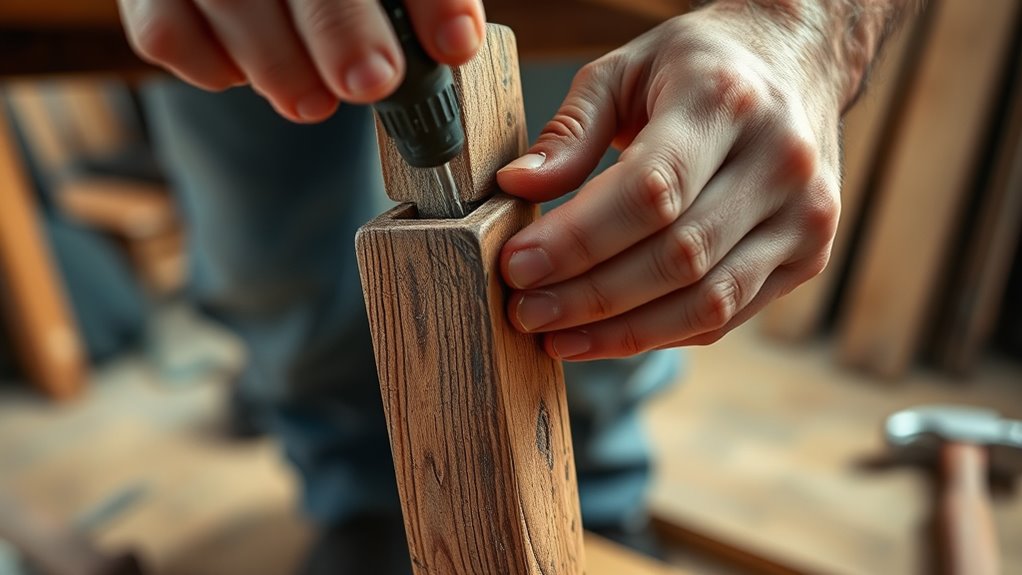
Once you’ve identified the loose or damaged parts, it’s time to tighten or substitute them. Start by choosing the right tools, like screwdrivers, Allen wrenches, or pliers, depending on your chair’s fasteners. For wooden chairs, use a screwdriver suited for wood screws; for metal or plastic chairs, ensure your tools match the hardware. Consider the types of chair materials—wood, metal, plastic—as they influence whether you can tighten screws or need to replace entire components. If screws are stripped or damaged, replacing them ensures stability. For broken legs or cracked joints, you might need to remove and swap out parts altogether. Always handle each component carefully, and double-check that all fasteners are securely tightened to prevent future wobbling. Recent insights into family dynamics can also provide helpful tips on maintaining stability and support in your furniture.
Stabilize and Test the Chair for Balance
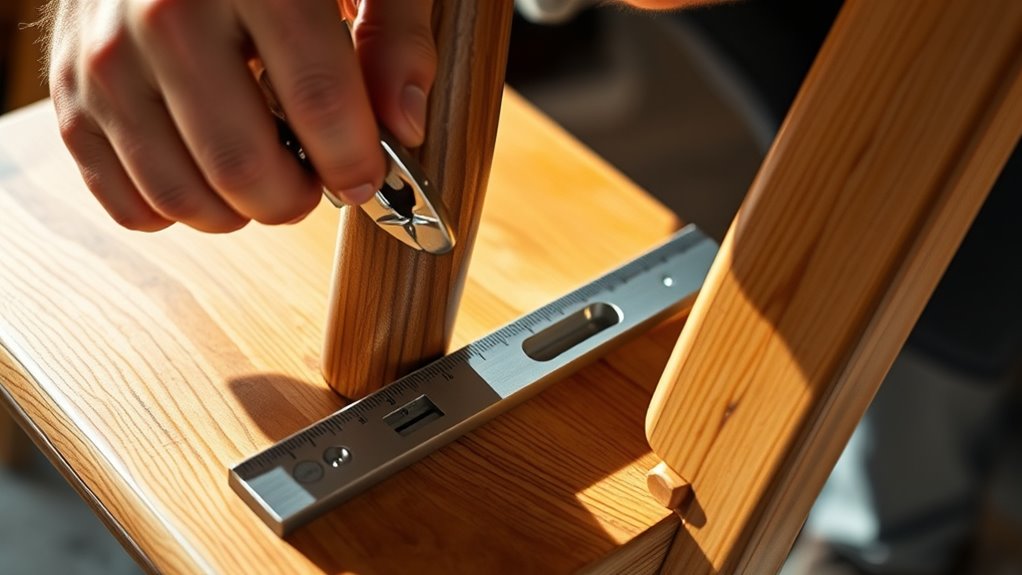
After tightening or replacing the loose parts, the next step is to stabilize the chair and check its balance. Start by examining each chair leg and making chair leg adjustments as needed to level the surface. Use a level or a straight edge to identify uneven legs. If you notice any wobbliness, tighten the leg bolts or add small furniture pads under the shorter leg. Also, inspect the cushion padding; worn or uneven padding can affect stability. Repair or replace damaged padding to ensure even weight distribution. Once you’ve made these adjustments, gently test the chair by sitting on it and shifting your weight slightly. If it feels stable and balanced, you’ve successfully stabilized your chair. If not, repeat the adjustments until it’s sturdy. Additionally, consider automating the testing process with a level sensor to ensure consistent results.
Frequently Asked Questions
What Tools Are Needed to Fix Wobbly Chairs?
When you want to fix wobbly chairs, you’ll need some essential tools. A chair repair kit is handy because it contains everything you need for quick fixes. Additionally, woodworking tools like a screwdriver, hammer, and wood glue help tighten joints or reattach loose parts. With these tools in hand, you can stabilize your chair efficiently, saving money and extending its life. Just follow the instructions carefully for best results.
How Can I Prevent My Chair From Becoming Wobbly Again?
To prevent your chair from wobbling again, focus on regular chair maintenance, tighten screws and bolts, and check for loose joints. Keep the legs even, and consider adding felt pads to uneven surfaces. Consistent wobble prevention involves inspecting your chair, maintaining its stability, and making necessary adjustments. By staying proactive, you guarantee your chair remains sturdy, comfortable, and reliable, avoiding future wobbles and extending its lifespan.
Are There Any Safety Precautions to Consider During Repair?
When repairing a chair, you should prioritize chair safety and follow repair precautions to prevent accidents. Always wear protective gloves and eye gear, make sure the workspace is clear, and use tools properly. Check for stability after fixing, and avoid rushing the process. By taking these steps, you minimize risks, ensure a safe repair, and keep your chair secure for future use without wobbles.
How Often Should I Inspect My Chairs for Stability?
Think of your chairs as the silent sentinels of your home, quietly bearing the weight of daily life. To keep them standing tall, you should inspect their chair stability every three to six months, depending on usage. Regular inspection frequency guarantees you catch loose joints or wobbliness early, preventing accidents. Staying attentive to your furniture’s condition helps maintain safety and prolongs its lifespan, keeping your home both secure and comfortable.
Can I Fix Wobbly Chairs Without Professional Help?
You can definitely fix wobbly chairs yourself with some DIY repair skills. Most common issues, like loose joints or uneven legs, are easy to address at home. First, identify the problem—tighten screws or bolts, add wood glue, or level the legs. With basic tools and patience, you don’t need professional help. Just follow safety precautions, and you’ll have your chair stable and secure in no time.
Conclusion
Now, as you’ve fixed your wobbly chair, it’s funny how a simple tighten or replacement can turn things around. You might find yourself sitting comfortably, noticing how a little fix can unexpectedly bring back stability and peace of mind. It’s almost like the chair was waiting for your touch all along, just like a lost puzzle piece falling into place. Enjoy your steady seat—you never know, the next fix might be just a step away!