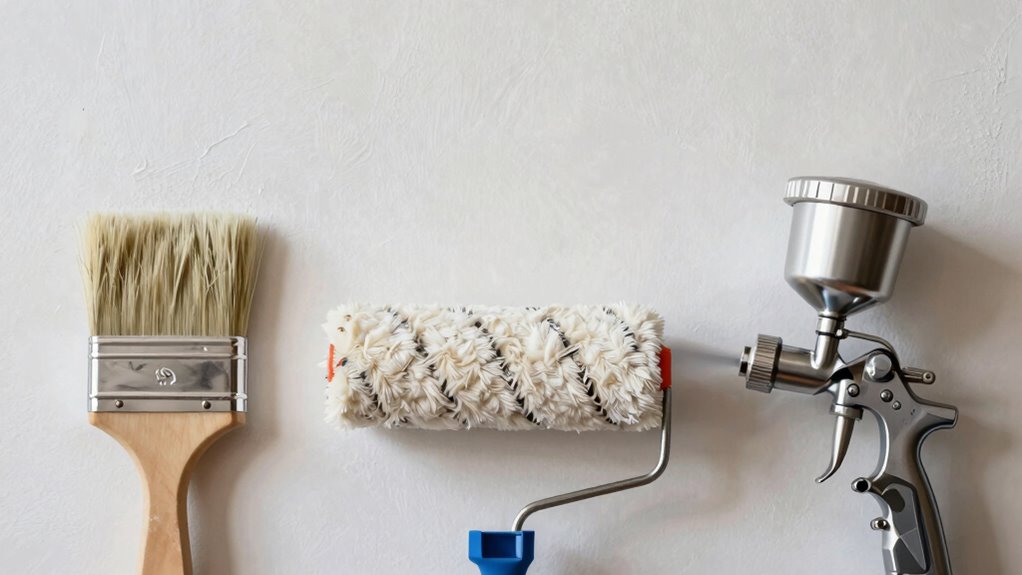

If you want a precise, detailed finish, a paint brush is your best choice, especially for tight spots or delicate surfaces. For large, flat areas needing quick, even coverage, rollers work efficiently and hide imperfections well. Sprayers deliver a smooth, professional finish on textured or extensive surfaces but require skill to avoid overspray. Understanding these differences helps you choose the right tool, and if you keep exploring, you’ll discover how to get the best results for your project.
Key Takeaways
- Paint brushes provide detailed, sharp edges and smooth finishes ideal for intricate or delicate surfaces.
- Rollers deliver uniform coverage quickly, perfect for large flat surfaces with minimal streaks.
- Sprayers achieve a smooth, even, and professional-looking finish on textured or complex surfaces efficiently.
- The tool choice impacts finish quality; brushes excel in precision, rollers in speed, and sprayers in texture and large areas.
- Proper surface prep and tool handling are essential for achieving the desired finish with each application method.
How Are Paint Brushes, Rollers, and Sprayers Different in Use?
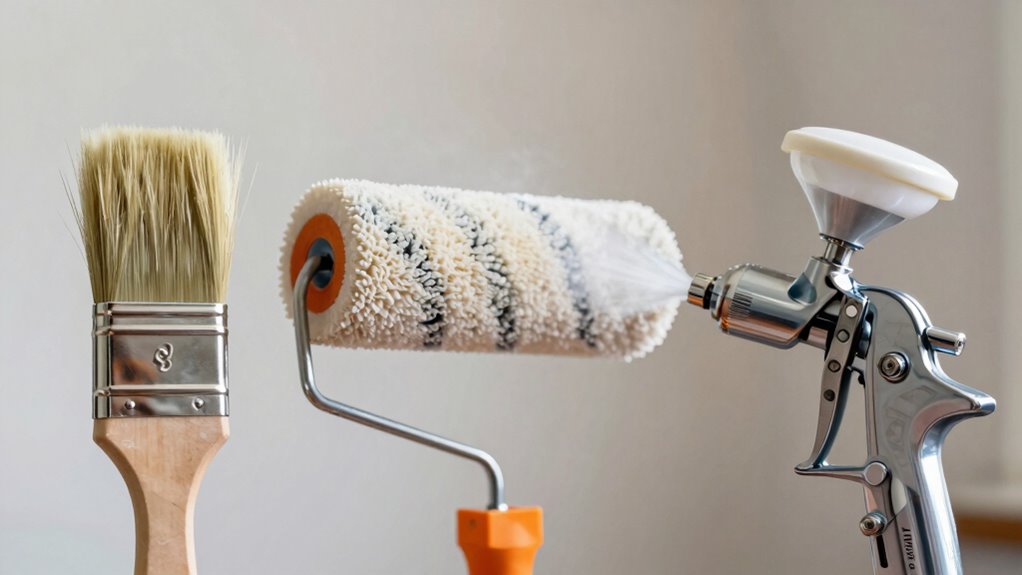
Paint brushes, rollers, and sprayers each serve different purposes and are used in distinct ways. When you use a paint brush, you benefit from high brush precision, allowing you to carefully target detailed areas and achieve fine lines. This tool is perfect for small projects or touch-ups where control matters most. Rollers are designed for quick coverage over large, flat surfaces, offering efficiency and uniformity but less precision. They excel at covering broad areas rapidly. Sprayers, on the other hand, deliver paint with high spray efficiency, covering surfaces quickly and smoothly. They’re ideal for large or textured surfaces but require some skill to avoid overspray. Each tool’s specific use depends on your project’s needs, balancing precision, speed, and coverage. Additionally, understanding contrast ratio can help you choose the right projector for visual clarity and image quality. Moreover, selecting the appropriate painting tool can also be influenced by energy efficiency, especially when considering sustainable practices in your workspace.
Which Painting Tool Gives the Best Finish?
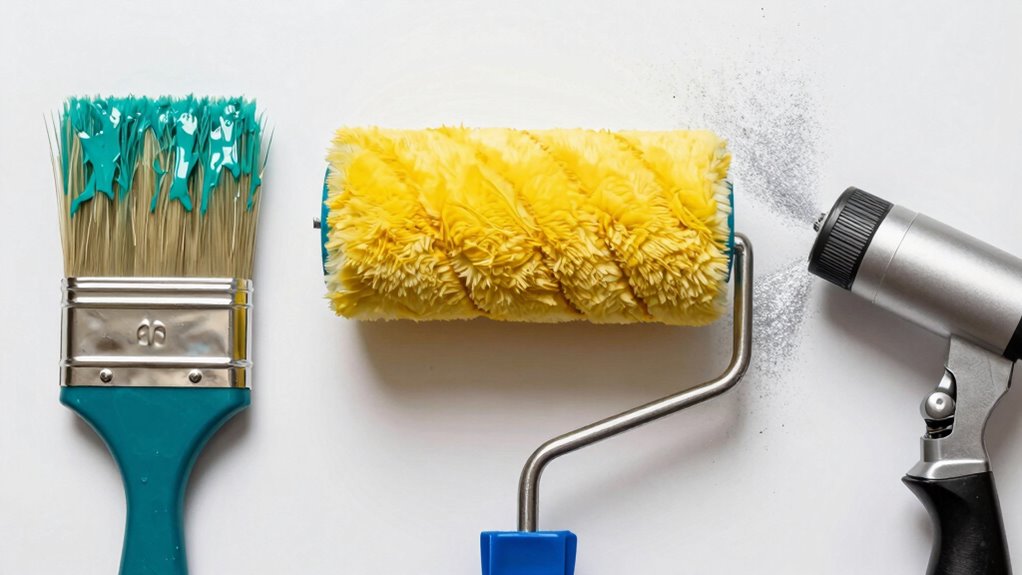
Have you ever wondered which tool produces the smoothest, most professional-looking finish? The answer depends on your priorities. Paint brushes excel at detail work and offer high paint quality, resulting in a precise, fine finish with sharp edges. Rollers are great for covering large surfaces evenly, providing a consistent coat that enhances durability over time. Sprayers can achieve a flawless, ultra-smooth finish on complex surfaces, but they require skill to prevent overspray and drips. If your goal is a high-quality, long-lasting finish, brushes and rollers tend to outperform sprayers in durability. Brushes allow for controlled application, reducing waste and imperfections. Proper tool maintenance and cleaning are essential to keep your equipment in optimal condition and ensure the best results over time. Additionally, understanding paint application techniques can help you choose the most suitable tool for your specific project. Selecting the right painting tools can also improve efficiency and the overall quality of your work. For instance, using the correct application method can make a significant difference in achieving a professional-looking finish.
How Fast and Efficient Is Each Tool?
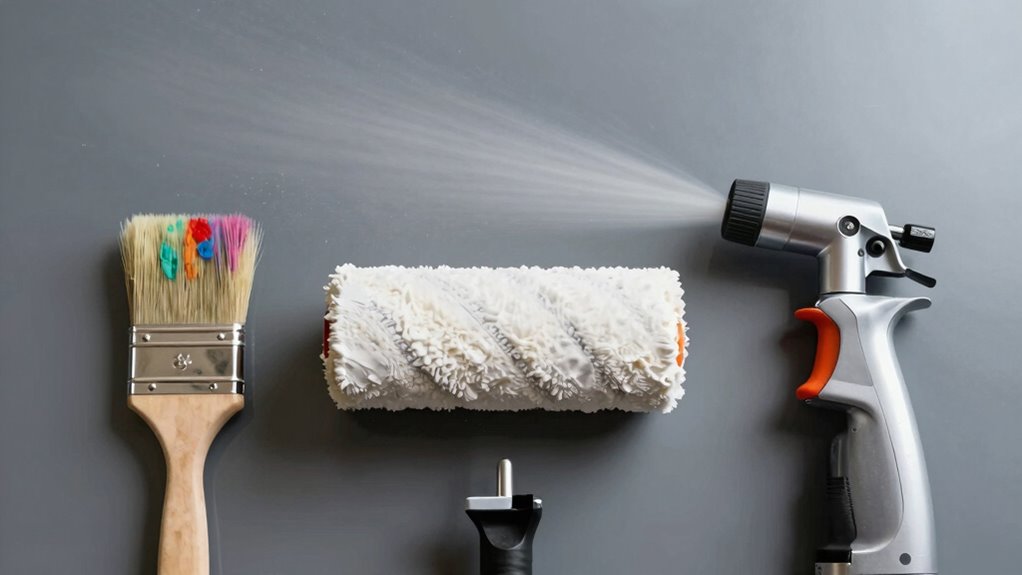
When it comes to speed and efficiency, each painting tool offers distinct advantages. A paintbrush delivers precise control with minimal setup, but you’ll spend more time making even brush strokes. Rollers cover large areas quickly, reducing painting time. Sprayers are the fastest for big projects, providing continuous spray patterns that speed up coverage. Additionally, painting tools vary in their ability to produce a smooth, professional-looking finish, which can be crucial depending on your project. For example, paint application techniques can influence the final texture and appearance of your work. The choice of painting equipment can also impact the overall efficiency and quality of the result. Moreover, connected home technology can enhance your painting projects by offering smart tools that improve precision and consistency. Modern smart painting devices can help automate parts of the process, increasing efficiency and reducing errors. Overall, sprayers are the most efficient for large projects, while brushes excel in detailed work.
Is It Easy to Use Paint Brushes, Rollers, or Sprayers?
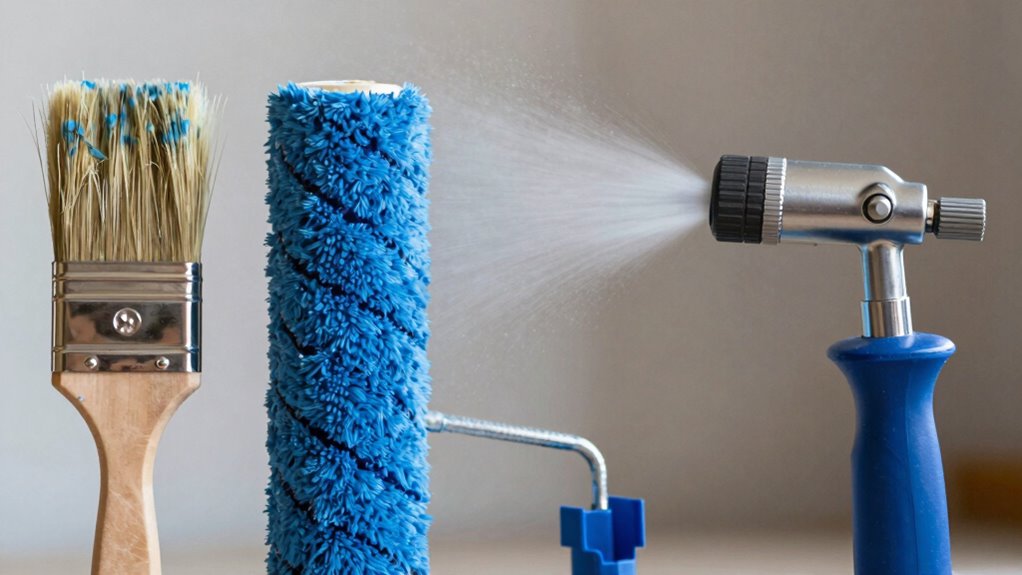
Using paint brushes, rollers, or sprayers can vary in ease, depending on handling and setup. You’ll want to contemplate how simple it is to control each tool and how much time it takes to prepare and clean up afterward. Understanding these factors helps determine which option suits your project best. Additionally, proper technique can significantly influence the quality of your finish and minimize mess. For example, mastering tool handling can help you achieve a smoother application and reduce the need for touch-ups.
Ease of Handling Tools
Paint brushes are generally the easiest tools to handle for small, detailed projects because they require minimal setup and are straightforward to maneuver. Using a brush involves simple brush maintenance, like cleaning after use, and no special storage is needed—just keep it in a dry place. Rollers can be slightly trickier; they need proper roller storage to prevent damage and are less precise for detailed work. Sprayers demand more effort, as they require setup, adjustment, and cleaning. Handling tools effectively depends on your project size and detail level. Here’s what to contemplate:
- Paint brushes are quick to start and easy to control.
- Rollers need careful roller storage to maintain quality.
- Sprayers require more effort in setup and cleanup.
- Handling ease varies with your familiarity and project scope.
- Thermal behavior of painting tools can influence how smoothly the paint is applied and dried.
Preparation and Cleanup
Preparing your tools and cleaning up afterward can vary considerably depending on whether you choose brushes, rollers, or sprayers. With brushes, cleaning is straightforward—just rinse with water or solvent, depending on the paint. Rollers require removing excess paint and washing the roller cover thoroughly. Sprayers, however, demand more effort—disassembling parts, cleaning nozzles, and using appropriate solvents. Proper priming techniques are essential regardless of your tool choice, as they ensure smooth application and better paint adhesion. When it comes to paint color matching, prepping your tools carefully helps maintain color consistency and prevents contamination. Additionally, understanding navigation and mapping of your tools can help streamline the cleanup process and prevent clogging or damage. Using the correct cleaning solvents for different paints can also make the process quicker and more effective. Selecting the proper tool care practices can extend the lifespan of your equipment and improve future results. Cleanup is often quick with brushes and rollers but can be more involved with sprayers. Overall, each method has its own process, but attention to detail makes cleanup easier and more effective.
What Are the Pros and Cons of Using Paint Brushes?
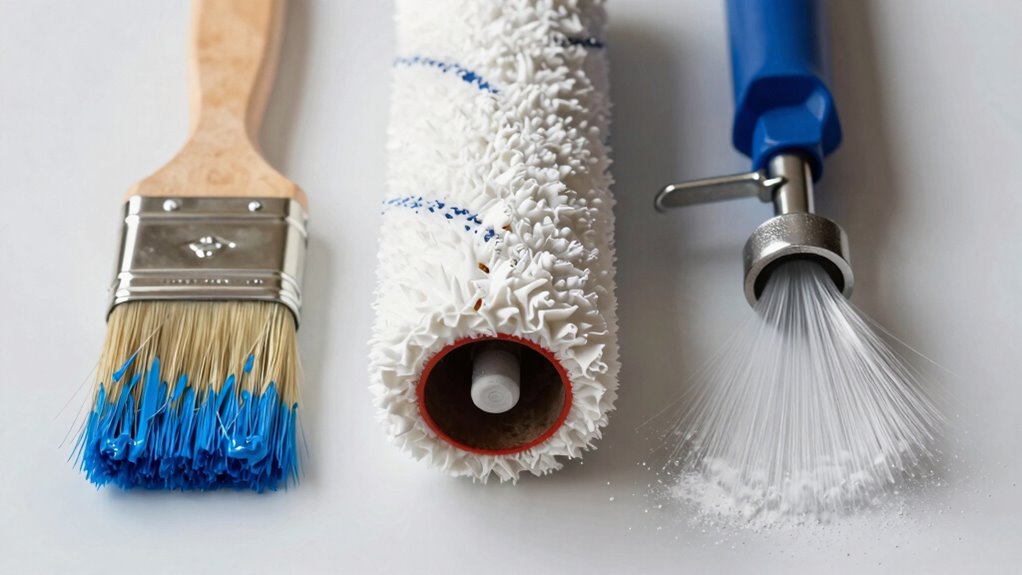
Using a paint brush offers precise detailing and gives you greater control over how the paint is applied. However, it can be time-consuming and tends to create more mess than other tools. Consider whether these benefits outweigh the drawbacks for your project. Additionally, understanding cleaning tools and maintenance can help keep your brushes in good condition and extend their usability. Proper cleaning methods for paint brushes, such as brush cleaning techniques, are essential for maintaining their performance and longevity. Incorporating proper storage practices can also prevent damage and ensure your brushes are ready for future projects. Regularly inspecting and replacing worn bristles is another important tool care practice that can improve your painting results. Being aware of digital safety tips can also help you avoid common pitfalls when managing your painting supplies online or purchasing new tools.
Precise Detailing Benefits
Because they allow for careful control, paint brushes excel at achieving precise detailing on small or intricate surfaces. This makes them ideal for tasks like touch-ups, decorative accents, or tight corners. With a brush, you can:
- Achieve fine edge precision, ensuring clean lines without bleeding.
- Blend colors smoothly, creating subtle transitions and custom effects.
- Access tight spots and detailed areas that larger tools can’t reach.
- Control paint application, reducing drips and excess buildup.
- Their versatility makes them suitable for various detailed painting techniques, allowing for intricate designs and careful craftsmanship. Additionally, brushes are often preferred when working on fragile surfaces where precision is crucial to avoid damage. The ability to work with different brush shapes and sizes further enhances their suitability for custom finishes and specialized effects. Using a brush gives you the flexibility to focus on specific areas without disturbing surrounding surfaces. This precision is especially important when working on detailed designs or delicate projects, where small mistakes can ruin the overall look. Overall, brushes are your go-to for intricate, high-quality finishes.
Greater Control Over Application
Paint brushes give you exceptional control over application, allowing you to target specific areas with precision. This control is especially useful when working on detailed or intricate surfaces, where accuracy matters most. Because of their design, brushes enable you to carefully manage paint absorption, reducing waste and preventing drips. The tool’s durability is also a benefit; quality brushes withstand frequent use without losing their shape or effectiveness. This means you can apply multiple coats with consistent results. However, brushes require steady handwork and may take longer to cover large areas. Still, if you want fine control and minimal overspill, a paint brush is your best choice. It’s perfect for detailed work and touch-ups where precision outweighs speed.
Time-Consuming and Messy
While brushes offer precise control, they can also be time-consuming and messy to work with. The messy application often leads to splatters and drips, making cleanup a hassle. The time-consuming process can test your patience, especially on large surfaces. Here are some key points to contemplate:
- You need to load paint frequently, slowing down the job.
- Achieving even coats requires multiple passes, extending your work time.
- Brush strokes can result in uneven textures, demanding touch-ups.
- Cleaning brushes afterward can be tedious and messy, adding to your workload.
When Should You Use Rollers for a Better Finish?
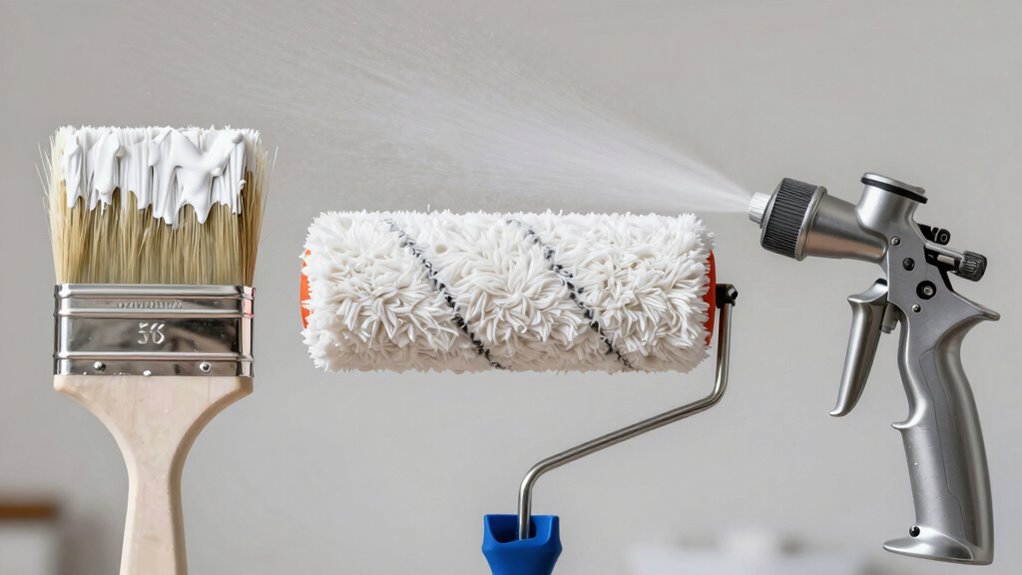
Wondering when a roller can give you a cleaner, more even finish? Rollers excel on large, flat surfaces where brush techniques might leave streaks or uneven patches. They work best when applying latex or acrylic paints, especially on walls and ceilings. Rollers create distinctive textures that help hide imperfections and provide a uniform coat. Use a roller when you want consistent coverage quickly without the streaking often caused by brushes. Choose the right roller texture for your project—smooth rollers for flat surfaces, thicker ones for textured walls. This tool minimizes brush marks and ensures a smoother finish overall. So, for large areas needing even coverage and a professional look, rollers are your best choice.
Do Paint Sprayers Provide Even Coverage or Create Overspray?
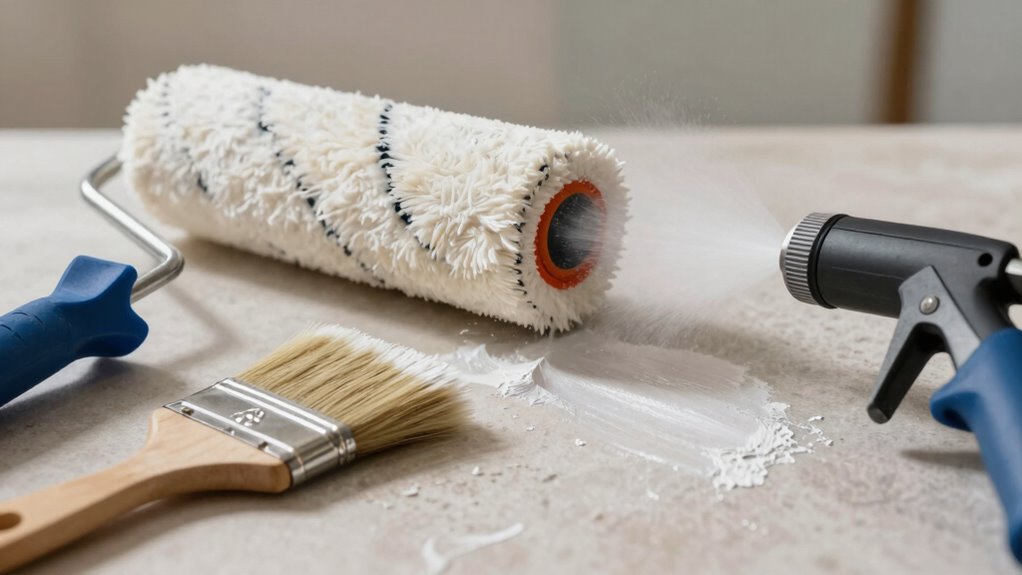
Paint sprayers can offer quick coverage, but they often require careful technique to guarantee even results. Overspray can be a concern, especially if you’re not precise, leading to wasted paint and mess. Your success depends on managing coverage consistency and controlling overspray risks effectively.
Coverage Consistency
Paint sprayers are capable of delivering even coverage when used correctly, but they can also produce overspray if not operated properly. To achieve consistent coverage, proper surface prep is essential to guarantee good paint adhesion. Here are key points to consider:
- Maintain a steady distance from the surface to avoid uneven layers.
- Use consistent motion to prevent streaks or thin spots.
- Adjust pressure and nozzle settings for optimal atomization.
- Practice on scrap surfaces to refine your technique before tackling main projects.
When you follow these steps, you’ll notice a smoother, more uniform finish. Proper surface prep not only enhances paint adhesion but also helps the sprayer distribute paint evenly, reducing the risk of blotches or thin areas.
Overspray Risks
While spray guns can deliver smooth, even coverage, they also carry the risk of overspray if not carefully controlled. Excess paint overspray can create a mess and waste material, making cleanup more difficult. Spray precision is vital to minimize this issue. Proper technique and equipment adjustments reduce overspray, but some dispersion is inevitable.
| Technique | Pros | Cons |
|---|---|---|
| Paint Sprayer | Fast coverage, smooth finish | Higher overspray risk |
| Brush | Precise control, little overspray | Time-consuming |
| Roller | Moderate overspray, even coverage | Less suited for detailed work |
Technique Sensitivity
Paint sprayers are designed to deliver quick, smooth, and even coverage, but their sensitivity to technique can considerably impact the final result. Your brush precision and sprayer speed are key factors. If you move too fast, overspray increases, wasting paint and creating uneven finishes. Conversely, moving too slowly may result in drips or inconsistent coverage. To achieve ideal results:
- Maintain consistent sprayer speed to ensure even application.
- Keep a steady distance from the surface for uniform coverage.
- Practice controlling your brush precision when switching between spray, tilt, or angle.
- Be mindful of your technique to prevent overspray and uneven areas.
Mastering these elements helps you avoid common pitfalls and get a professional-looking finish with your sprayer.
How Do Costs, Setup, and Cleanup Compare?
Choosing the right application method can considerably impact your project’s overall cost, setup time, and cleanup effort. With a paintbrush, you’ll face low initial costs and minimal setup but spend more time during application. Rollers are a balance, requiring moderate investment and faster setup, while sprayers have higher costs but quick coverage. Here’s a quick comparison:
| Aspect | Paint Brush | Roller | Sprayer |
|---|---|---|---|
| Cost Comparison | Low | Moderate | High |
| Setup Process | Simple | Moderate | Complex |
| Cleanup | Easy | Moderate | Time-consuming |
Your choice depends on balancing budget, time, and effort for your project.
What’s the Right Tool for Different Surfaces and Textures?

Selecting the right tool depends heavily on the surface and texture you’re working with. Different surface textures demand specific tools for ideal results and paint compatibility. For smooth surfaces like drywall or cabinets, a brush or roller works best to achieve an even finish. Textured surfaces, such as stucco or brick, require tools that can reach crevices and uneven areas. Consider these options:
Choosing the right painting tools enhances finish quality and saves time on any textured or smooth surface.
- Brushes for detailed work and precise edges on smooth surfaces.
- Rollers for large, flat areas with minimal texture.
- Sprayers for heavily textured surfaces needing even coating.
- Specialized tools like foam rollers or brushes for delicate or intricate textures.
Matching your tool to the surface texture ensures better paint adhesion and a cleaner finish, saving time and effort.
How to Choose the Best Painting Tool for Your Project?
Determining the best painting tool for your project hinges on understanding your surface, the type of finish you’re aiming for, and the scope of the job. Painting traditions favor brushes for detail work or touch-ups, while rollers are ideal for large, flat surfaces requiring smooth coverage. Modern equipment like sprayers can speed up extensive projects and reach tricky areas efficiently. Consider the level of control you need and the texture you want to achieve. If precision matters, a brush might be best; for quick, uniform coverage, a roller or sprayer could serve you better. Evaluate your project’s size and complexity, and choose a tool that aligns with your goals and your experience with different painting methods. This approach ensures a professional-looking finish tailored to your specific needs.
Frequently Asked Questions
Which Tool Is Best for Painting Detailed or Intricate Areas?
You should use a paintbrush for detailed or intricate areas because it offers precision techniques that other tools can’t match. A brush allows you to navigate tight corners and small spaces with accuracy, giving you better control. Its versatility makes it ideal for fine work, ensuring you get clean lines and crisp edges. While rollers and sprayers are efficient for large surfaces, a brush is your best tool for achieving professional-looking detail.
How Do I Prevent Paint Splatter When Using a Sprayer?
To prevent paint splatter when using a sprayer, you should start by adjusting the spray tips for a controlled flow. Keep the sprayer at a consistent distance, about 10-12 inches from the surface, and move your hand smoothly. Cover surrounding areas with drop cloths, and wear protective gear. Test your spray tips on scrap material first to fine-tune the spray pattern, reducing splatter and achieving a cleaner finish.
Can I Use the Same Paint With Brushes, Rollers, and Sprayers?
Using the same paint across brushes, rollers, and sprayers is like trying to fit a square peg into a round hole. You can, but you’ll get better results if you modify the paint consistency for each tool. For sprayers, thin the paint appropriately. Also, always clean your tools thoroughly afterward to prevent clogs and preserve the paint’s quality. Proper prep ensures a smooth, professional finish no matter the application method.
What Safety Precautions Are Needed for Spray Painting?
When spray painting, you need to prioritize safety. Always wear protective gear like a mask, goggles, and gloves to avoid inhaling fumes and protect your skin. Guarantee proper ventilation by opening windows and using fans to disperse fumes quickly. Keep the area clear of children and pets, and follow the paint manufacturer’s safety instructions. Taking these precautions helps prevent health issues and ensures a safer spray painting experience.
How Do I Store Leftover Paint After Using These Tools?
Think of storing leftover paint as sealing a treasure chest. To keep your paint fresh, tightly seal the container with its lid and wipe any spills. Store it in a cool, dry place away from sunlight and extreme temperatures. For paint storage, consider using airtight containers, and label them clearly. Leftover paint tips include stirring it before use later and avoiding freezing, which can ruin your paint’s quality.
Conclusion
Choosing the right painting tool depends on your project’s needs, surface, and desired finish. Did you know that using a roller can cut painting time by up to 50% compared to brushes? By understanding each tool’s strengths and limitations, you can attain professional results efficiently. Whether you prioritize speed, precision, or cost, selecting the appropriate method will ensure a smooth, beautiful finish that lasts. Happy painting!