When working with epoxy resin, always wear nitrile or latex gloves, safety goggles, and a respirator to protect your skin, eyes, and lungs from fumes and splashes. Make sure your workspace is well-ventilated by working near open windows or using an exhaust fan to disperse VOCs. Keep safety gear nearby and handle materials carefully to avoid spills. Staying cautious and following these safety basics will help you enjoy your projects safely; more tips await those who keep exploring.
Key Takeaways
- Always wear nitrile gloves, safety goggles, and a respirator when handling epoxy to prevent skin and eye irritation.
- Work in a well-ventilated area, using open windows or exhaust fans to disperse fumes effectively.
- Prepare your workspace by removing items that could contact epoxy or fumes, and keep protective gear accessible.
- Minimize splashes during mixing and cleaning spills immediately to reduce exposure risks.
- Be alert for signs of fumes such as dizziness or headaches, and seek fresh air if symptoms occur.
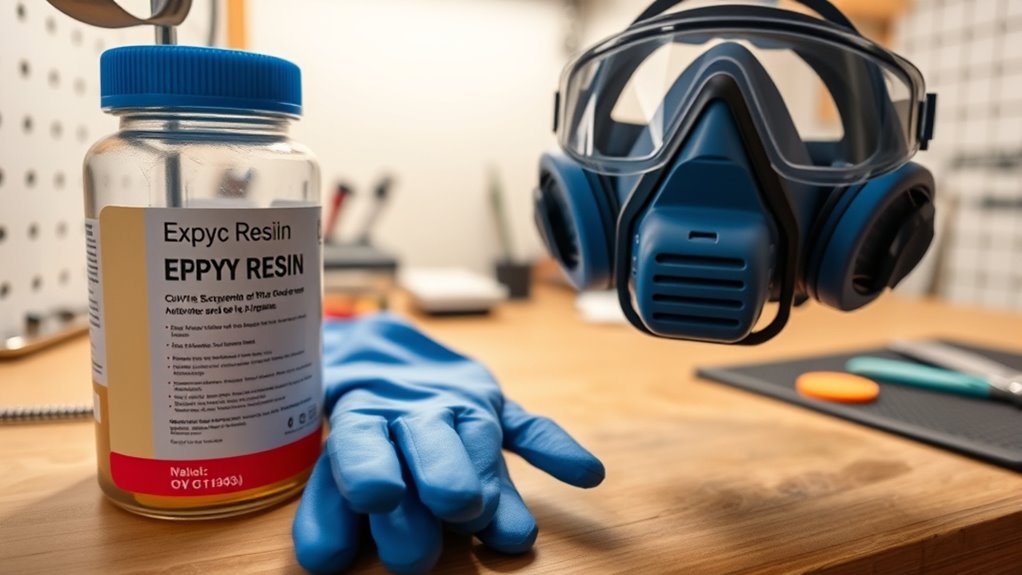
Working with epoxy resin can be rewarding, but it’s essential to prioritize safety from the start. When tackling any epoxy project, wearing the right protective gear is your first line of defense. Gloves made of nitrile or latex protect your skin from direct contact with resin, which can cause irritation or allergic reactions. Safety goggles shield your eyes from splashes and fumes, preventing irritation or injury. A respirator mask rated for chemical vapors is vital, especially when sanding cured resin or working in a less-ventilated space. Never skip this gear, even if you think the project is simple; resin can cause unexpected reactions if it contacts your skin or eyes.
Always wear gloves, goggles, and a respirator for safe epoxy resin work.
Ventilation is equally important to guarantee you’re not inhaling harmful fumes. Working in a well-ventilated area helps disperse volatile organic compounds (VOCs) released during mixing and curing. If possible, set up your workspace near an open window or door, or use a high-quality exhaust fan to create good airflow. Consider using a respirator mask with a fresh filter when working for extended periods or in enclosed areas. Avoid working in small, confined spaces without proper ventilation, as fumes can accumulate quickly and lead to headaches, dizziness, or respiratory issues. Ensuring proper ventilation techniques can dramatically reduce your exposure to harmful vapors.
Before you start, clear your workspace of anything that could accidentally come into contact with epoxy or fumes. Keep your protective gear nearby so you can put it on before mixing or pouring resin. When mixing epoxy, do so slowly and carefully to minimize splashes or spills, which can be hazardous if they contact your skin or eyes. Remember that fumes can linger even after you finish your project, so continue to work in a ventilated environment until all odors and vapors dissipate. If you notice any irritation, dizziness, or breathing difficulty, step outside immediately and seek fresh air.
Proper ventilation tips also include working during times when airflow is maximized, such as during the daytime with windows open, and avoiding indoor heating or air conditioning units that might recirculate fumes. Regularly check your workspace for adequate airflow and make adjustments as needed. If you work with epoxy resin frequently, investing in a local exhaust system or a portable fume extractor can greatly improve your safety. Prioritize these safety measures consistently, and you’ll find that your epoxy projects are not only successful but also safe and enjoyable.
Frequently Asked Questions
Can Epoxy Resin Be Reused After Curing?
You can’t reuse epoxy resin after curing, as the curing process transforms it into a solid, non-reversible material. Resin recycling isn’t practical because once it hardens, it loses its original properties. Instead, focus on proper mixing and application to minimize waste. If leftovers are available, consider curing small batches for art or crafts, but avoid attempting to re-melt or reshape cured resin, as it won’t regain its original fluidity or usability.
Is Epoxy Resin Safe for Food Contact Surfaces?
You should avoid using epoxy resin on food contact surfaces, as studies show some resins can release toxic chemicals. About 20% of epoxy products aren’t food-safe, raising serious toxicity concerns. For food safety, always choose resins labeled specifically for food contact, and guarantee you follow proper curing and sealing procedures. Protect yourself and your family by prioritizing non-toxic, food-safe options whenever working with epoxy on surfaces that will touch food.
How Long Does Epoxy Resin Fumes Last in a Workspace?
Epoxy resin fumes typically last 24 to 72 hours in your workspace, depending on ventilation and project size. To reduce exposure, guarantee proper ventilation requirements are met, like using fans or open windows, and employ fume mitigation techniques such as air purifiers or exhaust systems. Keep workspace well-ventilated during and after application, and avoid inhaling fumes directly. Proper ventilation helps clear fumes faster and keeps your environment safer.
Are There Eco-Friendly Epoxy Resin Options Available?
Think of eco-friendly epoxy resins as a breath of fresh air in your workshop. Yes, biodegradable alternatives and eco-friendly additives are available, making your projects kinder to the planet. These resins reduce environmental impact while still providing durability. Look for products labeled accordingly, and you’ll find options that align with sustainable practices. Making eco-conscious choices today ensures a healthier world for tomorrow.
Can I Work With Epoxy Resin Outdoors Safely?
Yes, you can work with epoxy resin outdoors safely. Make sure to wear protective gear like gloves, goggles, and a mask to avoid skin contact and inhalation of fumes. Use proper ventilation strategies such as working in a shaded, well-ventilated area or during cooler parts of the day. This helps minimize fumes and keep your workspace safe, ensuring you enjoy your project without health risks.
Conclusion
So, next time you plunge into your epoxy project, remember to play it safe—because mixing chemicals without precautions is a surefire way to turn that beautiful craft into a hazardous mess. Ironically, the most colorful part of your masterpiece might be the emergency room visit. So, put on your gloves, work in a ventilated space, and enjoy your creative process—just don’t forget safety is the real masterpiece in any epoxy adventure.