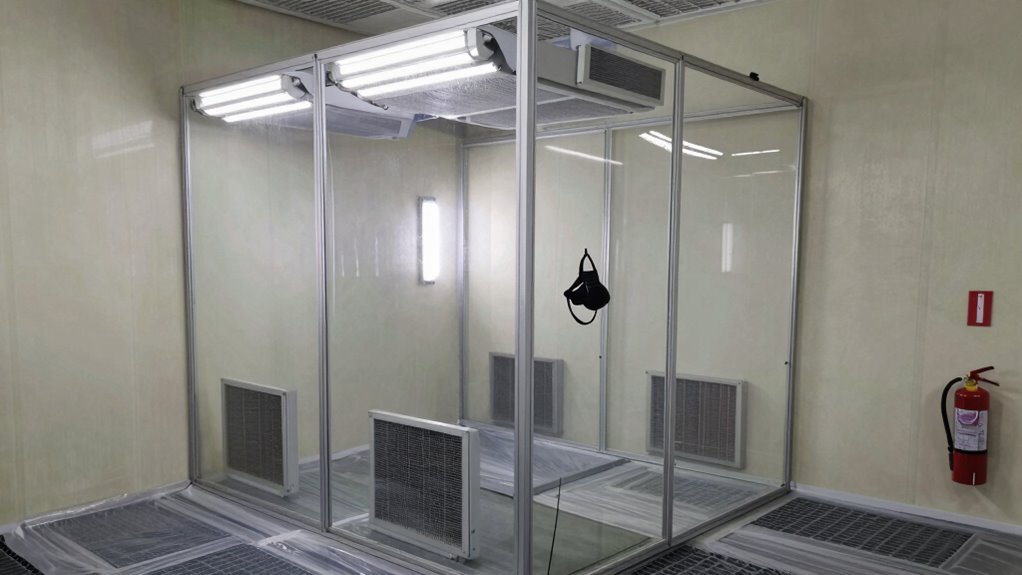

To build a safer indoor spray-painting area, set up a well-ventilated space with exhaust fans positioned near your work zone and away from other openings. Use plastic sheeting or drop cloths to contain overspray, and seal vents to keep fumes confined. Always wear protective gear like respirators, goggles, and gloves. Regularly maintain your ventilation and safety equipment for peak performance. Keep exploring to discover key tips for ensuring your workspace stays safe and effective.
Key Takeaways
- Set up a well-ventilated workspace with exhaust fans positioned near the painting area, away from openings.
- Use plastic sheeting or drop cloths to contain overspray and seal vents to prevent fumes from escaping.
- Incorporate air filtration units to capture fine particles and improve indoor air quality during painting.
- Always wear appropriate protective gear, including respirators, goggles, gloves, and coveralls.
- Regularly inspect and maintain ventilation systems and protective equipment for optimal safety and effectiveness.
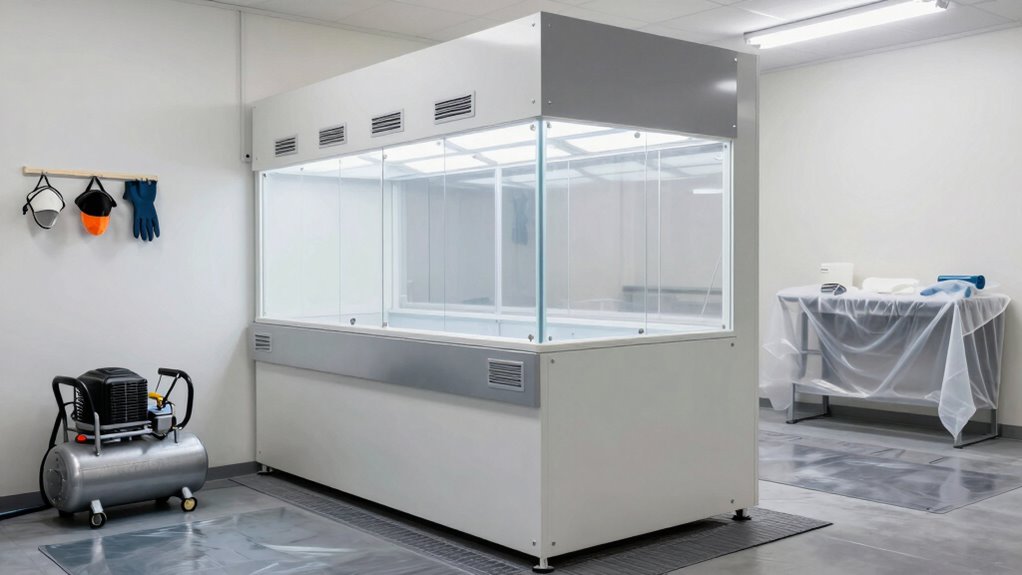
Creating a safe indoor spray-painting area is crucial to protect yourself and your surroundings from harmful fumes and overspray. To do this effectively, you need to focus on proper ventilation systems and the right protective gear. Ventilation is the backbone of a safe workspace. An efficient ventilation system ensures that toxic fumes don’t accumulate, reducing health risks and keeping the air clean. You should install exhaust fans or air filtration units that pull contaminated air out of the space and replace it with fresh air. Position these fans strategically—near the painting area and away from any openings or vents that could draw fumes into other parts of your home or workspace. Regularly maintaining and cleaning your ventilation system guarantees it runs at peak efficiency, which is crucial for safety. Incorporating air filtration units can further improve air quality by capturing fine particles and vapors, enhancing your safety during and after the painting process.
Effective ventilation and protective gear are essential for safe indoor spray painting.
Alongside ventilation, wearing the appropriate protective gear is non-negotiable. A high-quality respirator mask designed for paint fumes offers the best protection against inhaling hazardous particles and vapors. Pair this with safety goggles to shield your eyes from overspray and gloves to prevent skin contact with chemicals. Consider wearing a long-sleeved, chemical-resistant apron or coveralls to protect your clothing and skin. Remember, fumes can be dangerous even if they seem mild at first, so never skip your protective gear, regardless of how quick or routine the task might be.
Creating a designated, contained area also makes a significant difference. Use plastic sheeting or drop cloths to surround your workspace, preventing overspray from drifting into other rooms. Seal off vents or air ducts in the area to avoid spreading fumes elsewhere. When setting up your space, ensure good lighting and a stable surface for your work, which helps in controlling overspray and making the process safer and more precise.
Finally, remember that safety doesn’t end with construction. Keep your workspace well-ventilated during and after painting, and always follow manufacturer instructions on paints and solvents. Regularly inspect your ventilation system and protective gear for signs of wear or damage, replacing parts as needed. Building a safer indoor spray-painting area involves thoughtful planning and consistent upkeep, but the effort is worth it to protect your health and ensure a successful project.
indoor spray paint ventilation fan
As an affiliate, we earn on qualifying purchases.
As an affiliate, we earn on qualifying purchases.
Frequently Asked Questions
What Types of Paint Are Safest for Indoor Spray Painting?
You should choose low-VOC or zero-VOC paints for indoor spray painting, as they emit fewer paint fumes and reduce health risks. These paints contain fewer harmful chemicals, making the air safer to breathe. Additionally, pairing them with proper air filtration improves ventilation, capturing any lingering fumes. Always read labels to confirm the paint’s safety level, and verify your workspace is well-ventilated to protect your health during the process.
How Often Should I Replace or Clean Ventilation Filters?
You should replace or clean your ventilation filters regularly to guarantee ideal air quality and safety. For air filter maintenance, check filters every 1 to 3 months, depending on usage and paint fumes. Regular cleaning or replacement extends the ventilation system lifespan and maintains efficient airflow. If filters look dirty or clogged, replace them immediately to prevent paint particles from circulating and compromising indoor air quality.
Can I Use a Regular Fan Instead of a Dedicated Exhaust System?
You can use a regular fan instead of a dedicated exhaust system, but it’s not perfect. Focus on fan placement for peak airflow efficiency—position it near the spray area, pointing outward to remove fumes effectively. Keep in mind, regular fans may lack the power and filtration of specialized exhaust systems. For safer, cleaner spraying indoors, investing in a dedicated exhaust setup is usually the better choice.
What Personal Protective Equipment Is Essential Beyond Masks and Gloves?
Ever considered what else you might need besides masks and gloves? You should definitely wear protective eyewear to shield your eyes from splatters and fumes, and guarantee your respirator fits properly for maximum protection. Think about it—are you prepared for accidental splashes or inhaling fine particles? Using proper PPE like goggles and a well-fitted respirator keeps you safe from potential hazards, making your spray-painting experience much safer and more comfortable.
How Do I Dispose of Leftover Paint Safely?
You should first seal leftover paint tightly and store it in a well-ventilated, cool, and dry place, away from children and pets. Proper paint storage minimizes chemical hazards and prevents spills. For disposal, never pour paint down drains or onto the ground. Instead, take leftover paint to a local hazardous waste facility. This guarantees safe disposal, reduces environmental impact, and keeps your space free of chemical hazards.
Conclusion
By transforming your space into a safe haven, you’re not just painting walls—you’re crafting a shield against hazards. Think of your indoor spray-painting area as a fortress, where safety measures act as sturdy walls, keeping danger at bay. With proper ventilation and protective gear, you become the guardian of your creative kingdom. When you prioritize safety, your artistic journey becomes a vibrant dance, fluid and fearless, painting your world with confidence and care.