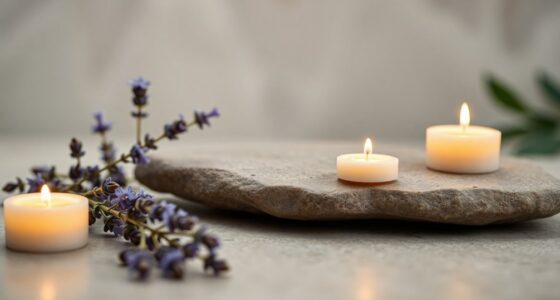
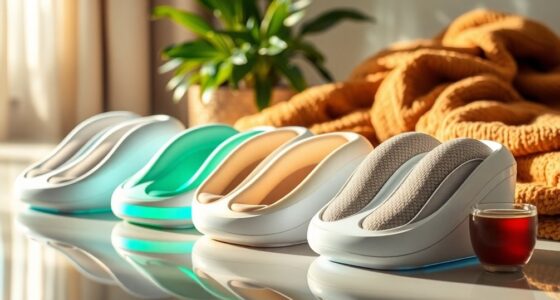
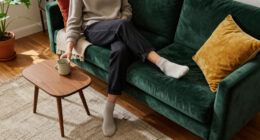
To set up a gentle stretching corner, choose a quiet, clutter-free spot near a window with natural light, creating a peaceful retreat. Decorate with soft rugs, cushions, and calming colors like pastels or earth tones, and add natural elements such as plants or water features. Use a yoga mat or supportive cushion for your stretches, and include calming scents like lavender. Focusing on simple poses and maintaining a routine helps build relaxation—exploring more tips can help you create the perfect space.

Get furniture and decor delivered free with Prime
- Fast, free delivery on millions of items
- Prime Video, Amazon Music and more included
- Member-only deals all year
Key Takeaways
- Choose a quiet, well-lit spot near a window with minimal distractions.
- Decorate with soft rugs, cushions, and calming colors to create a cozy, inviting atmosphere.
- Incorporate natural elements like plants and gentle scents to enhance relaxation.
- Use a comfortable mat or cushion and keep essentials nearby for easy access.
- Establish a daily routine focused on gentle poses and mindful breathing to foster consistency.

Creating a dedicated gentle stretching corner in your home can transform your daily routine into a calming, restorative practice. This space becomes your sanctuary for relaxation and mindfulness, where you can reconnect with your body and clear your mind. To start, choose a quiet, uncluttered area that feels inviting and free from distractions. Think about a corner near a window where natural light filters in, or a spot that offers a sense of privacy. The key is to make it feel like a retreat from the hustle of daily life, a place where you look forward to spending a few minutes each day.
Create a tranquil corner near a window for daily relaxation and mindful stretching.
Once you’ve picked your spot, focus on the decor to foster a sense of calm. Incorporate calming decor elements like soft rugs, plush cushions, or a cozy blanket. Keep the color palette soothing—think gentle neutrals, pastels, or earth tones. Minimalist decor works best, as it reduces visual clutter and helps you stay centered. Adding a few natural touches, such as potted plants or a small water fountain, can enhance the tranquility and bring a sense of nature indoors. The goal is to create an environment that invites you to breathe deeply and relax fully. Creating a space with intentional design can make your stretching routine more effective and enjoyable. Incorporating biodiversity elements like indoor plants not only beautifies the space but also promotes well-being and connection to nature. Additionally, integrating elements of indoor environment quality can further support relaxation and comfort. Paying attention to indoor air quality can also contribute to a healthier, more rejuvenating environment. Being mindful of the indoor environment overall helps create a truly restorative atmosphere.
Next, set up a comfortable surface for stretching. A yoga mat or thick cushion provides the necessary support for various yoga poses and stretches. Keep a small side table nearby to hold essentials like your water bottle, a journal, or calming essential oils—lavender or chamomile, for example. These scents can deepen the relaxing atmosphere and help you shift into your stretching routine. Make sure your corner allows enough space for movement, so you don’t feel cramped or restricted.
Practicing yoga poses in this dedicated space becomes more effective when your environment is intentionally designed for calmness. Focus on simple, restorative poses like child’s pose, downward dog, or seated forward bends. Use the space to breathe deeply, hold each stretch, and stay present. Over time, this corner becomes more than just a physical spot; it becomes a mental refuge that encourages mindfulness and self-care. By thoughtfully combining yoga poses with calming decor, you create a nurturing environment where your stretching practice can flourish and become a cherished part of your daily routine.
As an affiliate, we earn on qualifying purchases.
Frequently Asked Questions
What Are the Best Times of Day for Stretching?
You should stretch during your morning routines to wake up your body and boost circulation for the day ahead. Evening relaxation is also ideal, helping you unwind and release tension from daily activities. The best times are when your muscles are warm and you’re not rushed, so early mornings or right before bed work perfectly. Regular stretching at these times enhances flexibility and promotes overall well-being.
How Much Space Do I Need for a Stretching Corner?
They say, “A place for everything, and everything in its place.” For your stretching corner, you’ll want a space of about 4×6 feet, providing ample room for stretching equipment like yoga mats, foam rollers, or resistance bands. The ideal corner dimensions guarantee you have enough space to move comfortably without feeling cramped. Keep it open, organized, and dedicated to your routine for the best results.
Can Beginners Do Gentle Stretches Safely?
Yes, beginners can do gentle stretches safely by following proper stretching techniques and safety precautions. Start slowly, listening to your body, and avoid pushing into pain. Focus on controlled movements and hold each stretch comfortably. Remember to breathe deeply, and never force a stretch. If you’re unsure, consider consulting a fitness professional to guide you, ensuring you avoid injury and build a safe, effective routine.
What Are Common Mistakes to Avoid?
You should avoid poor posture correction and neglecting equipment essentials, as these are common mistakes. Don’t stretch too quickly or forcefully, which can cause injury. Make certain your equipment is stable and suitable for gentle stretching, like mats or blocks. Also, avoid overstretching or holding positions for too long. Listening to your body helps prevent strain, and maintaining proper posture ensures safe, effective stretching.
How Often Should I Stretch for Optimal Benefits?
You should stretch at least once or twice daily for maximum benefits, but don’t overdo it—imagine stretching so much your muscles scream for mercy! Keep hydration tips in mind, drinking water before and after to prevent cramps. Use stretch equipment like yoga blocks or straps to deepen your stretches safely. Consistency is key—stick with it, and you’ll gain flexibility, reduce stress, and boost your overall well-being.
Conclusion
Now that you’ve created your perfect stretching corner, get ready to unleash a level of relaxation so profound, it’s like discovering a secret haven in your own home! Every stretch will feel like a mini vacation, transforming your day from chaos to calm in seconds. Stick with it, and soon you’ll be so flexible, even your yoga mat will be jealous! Your new sanctuary isn’t just a corner—it’s your personal portal to bliss.
Halloween Picks
halloween
As an affiliate, we earn on qualifying purchases.