
Your “gray” lipstick may look purple at night because lighting, especially dim or cool light, can shift how colors appear. Your eyes also adapt to surroundings, altering color perception. Undertones in your makeup and skin, like blue or pink, become more noticeable under different lighting. To keep your look consistent, it’s important to test shades in various environments. If you want to understand how to prevent this color shift, keep exploring these details.
Key Takeaways
- Lighting conditions, especially dim or cool lighting, can enhance blue undertones, making gray lipstick appear purple.
- Eye adaptation and perception shifts cause colors to look different under various lighting environments.
- Natural daylight reveals true shades, while artificial lighting can distort undertones, emphasizing purple hues in gray lipstick.
- Different skin undertones influence how gray lipstick appears, with cool undertones more prone to looking purple at night.
- Proper testing in multiple lighting conditions helps predict how gray shades will look, preventing unwanted purple appearances.
Why Does Gray Lipstick Sometimes Look Purple in Different Lights?
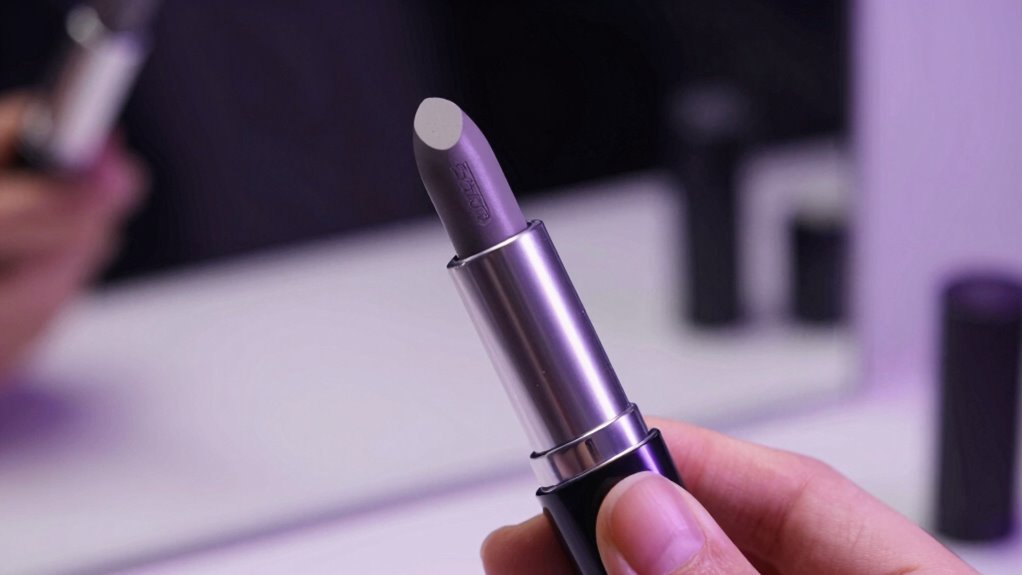
Gray lipstick can appear purple in certain lighting conditions because of how different light sources interact with its underlying pigments. According to color theory, the way colors blend and reflect light influences how we perceive shades. When you wear gray lipstick, the subtle mix of black and white base tones can shift under various lights, making it seem like there’s a hint of purple. This effect is especially noticeable in dim or cool lighting, where blue undertones become more prominent. Proper makeup blending can help you achieve a more consistent look, but lighting still plays a significant role. Additionally, the color temperature of your environment can greatly influence how your lipstick appears, emphasizing or diminishing certain undertones. Understanding how light interacts with your lipstick’s pigments helps you anticipate color changes and choose shades that match your desired effect in any setting. Recognizing lighting conditions can also help you select the right makeup for different environments to ensure your look remains consistent. Being aware of lighting variations allows for better planning when choosing makeup shades for different occasions or settings. Moreover, being mindful of the surrounding environment can help you better predict how your makeup will look when you’re outdoors or indoors. In addition, the type of light bulb used in indoor settings can significantly alter how colors appear, affecting your overall look.
Understanding Undertones and How They Affect Makeup Colors

Understanding undertones is key to choosing makeup colors that complement your natural complexion. When you master undertone matching, you can select shades that enhance your skin’s inherent hue, creating a harmonious look. Warm undertones, like peach or golden hues, pair well with earthy tones, while cool undertones, such as pink or blue-based shades, work better with jewel tones. Recognizing your undertone helps you avoid clashing colors and achieve better color harmony. For example, if you have cool undertones, avoid warm-colored foundations or lipsticks that might make your skin appear off. Additionally, understanding undertones can also help you select the most cost-effective makeup products that suit your complexion, preventing unnecessary purchases. Knowing how undertones influence overall appearance allows for more confident makeup choices that highlight your features and create a balanced, polished appearance. By understanding the subtle differences in undertones, you can make smarter makeup choices that highlight your features and create a balanced, polished appearance. Paying attention to undertone clarity can improve your ability to pick shades that truly match your skin. Recognizing the influence of undertones can help you better understand how different lighting conditions, like at night, may alter the perception of your makeup colors. For instance, lighting conditions, such as nighttime or dim environments, can significantly influence how your undertones appear and thus impact your overall makeup look.
How Light and Eyes Perception Cause Color Shifts

Your perception of color can shift depending on the lighting around you, making shades look different than they do in other conditions. When lighting changes, your eyes adapt quickly, altering how you see hues and undertones. Understanding these effects helps you recognize when colors may appear different than expected. Additionally, color perception is influenced by various environmental factors, including light temperature and intensity, which can further impact how you interpret shades. For example, lighting conditions can cause colors to seem more vibrant or muted, affecting your overall perception. Being aware of visual perception factors can help you better understand these color shifts in different settings, especially as light adaptation occurs rapidly to optimize your vision. Recognizing perceptual illusions caused by lighting can also improve your awareness of how your brain interprets color cues.
Lighting Conditions Alter Perception
Lighting conditions play a crucial role in how colors are perceived, often causing noticeable shifts that can confuse even the keenest eyes. Under different lighting, your perception of undertones can change dramatically, influencing how you see colors like gray or purple. This is where understanding color psychology becomes essential—certain lighting can make shades appear warmer or cooler, affecting your mood and makeup choices. For example, dim, warm lighting might cause your makeup to look less vibrant, reducing its longevity and impact. Bright, natural light reveals true undertones, helping you make better decisions about color matching and application. Recognizing how lighting alters perception can prevent misjudgments and ensure your makeup looks flawless, regardless of the environment.
Eye Adaptation Influences Color
As your eyes adjust to different lighting conditions, they actively influence how you perceive colors, often causing shifts that can surprise you. This process, known as visual adaptation, allows your eyes to fine-tune their response to varying light levels, affecting your color perception. When you move from bright daylight to a dim room, your pupils dilate, and your retina adjusts sensitivity. These changes can make colors appear different—what seemed neutral might look tinged with hue, like gray turning purple at night. Your eyes’ ability to adapt ensures you see details across lighting environments, but it also means color perception isn’t fixed. Instead, it constantly shifts based on light, causing subtle or dramatic color changes that catch you off guard. Understanding the mechanisms behind visual perception can also help explain how digital systems are similarly affected by changing conditions and security measures.
How to Identify Purple Undertones in Your Gray Makeup
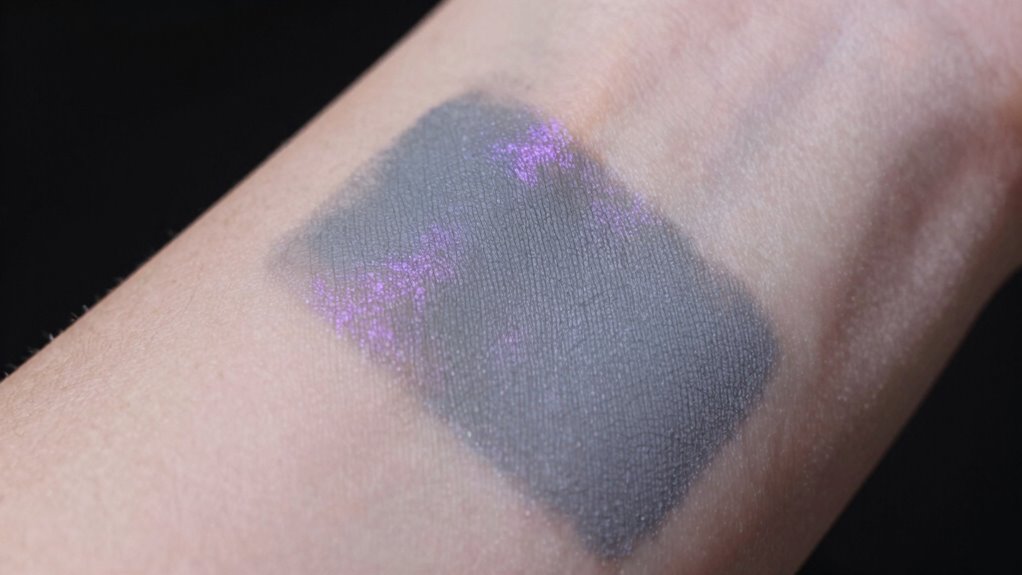
Purple undertones in gray makeup can be be subtle, but they make a noticeable difference once you know what to look for. To identify these undertones, focus on shade variations under different lighting conditions. Gray with purple undertones often appears cooler or slightly bluish at first glance, but close inspection reveals hints of lavender or violet. Your color perception plays a role—sometimes what looks neutral in daylight may seem cooler or warmer at night. Pay attention to how the makeup interacts with your skin tone and surrounding colors. If the gray shifts toward a subtle purple hue, you’ve likely found a shade with purple undertones. Recognizing these subtle differences helps you select the right shade to enhance your look. Additionally, understanding color undertone recognition can improve your ability to choose makeup shades that complement your natural complexion.
How Lighting Changes Makeup Colors and How to Fix It

Gray makeup shades with subtle purple undertones can look different depending on the lighting around you. Lighting illusions can distort your color perception, making your makeup appear cooler or warmer than it actually is. To fix this, consider these tips:
- Test makeup in natural daylight before committing.
- Use consistent lighting when applying makeup to see true shades.
- Avoid fluorescent lighting, which can cast a greenish hue.
- Invest in adjustable, neutral-toned bulbs for your vanity mirror.
- Remember that lighting conditions can significantly impact how makeup colors appear, so paying attention to your environment is key.
- Choosing the right makeup lighting can help ensure your shades look flawless in any setting.
- Understanding home lighting and its effects can help you create a more accurate makeup environment.
- Proper understanding of lighting illusions can aid in selecting shades that stay true regardless of the ambient light.
- Be aware that lighting technology continues to evolve, offering more options for accurate color representation.
How to Test and Confirm Your Undertones at Home or in Store

To accurately determine your undertones, start by examining how your skin reacts to different colors and lighting conditions both at home and in stores. Using color theory, look at how your skin either harmonizes or clashes with jewelry, clothing, or drapes in natural and artificial light. Hold different shades of white, beige, or taupe near your face to see which complements your skin best. Notice if your skin looks more vibrant with silver or gold accessories. Your skin undertones—cool, warm, or neutral—will influence these reactions. Testing in various environments helps you observe subtle shifts, confirming your undertones. Remember, consistent results across lighting conditions are key to accurately identifying your skin undertones at home or in store. Familiarizing yourself with at-home beauty technology can also assist in revealing your undertones more precisely.
Tips for Choosing Gray Makeup That Looks Good in All Lights
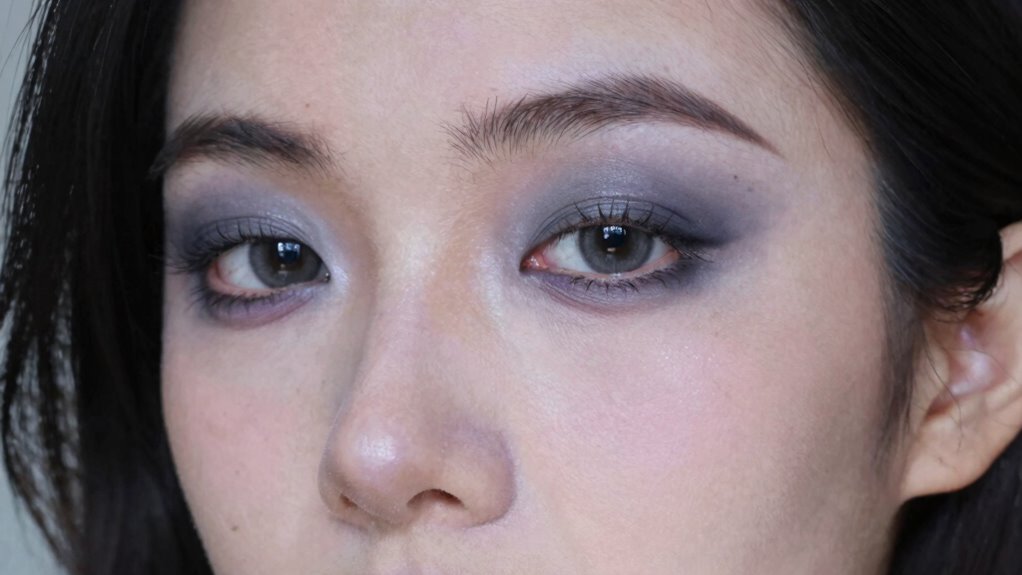
Choosing the right gray makeup is about understanding how it interacts with your skin and lighting conditions. To guarantee your look stays flawless in every setting, focus on shade compatibility and color harmony. Select grays with subtle undertones that complement your skin tone, preventing them from appearing dull or mismatched. Test your shades under different light sources to see how they shift, and opt for those that maintain their balance.
Here are some tips:
- Pick cool or warm gray shades based on your undertone
- Avoid overly muted or muddy grays
- Use neutral lighting for accurate testing
- Match your gray to your overall makeup palette
Common Mistakes When Picking Gray and Purple Makeup Products
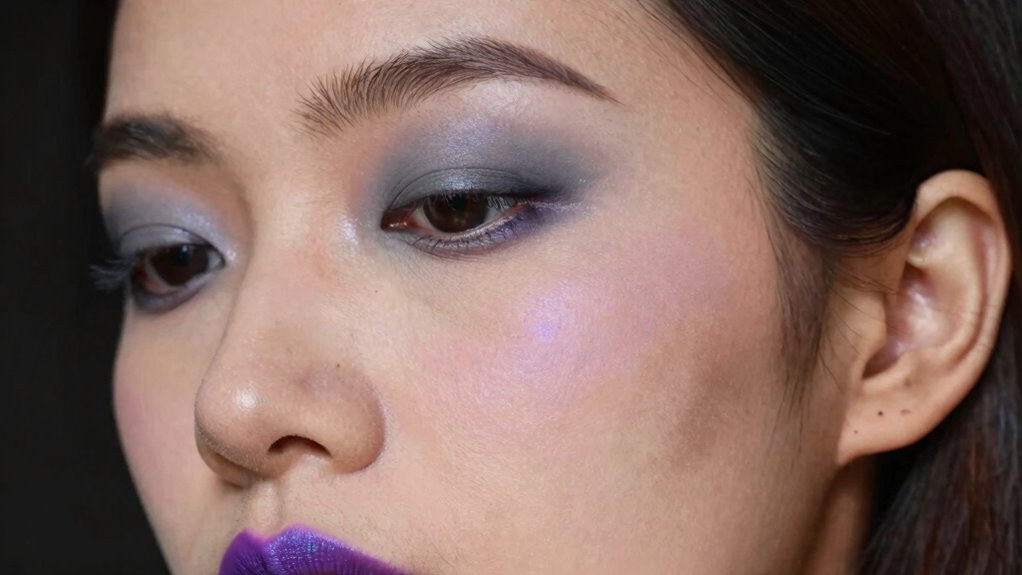
One common mistake people make when selecting gray and purple makeup products is ignoring their undertones, which can lead to mismatched or dull-looking results. When you’re shade matching, it’s essential to consider whether the product’s undertone aligns with your skin’s natural hue. Failing to do this can result in colors that clash or appear flat. Additionally, poor pigment blending can make your makeup look uneven or patchy, especially with tricky shades like gray and purple. To avoid these mistakes, test products in natural light and focus on how well the undertones complement your complexion. Proper shade matching combined with skillful pigment blending ensures your makeup enhances your features rather than detracting from them.
How to Make Your Makeup Look Flawless in Any Lighting
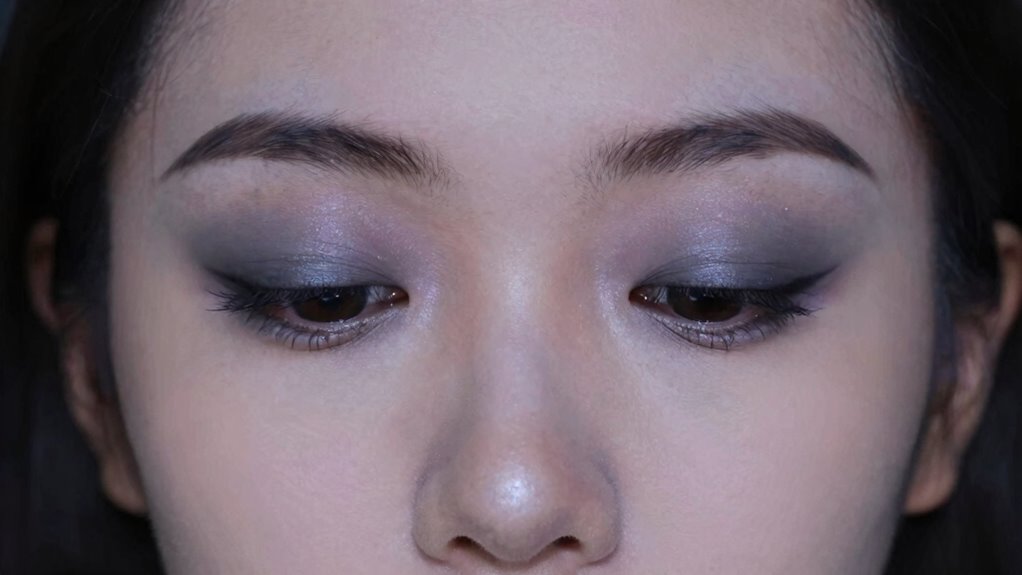
Achieving a flawless makeup look in any lighting requires paying close attention to how your products appear under different conditions. Lighting illusions can distort colors, so understanding color psychology helps you choose shades that flatter you in various settings. To optimize your look:
- Test your makeup in different lighting environments before heading out.
- Use matte finishes to reduce glare and maintain color accuracy.
- Apply highlighter strategically to enhance natural features without overdoing it.
- Choose neutral tones that adapt well from daylight to artificial lighting.
- Being aware of lighting conditions can help you adjust your makeup application more effectively. Additionally, understanding color perception can aid in selecting shades that look consistent regardless of the environment.
Frequently Asked Questions
Can Skin Undertones Influence How Gray Lipstick Appears Under Different Lights?
Your skin’s undertone influence definitely impacts how gray lipstick looks under different lighting effects. If you have warm undertones, the gray might appear with a slight brown or taupe hue, while cool undertones can make it seem more bluish or purple. Lighting effects further alter this perception, making the lipstick appear differently indoors versus outdoors. So, understanding your undertones helps you choose shades that flatter you in various lighting conditions.
Are There Specific Brands That Offer True Gray Shades Unaffected by Lighting?
Gray lipsticks that stay true regardless of lighting are rare, but some brands like MAC and Kat Von D prioritize product formulation and brand consistency to deliver more reliable shades. They carefully craft their formulas to minimize underlying undertones that shift with lighting. While no shade is perfect, these brands offer options that come close, giving you a more consistent gray that doesn’t turn purple or shift hue in different environments.
How Do Environmental Factors Like Humidity or Temperature Impact Makeup Color Perception?
Environmental factors like lighting conditions and skin hydration can profoundly impact how your makeup color appears. Poor lighting can distort shades, making your makeup look different than in natural light, while low humidity can cause your skin to become dry, affecting color application and perception. To get the true color, always check your makeup in natural light and keep your skin well-hydrated, ensuring consistent and accurate color perception.
Can Makeup Primers or Setting Sprays Alter How Gray or Purple Shades Look?
Makeup primers and setting sprays can definitely alter how gray or purple shades look on your skin. Primer effects, like smoothing or adding a glow, can intensify or mute certain tones. Lighting distortions also play a role, making colors appear different under various conditions. By choosing the right primer and paying attention to lighting, you can enhance your makeup’s true shades and avoid unexpected color shifts.
Are There Techniques to Test Makeup Colors Accurately Outside a Store or Home?
Sure, you can test makeup colors outside a store or home with a little humor and savvy. Use color matching techniques under natural lighting or do a lighting calibration by comparing swatches in daylight. Avoid fluorescent or yellow-tinted lights, which turn your perfect shade into a nightmare. Trust your eyes in natural light—if the color looks good there, it’ll likely pass the test, even if it looks suspiciously purple at night.
Conclusion
Understanding the subtle dance of undertones and lighting can elevate your makeup game, ensuring your look remains impeccable from dawn to dusk. By recognizing how different lights influence colors, you can make more informed choices that flatter your unique features. Embrace these insights as a gentle guide, allowing your natural beauty to shine through effortlessly, no matter where you find yourself. After all, a truly polished appearance is about harmony, not perfection.