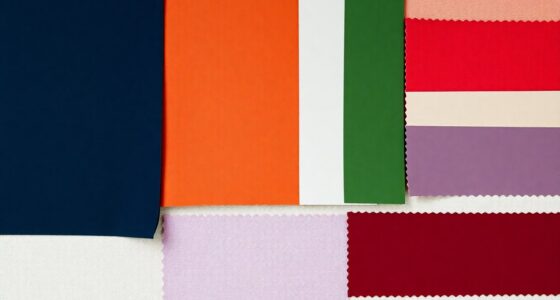
In mid-century modern design, you’ll notice bold palettes that blend earthy neutrals like browns, beiges, and grays with vibrant pops of yellows, greens, and oranges, creating a warm yet energetic vibe. Materials such as rich woods—teak, walnut, rosewood—combine with sleek metals, fiberglass, and plastics to highlight innovation. Signature patterns feature geometric, asymmetrical motifs that serve as visual anchors, balancing function and aesthetics. Explore these iconic palettes and materials further to capture the essence of this timeless style.
Key Takeaways
- Earthy neutrals like warm browns, beiges, and cool grays form versatile backgrounds in mid-century modern palettes.
- Bright accent colors such as sunny yellows, mint greens, and bold oranges add energetic highlights.
- Natural woods like teak, walnut, and rosewood provide rich textures and warmth to furniture and decor.
- Metals, including brushed brass and chrome, create striking contrasts and sleek accents.
- Innovative materials like plastics and fiberglass reflect technological advances and futuristic design elements.
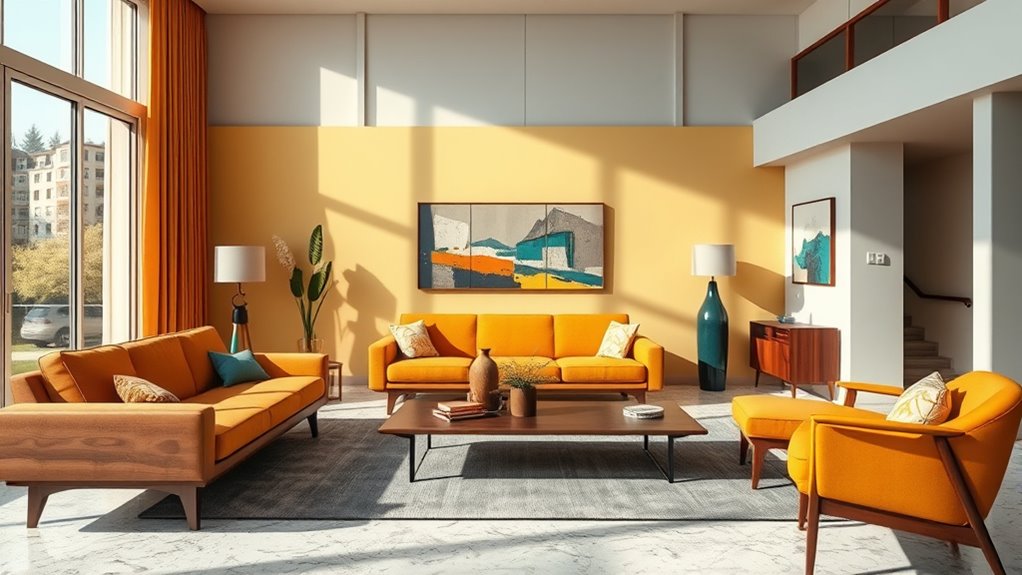
Have you ever wondered what makes Mid-Century Modern design so timeless? It’s a style that continues to captivate because of its bold yet simple aesthetic, its innovative use of materials, and its ability to blend form with function effortlessly. Central to its enduring appeal are the famous designers who shaped this movement, each bringing their unique vision and signature patterns that still influence designers today. Think of Charles and Ray Eames, whose pioneering use of molded plywood and fiberglass revolutionized furniture, or Eero Saarinen, whose sleek tulip chairs and tables broke away from traditional forms. These designers didn’t just create furniture; they crafted visual identities through signature patterns and innovative materials that became hallmarks of the era. The palette of Mid-Century Modern design is iconic, characterized by earthy neutrals mixed with vibrant pops of color. Warm browns, soft beiges, and cool grays serve as versatile backgrounds, allowing brighter hues to stand out. Think of sunny yellows, mint greens, or bold oranges—colors that energize a space while maintaining a sense of balance. These palettes weren’t accidental; they reflected a desire to bring warmth and optimism into post-war homes. The materials used also echo this intent. You’ll find a lot of natural woods like teak, walnut, and rosewood, which add rich textures and organic warmth. These woods are often paired with sleek metals—brushed brass or chrome—creating a striking contrast that still feels harmonious. Additionally, plastics and fiberglass became popular for their versatility and futuristic appeal, embodying the mid-century fascination with new technologies and materials. Authentic materials like these contributed to the style’s signature look and feel. Much of the style’s appeal lies in its ability to adapt and evolve, yet always retain its core aesthetic. The signature patterns created by famous designers are often geometric, incorporating clean lines, asymmetry, and repetitive motifs that lend a sense of rhythm and harmony to any space. These patterns are more than decorative; they serve as visual anchors that tie a room together. Whether it’s a geometric wallpaper or a fabric with bold, abstract shapes, these signature patterns make a statement while remaining understated and refined. The careful selection of palettes and materials reflects a deliberate effort to craft spaces that are both functional and visually striking. It’s this balance—achieved by iconic designers and their signature patterns—that keeps Mid-Century Modern design fresh and relevant, even decades later.
Frequently Asked Questions
How Did Mid-Century Modern Design Influence Today’s Interiors?
Mid-century modern design influences your interiors by emphasizing minimalist lighting that creates clean, functional spaces. You’ll notice geometric patterns in furniture and décor, adding visual interest without clutter. This style encourages simplicity and practicality, inspiring your choices today. You’re drawn to its timeless appeal, blending sleek lines with bold shapes, making your home feel both modern and welcoming. Its legacy shapes your aesthetic, fostering a space that’s stylish yet effortlessly livable.
What Are Common Misconceptions About Mid-Century Modern Palettes?
You might think mid-century modern palettes are limited to bold, primary colors, but that’s a misconception. In reality, the palette diversity includes earthy tones and muted shades, influenced by color psychology to create balance and harmony. This variety shows that mid-century modern design isn’t just about bright colors; it’s about thoughtfully using a range of hues to evoke specific moods and complement different interiors.
Which Materials Are Most Sustainable in Mid-Century Modern Design?
Think of sustainable materials as the heart of eco-friendly design. You’ll find reclaimed wood and recycled metals leading the charge, giving old materials new life. These choices are not only environmentally friendly but also add warmth and character to your space. By opting for reclaimed wood and recycled metals, you’re weaving sustainability into your mid-century modern aesthetic, making your home both stylish and kind to the planet.
How Can I Incorporate Mid-Century Modern Colors Into Contemporary Spaces?
You can incorporate mid-century modern colors into contemporary spaces by using classic color pairing techniques, like pairing warm oranges with cool teals or mustard yellows with charcoal grays. Focus on material texture by mixing sleek, smooth finishes with natural wood or textured fabrics to add depth. This approach creates a balanced, vibrant look that pays homage to mid-century modern style while keeping your space fresh and current.
What Are the Best Sources for Authentic Mid-Century Modern Furniture?
Imagine strolling through vintage shops, where sleek teak chairs and sculptural lamps catch your eye, or browsing online marketplaces filled with authentic pieces. You’ll find the best sources for genuine mid-century modern furniture in these places. Vintage shops often offer carefully curated items, while online marketplaces provide a vast selection. Look for trusted sellers with good reviews to guarantee you get high-quality, authentic pieces that bring timeless style into your space.
Conclusion
Embrace the timeless charm of mid-century modern design, where iconic palettes and materials weave a tapestry of elegance. Like a carefully curated melody, these elements harmonize to create spaces that whisper stories of innovation and grace. When you incorporate these enduring styles, you’re not just decorating—you’re crafting a living masterpiece that echoes the sophistication of a bygone era, yet remains eternally fresh, inviting you to bask in its effortless allure.