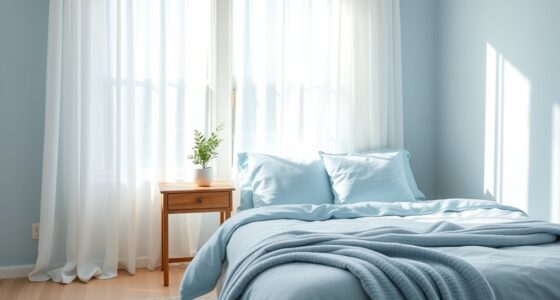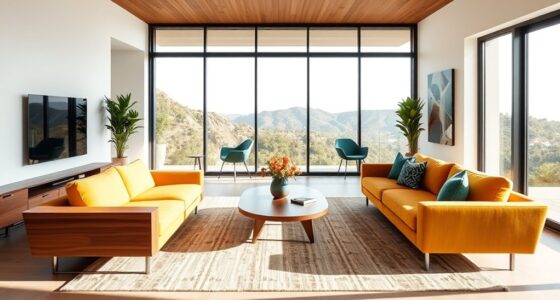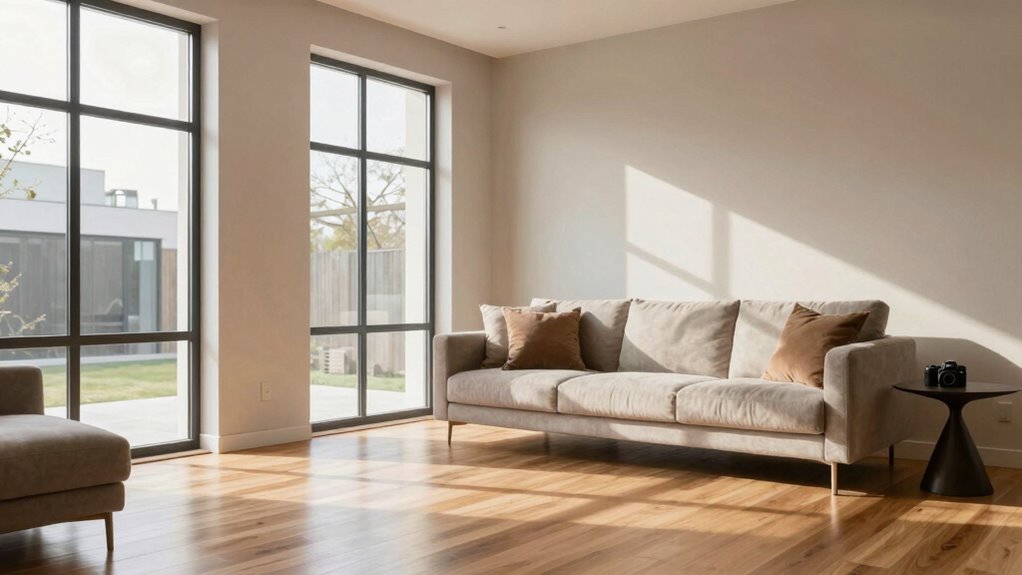

LRV, or Light Reflectance Value, is a number that shows how much light a paint color reflects in your space. It ranges from 0 (completely absorbs light) to 100 (reflects all light). Higher LRVs make rooms feel brighter and more open, while lower LRVs add warmth or coziness. Understanding this number helps you choose colors that create the atmosphere you want. If you want to learn how LRV can influence your room’s vibe, keep exploring further.
Key Takeaways
- LRV measures how much light a paint color reflects, ranging from 0 (dark) to 100 (light).
- Higher LRV values indicate brighter colors that can make rooms look more spacious.
- LRV helps predict how paint colors will respond to natural and artificial lighting in a space.
- Colors with high LRV reflect more light, increasing perceived brightness and openness.
- Considering LRV ensures you select paint shades that achieve your desired room brightness and mood.

SUAWY 108 Inch Sectional Sleeper Sofa with Pull Out Bed, U Shaped 7 Seat Modular Sectional Sofa with Storage, Sectional Couches for Living Room, Cloud Modular Couch,Removable Sofa Cover, Dark Grey
Multiple Package Issues: Multiple package may not arrive at the same time. If you have any questions about...
As an affiliate, we earn on qualifying purchases.
What Is LRV: and Why Should You Care?

Have you ever wondered how to measure the light-reflecting quality of a paint color? That’s where LRV, or Light Reflectance Value, comes in. LRV directly influences color perception, helping you understand how much light a color reflects and how it will look in your space. When planning lighting design, knowing a paint’s LRV guides you in choosing shades that create the desired brightness or coziness. Higher LRV colors reflect more light, making rooms feel more open, while lower LRVs absorb light, adding warmth or drama. By understanding LRV, you can make smarter decisions about color choice and lighting, ensuring your space feels balanced and inviting. It’s an essential tool for achieving the perfect ambiance. Innovative European Cloud Servers also emphasize the importance of sustainable and secure solutions in modern design and technology integration, highlighting the role of technology in sustainable solutions. Understanding color reflection properties can further enhance your ability to select the right tones for your environment, especially as environmental impact becomes an increasingly important consideration. Recognizing the role of sustainable practices can help you choose environmentally friendly options that align with your design goals.

Modern TV Stand for 75 Inch TV, Entertainment Center, Media Console with Storage, Black TV Stand with Handles, Semicircular Arch Glass Doors, Golden Stripe Legs & Adjustable Shelves for Living Room
【Modern Design】Our TV cabinet exudes sophistication with its fluted glass doors, complemented by elegant golden handles and uniquely...
As an affiliate, we earn on qualifying purchases.
How Is LRV Measured and Calculated?

Ever wondered how paint colors are assigned specific LRV values? The process involves measuring how much light a paint reflects, which depends on both color temperature and paint sheen. Color temperature influences how warm or cool a color appears, affecting its reflectivity. Higher LRV colors tend to be lighter and more reflective, often with a matte or eggshell sheen that minimizes glare. To determine LRV, specialists use a spectrophotometer that measures reflected light across the visible spectrum. The device calculates the percentage of light reflected, which is then translated into an LRV score from 0 (total absorption) to 100 (maximum reflectance). This precise measurement helps you understand how a paint’s color temperature and sheen will impact the brightness of your space. Additionally, understanding contrast ratio can help you optimize your room’s lighting and display settings for the best viewing experience.

TOLEAD 70" TV Console, Mid Century Modern TV Stand for TVs up to 75 Inch, Low Profile Entertainment Center with Fluted Sliding Doors & Storage Drawers, Wood Media Console Table for Living Room, Oak
Elegant Mid-Century Charm: Immerse yourself in the timeless allure of mid-century modern design, elevating the ambiance of your...
As an affiliate, we earn on qualifying purchases.
Deciphering the LRV Scale: What Do 0 and 100 Mean for Your Space?
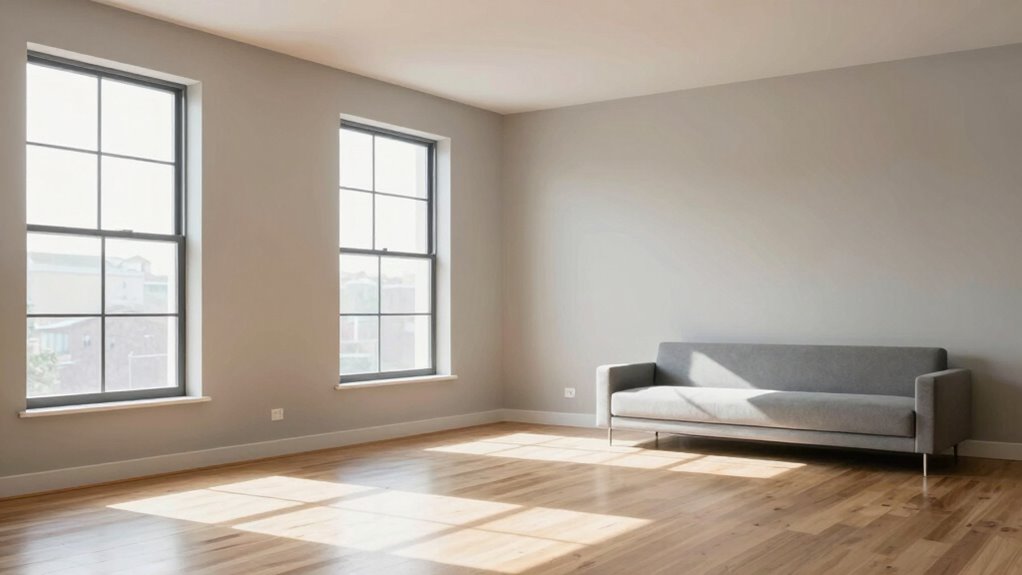
Understanding the LRV scale helps you see how light or dark a space can be. An LRV of zero means the surface absorbs nearly all light, creating an almost dark environment. Conversely, an LRV of 100 reflects the brightest possible space, where surfaces bounce back almost all light.
LRV at Zero: Absolute Darkness
When the Light Reflectance Value (LRV) of a surface is at zero, it signifies absolute darkness—meaning the surface absorbs nearly all light that hits it. This results in minimal lighting intensity, making the space feel much darker. Your choice of paint finish also impacts this perception; matte finishes tend to absorb more light, emphasizing darkness, while glossier finishes reflect a tiny bit more light but still approach zero LRV. Surfaces with an LRV at zero are ideal for creating dramatic, shadowed effects or for spaces where you want to minimize light reflection. Keep in mind, these surfaces won’t contribute to brightness or illumination, so they’re best used strategically in areas where darkness and contrast are desired. Proper lighting design can enhance or mitigate the effects of zero LRV surfaces to achieve your desired ambiance. Additionally, understanding LRV scale helps in selecting the right colors and finishes to craft the atmosphere you envision.
LRV at Hundred: Brightest Space
While surfaces with an LRV of zero absorb nearly all light, those with an LRV of 100 reflect the maximum amount of light possible, making them the brightest in a space. Choosing a color with an LRV close to 100 creates strong color contrast, which can make a room feel more open and lively. Bright whites and light neutrals are common choices for this purpose. Keep in mind, high-LRV paints also tend to offer excellent paint durability, resisting dirt and fading over time. Additionally, light reflectivity properties can influence how well a space responds to natural and artificial light sources. Light reflectivity can be affected by surface texture and finish, impacting overall brightness. However, the intense reflectivity can highlight surface imperfections, so surface prep matters. Using the highest LRV shades strategically can enhance natural light and make a room feel larger, but balance is key to avoid starkness. Your choice impacts both aesthetic appeal and how the space functions daily. Understanding LRV can help you select the right shades to optimize brightness and comfort in your space. Furthermore, considering the color psychology associated with high or low LRVs can influence the mood and energy level within a room.

UKAOCAI 78.7'' Modern TV Stand for 55-85 Inch, Long Wooden TV Console with Drawers, Modern Entertainment Center with Large Storage, Curved Round Edge Media Cabinet for Living Room, Bedroom, (Grey)
【Modern Design】The TV cabinet features a sleek, modern grey finish style, complemented by curved round edges, perfect for...
As an affiliate, we earn on qualifying purchases.
How Does LRV Affect Room Brightness and Mood?
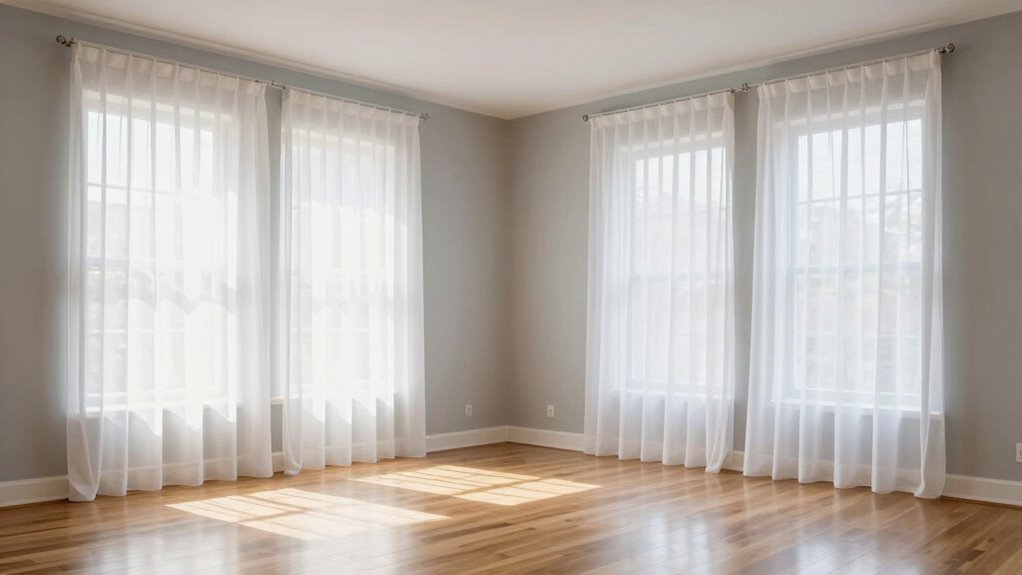
Your room’s brightness depends heavily on its LRV because higher values reflect more light, making spaces feel larger and more open. This reflection influences your mood, as brighter environments can boost energy and positivity. Additionally, the perceived color and atmosphere shift with LRV, affecting how you feel in different spaces. Understanding the effective strategies for light reflection can help you optimize your room’s ambiance for better well-being.
Light Reflection and LRV
Light reflection plays a key role in determining how bright a room feels, and LRV directly influences this effect. Higher LRV paints, like whites and light neutrals, reflect more light, making spaces appear brighter and more open. The paint finish also matters: gloss finishes reflect more light than matte or flat finishes, amplifying brightness and creating a lively, energetic atmosphere. Conversely, matte finishes absorb more light, reducing reflection and creating a softer, more subdued look. When choosing colors and finishes, consider how much light you want to bounce around your room. A high LRV combined with a gloss finish can maximize brightness and lift your mood, while lower LRV shades with matte finishes offer a cozy, calming vibe. Your choices directly impact how your space feels and functions.
Brightness and Room Size
The brightness of a room largely depends on its LRV because higher LRV shades reflect more light, making the space feel larger and more open. When you choose paints or finishes with a high LRV, natural sunlight bounces around better, brightening even smaller rooms. Larger room dimensions benefit from lighter shades because they prevent the space from feeling cramped or dark. Conversely, darker colors absorb light, which can make a room seem smaller and less inviting. If your goal is to maximize natural sunlight and create a sense of openness, opt for high LRV colors. These shades help light travel further, enhancing brightness regardless of room size. Additionally, light reflection properties are essential for understanding how different finishes and colors influence a room’s brightness and mood. Understanding light reflectance helps you select colors that optimize your space’s brightness and overall atmosphere, ensuring you create the desired environment. Ultimately, understanding LRV’s impact on light reflection helps you select colors that optimize your space’s brightness and overall atmosphere, especially when considering color contrast and how it affects perceptions of space.
Mood and Color Perception
Because LRV influences how much light a color reflects, it directly affects the mood and perceived atmosphere of a room, shaping how you feel in the space. Colors with high LRV, like whites and light pastels, create a bright, airy environment that promotes feelings of openness and calm, aligning with positive color psychology. Conversely, lower LRV shades, such as dark blues or deep greens, absorb more light, making a room feel cozier or more intimate, which can influence your emotional state. Ambient lighting enhances these effects by amplifying or softening the mood created by your chosen colors. When selecting paint or decor, consider how LRV impacts not just brightness but also the emotional tone you want your space to convey. Additionally, understanding your room’s lighting conditions can help you choose colors with the appropriate LRV to optimize both brightness and mood.
Choosing the Right LRV for Different Rooms and Purposes

When choosing the right Light Reflectance Value (LRV) for different rooms, it’s important to think about how each space will be used and the natural light it receives. Higher LRVs reflect more light, making rooms feel brighter, while lower LRVs absorb light, creating a cozy atmosphere. Consider these factors:
- For living rooms, opt for LRVs around 50-60 to balance natural light with comfort.
- In kitchens, choose LRVs of 60-70 to maximize brightness, especially with good window placement.
- Bedrooms benefit from LRVs of 30-50 for a calming environment.
- Remember that color temperature influences how LRV appears; warmer temperatures create a softer feel, while cooler ones enhance brightness.
- Keep in mind that light reflectance properties can vary based on surface finishes and textures, impacting how LRVs translate into actual brightness.
Common Mistakes When Applying LRV in Your Decor
Applying LRV without considering how it interacts with your room’s natural light can lead to mismatched expectations and disappointing results. A common mistake is relying solely on the number without factoring in lighting techniques, which greatly influence how a color appears. For example, a room with north-facing windows may make high-LRV colors seem dull, while south-facing rooms can enhance their brightness. Additionally, ignoring color psychology can cause unintended effects; a color with a high LRV might feel cold or stark if not balanced properly. Always test LRV samples in your space, considering natural and artificial lighting. Recognizing how lighting conditions impact color perception is essential for choosing the right shades, and this understanding can prevent visual mismatches in your decor. Being aware of lighting interactions can help you anticipate how colors will appear throughout the day, leading to more consistent and satisfying results. Understanding lighting’s influence on color perception is crucial for making confident decorating decisions, and this knowledge can help you create a harmonious environment. For example, incorporating appropriate lighting techniques can significantly alter how your chosen colors look, ensuring they align with your design goals. This helps you make informed choices, ensuring your decor aligns with your desired atmosphere and visual harmony.
Using LRV to Predict Paint Appearance in Different Lighting Conditions

Understanding how LRV influences paint appearance in different lighting conditions is essential for predicting the final look of your walls. Light-colored paints with high LRV reflect more light, making spaces feel brighter, especially in rooms with limited natural light. Conversely, darker shades with lower LRV absorb light, creating a cozy atmosphere. To use LRV effectively, consider these tips:
- Test paint samples in your room’s lighting to see how they reflect light.
- Choose high LRV paints for ceilings and walls in darker spaces.
- Be aware that different paint finishes alter light reflection—glossy finishes increase brightness, while matte reduces it.
- Remember that color saturation can appear more vibrant or muted depending on the lighting and LRV.
- Understanding LRV can help you select colors that enhance your space’s natural light and mood. Additionally, knowing how paint finishes interact with light can further optimize your room’s brightness and ambiance, especially when combined with regular practice of testing samples under various lighting conditions.
Comparing LRV With Other Factors That Influence Room Brightness

While LRV is a key factor in how your room’s brightness appears, it doesn’t work alone. Wall color plays a significant role—lighter shades reflect more light, boosting brightness, while darker tones absorb it. Natural light also impacts how LRV influences your space; abundant sunlight can make a room seem brighter regardless of LRV. Here’s a comparison:
| Factor | Effect on Brightness | How It Interacts with LRV |
|---|---|---|
| Wall color | Influences light reflection | Enhances or diminishes LRV’s effect |
| Natural light | Adds to overall brightness | Amplifies LRV impact |
| Room size | Larger rooms feel brighter | Can compensate for lower LRV |
| Window placement | Affects light entry and distribution | Works with wall color and LRV |
Understanding these factors helps you predict and control your room’s brightness more effectively.
Practical Tips for Using LRV in Your Painting Projects
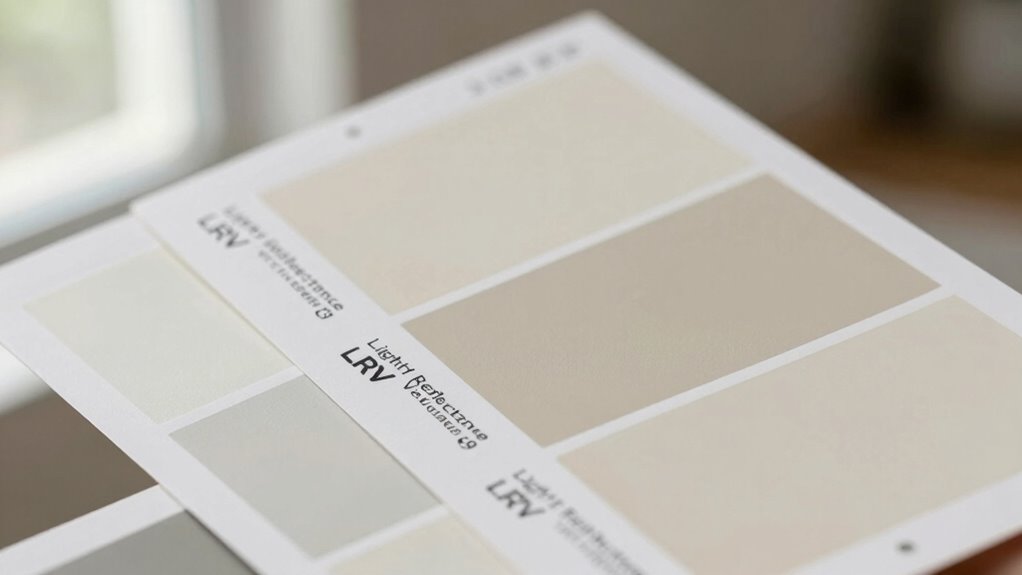
When choosing paint colors for your space, considering the Light Reflectance Value (LRV) can make a significant difference in achieving the desired brightness. To use LRV effectively:
- Select higher LRV shades for rooms needing more light to keep them feeling open and airy.
- Match your paint finish to the room’s purpose; matte finishes reduce reflectivity, while satin or semi-gloss enhance brightness.
- Pay attention to color temperature—cooler tones with higher LRV can make a space feel more spacious.
- Test paint samples in different lighting conditions to see how LRV influences the overall look before committing.
Frequently Asked Questions
Can LRV Change Over Time With Paint Aging or Environmental Factors?
Yes, your LRV can change over time due to paint aging and environmental impact. As paint ages, it may darken or fade, slightly lowering its LRV. Environmental factors like sunlight, humidity, and pollution also affect paint longevity and brightness. Regular maintenance and choosing high-quality, durable paint can help preserve your LRV stable longer. Keep an eye on your walls’ appearance to ensure your space remains bright and inviting.
Is LRV Relevant for Interior or Exterior Paint Choices?
You might think LRV only matters for exterior paint, but it’s equally relevant indoors. Architectural trends often favor lighter shades, and understanding LRV helps you choose colors that match historical paint palettes or create the desired brightness. Whether painting a room or the exterior, LRV guides you in selecting colors that reflect your style while ensuring the space feels inviting and cohesive, aligning with both modern and classic design principles.
How Does LRV Interact With Gloss or Sheen Levels?
You’ll find that LRV interacts with gloss or sheen levels by affecting gloss reflectance and sheen perception. Higher LRV paint reflects more light, making the sheen appear brighter and more vibrant. Conversely, lower LRV paints absorb more light, giving a muted sheen perception. When choosing finishes, consider how the LRV influences gloss reflectance, as it impacts how the paint’s sheen looks under different lighting conditions, affecting your room’s overall brightness and ambiance.
Are There Industry Standards for LRV Measurement Accuracy?
You’ll find that industry standards for LRV measurement accuracy do exist, emphasizing measurement calibration to guarantee reliable results. Industry benchmarks specify calibration procedures and equipment tolerances, helping you maintain consistency across projects. By adhering to these standards, you can trust that LRV values accurately predict a room’s brightness, making your color selections more precise and consistent. Regular calibration and following recognized benchmarks help you achieve dependable, industry-approved LRV measurements.
Does LRV Influence Energy Efficiency in Building Design?
You might think LRV only affects color perception, but it actually influences energy efficiency too. When you choose paints with higher LRV, they reflect more light, reducing the need for artificial lighting and lowering energy costs. This choice also enhances paint durability by minimizing heat absorption. So, by considering LRV, you create a brighter, more sustainable space that saves energy and keeps your paint looking fresh longer.
Conclusion
Understanding LRV helps you choose paint shades that truly brighten and set the mood of your space. While some believe lighter LRVs always make rooms feel larger, it’s not the whole story—lighting and context matter too. By considering LRV alongside other factors, you can confidently select colors that enhance your home’s atmosphere. Trust the numbers, but also trust your eye, to create a space that feels just right.