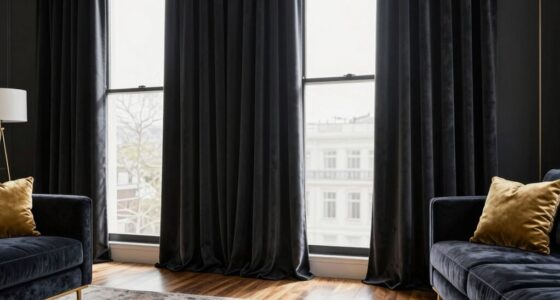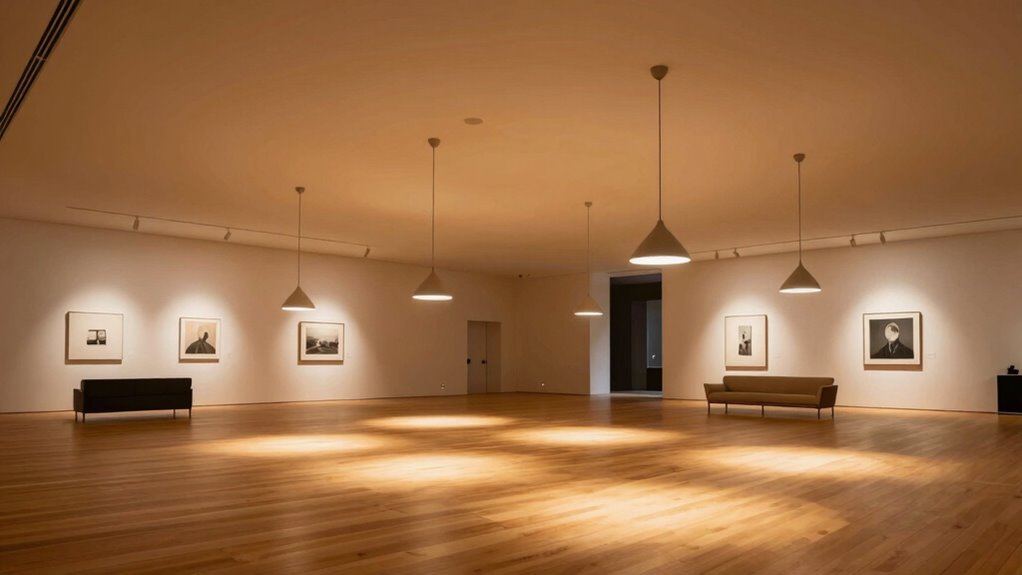

To coordinate statement lighting across open spaces, plan fixture placement carefully, considering sightlines and focal points. Mix styles that share a common material or finish for cohesion, and incorporate layered lighting like ambient, task, and accent lights for depth and visual interest. Use consistent colors or finishes to tie fixtures together, and select appropriate brightness and color temperature for harmony. When you continue exploring, you’ll discover how subtle details can make your space truly unified and inviting.

Get furniture and decor delivered free with Prime
- Fast, free delivery on millions of items
- Prime Video, Amazon Music and more included
- Member-only deals all year
Key Takeaways
- Ensure consistent fixture styles and finishes to create visual harmony across different areas.
- Use layered lighting (ambient, task, accent) to unify the space and add depth.
- Strategically position statement fixtures to highlight architectural features or focal points.
- Incorporate lighting controls like dimmers for seamless ambiance adjustments throughout the space.
- Plan fixture placement to maintain balanced sightlines and prevent visual clutter or competition.
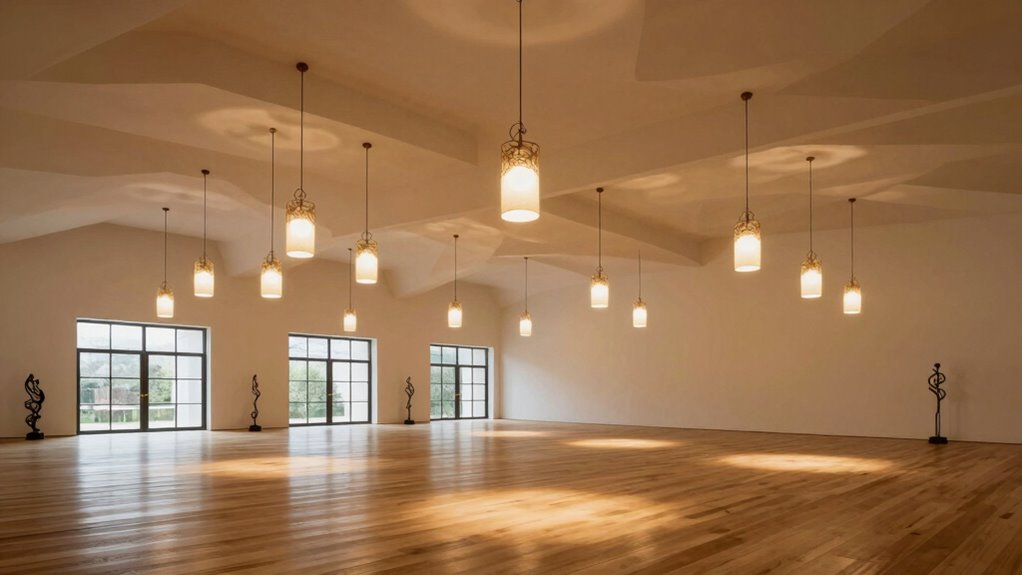
Fixture placement is equally essential in coordinating statement lighting. You need to think about where each fixture will be located in relation to others and the room’s focal points. Proper placement ensures that your lighting highlights specific features, like artwork, architectural details, or furniture, without creating shadows or overly bright spots. For open spaces, evenly spaced fixtures can distribute light uniformly, preventing dark corners or overly illuminated areas. You might also use layered lighting—combining ambient, task, and accent lights—to add depth and dimension. When placing fixtures, consider sightlines and how each light interacts with the space, making certain a balanced distribution that guides the eye naturally across the room. Understanding fixture placement is crucial for achieving a cohesive look. To achieve a seamless look, you should also think about fixture styles and finishes. Mixing different styles can work if they share a common material or color palette. For example, sleek metal fixtures with a matte finish can tie together a modern and rustic aesthetic. When it comes to fixture placement, avoid cluttering the space or creating visual competition. Instead, focus on highlighting the room’s architecture and key features, using statement pieces as focal points. Incorporating lighting layers can help balance illumination and add visual interest throughout the space. Thoughtful lighting design can significantly enhance the overall ambiance and functionality of the room. Additionally, considering the room’s overall color temperature helps create a harmonious and inviting environment. Proper lighting controls, such as dimmers and timers, can further enhance flexibility and energy efficiency in your lighting setup. Dimmers are also a helpful tool, allowing you to adjust the light levels to suit different activities and moods.
Ultimately, coordinating statement lighting across open spaces requires intentional planning around color temperature and fixture placement. You want your lighting to complement the room’s design, enhance its features, and create a welcoming atmosphere. By paying attention to these details, you can craft a cohesive, stylish environment where every fixture contributes to the overall aesthetic. When done thoughtfully, your open space will feel harmonious, vibrant, and perfectly lit for any occasion.
statement pendant lighting for open spaces
As an affiliate, we earn on qualifying purchases.
As an affiliate, we earn on qualifying purchases.
Frequently Asked Questions
How Do I Choose the Right Statement Lighting Fixtures?
To choose the right statement lighting fixtures, focus on decorative fixtures that complement your space’s style. Consider fixture placement carefully to highlight key areas and create visual balance. Think about the fixture’s size, shape, and color to guarantee it stands out without overwhelming the room. You want a piece that draws attention and adds personality, so pick a fixture that enhances your overall design while providing functional illumination.
What Color Temperature Works Best for Open Spaces?
A 3000K to 4000K color temperature works best for open spaces, creating a balanced environment that feels warm yet vibrant. This range promotes color harmony and enhances mood without overwhelming the senses. You’ll find it’s perfect for unifying various areas, making the space feel cohesive and inviting. Too warm might feel dull, while too cool can be harsh. Aim for this range to craft an inviting, lively atmosphere.
How Can I Control Multiple Statement Lights Easily?
You can control multiple statement lights easily by integrating smart controls, like a centralized app or a smart lighting system, which allows you to adjust all lights simultaneously or individually. Make sure each light has a reliable power source, either wired or connected to a smart plug. This setup simplifies management, letting you create consistent lighting scenes across open spaces while giving you quick, convenient control from your device.
What Are Common Mistakes in Lighting Coordination?
You might find that overlooking the lighting hierarchy or misjudging fixture placement is a common misstep. Avoid cluttering your space with too many focal points, which can create visual chaos. Instead, prioritize a balanced lighting hierarchy, ensuring each fixture complements the overall design. Proper fixture placement is key—think about how light flows and highlights features naturally. This approach keeps your open space inviting, cohesive, and visually appealing.
How Do I Balance Function and Style in Statement Lighting?
You balance function and style by selecting statement lighting that enhances ambient lighting while highlighting aesthetic focal points. Focus on fixtures that provide sufficient illumination for daily tasks without overpowering the space’s design. Use layered lighting techniques: combine ambient, task, and accent lighting to create depth and visual interest. This approach guarantees your statement lighting is both practical and visually striking, seamlessly blending form and function across your open space.
Conclusion
Imagine your open space as a symphony, each light a musical note. When these notes harmonize, the space feels balanced and inviting. I once saw a sprawling loft transformed simply by coordinating statement lighting—each fixture played its part perfectly. Think of it like tuning a guitar; when every string is just right, the whole piece resonates beautifully. With thoughtful coordination, your open space will shine as effortlessly as a well-conducted melody.
Columbus Day / Indigenous Peoples' Day Picks
long weekend sales
As an affiliate, we earn on qualifying purchases.