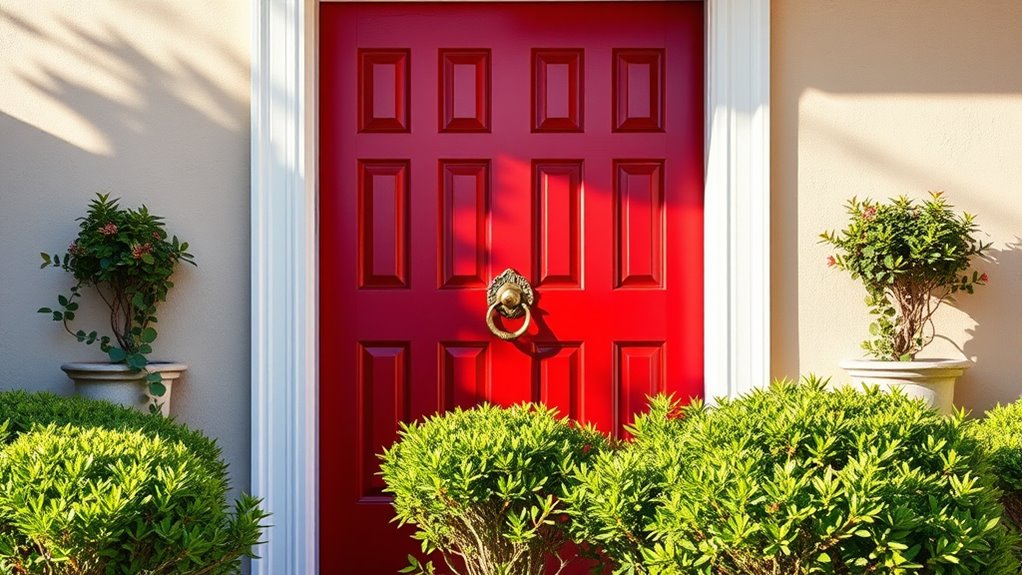

Choosing a front door color that boosts curb appeal depends on your home’s style, surroundings, and the impression you want to make. Bright and bold shades like red or yellow can create an inviting, energetic vibe, while calming hues like blue or green offer a sense of reliability and harmony. Consider seasonal trends and how natural light affects color appearance. To make the best choice and discover more tips, keep exploring how color psychology and neighborhood style impact your decision.
Key Takeaways
- Select colors that complement your home’s exterior and surrounding environment to create a cohesive and attractive look.
- Consider seasonal color trends to keep your front door stylish and relevant throughout the year.
- Use color psychology to choose a hue that reflects your personality and conveys the desired first impression.
- Opt for bold or contrasting colors to make your front door stand out as a focal point.
- Ensure the chosen color enhances curb appeal by aligning with neighborhood aesthetics and personal style.
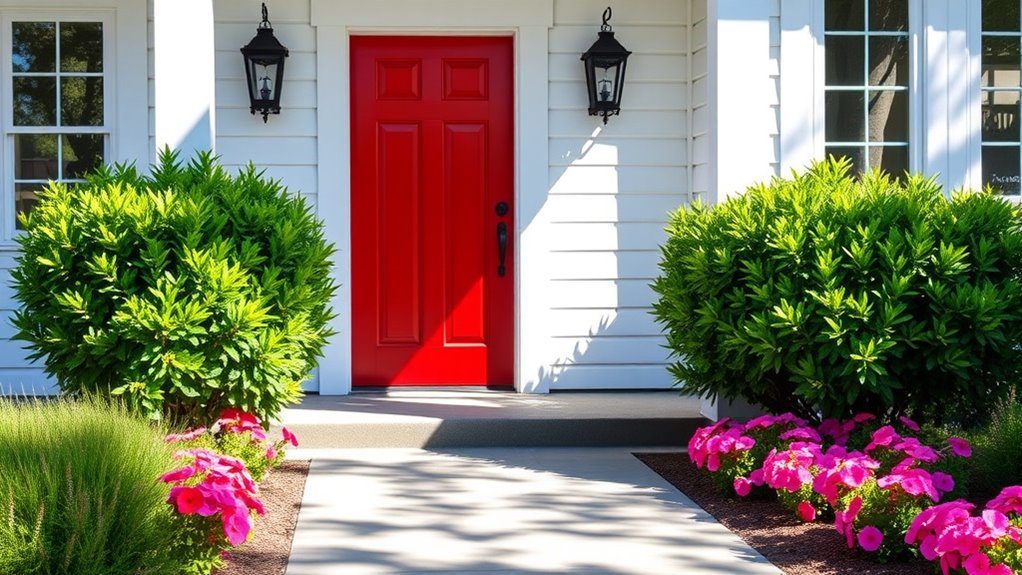
Your front door is more than just the entryway—it’s a statement of your style and personality. When choosing a door color, you’re not just picking a shade; you’re setting the tone for your entire home. Door color psychology plays a significant role here. For example, red can evoke energy and warmth, making visitors feel welcomed and excited to enter. Blue often symbolizes calmness and reliability, giving your home a serene, trustworthy vibe. Yellow radiates friendliness and optimism, inviting positive energy. Green suggests harmony and growth, perfect if you want your home to blend naturally with its surroundings. Black offers sophistication and elegance, while white can communicate simplicity and cleanliness. Think about the message you want your front door to send, and choose a hue that aligns with that feeling.
Seasonal color trends can also influence your decision. In spring, fresh and vibrant colors like pastel greens, soft blues, and cheerful yellows are popular, reflecting renewal and energy. Summer tends to favor bold, lively shades—think bright reds, turquoise, or sunny oranges—that stand out in the outdoors and match the season’s exuberance. Fall colors lean toward earthy tones such as deep reds, burnt oranges, and warm browns, echoing the natural landscape and creating a cozy, inviting look. During winter, classic and elegant shades like deep navy, charcoal gray, or classic red are trending, adding a touch of sophistication and warmth against the chilly backdrop. Keeping these seasonal trends in mind can help your front door stay stylish and relevant, whether you’re updating it for the first time or planning a subtle refresh.
Your choice of door color should also complement your home’s exterior and surroundings. If your home has a neutral facade, a bold color can create a striking focal point. Conversely, if your home already features vibrant accents, a more subdued door color might be the best way to balance the overall look. Consider how the color will look in different lights throughout the day, as natural sunlight can dramatically change its appearance. Think about your neighborhood’s aesthetic—would a bright, unconventional color stand out, or would a classic hue maintain harmony with neighboring homes? Ultimately, the right front door color reflects your personality while enhancing your home’s curb appeal. Whether you’re drawn to trendy seasonal shades or prefer timeless tones rooted in door color psychology, your choice can elevate your home’s first impression and make your entrance truly unforgettable. Additionally, using vegetable juices or other natural color inspirations can help you visualize unique, earthy color palettes for your door.
Frequently Asked Questions
How Does Door Color Affect Home Value?
Door color markedly impacts your home’s value by influencing first impressions. Using door color psychology, you can choose shades that evoke warmth or sophistication, boosting curb appeal. Staying updated with door color trends helps your home look fresh and appealing. When you pick a color that complements your home and neighborhood, it attracts potential buyers and adds value. Your choice of door color can make your home more enticing and potentially increase its market worth.
Are Certain Colors More Paint-Friendly Than Others?
Certain colors are more paint-friendly because they tend to have better paint durability and fade less over time. Light and neutral shades like beige, soft gray, or pastels usually resist chipping and fading longer. When selecting a color, consider color matching tips like choosing hues that complement your home’s exterior and environment. Opt for high-quality exterior paint to guarantee longevity, regardless of your chosen color.
What Color Options Suit Historic Home Styles?
You should opt for colors inspired by historic color palettes and traditional paint schemes. Rich, muted tones like deep reds, navy blues, forest greens, and classic black or white work well for historic home styles. These colors highlight the architectural details and preserve the home’s charm. Avoid overly bright or modern shades, and instead, embrace timeless hues that complement the period and style of your home.
How to Choose a Door Color for High-Traffic Areas?
Did you know high-traffic doors often face more wear and tear? For these areas, choose a durable, bold color like red or navy to hide fingerprints and scratches. Consider door color psychology to evoke warmth or security, and stay aligned with seasonal color trends for freshness. Opt for matte finishes to reduce glare and maintenance. This approach keeps your door inviting, resilient, and on-trend despite frequent use.
Can Door Color Influence Energy Efficiency?
Yes, door color can influence energy efficiency. Lighter colors reflect solar heat absorption, helping keep your home cooler, while darker shades absorb more heat, potentially increasing cooling costs. Additionally, choosing a durable paint guarantees your door resists fading from sun exposure, maintaining its energy-efficient benefits over time. By selecting the right color with these factors in mind, you can enhance your home’s comfort and reduce energy bills.
Conclusion
Ultimately, picking the right front door color boosts your home’s curb appeal and reflects your personality. Some say a bold hue can make your house stand out, while others believe classic shades offer timeless charm. The truth? Trust your instincts and consider your home’s style and surroundings. When you choose a color that resonates with you, it creates a welcoming vibe that invites neighbors and guests alike—proving that the right door truly makes a lasting impression.