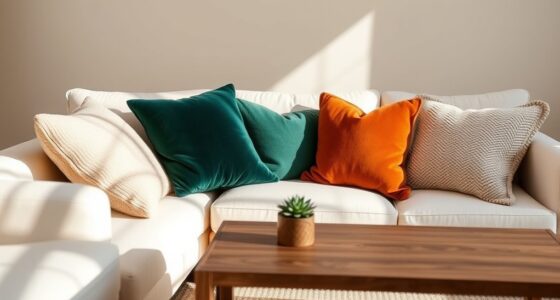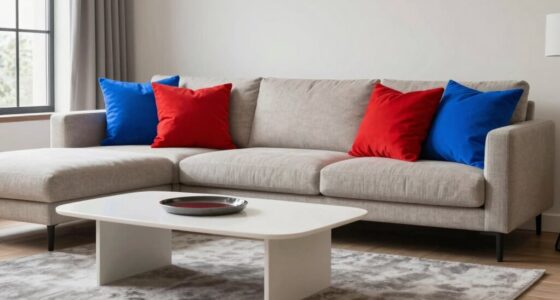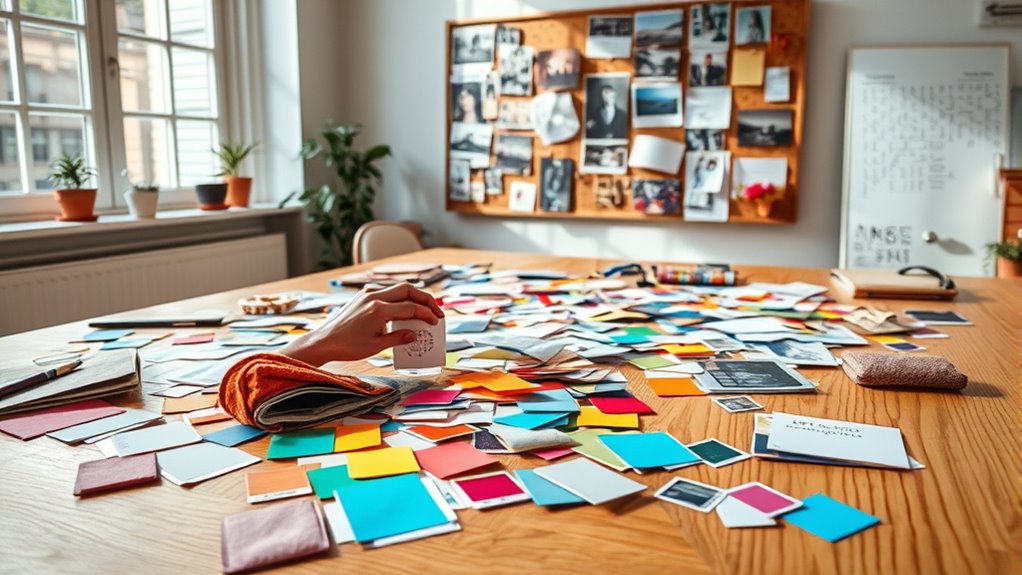

To build a mood board for your space, start by selecting a cohesive color palette that reflects the mood you want to create, like calm or energetic. Gather textures, fabric swatches, and material samples that match your style, whether cozy or sleek. Arrange everything thoughtfully, balancing colors and textures to see how they complement each other. Keep refining your board as you go—more tips on making your mood board truly inspired are just ahead.
Key Takeaways
- Gather inspiration images, color palettes, and material samples that reflect your desired aesthetic.
- Arrange your collected elements on a board, balancing colors and textures for visual harmony.
- Focus on cohesive color schemes that evoke the mood or style you aim to achieve.
- Incorporate tactile samples like fabrics and finishes to add depth and realism.
- Continuously review and refine your mood board, swapping elements to better align with your vision.
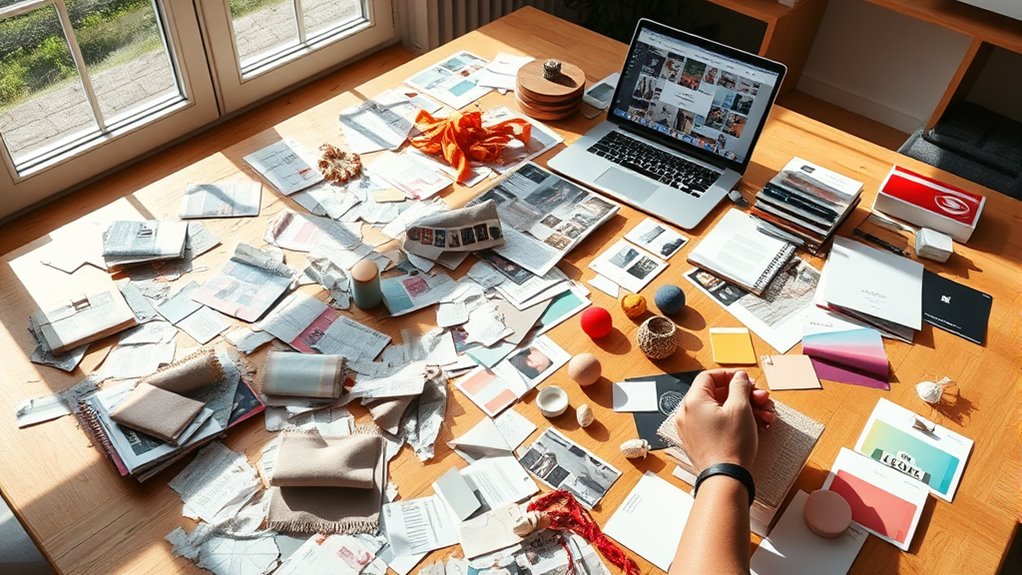
Creating a mood board is an essential step in visualizing your project’s overall aesthetic and direction. It acts as a visual map, helping you gather ideas, refine your style, and communicate your vision clearly. When starting, focus on selecting a cohesive set of color palettes that reflect the mood you want to create. Think about the emotions you want your space to evoke—calm, energetic, cozy, or sophisticated—and choose colors that support that feeling. Don’t be afraid to experiment with shades and combinations; sometimes, a bold accent color can transform your entire palette. Keep in mind that your chosen colors should complement each other and work harmoniously to set the tone for your space.
Alongside color palettes, material textures play a *vital* role in bringing your mood board to life. Textures add depth and tactile interest, making your vision more tangible. Gather images of fabric swatches, wood grains, metal finishes, and other surface details that resonate with your desired style. If you’re aiming for a cozy, inviting atmosphere, incorporate plush textiles, soft rugs, and warm wood textures. For a sleek, modern look, include smooth surfaces like glass, polished concrete, or matte metals. Mixing different textures in your mood board helps you visualize how various materials will interact in your space, guiding your choices in furniture, decor, and finishes.
As you compile your mood board, consider the overall balance between colors and textures. Don’t just focus on individual elements; think about how they work together to create a unified aesthetic. Use digital tools or physical boards—whichever suits your workflow— to arrange images, samples, and swatches in a way that feels natural to you. Pay attention to the scale and proportion of each element, ensuring that your mood board isn’t cluttered but instead communicates your vision clearly. Incorporating a variety of examples can also help you see how different styles and materials combine harmoniously.
Finally, review and refine your mood board regularly. It’s a dynamic tool meant to evolve as your project progresses. If you find certain colors or textures don’t quite fit, swap them out or tweak your palette. The goal is to develop a visual reference that inspires and guides your decisions, keeping your project aligned with your original concept. By thoughtfully curating your color palettes and material textures, you’ll create a compelling, cohesive mood board that lays a solid foundation for your space’s transformation.
Frequently Asked Questions
What Software Tools Are Best for Creating Mood Boards?
You should try tools like Canva, Adobe Spark, or Milanote for creating mood boards. These platforms support collage techniques and make image sourcing easy with built-in libraries or upload features. They’re user-friendly, allowing you to quickly arrange images, color swatches, and textures to visualize your space. Plus, their collaborative features help you share ideas with others, making the process smoother and more inspiring.
How Do I Choose a Cohesive Color Palette?
To choose a cohesive color palette, focus on color harmony and tone consistency. Start by selecting a dominant color that sets the mood, then add complementary shades to create balance. Use tools like color wheels or apps to visualize how colors work together, ensuring they blend seamlessly. Stick to a limited palette to maintain harmony, making your space feel unified and visually appealing.
Can I Include Digital and Physical Elements in One Mood Board?
Think of your mood board as a mosaic, blending the old and new. Yes, you can include digital collage elements alongside physical samples, creating a dynamic visual story. Use digital tools to arrange images, textures, and color swatches, then attach physical samples like fabric swatches or paint chips. This mix offers a richer perspective, helping you better visualize how different elements will come together in your space.
How Often Should I Update My Mood Board During a Project?
You should update your mood board regularly throughout your project timeline, especially during key project milestones. This allows you to incorporate new ideas and reflect evolving design choices. Plan for mood board revisions at least once every few weeks or whenever your concept shifts considerably. Staying flexible ensures your mood board stays aligned with your vision, helping you make informed decisions and maintain a cohesive design throughout the process.
What Are Common Mistakes to Avoid When Building a Mood Board?
You should avoid cluttered layouts and inconsistent themes when building a mood board. Keep your design clear by focusing on a cohesive color palette and consistent style elements. Don’t overload the board with too many images or ideas, as it can become overwhelming. Regularly review and refine your selections to maintain harmony. Staying organized and intentional helps create a mood board that effectively guides your space’s aesthetic.
Conclusion
Now, picture your space coming to life—a swirling palette of colors, textures, and inspiring visuals all woven together on your mood board. As you finalize your design, feel the excitement ripple through you, knowing each element reflects your unique style. With your mood board in hand, you’re ready to transform your space into a cozy, vibrant haven that tells your story. Embrace the journey and enjoy watching your vision unfold before your eyes.