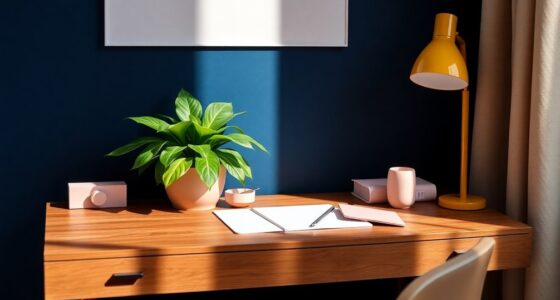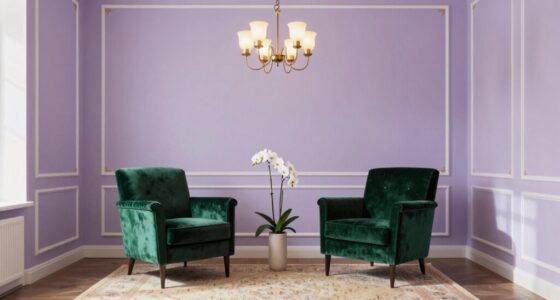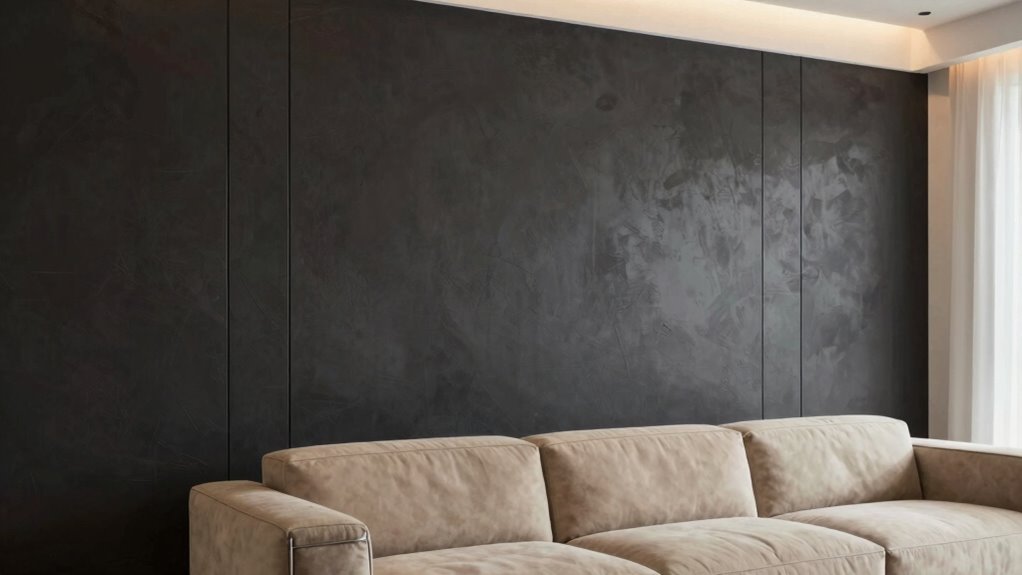

To make an accent wall feel architectural instead of trendy, focus on craftsmanship, durable materials, and purposeful contrasts. Choose rich, timeless hues paired with neutral tones and incorporate textures like wood, stone, or textured tiles. Use lighting to highlight depth and shadow, emphasizing the wall’s structure. Keep details minimal and clean-lined for sophistication. Careful material selection and thoughtful lighting create a built-in, permanent feel—exploring these principles further will help you craft a truly enduring focal point.

Get furniture and decor delivered free — and shop member deals
- Fast, free delivery on millions of items
- Access to Prime Big Deal Days deals on October 6–7
- Prime Video, Amazon Music and more included
Key Takeaways
- Choose timeless, contrasting colors paired with neutral tones to create a deliberate, sophisticated focal point.
- Incorporate durable, high-quality materials like stone or textured wood for permanence and craftsmanship.
- Use strategic lighting to emphasize texture, depth, and architectural features without overwhelming the design.
- Keep embellishments minimal with clean lines and precise detailing to maintain a modern, refined aesthetic.
- Ensure cohesive integration of materials and lighting for a balanced, built-in architectural appearance.
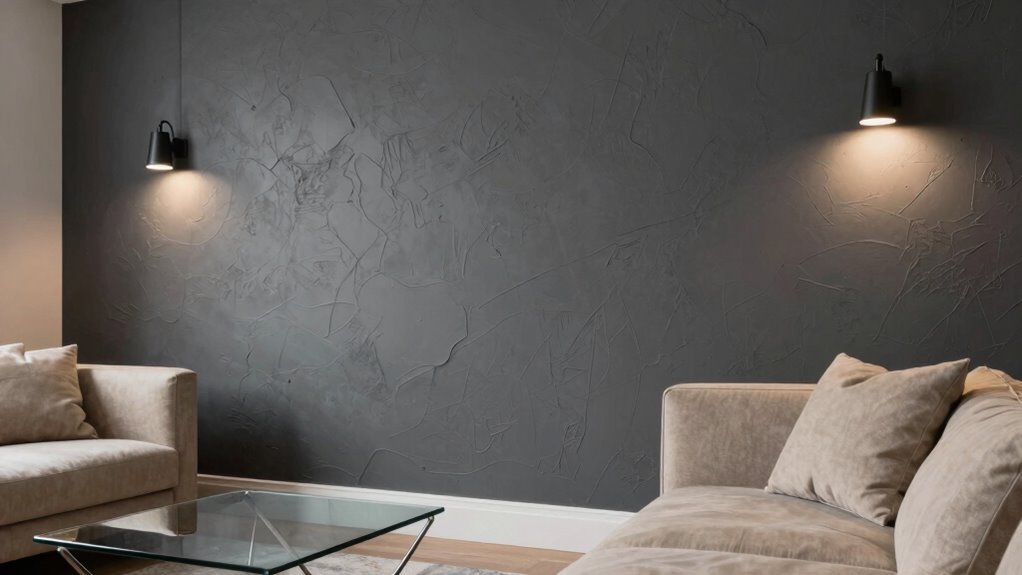
An accent wall can instantly elevate a room’s design, but to make it truly feel architectural, you need to go beyond simple paint or wallpaper. It’s about creating a sense of depth, texture, and intentionality that commands attention without feeling trendy or temporary. The key lies in how you approach color contrast and material selection. When selecting a color, choose hues that provide a striking contrast against the surrounding walls, but do so with purpose. Instead of opting for the latest color trend, consider shades that complement your overall palette while adding visual weight. A deep, rich color paired with neutral tones can anchor a space, making the wall feel like a deliberate architectural feature rather than just a decorative choice.
Choose contrasting, purposeful colors and textured materials to transform an accent wall into a timeless architectural feature.
Material selection plays an equally crucial role in elevating the look. You want to choose materials that add texture and substance, creating a tactile sense of permanence. For example, using wood paneling, stone veneer, or textured tiles can dramatically shift the perception of the wall from simply painted to architecturally significant. These materials, when carefully installed and chosen with intent, convey craftsmanship and durability, making the wall feel like a built-in feature rather than an afterthought. Metal accents or panels can also introduce sleekness and modernity, especially when contrasted with softer textures like plaster or fabric wall coverings. Incorporating architectural materials can further reinforce the sense of permanence and craftsmanship. Paying attention to material durability ensures your accent wall remains visually striking over time. Additionally, considering material installation techniques can influence the overall sophistication and finish of your accent wall.
To further enhance the architectural feel, consider how the materials and colors interact with lighting. Natural light will highlight the contrast and texture, emphasizing the wall’s depth and dimensionality. Strategic placement of lighting fixtures—such as wall sconces or LED strip lights—can cast shadows that accentuate the material’s texture and create a dramatic effect. Keep in mind that simplicity in framing and detailing also matters; clean lines and minimal embellishments help maintain a sophisticated, architectural aesthetic. Choosing appropriate lighting techniques can significantly influence how the textures and colors are perceived, adding to the overall sense of design intentionality. Understanding how lighting and material interaction affects overall perception can help you create a truly cohesive design. Additionally, layering different lighting sources can further accentuate the wall’s architectural qualities, making it a focal point in your space.
As an affiliate, we earn on qualifying purchases.
Frequently Asked Questions
What Materials Best Create an Architectural Accent Wall?
You should choose materials like textured wallpaper, reclaimed wood, or stone to create an architectural accent wall. These materials add depth and tactile interest through texture patterns, making the wall feel intentional and timeless. Opt for neutral or muted color schemes to enhance sophistication and guarantee the wall complements your overall design. By combining these elements, your accent wall will feel deliberate and architectural, rather than just trendy or superficial.
How Do Lighting Choices Influence the Wall’s Appearance?
Lighting transforms your accent wall into a living canvas, casting shadows that dance across its surface. By choosing lighting with the right color contrast, you highlight textures and architectural details, making the wall feel purposeful and refined. Soft, warm lights create inviting shadows, while brighter, cooler tones emphasize structure. Ultimately, your lighting choices shape the wall’s mood, turning it into an architectural feature that feels timeless and thoughtfully designed.
Can an Accent Wall Work in Small or Open Spaces?
An accent wall can work well in small or open spaces when you use color psychology and texture contrast to create depth. In small rooms, opt for darker or bold colors to add coziness, while in open spaces, lighter hues make the area feel larger. Incorporate textured materials like brick or wood to add architectural interest, making the wall feel intentional and sophisticated, rather than just trendy.
How Do Scale and Proportions Affect the Wall’s Impact?
Think of scale and proportions as the orchestra that makes your accent wall sing. You’ll want a bold color contrast and texture variety that match the wall’s size—larger walls can handle more dramatic elements, while smaller ones benefit from subtlety. If you choose a textured finish or striking hue, guarantee it balances with the room’s overall proportions, creating harmony rather than chaos. Proper scaling makes your accent wall feel intentional and architectural.
What Maintenance Is Required for Different Wall Finishes?
You need to regularly clean and inspect your wall finishes to keep them looking their best. For painted walls, wipe down with a damp cloth; textured finishes, like wallpaper or stone, may require gentle vacuuming or spot cleaning. To maintain their architectural appeal, guarantee proper color coordination with surrounding walls and furniture, and incorporate texture contrast to add depth. Avoid harsh chemicals that could damage delicate surfaces, preserving their timeless elegance.
Conclusion
Ultimately, making an accent wall feel architectural isn’t about following trends—it’s about creating a space that resonates with timeless design principles. When you choose quality materials, pay attention to details, and consider how the wall interacts with the room’s overall architecture, you’ll craft a feature that feels intentional and enduring. Trust the theory that thoughtful design, rooted in principles rather than fleeting trends, results in spaces that truly stand the test of time—and that’s a style worth embracing.
Fall Picks
fall essentials
As an affiliate, we earn on qualifying purchases.