
Disinfecting and sanitizing are often used interchangeably, but they’re different. Sanitizing lowers germs to safe levels and is enough for everyday cleaning, while disinfecting kills 99.9% of germs for a deeper clean, especially after illness or on high-touch surfaces. Many people make mistakes by rushing or skipping steps, which can leave germs behind. Keep going to find out how to do it right and protect your health effectively.
Key Takeaways
- Sanitizing reduces germs to safe levels, while disinfecting kills 99.9% of germs for a deeper clean.
- Use sanitizers for everyday surfaces; disinfectants are for high-touch areas or after illness.
- Proper cleaning involves removing dirt first, then applying disinfectant with correct contact time.
- Always read product labels to ensure proper use and surface compatibility.
- Rushing or skipping steps can make disinfecting ineffective or damage surfaces.
What’s the Difference Between Sanitizing and Disinfecting?
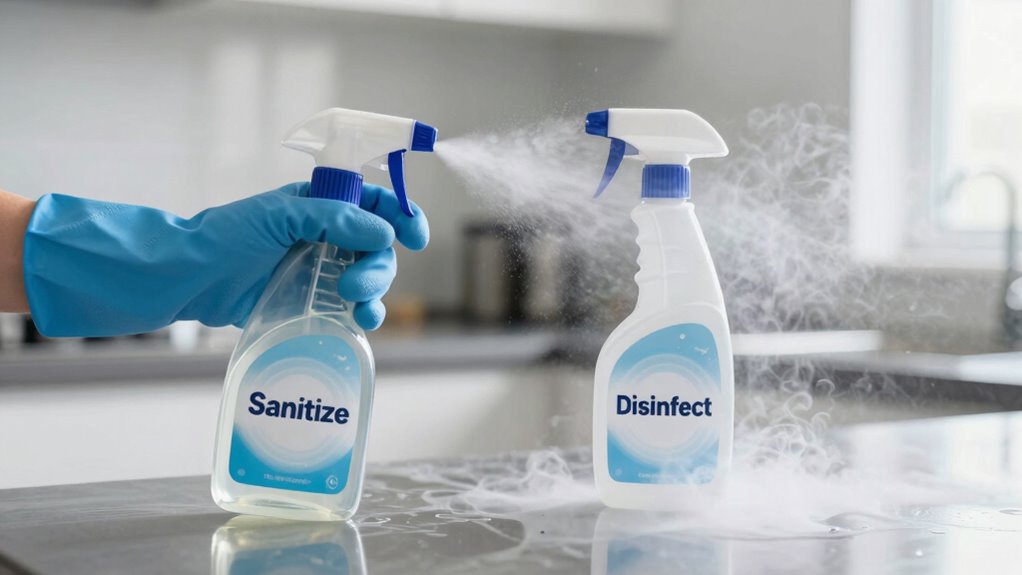
Have you ever wondered how sanitizing differs from disinfecting? Both aim to improve surface hygiene, but they do so differently. Sanitizing reduces germs to safe levels, focusing on germ elimination without necessarily killing every pathogen. It’s ideal for everyday cleaning, especially on items like dishes or countertops. Disinfecting, on the other hand, involves using stronger chemicals to kill 99.9% of germs and bacteria. It’s more thorough and suited for situations requiring higher levels of cleanliness, like after illness or on frequently touched surfaces. While sanitizing is about lowering the microbial count, disinfecting provides a deeper level of germ elimination. Understanding this distinction helps you choose the right method for each cleaning task and ensures your space remains safe and hygienic. Additionally, the effectiveness of these methods can be influenced by the contrast ratio of your cleaning environment, which impacts how well you can see and assess cleanliness. Proper surface contact time is also essential to ensure disinfectants work effectively. To optimize your cleaning outcomes, consider connected cleaning devices that can monitor and improve disinfectant application. Maintaining proper cleaning techniques can further enhance the overall effectiveness of your hygiene efforts. For example, using appropriate application methods can prevent the spread of germs and ensure thorough sanitation.
When Should You Sanitize or Disinfect Your Space?

Knowing when to sanitize or disinfect your space is essential for maintaining proper hygiene. You should disinfect high-touch surfaces like doorknobs, light switches, and countertops, especially after illness or if someone shows symptoms. Consider the surface material—porous surfaces like fabric may not withstand strong disinfectants, so sanitizing might suffice. Non-porous surfaces such as metal or plastic are ideal for disinfecting. Additionally, think about the environmental impact; use eco-friendly disinfectants when possible to reduce harm to the environment. Regular sanitizing keeps germs at bay during routine cleaning, while disinfecting offers a deeper clean when there’s a higher risk of contamination. Knowing the right approach ensures effective hygiene without unnecessary chemical use or environmental damage. Consulting official guidelines can help determine the appropriate cleaning method for various surfaces. Incorporating smart home automation can also remind you to clean or disinfect specific surfaces based on usage patterns or health alerts. Being aware of the thermal behavior of different surfaces can help you choose the most effective cleaning method without damaging materials.
How Do Disinfectants Kill Germs and Keep You Safe?

Disinfectants work by targeting the germs on surfaces and destroying their structure, making them incapable of causing infection. They achieve germ elimination through various disinfectant mechanisms, such as disrupting cell walls or denaturing proteins within microorganisms. When you apply a disinfectant, it interacts with the germs’ cellular components, effectively neutralizing their ability to reproduce and cause illness. Different disinfectants use different mechanisms, like oxidation or membrane damage, to kill bacteria, viruses, and fungi. This process ensures that harmful microbes are eliminated quickly and effectively. Proper use of disinfectants ensures maximum germ elimination, reducing the risk of spreading infections and keeping you healthier. Additionally, understanding the specific disinfectant mechanisms can help you choose the most effective products for different surfaces and microbes, especially considering the types of microbes present. Recognizing sustainable disinfection practices can also help minimize environmental impact during cleaning. Being aware of disinfectant safety precautions is also crucial to prevent potential health hazards during use.
What Common Mistakes Should You Avoid When Disinfecting?

To guarantee effective disinfecting, it’s essential to avoid common mistakes that can undermine your efforts. One mistake is rushing through the process without following the instructions on the disinfectant label. Using too little or too much solution can reduce effectiveness and create safety hazards. Another common mistake is neglecting to clean surfaces first; dirt and grime can prevent disinfectants from working properly. Additionally, not allowing the disinfectant enough contact time can leave germs behind. You should also avoid mixing different chemicals, as this can produce dangerous reactions. Ultimately, skipping proper ventilation creates safety hazards, such as inhaling fumes. Being mindful of these common mistakes helps ensure your disinfecting efforts are both safe and effective, reducing the risk of germs spreading and preventing accidents. Understanding water chemistry and proper application techniques can further enhance your disinfection routine, as the chemical reactions involved depend heavily on correct application methods. Proper disinfectant concentration is also crucial to ensure germs are effectively eliminated without unnecessary chemical exposure. Moreover, using the correct disinfectant type for specific surfaces ensures compatibility and effectiveness. Remember that proper surface preparation can make a significant difference in achieving thorough disinfection.
How to Properly Sanitize and Disinfect Surfaces at Home and Work
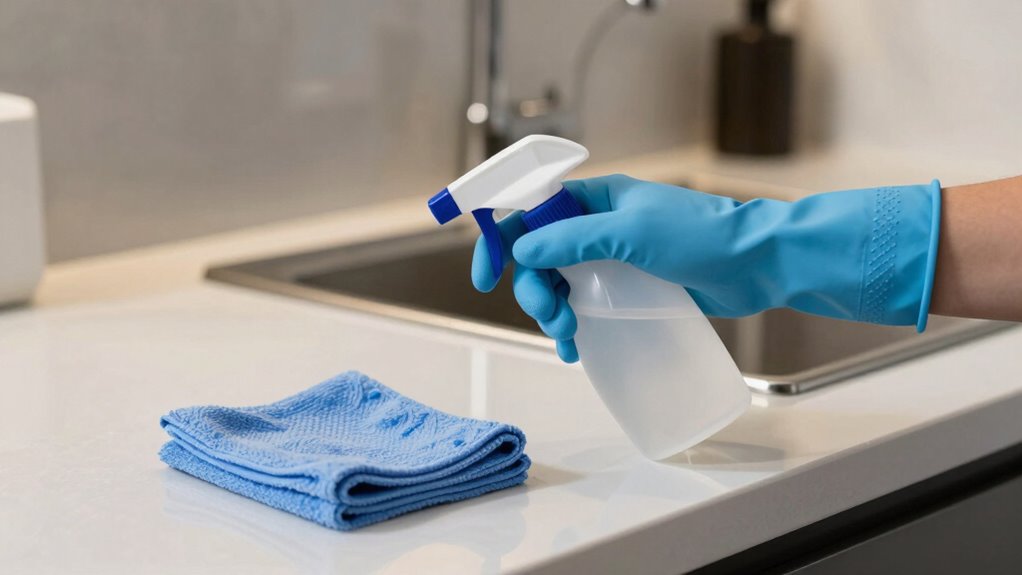
To properly sanitize and disinfect surfaces at home and work, you need to choose the right cleaning products for each task. Using the correct techniques guarantees germs are effectively removed without spreading contamination. Pay attention to instructions on the labels to maximize their effectiveness and safety. Additionally, selecting products designed specifically for truck bed surfaces can help maintain their durability and ensure safe, effective cleaning. Proper air purifier maintenance can also improve indoor air quality, reducing airborne germs and allergens that may contaminate surfaces. Regularly cleaning and replacing filters in your air purifier ensures it operates at peak performance and continues to reduce airborne germs. Applying appropriate disinfection procedures ensures comprehensive cleaning, especially in high-touch areas to prevent the spread of pathogens.
Choosing the Right Products
Choosing the right products for sanitizing and disinfecting surfaces is essential to effectively eliminate germs and viruses. Selecting the appropriate disinfectants and sanitizers depends on the surface type and purpose. Look for EPA-approved products that specify they kill bacteria and viruses. Always prioritize items that support good hand hygiene and consider air filtration systems to reduce airborne pathogens. Here’s a quick guide:
| Product Type | Best Use Case |
|---|---|
| Alcohol-based sprays | Quick disinfecting of small surfaces |
| Bleach solutions | Heavy-duty disinfection of high-touch areas |
| Quaternary ammonium compounds | Regular sanitizing of surfaces |
| Hydrogen peroxide | Safe for electronics and sensitive surfaces |
| Air purifiers | Improve air quality and reduce airborne germs |
Choosing the right product guarantees thorough cleaning and protects your health. Additionally, understanding the difference between sanitizing and disinfecting can help you select the most effective method for each situation.
Proper Cleaning Techniques
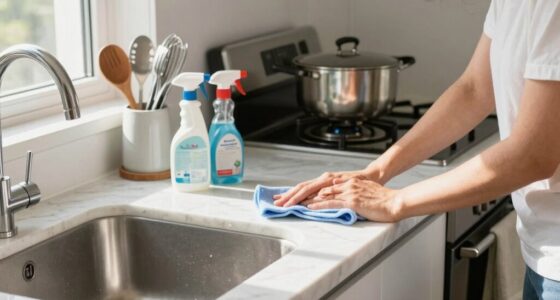
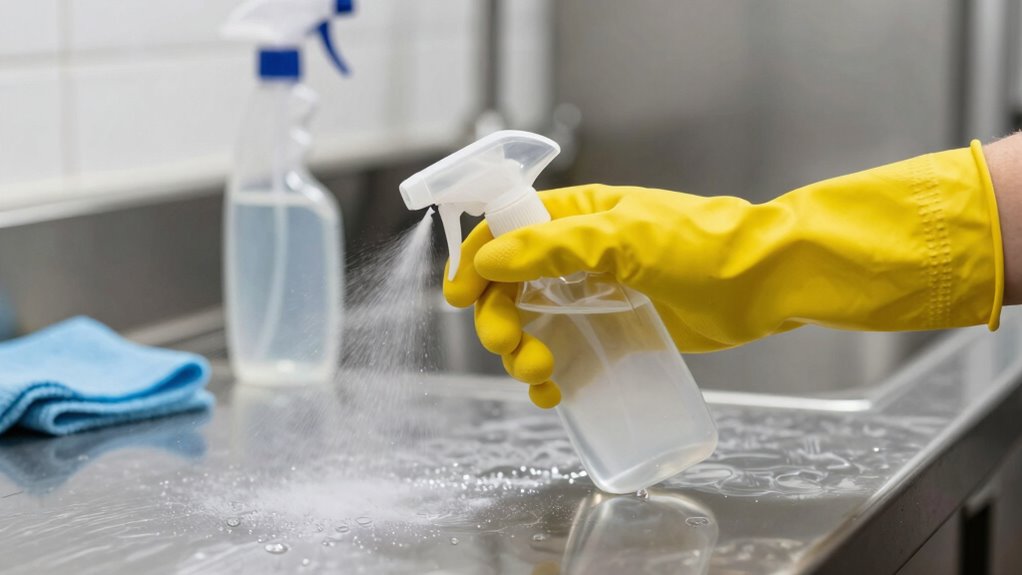
Proper cleaning techniques guarantee that your efforts to sanitize and disinfect actually eliminate germs rather than just spreading them around. Start with thorough household cleaning by removing dirt, dust, and debris with soap and water. This step prepares surfaces for effective disinfection. Use proper tools like microfiber cloths and scrub brushes to reach all areas. When disinfecting, follow product instructions carefully, ensuring adequate contact time to kill germs. For high-touch surfaces, consider professional sanitation methods, especially in workplaces or public spaces. Always wear gloves and ventilate the area. Focus on cleaning visible dirt first, then apply disinfectants. Consistent, proper cleaning techniques prevent germs from lingering and help maintain a healthier environment at home and work. Additionally, understanding vehicle performance and how different cleaning methods impact surface longevity can help you choose the right tools and products for effective sanitation. Using the correct disinfectant application techniques can also make a significant difference in germ elimination, and employing appropriate cleaning tools ensures thorough coverage and reduces the risk of cross-contamination.
How to Choose the Best Disinfectant Products for Your Needs
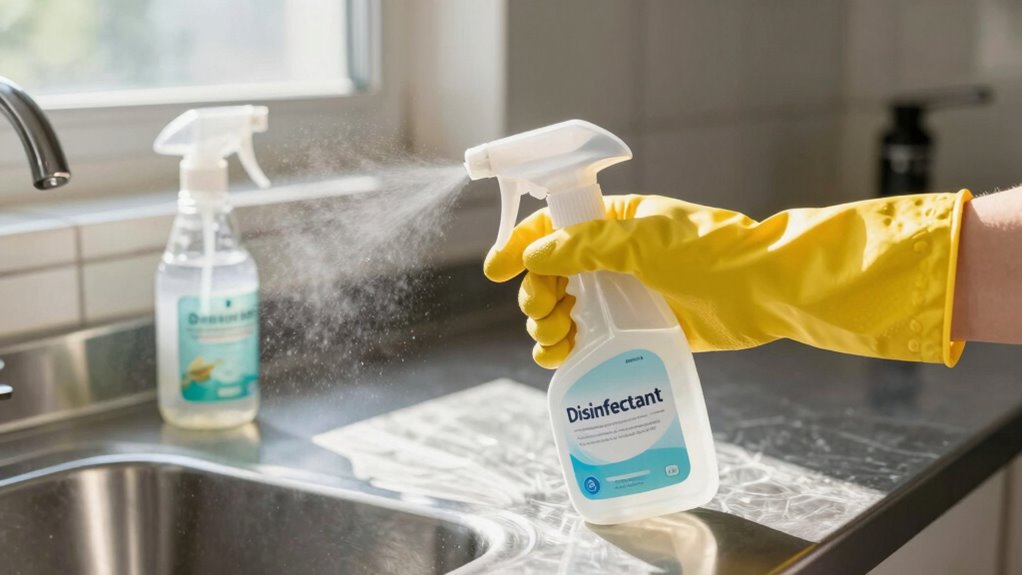
To choose the right disinfectant, start by evaluating the surfaces you’ll be cleaning and their material types. Next, read labels carefully to understand each product’s effectiveness and safety instructions. Finally, match disinfectants to your specific needs, whether for high-touch areas or delicate surfaces.
Assess Your Surface Types
Understanding the types of surfaces you need to disinfect is essential for selecting the right products. Different surface materials, like glass, plastic, metal, or wood, respond differently to various disinfectants. For example, some disinfectants may damage wood or painted surfaces while working well on stainless steel or glass. Assess your surfaces carefully to avoid using harsh chemicals that could cause damage or reduce effectiveness. Consider your cleaning schedules as well—high-touch areas like doorknobs and countertops need more frequent disinfecting, while less-used surfaces may require less often. Choosing the appropriate disinfectant based on surface type ensures thorough cleaning without harm. Additionally, understanding surface compatibility helps you match products to your needs, saving time and money while maintaining a safe environment.
Understand Disinfectant Labels
When choosing a disinfectant, examining the label is crucial to make sure you’re selecting the right product for your needs. Start by focusing on the disinfectant ingredients, as they determine effectiveness against specific germs. Next, enhance your label comprehension by understanding symbols and instructions. Then, consider the contact time—how long the surface must stay wet for proper disinfection. Finally, check for any restrictions, like safe use on particular surfaces or the need for rinsing. These steps help ensure you’re using the right disinfectant safely and effectively. Remember, a clear label guides you in choosing a product that matches your needs, avoids misuse, and guarantees proper disinfection. Your understanding of these elements makes all the difference.
Match Products To Needs
Choosing the right disinfectant product starts with matching it to your specific needs. First, consider your cleaning schedule—frequent cleaning of high-touch surfaces may require a fast-acting disinfectant, while less frequent tasks can use milder options. Think about the surfaces you’re treating; some products are safe for electronics, while others are best for countertops or floors. Always prioritize product safety to protect yourself and others, especially in environments like homes, schools, or healthcare facilities. Read labels carefully to ensure the disinfectant is effective against the germs you’re targeting and suitable for your surfaces. Matching the right product to your needs simplifies your cleaning routine and ensures you’re disinfecting effectively without unnecessary risks.
Why Knowing the Difference Helps Protect You and Your Family

Knowing the difference between disinfecting and sanitizing is essential because it guarantees you use the right method to protect your family from germs and illnesses. Understanding this helps you improve your cleaning routines and reduce germ transmission. Here’s why it matters:
- It guarantees you target the right bacteria and viruses on surfaces.
- It helps you choose the appropriate product for high-touch areas.
- It minimizes the risk of spreading germs through improper cleaning.
- It empowers you to make informed decisions during flu season or outbreaks.
Frequently Asked Questions
Can You Sanitize and Disinfect With the Same Product?
You can’t always sanitize and disinfect with the same product because of product compatibility and cleaning effectiveness. Disinfectants are designed to kill germs, while sanitizers reduce bacteria to safe levels. Some products work for both, but check labels carefully. Using the right product guarantees you effectively eliminate germs and bacteria without damaging surfaces or reducing cleaning effectiveness. Always follow manufacturer instructions to get the best results.
How Long Should Disinfectants Sit on Surfaces?
You should let disinfectants sit on surfaces for the recommended contact time, usually between 1 to 10 minutes, depending on the product. During this period, make certain the disinfectant stays wet and maintains surface contact. This guarantees it effectively kills germs. Check the label for specific instructions, as proper contact time is vital for disinfectants to work properly and provide maximum germ protection.
Are Natural or Homemade Disinfectants Effective?
Natural or homemade disinfectants can be effective if you choose the right DIY solutions, like vinegar or hydrogen peroxide, which have natural effectiveness against many germs. However, they may not be as reliable as commercial disinfectants for all pathogens. To guarantee safety, follow proper dilution and contact time guidelines. While they’re useful for everyday cleaning, for high-risk areas, consider using proven disinfectants for the best protection.
Can Disinfectants Be Harmful to Children or Pets?
Disinfectants can be downright dangerous if you’re not careful, threatening child safety and pet protection. They contain powerful chemicals that, if ingested or even touched, can cause serious harm—think burns, poisoning, or respiratory issues. Always keep disinfectants out of children’s reach, use them in well-ventilated areas, and opt for safer, pet-friendly options whenever possible. Your little ones and furry friends depend on your vigilance to stay safe.
Is There a Difference in Cleaning Tools Needed for Sanitizing Vs Disinfecting?
Yes, there’s a difference in cleaning tools for sanitizing versus disinfecting. For surface preparation, you typically use different cleaning tools; sanitize often requires less intensive tools like cloths or sponges, while disinfecting might need scrub brushes or mops to thoroughly clean and prepare the surface. Proper surface preparation guarantees disinfectants work effectively, so choose your cleaning tools based on the level of cleaning needed before applying disinfectants or sanitizers.
Conclusion
Knowing the difference between sanitizing and disinfecting is like holding the key to a safer home. Think of it as choosing the right shield to guard your castle—each tool has its purpose. When you select wisely and use proper techniques, you’re planting seeds of protection that blossom into a healthier environment. Remember, your actions are the brushstrokes in the masterpiece of your family’s safety—so choose your colors carefully.