To remove sticky residue from household surfaces, start by gently wiping with warm water and a mild dish soap, then try applying vinegar or rubbing alcohol with a soft cloth for stubborn spots. Avoid harsh scrubbers or abrasive tools that could scratch delicate surfaces. For tougher residue, you can use a commercial adhesive remover, always testing first on a small area. Using heat with a hairdryer can soften sticky spots, but be cautious to prevent damage. Keep exploring for more helpful tips.
Key Takeaways
- Use warm water and mild dish soap to gently loosen sticky residues.
- Apply vinegar or rubbing alcohol with a cloth for stubborn spots.
- Test commercial adhesive removers on small areas before full application.
- Gently warm residue with a hairdryer to soften it before wiping away.
- Always wipe with a damp cloth afterward and dry thoroughly to prevent damage.
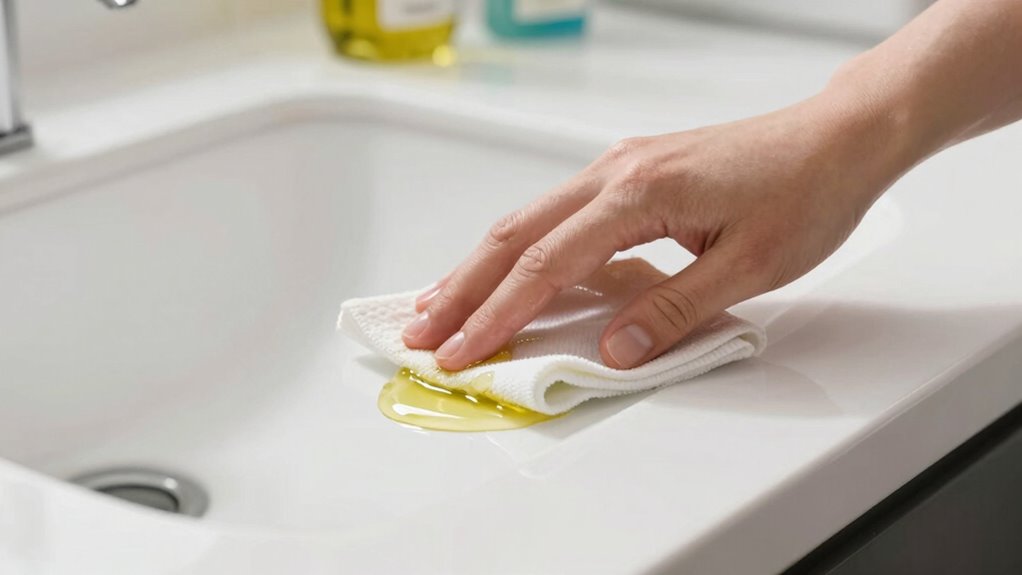
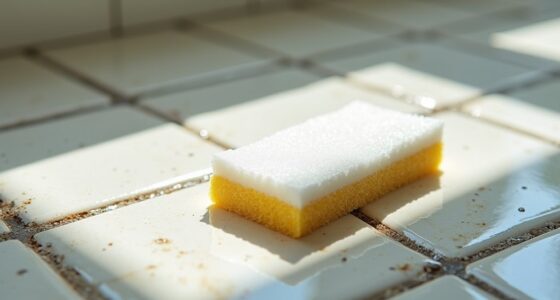
Sticky residue on household surfaces can be frustrating, but luckily, it’s often easy to remove with the right approach. The key is using the appropriate cleaning tools and keeping household safety in mind. Before you start, gather soft cloths, sponges, or microfiber towels—these are gentle on most surfaces and effective at lifting sticky residues. Avoid abrasive scrubbers that could scratch delicate finishes, and always check the manufacturer’s instructions if you’re dealing with special surfaces like countertops or wood furniture. Protect yourself by wearing gloves if you’re using strong cleaning agents, and ensure the area is well-ventilated to prevent inhaling fumes.
Use gentle tools and safety precautions to effectively remove sticky residues from household surfaces.
When tackling sticky residue, start with warm water and a mild dish soap. Dampen your cleaning tools with this solution and gently wipe the affected area. Often, this simple step loosens the sticky layer without risking damage. For stubborn spots, consider applying a small amount of vinegar or rubbing alcohol to a cloth and gently dabbing the residue. These substances break down adhesives and sticky substances safely if used in moderation. Remember, household safety is paramount—avoid mixing chemicals, and never use harsh solvents on surfaces that could be damaged or pose health risks.
If the residue persists, you can try a commercial adhesive remover designed for household use. Always read the label and test it on a small, inconspicuous area first to prevent discoloration or surface damage. When using chemical removers, wear gloves and ensure good ventilation. Additionally, understanding household safety practices can help prevent accidents during cleaning. Using appropriate cleaning solutions tailored to specific surfaces can also improve your results and protect your household items. After the sticky residue is gone, wipe the surface with a clean, damp cloth to remove any leftover cleaner and then dry it thoroughly to prevent streaks or water spots.
In some cases, heat can help soften sticky residues, making them easier to wipe away. Use a hairdryer set on low or medium heat, keeping it a few inches from the surface. Gently warm the residue, then wipe it clean with a cloth. Be cautious not to overheat or hold the heat source too close, as excessive heat can damage certain surfaces. Additionally, understanding household safety practices is essential to prevent accidents during cleaning.
Throughout the process, always prioritize household safety by testing cleaning methods in small areas first and avoiding harsh chemicals unless necessary. Keep cleaning tools clean and dry, and stay mindful of the materials you’re working with to prevent damage. With patience and the right tools, you’ll efficiently remove sticky residues and restore your household surfaces to their original shine.
adhesive residue remover
As an affiliate, we earn on qualifying purchases.
As an affiliate, we earn on qualifying purchases.
Frequently Asked Questions
Can Vinegar Damage Painted Surfaces When Removing Sticky Residue?
Vinegar can damage painted surfaces if used improperly, especially without considering paint protection and surface compatibility. It’s acidic, so it might erode or discolor paint over time. To avoid damage, test a small, hidden area first, and dilute vinegar with water. If you notice any adverse effects, stop using it immediately. Always prioritize gentle cleaning methods to protect your painted surfaces and guarantee they stay looking their best.
Is It Safe to Use Harsh Chemicals on Delicate Household Surfaces?
Using harsh chemicals on delicate surfaces is like walking a tightrope—you risk damage if you’re not careful. You should prioritize chemical safety and consider the surface’s sensitivity before applying strong cleaners. Test a small, inconspicuous area first, and opt for gentler solutions when possible. Always read labels and follow instructions closely to avoid harming your household surfaces, ensuring they stay clean without unnecessary damage.
How Long Should I Let Cleaning Solutions Sit Before Wiping?
Let cleaning solutions sit for 5 to 10 minutes before wiping to maximize residue removal. This pause allows the cleaning agents to break down sticky residue effectively, making it easier to clean away. Your cleaning techniques should include gentle scrubbing if needed, but avoid excessive force on delicate surfaces. Always follow the product instructions for safe and efficient residue removal, ensuring your surfaces stay clean without damage.
Will Removing Residue Affect the Finish or Color of My Furniture?
Removing residue is like peeling back a delicate layer—if you’re gentle, your furniture’s finish and surface color stay intact. Use mild cleaning solutions and avoid harsh scrubbing, which can strip or dull the finish. As long as you’re careful, residue removal won’t harm your furniture’s appearance. Think of it as a dance—tread lightly, and your furniture will keep shining without losing its original charm.
Are There Eco-Friendly Alternatives for Removing Sticky Residues?
Yes, there are eco-friendly alternatives for removing sticky residues. You can try natural remedies like vinegar or baking soda, which are effective and gentle. Biodegradable solutions, such as plant-based cleaning sprays, also work well without harming the environment. These options won’t damage your furniture’s finish or color, making them safe choices for household cleaning. Always test a small area first to guarantee compatibility.
household sticky residue cleaner
As an affiliate, we earn on qualifying purchases.
As an affiliate, we earn on qualifying purchases.
Conclusion
With these simple tricks up your sleeve, sticky residue doesn’t stand a chance. Think of it as a stubborn stain on your favorite canvas—you have the tools to erase it and restore its shine. Just remember, patience and the right approach are your best allies. Soon enough, your surfaces will gleam like a mirror, reflecting the effort you put in. Say goodbye to sticky messes, and hello to a cleaner, fresher home that welcomes you with open arms.
best adhesive remover for surfaces
As an affiliate, we earn on qualifying purchases.
As an affiliate, we earn on qualifying purchases.
gentle cleaning cloths for sticky residue
As an affiliate, we earn on qualifying purchases.
As an affiliate, we earn on qualifying purchases.