
To avoid wasting detergent, measure carefully based on your laundry load size, soil level, and water hardness. Use the guide on your detergent label or a measuring tool like a scoop or cap filled to the recommended line. Adjust the amount for small or lightly soiled loads, and use more for heavy soil. Properly dosing keeps clothes clean, your machine in good shape, and saves you money. Keep going to discover how to perfect your detergent use every time.
Key Takeaways
- Always measure detergent with the recommended scoop or cap to ensure proper dosage and prevent waste.
- Adjust detergent amount based on load size, soil level, and water hardness for optimal cleaning efficiency.
- Use high-efficiency (HE) detergents sparingly, as they are concentrated and require less product per wash.
- Avoid overfilling detergent compartments to prevent residue buildup, soap scum, and potential machine damage.
- Follow manufacturer guidelines and consider water hardness to fine-tune detergent usage and save money.
Why Using the Right Detergent Amount Matters for Your Laundry
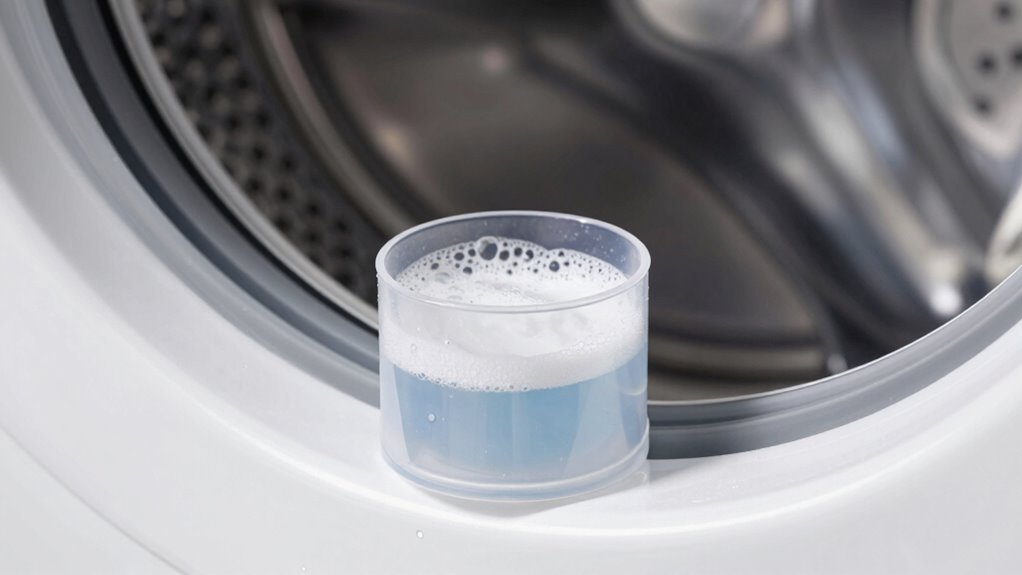
Using the right amount of laundry detergent is essential because too much or too little can affect your laundry results. Understanding detergent chemistry helps you see why proper dosing matters; excess detergent can leave residue and cause buildup, while too little may not clean effectively. Throughout laundry history, manufacturers have refined formulas to maximize cleaning power with less detergent, emphasizing efficiency and environmental impact. Proper amounts ensure you harness the full benefits of the detergent’s formulation—whether it’s enzymes, surfactants, or other ingredients—delivered in the right quantities. Overusing detergent doesn’t just waste product but can also damage fabrics and washing machines over time. Additionally, using too little risks leaving dirt and odors behind. Striking the right balance improves cleaning, saves money, and extends your laundry’s lifespan. The development of energy-efficient formulations reflects ongoing innovations in detergent chemistry aimed at reducing environmental impact while maintaining cleaning performance. Moreover, selecting the appropriate amount of detergent is crucial for preventing buildup, which can impair washing machine efficiency and longevity, and maintaining fabric integrity over repeated washes. Using proper measuring tools helps ensure you consistently use the correct amount and avoid waste, while also helping you better understand detergent chemistry to optimize your laundry routine.
How to Measure Detergent Correctly by Load Size and Soil Level
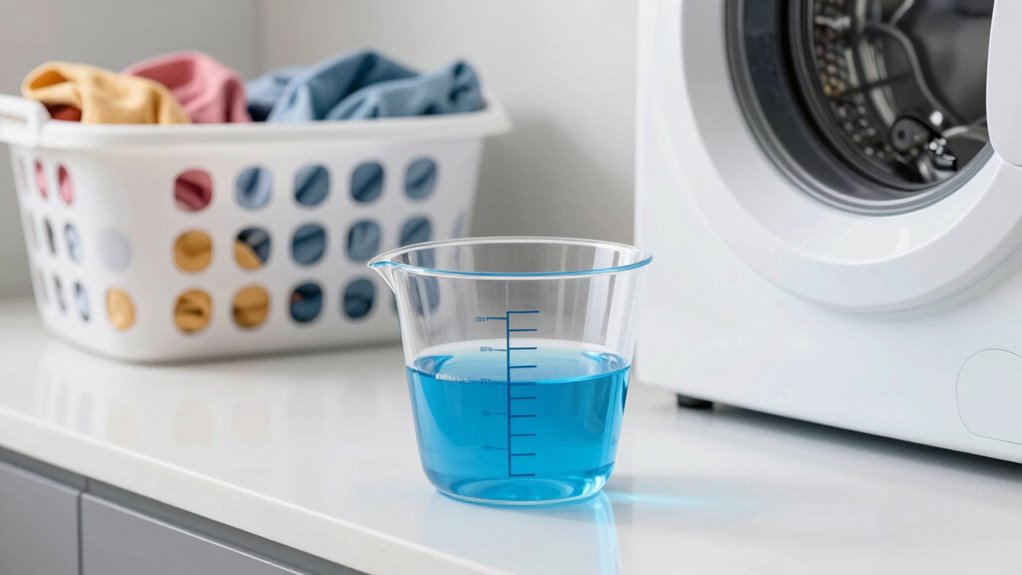
Accurately measuring detergent based on your laundry load size and soil level guarantees you use the right amount every time. To do this, use measuring tools like a scoop or cap designed for your detergent. Start by evaluating your load size—small, medium, or large—and adjust the detergent accordingly. For lightly soiled clothes, use less detergent; for heavily soiled items, increase the amount slightly. Many detergents have filling lines on their caps, making it easy to measure precisely. Always follow the recommended guidelines for load size and soil level provided on the detergent packaging. Proper measurement ensures your clothes get clean without excess detergent residue, saving money and protecting your washer over time. Being familiar with detergent measurement techniques helps optimize cleaning results and prolongs appliance life. Additionally, considering smart home automation features can help remind you to measure detergent correctly, ensuring consistent cleaning performance. Using modern laundry technology can further streamline this process and improve your overall laundry experience. Regularly maintaining your washing machine with proper appliance care also contributes to better cleaning efficiency and longevity. Incorporating proper laundry sorting can also help determine the appropriate amount of detergent needed for each load.
Signs Your Clothes or Washer Are Over- or Under-Detergented
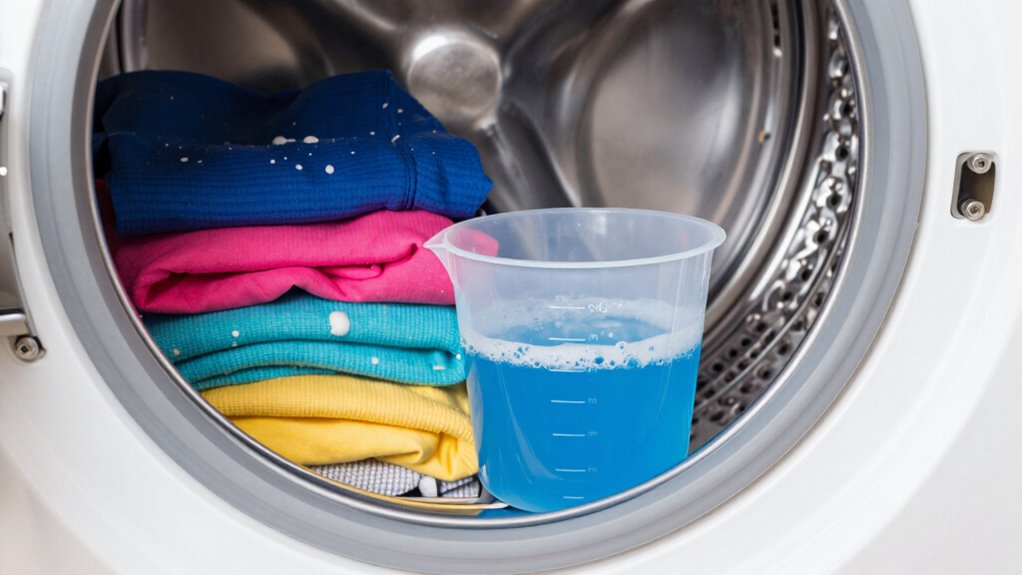
If your clothes aren’t coming out clean or if your washer smells musty, it could be a sign that you’re using too much or too little detergent. Overuse often leaves detergent residue on clothes, which can cause itching and skin irritation. You might notice laundry streaks or films on your garments, indicating excess detergent. Conversely, under-detergenting can result in clothes not smelling fresh or feeling dingy, as dirt and oils aren’t fully removed. Your washer might also develop mold or mildew from leftover detergent buildup. Pay attention to these signs: excessive suds, soap scum, or persistent odors. Properly balanced detergent amounts prevent residue and streaks, ensuring your laundry is clean, fresh, and your machine stays in good shape. Additionally, using the right connected equipment and following science-backed training methods can optimize your laundry routine and extend the lifespan of your washing machine.
Tips for Measuring the Correct Detergent Amount to Prevent Waste
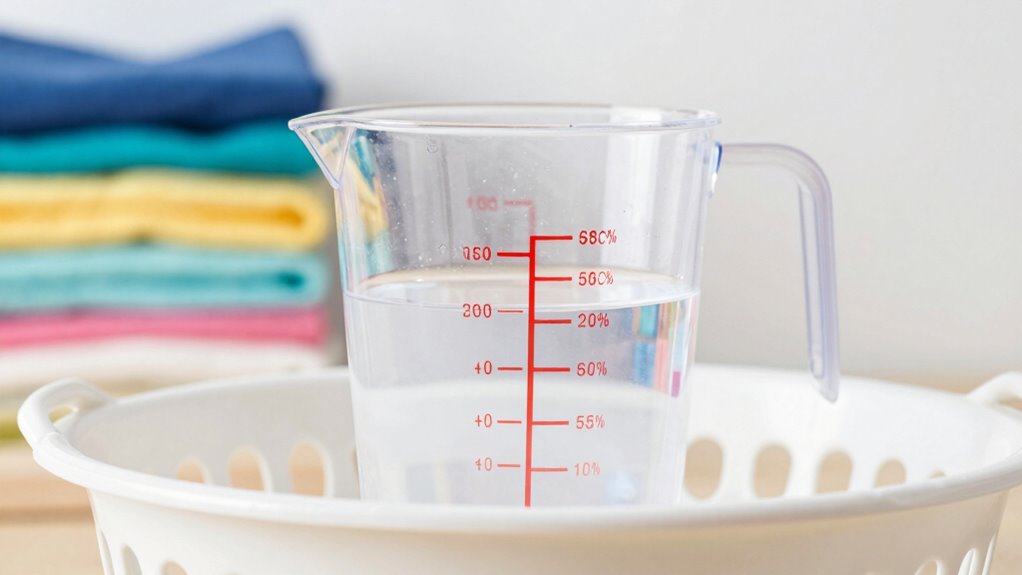
To prevent issues from over- or under-dosing, measuring the right amount of detergent is key. Use measuring tools like cups or caps designed for your detergent to guarantee accuracy. Always follow the detergent formulas on the label, which specify the correct amount based on load size and soil level. For small loads or lightly soiled clothes, use less detergent; for larger or heavily soiled loads, increase accordingly. Avoid eyeballing your measurements, as this can lead to waste or ineffective cleaning. Keep your measuring tools clean and dry after each use to maintain accuracy. Proper detergent measurement not only prevents detergent waste but also protects your clothes and washer from potential damage caused by excess soap. Additionally, understanding your detergent formulation helps optimize cleaning performance and extend the life of your laundry appliances. Being aware of essential oil benefits can also be useful if you choose to add natural scents or cleaning boosters to your laundry routine. Paying attention to water temperature and cycle settings can further enhance cleaning efficiency while conserving resources.
Benefits of Using the Proper Detergent Amount for Your Skin and the Environment
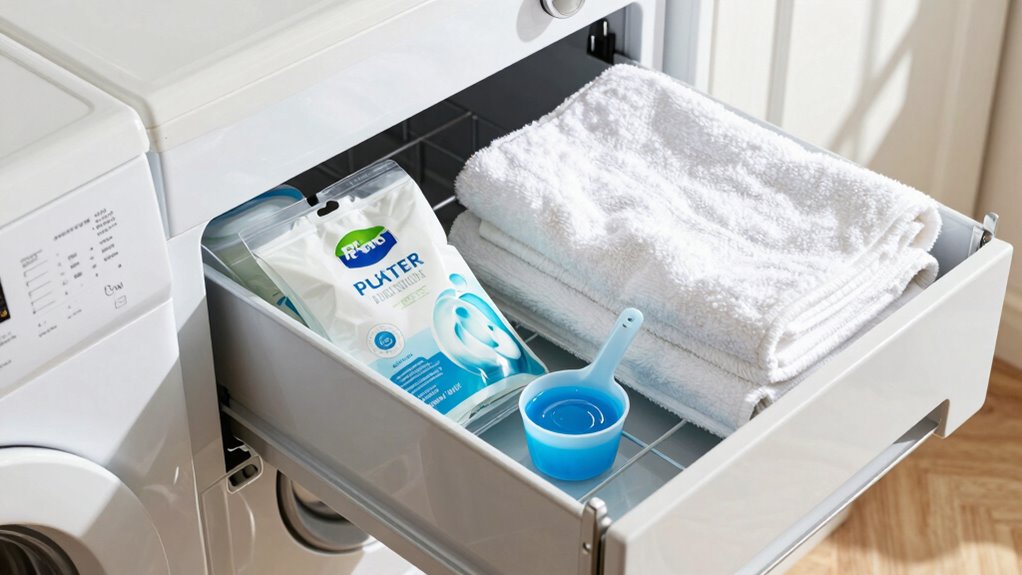
Using the proper amount of detergent benefits both your skin and the environment by reducing exposure to harsh chemicals and minimizing waste. When you use the right amount, you help prevent skin irritation, especially if you opt for skin sensitive formulations designed for delicate skin. Eco friendly detergents are often formulated to be gentle yet effective, so using the correct amount maximizes their benefits without overloading your laundry. This reduces water pollution and conserves resources, making your laundry routine more sustainable. Proper detergent dosage also ensures that your washing machine operates efficiently, extending its lifespan and reducing energy consumption. Additionally, following manufacturer guidelines for measuring detergent can prevent overuse and ensure optimal cleaning results. Using the right amount of detergent supports safe laundry practices and minimizes chemical residues on your clothes. Plus, avoiding excess detergent means fewer chemicals lingering on your clothes and in your home environment. Being mindful of the right detergent quantity not only improves air quality by reducing chemical residues that can become airborne, but also protects your skin and contributes to a healthier planet, all while ensuring your laundry comes out clean and fresh every time.
Common Mistakes When Filling Your Laundry Detergent Drawer

One common mistake is overfilling the detergent compartments, which can lead to residue build-up and ineffective cleaning. Ignoring your water hardness levels can also cause issues, as soft and hard water require different detergent amounts. Paying attention to both will help you avoid common pitfalls and get the best results from your laundry. Additionally, understanding the importance of effective storytelling in branding can inspire you to create better routines and practices, ensuring your laundry process is both efficient and sustainable. Proper script optimization can also help you remember the correct detergent amounts, making each wash more reliable and consistent. Being aware of water quality factors can further optimize your detergent usage for different laundry loads. Recognizing the impact of water hardness can help you choose the appropriate detergent and amount for your specific needs.
Overfilling Detergent Compartments
Overfilling your laundry detergent compartments is a common mistake that can lead to multiple issues. When you add too much detergent, you’re engaging in unnecessary detergent overuse, which can cause soap buildup and reduce your washer’s efficiency. Overfilling the compartment filling too much also increases the risk of residue sticking to clothes and the drum, potentially leading to odors and fabric damage. Excess detergent often spills out during the wash cycle, creating messes and wasting product. To avoid these problems, measure carefully and fill the compartment only to the recommended level. Stick to the correct amount for each load size to ensure your laundry gets clean without wasting detergent or harming your machine. Proper compartment filling helps you save money and keeps your laundry fresh. Additionally, using an appropriate amount of detergent can prevent issues related to detergent buildup, ensuring your appliance functions optimally over time. Being aware of detergent residue buildup can help you maintain your washer and extend its lifespan, especially since machine maintenance is crucial for preventing long-term damage.
Neglecting Water Hardness Levels
Ignoring your water’s hardness level when filling the detergent drawer can undermine your laundry efforts. Water mineralization, or hardness, affects how well your detergent works and can lead to inefficient cleaning. Hard water contains minerals like calcium and magnesium, which reduce washer efficiency by preventing detergent from fully dissolving and binding to stains. If you don’t adjust your detergent amount or use a water softener accordingly, you risk leaving soap scum or mineral deposits on your clothes and inside your machine. Soft water, on the other hand, requires less detergent. By neglecting water hardness levels, you may waste detergent or fail to clean effectively. Always test your water mineralization and adjust your detergent quantity to optimize washer performance and protect your laundry investment.
How to Adjust Detergent Amounts for Different Machines and Detergent Types

Your washing machine’s capacity varies, so you need to adjust the detergent amount accordingly. Different detergent types, like pods or liquids, also require different measurements for ideal cleaning. Knowing these differences helps you avoid waste and get the best results.
Machine Capacity Variations
Since washing machine capacities vary widely, you need to adjust the amount of detergent accordingly to guarantee ideal cleaning without waste. Larger machines require more detergent to maintain proper detergent concentration, ensuring maximum laundry cycle efficiency. Conversely, smaller machines need less to prevent residue and over-sudsing. Use the chart below as a guide:
| Machine Size | Detergent Amount | Notes |
|---|---|---|
| Small (2-4 kg) | 1-2 tbsp | For quick, efficient cycles |
| Medium (5-7 kg) | 3-4 tbsp | Standard load |
| Large (8+ kg) | 5-6 tbsp | Heavy or bulky items |
Adjust based on load size and fabric type, maintaining appropriate detergent concentration for best results.
Detergent Type Differences
Different types of laundry detergents require different amounts to work effectively, especially when considering your washing machine’s design and capacity. Detergent formulas vary in concentration; high-efficiency (HE) detergents are more concentrated, so you need less per load. Traditional formulas often require larger doses. Additionally, scent options can influence how much detergent you use—stronger fragrances sometimes mean you should use slightly more to fully rinse out the scent. Always check the label for recommended amounts based on your machine type and load size. Adjusting the detergent quantity guarantees effective cleaning without wastage or residue. Whether you prefer liquid, powder, or pods, understanding these differences helps you optimize your detergent use and get the best clean every time.
Frequently Asked Questions
Can I Use Less Detergent for Heavily Soiled Clothes?
Yes, you can use less detergent for heavily soiled clothes, but focus on proper stain removal techniques first. Adjust the detergent concentration according to the load size and soil level to avoid overusing. Using too much detergent can leave residues and reduce cleaning efficiency. For tough stains, pre-treat with stain removers and wash at higher temperatures if safe. This way, you optimize cleaning while saving detergent.
How Do Detergent Types Affect the Amount I Should Use?
Ever wondered how detergent types influence the amount you should use? Different detergents, like powders or liquids, vary in efficacy, so you might need less of a concentrated formula for the same cleaning power. Choosing eco-friendly options can also reduce environmental impact. Always follow the label instructions to optimize detergent efficacy and minimize waste, ensuring you’re cleaning effectively without excess. Isn’t it smarter to use just what you need?
Is Hand Washing Detergent Different in Measurement From Machine Detergent?
Yes, hand washing detergent typically requires a different measurement than machine detergent. Hand wash formulas are usually more concentrated, so you use less per load, often just a small amount. Machine detergents are designed for larger loads and may need more to effectively clean. Always check the label for specific detergent measurement instructions, and adapt based on the size of your load to avoid waste and ensure clean laundry.
How Does Water Hardness Influence the Detergent Amount Needed?
Water hardness impacts how much detergent you should use. Hard water contains minerals causing scale buildup, so you’ll need more detergent to clean effectively. Water softening reduces mineral content, allowing you to use less detergent. If your water is hard, increase the amount slightly to avoid ineffective cleaning, but be cautious not to overdo it. Soft water lets you stick to the recommended amount, preventing waste and buildup.
Can Overusing Detergent Harm My Washing Machine’s Lifespan?
If you overuse detergent, you risk damaging your machine over time. Imagine detergent buildup clogging the internal components, leading to poor performance and potential corrosion. This buildup can weaken seals, cause leaks, and even shorten your washer’s lifespan. To avoid this, always measure carefully, use the right amount, and keep your machine clean. Trust us—preserving your washer saves you money and keeps laundry day hassle-free.
Conclusion
Think of your laundry routine like tending a garden—using just the right amount of detergent helps your clothes flourish without waste. When you measure accurately, you’re nurturing your wardrobe, saving money, and protecting the environment. Avoid over- or under-dosing, and your laundry will come out fresh and clean every time. Remember, a little care goes a long way—your clothes will thank you for tending them with the perfect amount of detergent.