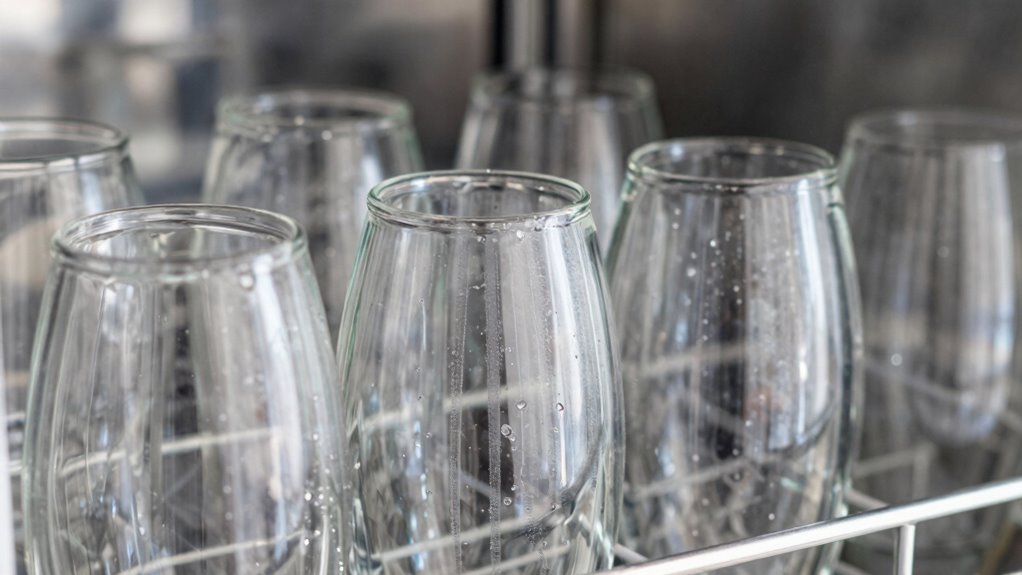

If your dishwasher leaves a film on glassware, it’s likely caused by detergent residue or mineral deposits from hard water. Using too much detergent or a low-quality brand can leave a sticky film, especially if the detergent doesn’t dissolve well. Hard water minerals can also create cloudy buildup. To fix this, try switching to a detergent formulated for hard water, use a rinse aid, or consider installing a water softener. Discover more tips to restore sparkling glassware.
Key Takeaways
- Excess detergent or low-quality brands can leave sticky residue on glassware.
- Hard water minerals can deposit a cloudy film despite cleaning cycles.
- Insufficient or ineffective rinse cycles may fail to remove detergent or mineral buildup.
- Using the wrong detergent amount or type can cause leftover film on glass surfaces.
- Regular maintenance of the dishwasher and installing a water softener can prevent residue formation.

If your dishwasher is leaving a film on your glassware, it can be frustrating and confusing. The first thing to verify is whether detergent residue is building up on your dishes. Sometimes, using too much detergent or a brand that doesn’t dissolve well can leave behind a sticky film. Even if you’re using the recommended amount, the type of detergent matters. Powder, gel, or pods can interact differently with your water supply, and some may not rinse off completely, especially if your dishwasher isn’t functioning at its best.
Detergent buildup can leave a sticky film on glassware, especially if using too much or low-quality detergent.
Another common culprit is water hardness. Hard water contains high levels of minerals like calcium and magnesium, which tend to leave deposits on glassware and dishes after washing. These mineral deposits can create a cloudy or filmy surface that’s difficult to remove. If your area has hard water, standard dishwashing routines might not be enough to prevent this residue from forming. You might notice the film more on glassware than on plastic or metal items because glass is more prone to mineral buildup. Understanding water hardness can help you determine the best methods to combat these deposits. Additionally, using water softening agents can significantly improve your dishwashing results. Regularly testing your water’s hardness can help you choose the most effective treatment options.
To counter detergent residue, you can try switching to a different type of detergent, preferably one designed for hard water. Look for products that contain water softening agents or are labeled as “high-efficiency” or “phosphate-free,” which often work better in areas with mineral-rich water. Using the correct amount of detergent is also essential—more isn’t always better. Sometimes, excess detergent can leave a film because it doesn’t rinse off completely, especially if your dishwasher’s rinse cycle isn’t effective enough.
Addressing water hardness requires specific solutions. Installing a water softener system can considerably reduce mineral content in your water, leading to cleaner, clearer glassware. Alternatively, you can add a rinse aid to help break down mineral deposits and improve rinsing performance. Regularly cleaning your dishwasher’s spray arms, filters, and interior also ensures maximum operation, preventing buildup that can worsen residue issues. Keeping these components well-maintained can help prevent buildup that contributes to film formation. Additionally, choosing dishwasher detergents formulated to combat hard water can make a significant difference. Exploring water treatment options can further enhance your dishwashing results and reduce residue buildup.
In the end, understanding whether the film on your glassware comes from detergent residue or mineral deposits helps you take targeted action. Adjusting your detergent choice, using rinse aids, and exploring water treatment options can make a big difference. With these steps, you’ll soon enjoy sparkling, residue-free glassware every time you run your dishwasher.

Finish Jet-Dry Dishwasher Rinse Aid, Compatible with Dishwasher Detergent, Prevents Spots & Residues, Dries, Shine & Protects, 32 oz, 315 washes
RINSE AID: Finish Jet Dry Rinse Aid is dishwasher rinse aid product.
As an affiliate, we earn on qualifying purchases.
As an affiliate, we earn on qualifying purchases.
Frequently Asked Questions
Can Water Hardness Affect Film Buildup on Glassware?
Yes, water hardness can affect film buildup on glassware. When your water quality contains high mineral deposits, especially calcium and magnesium, it leaves a film on your glasses after washing. These mineral deposits can form a film that dulls the shine. To prevent this, consider using a water softener or adjusting your dishwasher’s rinse settings, which help reduce mineral buildup and keep your glassware sparkling clean.
Do Different Dishwasher Detergents Leave Varying Residues?
They say “you get what you pay for,” and it’s true with dishwasher detergents. Different dishwasher types and detergent ingredients can leave varying residues on your glassware. Some detergents are formulated with harsher chemicals that may leave film, especially if your machine isn’t compatible. Opt for high-quality, enzyme-based detergents suited for your dishwasher type, and you’ll notice cleaner, streak-free glassware with fewer residues.
How Often Should I Clean My Dishwasher’s Filter?
You should clean your dishwasher’s filter at least once a month to maintain ideal performance. Regular filter maintenance prevents debris buildup that can cause residues on your glassware and reduce cleaning efficiency. If you notice lingering spots or film, increase cleaning frequency. Removing and washing the filter with warm, soapy water helps eliminate trapped particles, ensuring your dishwasher runs smoothly and your glassware stays spotless.
Does Load Placement Impact Film Formation on Glasses?
Loading techniques and placement strategies are the key to preventing film on your glasses. If you cramp the glasses or stack them incorrectly, it’s like putting a puzzle together with missing pieces, which traps detergent and debris. Properly spaced, upright placement ensures water flows freely, rinsing away residue and preventing film. So, take your time arranging your glasses carefully—your sparkling, film-free glasses will thank you.
Are There Specific Rinse Aids to Prevent Film on Glassware?
Yes, specific rinse aids can improve rinse aid effectiveness and enhance glassware clarity. Look for rinse aids formulated to prevent film buildup and promote sparkling results. These products work by reducing water spots and ensuring a streak-free finish. By choosing the right rinse aid, you’ll notice clearer, shinier glasses with less film, making your dishwashing routine more effective and your glassware more impressive after each cycle.

Finish Dishwasher Salt Helps Soften Water to Prevent Limescale and Watermarks, 2 KG
Finish Salt is specifically made for dishwashers to soften water and protect them from the negative effects of…
As an affiliate, we earn on qualifying purchases.
As an affiliate, we earn on qualifying purchases.
Conclusion
To keep your glassware sparkling, you need to identify the cause, adjust your rinse aid, and clean your dishwasher regularly. Address mineral buildup, check your water temperature, and avoid overloading the machine. By doing these, you eliminate film, prevent streaks, and restore clarity. Consistency is key—maintain, monitor, and care for your dishwasher. When you do, you’ll enjoy crystal-clear glassware, flawless dishes, and a dishwasher that works like new, every time.

Bioclean Hard Water Stain Remover 20.3 oz
PROFESSIONAL HARD WATER STAIN REMOVER: Get the powerful industrial and commercial strength that takes stains, spots, and rust…
As an affiliate, we earn on qualifying purchases.
As an affiliate, we earn on qualifying purchases.

Aromasong Dishwasher Salt 5 LB – 100% Natural Water Softening Agent Compatible with Bosch, Miele, Whirlpool, Thermador and More… For Cleaner Dishes & Washer Reactivation (packaging may vary)
GET SHINY DISHES – Enjoy squeaky-clean wares with our water softener salt for dishwashers. It will improve your…
As an affiliate, we earn on qualifying purchases.
As an affiliate, we earn on qualifying purchases.