To deep clean your reusable water bottles and lids, disassemble all parts and rinse them with warm water. Fill the bottles with a natural cleaning solution like vinegar or baking soda and let them sit for 15 minutes. Use a bottle brush to scrub inside, and soak lids and small parts afterward. Rinse everything thoroughly. Regular cleaning prevents odors and bacteria buildup—keep going to discover more effective tips for keeping your bottles fresh and safe.

Get furniture and decor delivered free — and shop member deals
- Fast, free delivery on millions of items
- Access to Prime Big Deal Days deals on October 6–7
- Prime Video, Amazon Music and more included
Key Takeaways
- Disassemble the bottle, lids, and straws, then rinse all parts thoroughly with warm water.
- Fill the bottle with warm water and natural cleaning agents like vinegar or baking soda, then let sit for 15 minutes.
- Use a bottle brush to scrub the interior and soak small parts in the cleaning solution for effective deep cleaning.
- Rinse all parts thoroughly to remove any residues and eliminate persistent odors.
- Incorporate routine cleaning using natural solutions to prevent bacteria buildup and prolong bottle lifespan.

Reusable water bottles are a great way to stay eco-friendly and hydrated, but they can quickly harbor bacteria and odors if not cleaned properly. Many people believe bottled water is safer or cleaner than refilling their own bottles, but this is a common bottled water myth. Bottled water isn’t inherently safer; bacteria can develop in any container if not cleaned regularly. To keep your reusable bottle fresh and safe, you need to deep clean it periodically using eco-friendly cleaning methods. These methods not only protect your health but also reduce the environmental impact compared to harsh chemicals.
Reusable bottles need regular eco-friendly cleaning to prevent bacteria and odors, ensuring safe, fresh hydration.
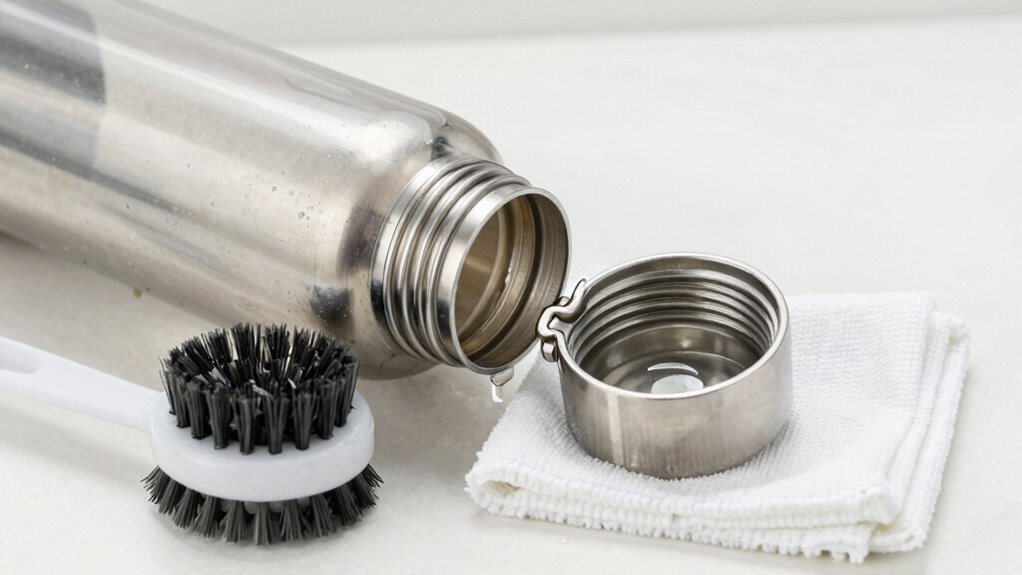
Start by disassembling your bottle and removing the lid, straw, and any other parts. Rinse everything thoroughly with warm water to loosen any residue. For a deep clean, fill your bottle with a mixture of warm water and a natural cleaning agent like white vinegar or baking soda. Both are excellent eco-friendly options that cut through grime and eliminate odors without introducing harmful chemicals. Let the mixture sit for about 15 minutes, giving it time to break down bacteria and stains. Then, use a bottle brush to scrub the interior, paying close attention to hard-to-reach areas such as the bottom and around the threads.
For the lid and other small parts, soak them in the same vinegar or baking soda solution for a few minutes. Use an old toothbrush or small brush to scrub crevices and hinges. Rinse everything thoroughly with warm water afterward to remove any lingering cleaning solution. If odors persist, repeat the process or try a quick soak in a mixture of water and a few drops of tea tree oil, which has natural antimicrobial properties. Additionally, bacteria growth can occur in any container if it isn’t cleaned regularly, emphasizing the importance of routine maintenance. Regular cleaning not only prevents bacteria buildup but also keeps your bottles smelling fresh and tasting clean. Incorporating routine cleaning into your health and hydration habits ensures your reusable bottle remains a safe and pleasant choice.
Sometimes, people fall for bottled water myths, assuming that bottled water stays fresh longer or is less prone to bacteria growth. In reality, bacteria can thrive in any container if it’s not cleaned regularly. Eco-friendly cleaning methods like vinegar, baking soda, and natural oils are just as effective without harming the environment or your health. Avoid using bleach or harsh chemicals, as they can leave residues and affect the taste of your water. Instead, stick with natural solutions that are safe, effective, and sustainable.
reusable water bottle cleaning brush
As an affiliate, we earn on qualifying purchases.
As an affiliate, we earn on qualifying purchases.
Frequently Asked Questions
Can I Use Bleach to Clean My Water Bottle?
You can use bleach to clean your water bottle, but only if you follow proper bleach safety guidelines. Mix a solution of one teaspoon of bleach per quart of water, then let your bottle soak for a few minutes before rinsing thoroughly. However, consider alternative cleaning methods like vinegar or baking soda, which are safer and effective without the risks associated with bleach. Always rinse well to prevent lingering chemicals.
How Often Should I Deep Clean Reusable Bottles?
You should deep clean your reusable bottles at least once a month to prevent mold and bacteria buildup. Different bottle materials may require specific cleaning techniques—stainless steel, for example, handles more rigorous cleaning, while plastic needs gentle scrubbing to avoid scratches. Regular cleaning with warm water and soap helps, but deep cleaning with vinegar or baking soda guarantees thorough sanitation. Adjust frequency based on your usage and how often you refill the bottle.
Are Dishwasher-Safe Bottles Truly Hygienic?
Dishwasher-safe bottles can be hygienic if you choose the right material and maintain proper cleaning frequency. Bottles made from durable materials like stainless steel or certain plastics usually withstand dishwashers well. To guarantee cleanliness, regularly wash your bottle after each use and deep clean it weekly. Using the dishwasher for cleaning helps eliminate bacteria and residue, but always check the manufacturer’s guidelines to confirm the bottle’s suitability for dishwasher cleaning.
What’s the Best Way to Remove Stubborn Odors?
You might find it surprising, but baking soda is your best friend for odor elimination in bottles. To remove stubborn odors, fill your bottle with warm water, add a teaspoon of baking soda, and let it sit overnight. Shake it well in the morning, then rinse thoroughly. This simple trick neutralizes lingering smells and keeps your reusable bottle fresh, making it ready for your next adventure.
Can I Use Vinegar to Clean All Types of Bottles?
Yes, you can use vinegar to clean most bottles, but check the bottle material safety first. Vinegar is effective for removing odors and buildup, but for some materials like certain plastics or specialty bottles, vinegar alternatives like baking soda or mild soap might be safer. Always rinse thoroughly after cleaning to prevent any lingering vinegar taste or damage. When in doubt, follow the manufacturer’s cleaning recommendations to keep your bottles in top shape.
Conclusion
Deep cleaning your reusable water bottles and lids is like giving them a fresh start, ensuring they’re safe and sparkling clean. By following these simple steps regularly, you’ll keep bacteria at bay and enjoy every sip guilt-free. Think of your bottles as your trusty sidekicks—just like a well-maintained bike, they perform best when cared for properly. So, make deep cleaning a habit, and your bottles will serve you well, crystal clear and odor-free, every time.
Fall Picks
fall essentials
As an affiliate, we earn on qualifying purchases.