
TL;DR

Get furniture and decor delivered free — and shop member deals
- Fast, free delivery on millions of items
- Access to Prime Big Deal Days deals on October 6–7
- Prime Video, Amazon Music and more included
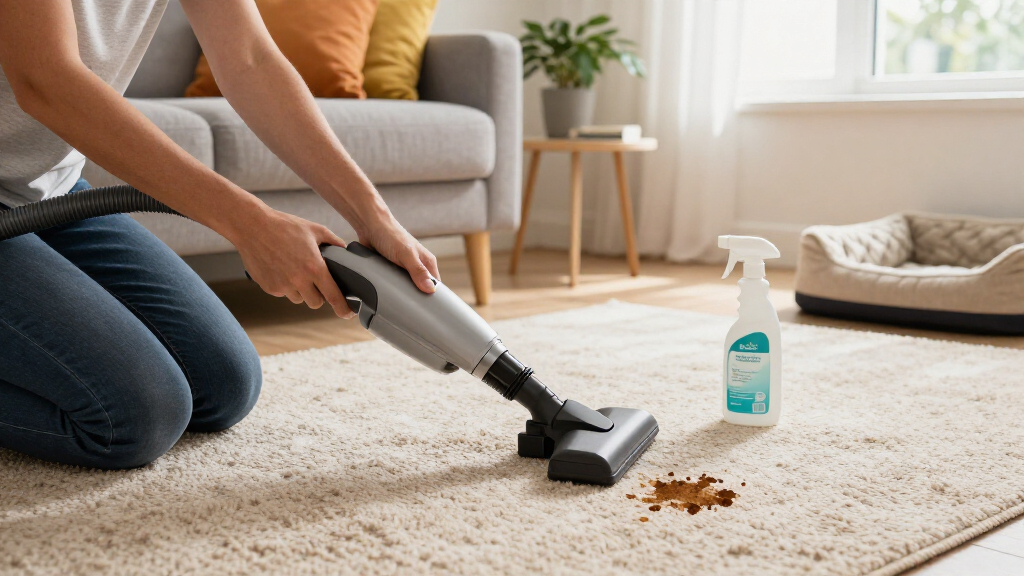
AI-based pet stain removal devices are gaining popularity among pet owners. Experts confirm that while some products show promise, reliability varies, and caution is advised. Uncertainties remain about long-term effectiveness and accuracy.
AI-powered pet stain removal devices are increasingly popular among pet owners seeking quick, automated solutions. However, experts warn that their effectiveness varies, and consumers should approach these products with caution. Recent evaluations indicate that while some devices show promise, their reliability is not yet guaranteed, raising questions about trusting AI for such sensitive cleaning tasks.
Several companies have launched AI-enabled cleaning devices designed to detect and remove pet stains automatically. These devices utilize sensors, machine learning algorithms, and sometimes camera systems to identify stains and apply cleaning solutions accordingly. According to consumer reports and early reviews, some models successfully remove fresh stains and are user-friendly, but others struggle with older or more stubborn marks.
Experts in cleaning technology and veterinary science emphasize that AI devices are still in developmental stages. Dr. Lisa Chen, a pet health specialist, noted, “While these devices can be effective for light, recent stains, they are not yet reliable for deep or set-in stains, which often require manual cleaning or professional intervention.” Researchers also highlight that sensor accuracy and AI decision-making algorithms are still evolving, leading to inconsistent results across different products.
Consumers are advised to read reviews carefully and consider these devices as supplementary tools rather than complete replacements for traditional cleaning methods. Manufacturers typically recommend manual pre-cleaning for tougher stains, which AI devices may not fully address.
Implications for Pet Owners Considering AI Cleaning Devices
This development matters because many pet owners are seeking efficient, automated solutions to manage pet stains, which are common and often challenging to clean. The variability in AI device performance means that relying solely on these products could lead to incomplete stain removal or potential damage to flooring and fabrics. Understanding their limitations helps consumers make informed decisions and avoid disappointment or unnecessary expenses.
Furthermore, this situation underscores the importance of ongoing technological improvements and the need for clear consumer guidance. As AI devices become more sophisticated, their role in home cleaning will likely expand, but current limitations suggest caution and continued reliance on traditional cleaning methods for stubborn stains.
As an affiliate, we earn on qualifying purchases.
Development of AI Cleaning Devices and Consumer Adoption Trends
Over the past two years, several startups and established brands have introduced AI-enabled cleaning devices specifically targeting pet stain removal. These products often feature sensors capable of detecting moisture and stain coloration, combined with machine learning to adapt cleaning patterns. The market growth is driven by increasing pet ownership and a demand for convenient home cleaning solutions.
Early reviews and user feedback have been mixed, with some users praising ease of use and initial effectiveness, while others report inconsistent results, especially with older or deep-set stains. Industry experts have noted that AI technology in home cleaning is still maturing, and manufacturers are actively updating algorithms and hardware to improve reliability.
Regulatory bodies and consumer advocacy groups have called for clearer labeling and testing standards to ensure safety and efficacy, but such frameworks are still under development. The overall trend indicates a shift towards smarter, more autonomous cleaning devices, but their readiness for widespread, dependable use remains under evaluation.
“While these devices can be effective for light, recent stains, they are not yet reliable for deep or set-in stains, which often require manual cleaning or professional intervention.”
— Dr. Lisa Chen, Pet Health Specialist
Unresolved Questions About Long-Term Effectiveness
It remains unclear how well AI-powered stain removal devices will perform over time, especially with repeated use on various surfaces or with different types of stains. Long-term durability, sensor accuracy, and algorithm improvements are still being tested, and manufacturers have not yet provided comprehensive data on these aspects. Additionally, the safety of chemical solutions used in some devices under prolonged use is still under review.
Upcoming Developments and Industry Standards
Manufacturers are expected to release updated models with improved sensors and AI algorithms in the coming months. Consumer testing and independent reviews will play a critical role in assessing their real-world performance. Regulatory agencies are also working toward establishing safety and efficacy standards for AI cleaning devices, which could influence market offerings and consumer confidence.
Pet owners and industry stakeholders should watch for these developments, as they will shape the future reliability and adoption of AI-based stain removal solutions.
Key Questions
Can AI-powered pet stain removal devices completely replace manual cleaning?
Currently, most AI devices are effective only for light or fresh stains. For deep, old, or stubborn stains, manual cleaning or professional services are still recommended.
Are AI cleaning devices safe for all types of flooring and fabrics?
Manufacturers claim their devices are safe for common household surfaces, but users should follow instructions carefully and test on small areas first to prevent damage.
How reliable are AI devices in detecting pet stains?
Sensor accuracy varies by model, and some devices may miss or misidentify stains, especially if they are old or faint. Ongoing improvements are expected.
What should consumers consider before buying an AI pet stain removal device?
Consumers should review product performance reports, consider their specific needs, and treat these devices as supplementary tools rather than sole solutions for tough stains.
Will AI devices improve significantly in the next year?
Yes, manufacturers are actively updating hardware and software, and industry standards are under development, which should lead to more reliable products soon.
Source: rss
Evergreen bestsellers Picks
bestsellers
As an affiliate, we earn on qualifying purchases.




![[Fact Check] Lee’s Claim Blaming Oh For Seoul Home Prices? - 최보식의언론](https://byretreat.com/wp-content/uploads/2026/09/fact-check-lee-s-claim-blaming-oh-for-seoul-home-prices-featured-260x140.jpg)
