
To reduce mud around your entry paths and yard, start by evaluating your property’s natural water flow and installing drainage solutions like French drains or surface drains to redirect excess water away from problem areas. Add a gravel layer around entry points and yard to promote quick drainage and create a stable surface. Properly grading your yard to slope away from your home helps water flow downhill. Keep up with maintenance to guarantee these systems stay effective, and you’ll improve your landscape’s health while minimizing mud.
Key Takeaways
- Install effective drainage systems like French drains to redirect water away from entry paths.
- Lay and compact gravel around entry points to improve drainage and prevent mud accumulation.
- Grade yard slopes to direct water flow away from walkways and prevent pooling.
- Use permeable barriers like gravel to enhance soil drainage and reduce muddy patches.
- Regularly inspect and maintain drainage and grading systems for ongoing effectiveness.
Mud around entry paths and yards can quickly become a persistent problem, especially during rainy seasons. When water accumulates and soaks into the soil, it creates slippery, muddy patches that can be messy and unsafe. To combat this, you need effective drainage solutions that redirect water away from your walkways and yard. Start by evaluating your property’s slope and natural water flow. Installing proper drainage systems, such as French drains or surface drains, helps channel excess water away from problem areas. These solutions prevent water from pooling and reduce the amount of mud that forms after heavy rain.
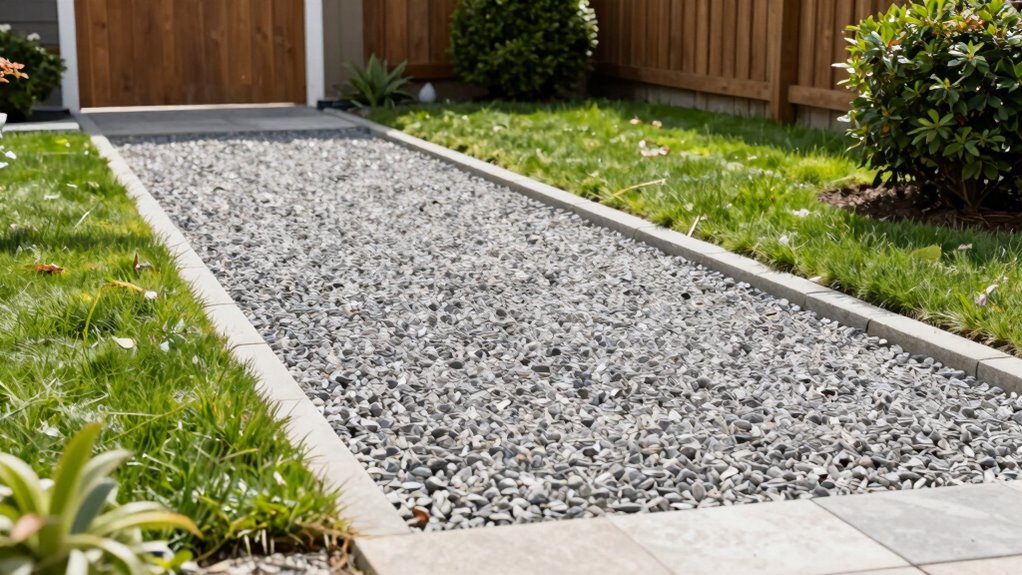
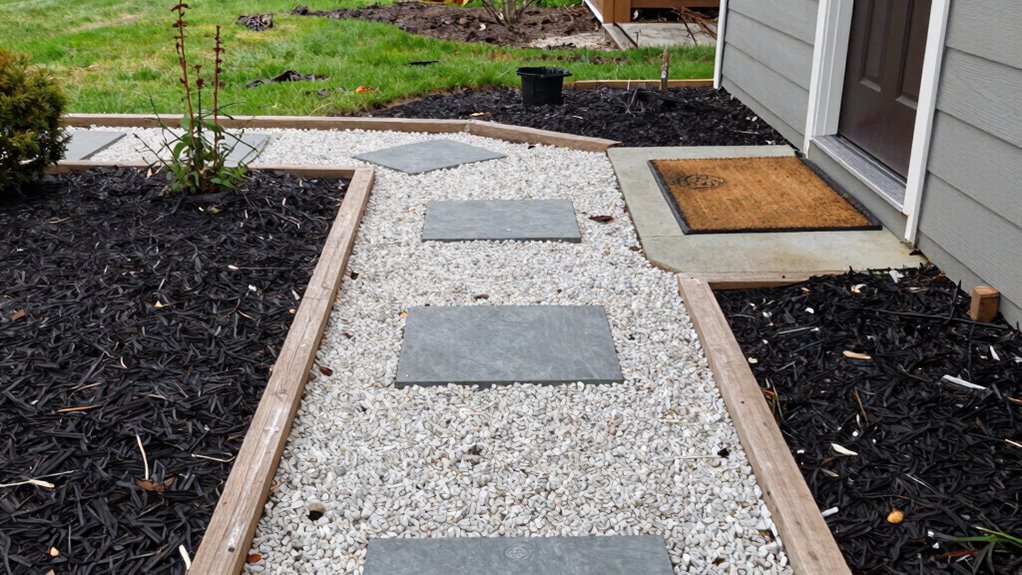
Another vital step is gravel installation around your entry points and yard. Gravel acts as a permeable barrier that allows water to drain quickly, preventing it from sitting and turning into mud. When you lay down gravel, verify it’s a sufficiently thick layer—usually around 3 to 4 inches—to provide a stable, well-draining surface. Spread the gravel evenly and compact it to create a firm footing that resists shifting under foot traffic. Gravel not only improves drainage but also offers a cleaner, more polished look to your entryways. Incorporating drainage solutions like gravel helps create a more effective water management system.
Combining drainage solutions with gravel installation maximizes mud reduction. For example, placing gravel in areas prone to water pooling helps water seep into the ground faster, while installing drains directs excess water to safe outlets. Additionally, consider grading your yard to slope away from your house and walkways, which encourages water to flow downhill rather than settle around your home’s foundation or entry paths. Proper grading, combined with gravel and drainage systems, creates a thorough approach to mud control. Regularly inspecting and maintaining these systems ensures they continue to function effectively over time. Ensuring your yard has proper drainage is essential for long-term mud prevention and overall landscape health. Incorporating Proper grading techniques can further enhance water runoff management. Implementing soil stabilization methods can also help prevent soil erosion and reduce muddy areas over time.
As an affiliate, we earn on qualifying purchases.
Frequently Asked Questions
What Are the Best Materials for Creating a Mud-Free Entryway?
The best materials for creating a mud-free entryway include gravel, crushed stone, and stabilized soil. Gravel and crushed stone promote good pathway drainage, preventing water from pooling and mud from forming. Using soil stabilization techniques, like adding geotextiles or stabilizing additives, helps keep the surface firm and reduces erosion. These materials work together to keep your entryway dry, durable, and mud-free, even in rainy weather.
How Often Should I Maintain Gravel or Stone Paths?
You should maintain gravel or stone paths at least twice a year, ideally in spring and fall. Regular gravel maintenance keeps the path level and prevents erosion, while checking path drainage guarantees water flows away from the surface, reducing mud buildup. Raking and replenishing gravel as needed also helps keep the surface even. Proper maintenance minimizes mud and keeps your paths looking tidy and functional year-round.
Can Plants Help Prevent Mud Around Entry Points?
Yes, plants can help prevent mud around entry points. You can plant barriers of sturdy, dense shrubs or ground cover plants to absorb runoff and stabilize soil. Mulch barriers around these plants also help keep mud at bay by reducing erosion and retaining moisture. Regularly maintaining these plantings guarantees they stay healthy and effective, creating a natural barrier that minimizes mud and keeps your entryways cleaner.
What Are Quick Fixes for Existing Muddy Areas?
You can quickly fix muddy areas by improving drainage solutions, like adding gravel or creating a slight slope to direct water away. Using footwear tips, such as waterproof boots, helps keep your feet dry while working. Spread some wood chips or straw over the mud for instant coverage and traction. These fixes are fast, easy, and prevent mud from spreading further, making your yard safer and cleaner without long-term commitment.
Are There Eco-Friendly Solutions for Reducing Mud?
Yes, eco-friendly alternatives exist for reducing mud. You can use natural drainage solutions like installing gravel or wood chips, which improve water flow and prevent mud buildup. Planting native grasses or ground covers helps stabilize soil and absorb excess moisture. These methods are sustainable, low-impact, and enhance your yard’s natural beauty while effectively managing mud. Embracing eco-friendly solutions promotes a healthier environment and keeps your entry paths cleaner.
Conclusion
By taking these steps, you’re planting the seeds for a cleaner, calmer yard—transforming muddy chaos into a sanctuary. Each gravel layer or drainage tweak acts like a shield, guiding water away and letting your entryway flourish. Think of your efforts as nurturing a sturdy bridge over muddy waters, inviting ease and order into your daily life. With patience and care, your yard becomes a symbol of resilience, welcoming you home without the mess.