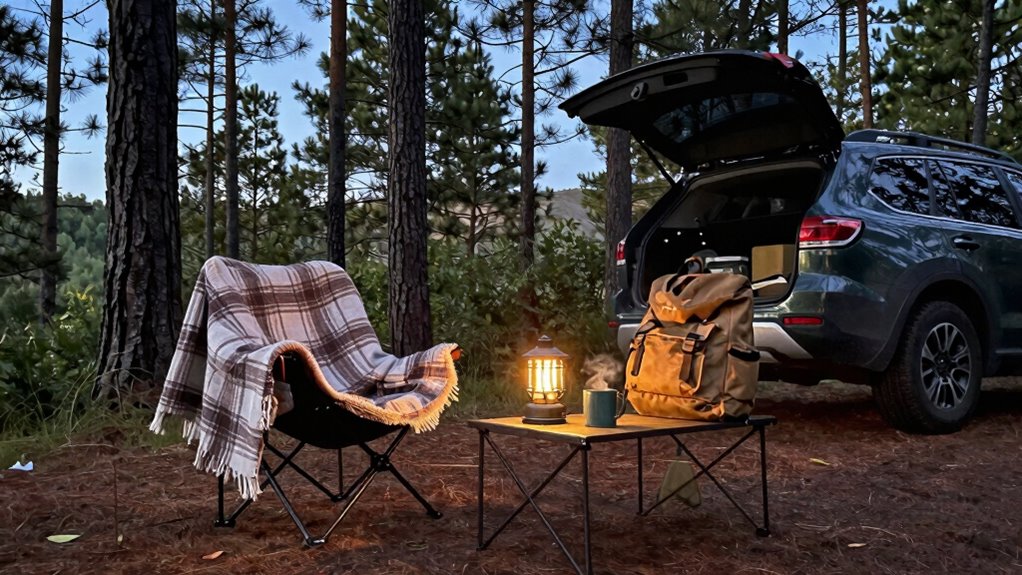

To plan a more comfortable road trip basecamp, choose a flat, well-drained spot that’s safe and offers shade. Bring cozy chairs, organize your essentials within easy reach, and set up the shelter to protect against wind and sun. Stay aware of weather and local rules, lock up valuables, and keep safety gear nearby. By thoughtfully preparing your environment and safety measures, you create a relaxing, worry-free base. Keep exploring for tips to make your camp even better.

Get furniture and decor delivered free — and shop member deals
- Fast, free delivery on millions of items
- Access to Prime Big Deal Days deals on October 6–7
- Prime Video, Amazon Music and more included
Key Takeaways
- Choose a flat, well-drained campsite with easy access and minimal environmental impact.
- Bring comfortable outdoor furniture and organize essentials for quick access and relaxation.
- Set up shade and wind protection to create a cozy, weather-resistant basecamp.
- Ensure safety by locking valuables, carrying lighting, and informing someone of your plans.
- Regularly check weather forecasts and adjust plans to maintain safety and comfort.
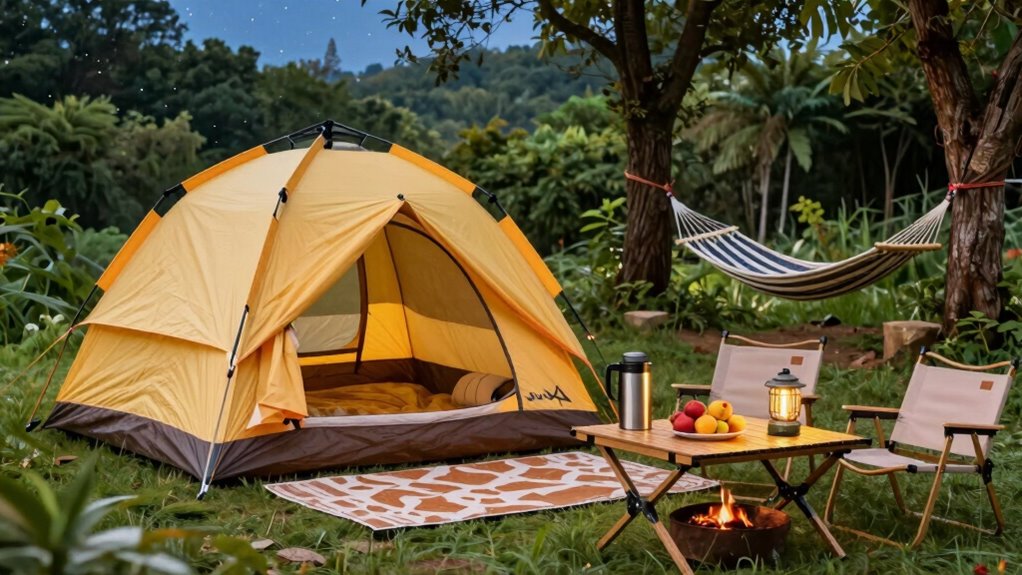
Safety tips should be at the forefront of your planning. Before setting up, research the area’s safety guidelines and local regulations. Always choose a spot that’s legal and suitable for camping, away from hazards like unstable ground or nearby water bodies prone to flooding. Lock your vehicle when unattended, and store valuables out of sight to prevent theft. Keep a flashlight, extra batteries, and a charged power bank handy for emergencies or if the weather suddenly changes. It’s also smart to tell someone your plans and expected return time, especially if you’re heading into remote areas. Familiarize yourself with basic survival skills, such as how to start a fire or find clean water, just in case. Knowing environmental considerations can help you minimize your impact on the area and support conservation efforts. Being aware of local regulations can prevent unintentional violations and ensure a smoother camping experience. Always check weather forecasts before arriving and be prepared to adjust your plans if needed.
Creating a comfortable basecamp isn’t just about packing the right gear — it’s about setting up an environment where you feel secure and relaxed. When you arrive, choose a flat, well-drained spot for pitching your tent. Clear the area of debris, and stake it securely to withstand wind. Set up your shelter in a way that provides shade during the day and protection from wind at night. Bring along comfortable chairs and a small table to create a cozy outdoor living space. Keep your essentials organized in easily accessible containers, so you don’t waste time searching for things. A little planning goes a long way, making your basecamp a haven where you can unwind after a day of adventure. Paying attention to camping safety and environmental considerations ensures a more enjoyable experience. With thoughtful packing and sound safety tips, you’ll enjoy a more comfortable, worry-free road trip experience.
As an affiliate, we earn on qualifying purchases.
Frequently Asked Questions
What Are the Best Snacks for Long Road Trips?
For long road trips, you should pack healthy snacks like fresh fruit, nuts, and granola bars to keep energy levels up. Easy snack packs, such as trail mix or veggie sticks with hummus, make snacking convenient and mess-free. These options help you stay satisfied without unnecessary sugar or junk food. Keep a variety handy, and you’ll enjoy the journey more while staying fueled and comfortable on the road.
How Do I Keep My Phone Charged During the Trip?
Think of your phone as a trusty sidekick—you want it powered up for every adventure. To keep it charged, focus on battery maintenance by turning off unnecessary apps and brightness. Carry multiple charging options like a car charger, portable power bank, or solar charger, so you’re never stranded in a dead zone. This way, your device stays alive, ready to navigate and capture memories along the way.
What Safety Equipment Should I Pack for Emergencies?
You should pack an emergency kit that includes essential safety equipment like a first aid kit, flashlight, batteries, and multi-tool. Make certain your first aid supplies cover cuts, burns, and any personal medications. It’s also wise to include items like a whistle, reflective triangles, and extra water. These preparations ensure you’re ready for unexpected situations, helping you stay safe and handle emergencies confidently during your road trip.
How Can I Reduce Road Trip Noise for Better Sleep?
To reduce road trip noise for better sleep, you can use soundproof windows or add thick curtains to your vehicle’s windows. Earplug alternatives like noise-canceling headphones or a white noise app also work well. You might consider placing a foam panel or a folded blanket against the window or around your sleeping area. These methods block out distracting sounds, helping you rest more peacefully during your trip.
What Are Tips for Traveling With Pets Comfortably?
You can make pet travel smoother by packing essential comfort tips like cozy bedding, familiar toys, and portable water bowls. Keep your pet secure with a harness or crate, and plan frequent breaks for stretching and bathroom needs. Bring along pet travel essentials such as treats and waste bags. Staying calm and positive helps your pet stay relaxed, making the journey enjoyable for everyone.
Conclusion
With a little prep, your road trip basecamp becomes more than just a stopover—it turns into a cozy retreat where you can really unwind. As you pack and plan, you might find that the perfect spot appears right when you least expect it, almost like it was waiting for you all along. So trust your instincts, stay flexible, and enjoy the journey. After all, sometimes the best memories come from the most unexpected discoveries.
Fall Picks
fall essentials
As an affiliate, we earn on qualifying purchases.