To choose better locations for your cameras and sensors, assess your site first, looking for sheltered spots away from foliage or obstructions that could block views. Position cameras high to cover larger areas and avoid glare or shadows caused by lighting changes. Guarantee the placement considers environmental factors like weather exposure, and use lighting or supplemental power if needed. Properly selected locations improve reliability and image clarity; if you keep exploring, you’ll discover more tips for perfect placement.
Key Takeaways
- Conduct a thorough site assessment to identify environmental factors, obstructions, and optimal viewing angles.
- Mount cameras at heights that maximize coverage while preventing vandalism or accidental damage.
- Position cameras to avoid direct sunlight, glare, shadows, and reflective surfaces for clear footage.
- Protect cameras from weather elements using shelters, shading accessories, and stable mounting points.
- Regularly review and adjust placement based on lighting changes, foliage growth, and environmental conditions.
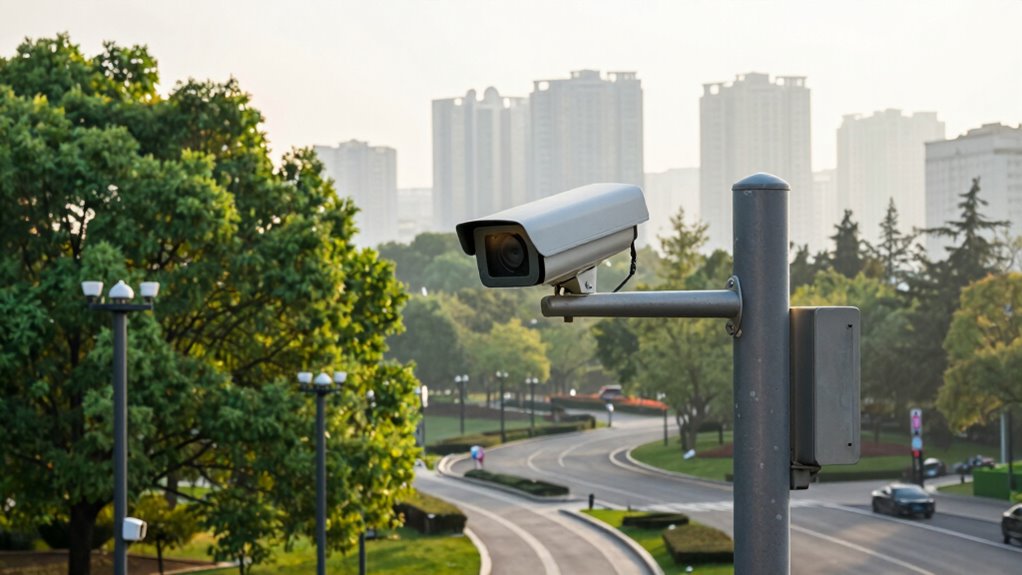
Selecting the right locations for your cameras and sensors is essential to ensuring effective coverage and reliable performance. When you’re choosing spots, you need to consider how lighting conditions will affect image clarity and sensor accuracy. Areas with poor lighting, like dim corners or shaded spots, can compromise footage quality, making it harder to identify details or recognize faces. If natural light fluctuates throughout the day, think about installing supplemental lighting or positioning cameras where they can operate effectively in low light. Infrared or night vision capabilities are helpful, but they aren’t foolproof, so positioning your cameras to maximize their effectiveness during different lighting conditions is fundamental. Additionally, conducting a site assessment beforehand helps identify potential issues related to environmental factors and obstructions. Environmental factors play a significant role in determining the best locations. You should avoid placing cameras where exposure to extreme weather—heavy rain, snow, or direct sunlight—could damage equipment or cause false triggers. For outdoor installations, choose sheltered spots that provide some protection from the elements, but still offer an unobstructed view of the area you want to monitor. Consider foliage or objects that could grow or move and block the camera’s line of sight over time. Wind, snow, and even dust can cause false alarms or degrade image quality, so selecting stable, well-protected locations is paramount. Proper environmental resilience is crucial for long-term camera performance and reliability. To maximize effectiveness, it’s also important to evaluate lighting variability and how it might change throughout the day and seasons. Regularly reviewing the site conditions ensures your setup remains optimal as environmental factors evolve.
Choose camera locations carefully to optimize image quality and performance in varied lighting conditions.
Another key factor involves understanding the environment’s layout and potential obstructions. For example, mounting cameras high on walls or poles can help cover larger areas and reduce the chance of vandalism. However, ensure they’re positioned at a height that still captures clear images of faces or license plates. Think about the placement of sensors in relation to physical barriers—walls, fences, or furniture—that might interfere with signals or sightlines. You want to avoid blind spots, so walk through the area beforehand, noting where natural or man-made obstructions could hide activity. Lighting conditions are often unpredictable, especially outdoors, so you should also consider how shadows, glare, or reflections might influence visibility. For instance, a camera facing directly into the sun could have its lens washed out, preventing clear footage. To mitigate this, position cameras to avoid direct sunlight or use shading accessories. When it comes to environmental factors, regular maintenance and adjustments might be necessary to adapt to changing conditions, like trimming foliage or cleaning lenses. Understanding the environmental impact on your equipment will help you make better placement decisions and ensure consistent surveillance quality. Ultimately, thoughtful placement that accounts for lighting and environmental influences will give you the clearest, most reliable footage, helping you monitor effectively and respond swiftly to incidents.
outdoor security camera with night vision
As an affiliate, we earn on qualifying purchases.
As an affiliate, we earn on qualifying purchases.
Frequently Asked Questions
How Do Weather Conditions Affect Sensor Placement?
Weather impact plays a significant role in sensor placement, as extreme conditions can affect their performance. You should consider durability against elements like rain, snow, and heat, guaranteeing sensors are weatherproof or protected. Proper placement minimizes exposure to direct sunlight, moisture, and wind, which can damage or skew data. By accounting for weather impact, you enhance sensor durability and ensure consistent, reliable data collection over time.
What Are the Legal Considerations for Camera Placement?
They say “better safe than sorry,” and that’s true for camera placement. You must consider legal factors like privacy concerns and local regulations to avoid trouble. Always make certain cameras don’t infringe on private property or public rights. Check with local authorities or laws to confirm your placement complies. Respecting privacy and abiding by rules not only keeps you out of legal hot water but also builds trust with the community.
How Can Lighting Impact Camera Effectiveness?
Lighting conditions considerably impact your camera’s effectiveness by affecting image clarity and detail. Poor lighting can cause grainy or blurry footage, while shadows may obscure important details. Shadow effects, especially during bright sunlight or uneven lighting, can hide intruders or objects. To optimize camera performance, guarantee consistent, adequate lighting and position cameras to minimize shadows, improving visibility and security around your property.
What Tools Are Best for Testing Camera Coverage?
You should use tools like camera calibration software and coverage analysis programs to test your camera coverage effectively. Camera calibration confirms your cameras are properly aligned and functioning, while coverage analysis helps you identify blind spots and overlaps. These tools provide visual feedback, making it easier to adjust camera positions for ideal monitoring. Regular testing with these tools guarantees reliable security and thorough coverage, preventing gaps and ensuring your system performs at its best.
How Often Should Sensor Locations Be Reevaluated?
You should reevaluate sensor locations at least once a year to guarantee ideal placement accuracy. Regular checks help you account for sensor lifespan, preventing performance drops over time. As environments change, repositioning sensors can improve data collection and security coverage. Frequent reevaluation keeps your system effective, extends sensor lifespan, and maintains accurate readings, so your setup remains reliable and responsive to evolving conditions.
Conclusion
Remember, selecting the right spots for your cameras and sensors is like orchestrating a symphony—each placement must harmonize to provide full coverage and security. Just as a keen eye or a watchful owl observes from the heights, your strategic choices guarantee nothing escapes your view. Trust your instincts, think like a guardian, and your setup will become a silent sentinel, quietly watching over your space, much like the ancient watchmen guarding timeless secrets.