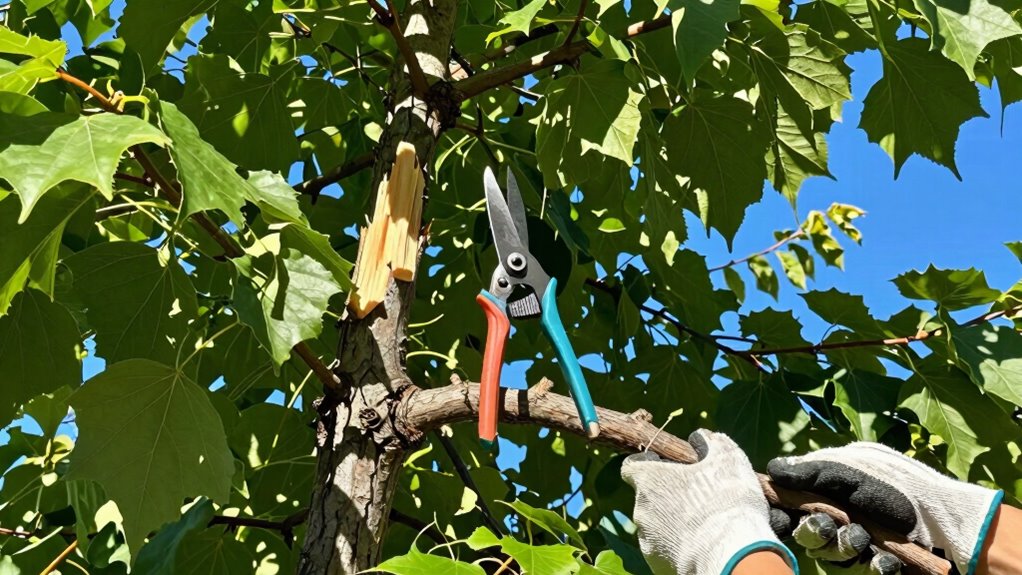
If you’re feeling overwhelmed about what to cut when pruning, focus on the ‘Three Ds’: Disproportion, Damage, and Dormancy. Remove unhealthy, dead, or overgrown branches that block light and airflow, and fix any structural issues. Avoid cutting during active growth or flowering. By sticking to these simple rules, you’ll help your plants stay healthy and vibrant. Keep going, and you’ll discover more tips to prune confidently and correctly.
Key Takeaways
- Focus on removing dead, diseased, or damaged branches to improve plant health and prevent issues.
- Use the ‘Three Ds’ rule—Disproportion, Damage, Dormancy—to guide pruning decisions effectively.
- Prune during dormancy or after flowering for best results, avoiding active growth periods.
- Use clean, sharp tools for precise cuts, and avoid over-pruning to reduce stress.
- When in doubt or facing severe issues, seek expert advice to prevent further damage.

2-Pack Stainless Steel Gardening Scissors, Pruning Shears and Clippers for Gardening
- Versatile Pruning Combo: Includes pruning shears and snip for all tasks
- Ultra Sharp Blades: Premium stainless steel with titanium coating
- Durable and Rustproof: Made from high-quality stainless steel
As an affiliate, we earn on qualifying purchases.
As an affiliate, we earn on qualifying purchases.
Why Proper Pruning Keeps Plants Healthy and Vibrant
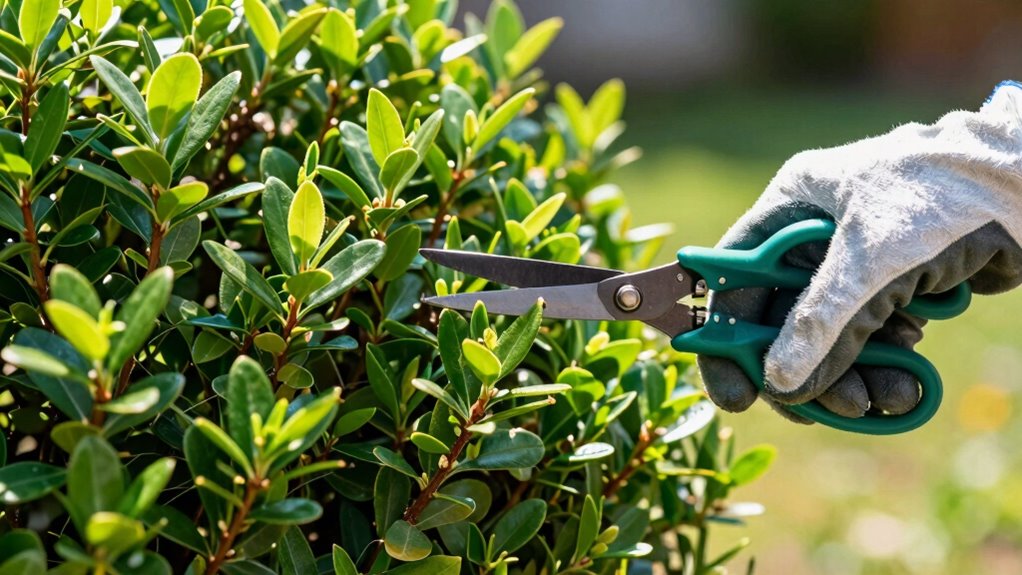
Proper pruning is essential for keeping your plants healthy and vibrant because it helps remove dead or diseased branches that can weaken the overall structure. Using the right pruning tools ensures clean cuts, which minimizes stress on the plant and promotes faster healing. When you prune correctly, you prevent the spread of disease and encourage new, healthy growth. This directly supports plant health by allowing nutrients to flow freely and reducing the risk of pests hiding in damaged areas. Regular pruning also improves air circulation and light penetration, which keeps your plants strong and resilient. Remember, sharp, clean tools make a significant difference—dull blades can cause tears and infections. Prioritizing proper pruning techniques helps your plants thrive and stay vigorous throughout the season. Additionally, practicing smart route choices when pruning can help you access hard-to-reach areas safely and efficiently, much like choosing the best net worth strategies for financial growth. Incorporating sound healing science principles like understanding plant responses to vibrations can further enhance your pruning effectiveness and plant vitality. Moreover, adopting a holistic approach to plant care aligns with innovative European cloud solutions, ensuring sustainable and secure growth practices. Regular assessment of your pruning techniques can also aid in developing visual and auditory cues, which are valuable in recognizing the plant’s needs and responses.
How to Spot Dead, Diseased, or Damaged Branches

You need to learn how to spot dead, diseased, or damaged branches before they harm your plant. Look for discolored or wilted foliage, and watch for any signs of fungal growths. Also, check for structural weaknesses that could cause branches to break unexpectedly.
Identifying Discolored Foliage
Discolored foliage is a clear sign that something’s wrong with your plant, whether it’s dead, diseased, or damaged. Look closely at the leaves; yellowing, browning, or spots indicate trouble. Discolored foliage can result from nutrient deficiencies, which weaken the plant and cause unnatural coloration. For example, magnesium deficiency often leads to yellowing between leaf veins, while iron deficiency causes yellowing across the entire leaf. Damaged or dead branches may have leaves that turn color prematurely or remain dull and lifeless. By examining the foliage’s color and texture, you can identify which branches are distressed. Regularly monitoring plant health indicators helps you detect issues early and take appropriate action. Promptly addressing discolored foliage helps prevent further deterioration, ensuring you can prune effectively and keep your plant healthy. Recognizing unhealthy plant signs early allows you to implement simple, targeted solutions to restore your plant’s vitality, including understanding how discoloration relates to specific deficiencies and damages. Additionally, awareness of symptoms of disease can help distinguish between nutrient problems and infections that may require different treatments.
Detecting Fungal Growths
How can you tell if fungal growths are taking hold on your plant? Look for unusual spots, fuzzy patches, or moldy surfaces on branches. Mushroom identification is helpful—if you spot small, cap-shaped fungi, it’s a sign of fungal presence. Fungal growths often cause tissue to soften, discolor, or decay, making branches appear dead or damaged. Pay close attention to any powdery or slimy textures, which indicate infection. Once detected, fungal treatment is essential; prune out infected branches promptly to prevent spreading. Use sterilized tools to avoid transferring spores. Regular inspection helps catch issues early, saving your plant from further damage. Recognizing these signs guarantees you can act quickly to control fungal growths and keep your plant healthy. Additionally, understanding the signs of decay can help you identify affected areas before visible symptoms appear. Being vigilant about early detection can significantly improve your plant’s chances of recovery.
Recognizing Structural Weakness
Identifying dead, diseased, or damaged branches is crucial for maintaining your plant’s health. These weak spots threaten the plant’s structural integrity and can compromise branch stability. Look for branches that are discolored, brittle, or have shriveled leaves. Dead branches often feel hollow or break easily when gently bent. Diseased ones may show signs of fungal growth, unusual spots, or oozing sap. Damaged branches might have cracks, splits, or broken tips. Removing these ensures the plant remains strong and resilient, preventing decay from spreading. By targeting weak branches, you support better airflow and sunlight penetration, which promotes overall health. Recognizing these signs early helps you make precise cuts that preserve the plant’s shape and vitality. Keep a close eye to maintain its structural integrity. Proper pruning techniques can further enhance plant health and longevity.
Pruning Overgrown or Crowded Branches: A Simple Guide
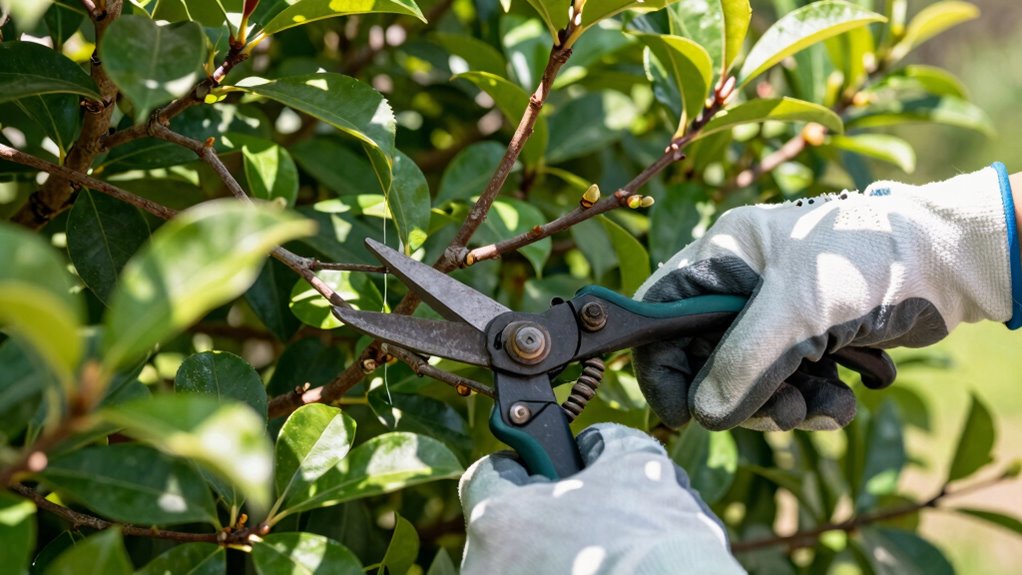
When branches become overgrown or crowded, it’s essential to prune them to promote healthy growth and maintain your plant’s shape. Focus on removing thicker branches that crowd the center or block sunlight, which can hinder leaf color and overall vigor. Cutting back overgrown branches encourages new growth and airflow. Additionally, selecting the right wood type can influence the durability and appearance of your pruning cuts, ensuring the health of your plant. Consider these tips: – Thin out branches with excessive thickness to prevent crowding – Remove branches that overlap or cross to improve structure – Watch for branches with dull or pale leaf color—these may need thinning – Keep the plant balanced by pruning selectively on each side. Understanding plant ecosystems can help you make more informed pruning decisions that support biodiversity and plant health. Recognizing plant responses to pruning can also guide you in timing your cuts for optimal recovery and growth. Proper filtration during pruning can help prevent the spread of disease and keep your tools clean for future use.
Should You Shape or Size Your Plants? What the ‘Three Ds’ Rule Tells You

Deciding whether to shape or size your plants hinges on understanding the ‘Three Ds’ rule: Disproportion, Damage, and Dormancy. If a plant’s growth becomes uneven or out of balance, shaping can improve its overall pruning aesthetics. Damage from pests, storms, or improper pruning indicates you should size back to promote healthy growth and prevent further issues. Dormant plants, which aren’t actively growing, are best left alone until their next growth cycle. This rule helps you determine whether to prune for form or to control size, ensuring your actions support healthy plant growth. By focusing on these three factors, you avoid unnecessary trimming and maintain the natural beauty of your plants without compromising their essential strength.
When and How to Prune Using the ‘Three Ds’ for Best Results
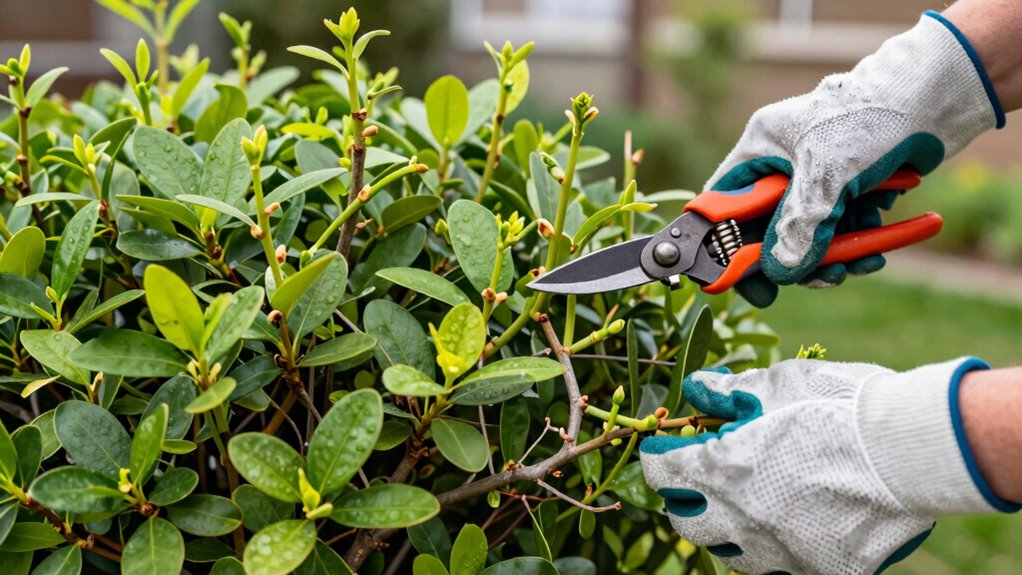
Timing your pruning is crucial to achieving the best results with the ‘Three Ds’ rule. Prune when your plant shows signs of overgrowth or decline, usually during the dormant season or after flowering. Proper timing helps maintain growth, guarantees healthy growth maintenance, and enhances plant aesthetics. To prune effectively, focus on these key steps:
- Remove dead, damaged, or diseased branches first
- Cut back overly dense growth to improve airflow
- Shape the plant for better aesthetics and balance
- Avoid pruning during active growth periods to prevent stress
- Consider local seasonal variations, as timing can differ based on climate and plant type
- Understanding plant physiology can help determine the optimal pruning time for different species
- Recognizing growth cycles in plants can further refine pruning timing for optimal health and appearance
- Being aware of plant response to pruning helps optimize recovery and growth after pruning.
- Awareness of plant health indicators allows for more precise pruning decisions and promotes overall vitality.
Using the ‘Three Ds’ at the right time ensures your plant remains healthy, attractive, and easy to manage. This approach promotes vigorous growth and keeps your landscape looking its best year-round.
Tools and Tips: Pruning Safely and Effectively
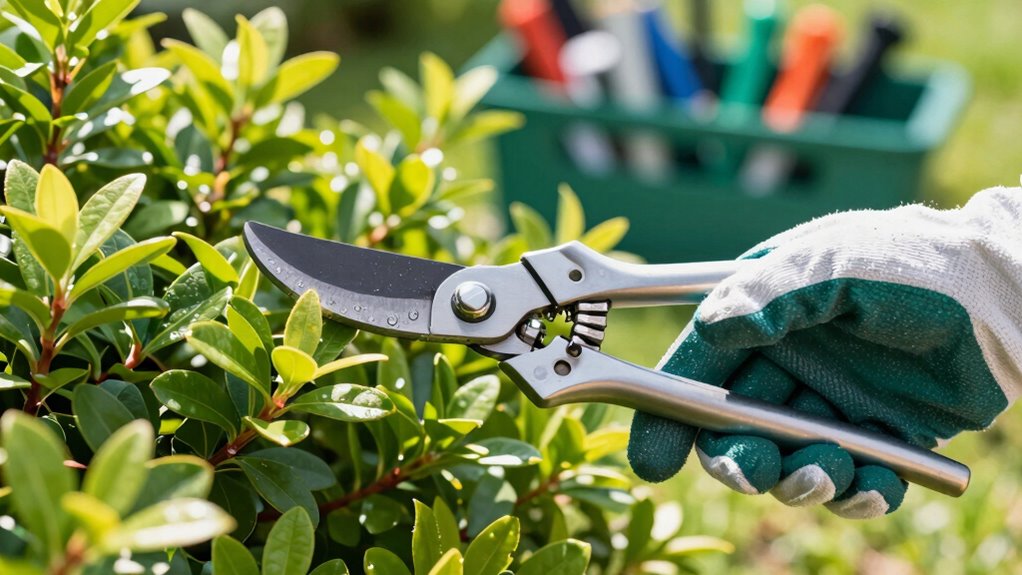
Using the right tools is essential for pruning safely and effectively. Invest in sharp, high-quality pruning tools like bypass pruners for clean cuts and loppers for thicker branches. Dull tools can damage plants and increase the risk of infection. Always sanitize your tools before and after pruning to prevent disease spread. Pay attention to pruning timing; pruning at the right time encourages healthy growth and reduces stress on the plant. For example, prune deciduous trees during dormancy, while flowering plants are best trimmed after blooming. Proper tools and timing make pruning easier, safer, and more successful. Remember, the goal is to make clean cuts with minimal damage, helping your plants thrive without unnecessary stress or injury.
Common Pruning Mistakes and How to Avoid Them
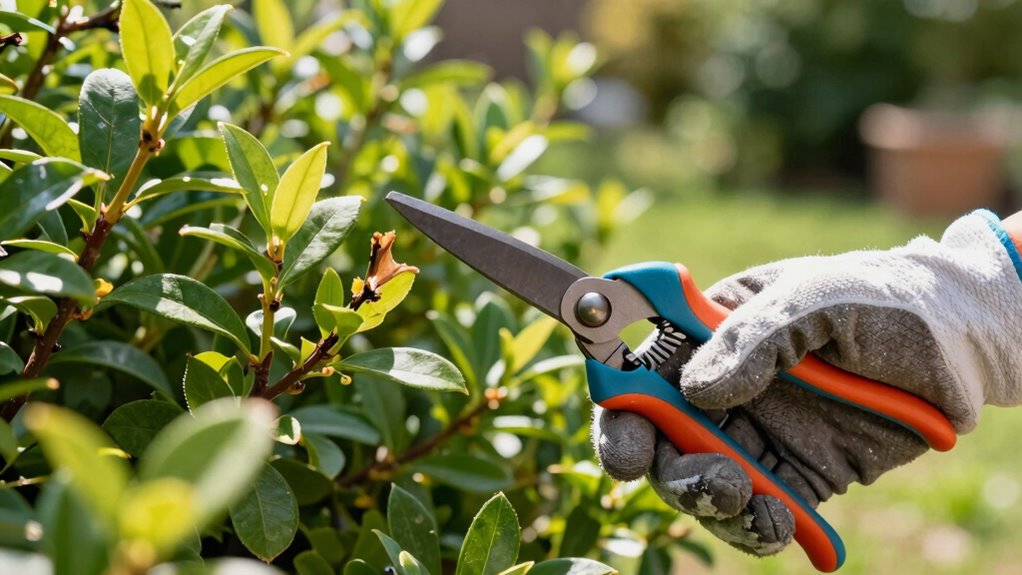
Even with the right tools and proper technique, it’s easy to make mistakes that can harm your plants. Common pruning mistakes often stem from misconceptions or neglecting seasonal pruning schedules. For example, cutting too much at once weakens the plant, or pruning at the wrong time can promote disease. Avoid these pitfalls by recognizing pruning myths, such as the idea that all dead branches must be removed immediately. Also, be cautious not to:
Even with proper tools, avoid pruning mistakes like over-pruning or improper timing to keep plants healthy.
- Prune during the wrong season, risking damage or disease
- Over-prune, leading to stress and poor growth
- Use blunt tools, causing unnecessary damage
- Remove healthy growth unnecessarily
Being aware of these errors helps you make better decisions, ensuring healthy development and a vibrant garden. Proper knowledge about seasonal pruning and avoiding common mistakes keeps your plants thriving. Recognizing the importance of seasonal pruning schedules can help prevent many of these issues and promote healthier growth, especially since timing considerations are crucial for plant health. Additionally, understanding plant growth cycles can guide you in making informed pruning choices that support your garden’s vitality. Incorporating proper pruning techniques ensures minimal stress and optimal recovery for your plants. Moreover, understanding the role of healthy plant development can help you identify what to prune and what to leave intact for sustained growth.
Tailoring Pruning Techniques for Different Shrubs and Trees
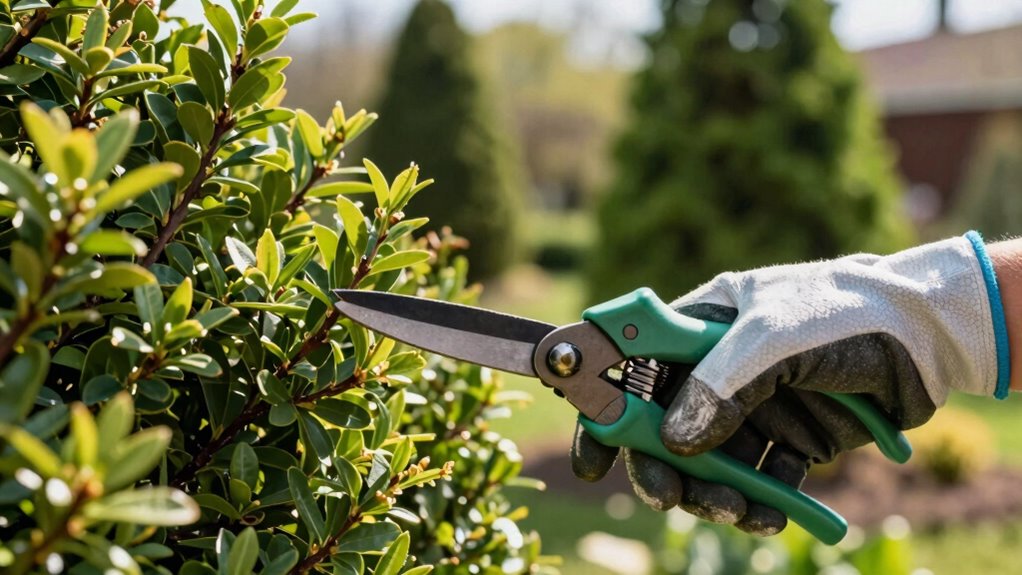
To achieve healthy, attractive plants, you need to tailor your pruning techniques to the specific types of shrubs and trees you’re working with. Different species have unique growth habits and pruning needs. For example, flowering shrubs in your flower bed may require light pruning after blooming, while deciduous trees might need careful thinning to maintain shape. Consider how pruning impacts soil health; proper cuts can reduce stress and encourage root growth. Always research each plant’s requirements to avoid damaging buds or branches. Some plants respond well to shaping, while others need minimal interference. Adjust your pruning approach based on the plant’s natural growth pattern, ensuring you support overall plant health and vibrant blooms. Tailoring your method keeps your garden thriving.
Troubleshooting Pruning Problems: When to Call an Expert

While many pruning issues can be resolved with proper techniques, some problems are best left to the experts. If you notice signs of root rot, pest infestation, or extensive damage, it’s time to call in a professional. These issues can worsen if misdiagnosed or improperly treated. For example, root rot may require specialized treatment, and pest infestations might need targeted chemical controls. Additionally, if your pruning efforts lead to dieback or unexpected disease spread, expert intervention is vital.
You should seek professional help if:
- You observe persistent wilting or yellowing after pruning
- The plant shows signs of severe pest infestation
- There’s evidence of root rot affecting stability
- You’re unsure about the correct pruning method for your plant type
Frequently Asked Questions
Can Pruning Help Improve a Plant’s Flowering or Fruit Production?
Yes, pruning can help improve your plant’s flowering and fruit production. When you prune correctly, you encourage a flowering boost by removing dead or overcrowded branches, allowing new growth to thrive. This also increases fruit yield since the plant channels energy into producing blooms and fruits rather than unnecessary growth. Regular pruning keeps your plant healthy, vigorous, and more productive, ensuring you get the best possible harvest.
How Do I Prune Plants During Different Seasons Effectively?
You should adapt your pruning timing based on the season to make certain of healthy growth. During spring, prune to remove dead or weak branches to promote new growth, while in summer, focus on shaping and thinning. In fall, cut back to prepare plants for winter, and in winter, avoid heavy pruning to prevent stress. Practicing seasonal pruning helps maintain your plants’ health, flowering, and fruit production year-round.
What Are the Signs of Over-Pruning or Under-Pruning?
You’ll notice pruning overreach when your plant looks sparse, with missing branches or stunted growth, indicating you’ve cut too much. Improper trimming, like cutting into healthy wood, causes weak new growth or dieback. Under-pruning results in overgrown, tangled branches that hinder airflow and light. To avoid this, prune selectively, remove dead or diseased parts, and remember that less is often more. Keep an eye on your plant’s overall health.
Are There Specific Pruning Techniques for Native Versus Exotic Plants?
Think of native pruning as tending a familiar friend, gently shaping with respect for its natural form, often using light, selective cuts. For exotic pruning, you’re more like a sculptor, shaping unfamiliar patterns to encourage growth or control size. Use native pruning techniques to preserve the plant’s natural beauty, while exotic pruning involves more precise, sometimes dramatic cuts. Tailor your approach to each plant’s origin for healthy, vibrant growth.
How Can I Tell if a Branch Is Truly Dead or Just Dormant?
To determine if a branch is truly dead or just dormant, look closely at its health and dormancy indicators. If the branch is brittle, brown, and easily snaps, it’s dead. If it’s still green inside or if buds are swelling, it’s likely dormant. You can also gently scratch the bark; green underneath indicates life. Trust these signs to avoid unnecessary pruning and keep your plant healthy.
Conclusion
By following the simple ‘Three Ds’ rule—removing dead, diseased, and damaged branches—you’ll keep your plants healthy and thriving. With the right tools and techniques, pruning becomes safer and more effective. Remember, proper pruning isn’t just about aesthetics; it’s about giving your plants a fresh start. So, why not embrace these easy guidelines and enjoy a lush, vibrant garden that shows off your green thumb? After all, isn’t a thriving garden worth the effort?