Many mulch myths can lead you to over- or under-apply it, harming your garden. Effective mulching involves using about 2 to 3 inches of organic material like wood chips or bark, ensuring even coverage while avoiding contact with stems. Adjust based on climate, plant needs, and mulch type. Proper application boosts soil health, conserves moisture, and prevents weeds. To maximize benefits, understanding these guidelines will help your garden thrive—keep exploring for more tips.
Key Takeaways
- A 2 to 3-inch mulch layer effectively conserves moisture and suppresses weeds without harming plants.
- Over-mulching can cause soil compaction, root suffocation, and attract pests.
- Under-mulching leads to dry soil, increased weeds, and temperature fluctuations affecting plant health.
- Organic mulches like wood chips or bark are best applied in 2-3 inch layers; lighter mulches need less depth.
- Regularly check and replenish mulch to maintain proper thickness and optimize soil and plant benefits.
What Mulch Myths Should Gardeners Ignore?
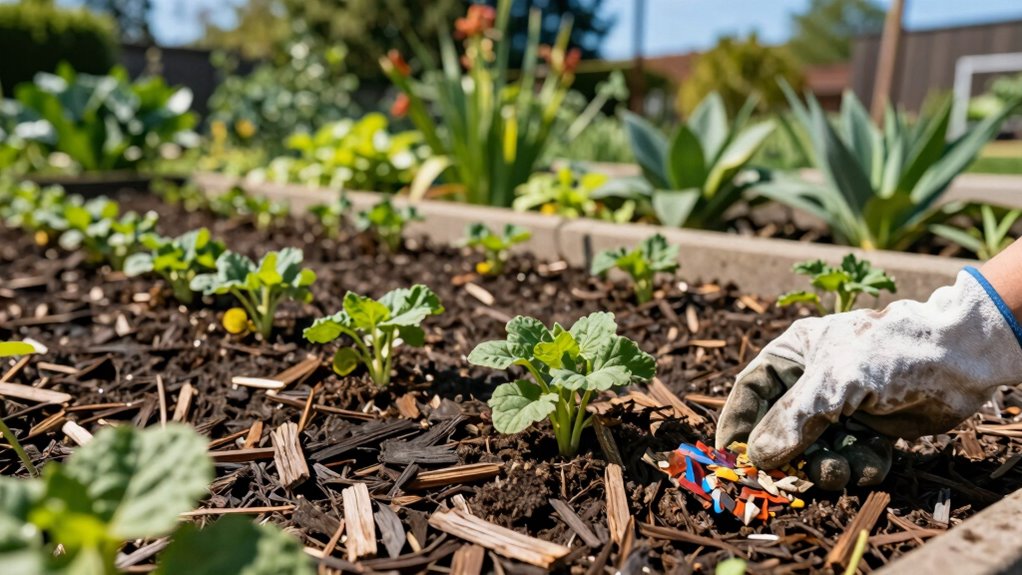
Many common beliefs about mulch are actually myths that can mislead gardeners. One such myth is that mulch harms soil health by suffocating roots or causing nutrient loss. In reality, mulch improves soil health by conserving moisture, regulating temperature, and adding organic matter as it decomposes. Additionally, mulch can aid in soil aeration by preventing soil compaction and promoting healthy root growth. Proper mulch application can enhance soil aeration and promote beneficial microbial activity, further supporting plant health. Using mulch appropriately can also help prevent weeds and reduce the need for chemical controls. Some gardeners assume mulch attracts pests; however, research indicates that certain mulching materials can actually deter pests and protect plants from infestations. Moreover, understanding the benefits of mulch allows gardeners to tailor their mulching practices for optimal plant and soil health. Believing these myths may cause you to avoid using mulch altogether or apply it incorrectly, reducing its benefits. Understanding the truth helps you make informed decisions that promote healthier soil and more effective pest control, ultimately supporting your garden’s growth and productivity.
How Much Mulch Do You Really Need for Your Garden?

To get the most benefit from mulch without wasting materials or creating problems, you need to apply the right amount. Generally, a layer of 2 to 3 inches is ideal for maintaining soil moisture and suppressing weeds. Too little mulch won’t provide sufficient weed control or retain moisture effectively, leading to dry soil and more weeds. Conversely, too much mulch can suffocate plant roots and promote rot. Spread mulch evenly around your plants, ensuring it doesn’t touch stems or trunks. This balance helps keep soil moisture consistent, reducing watering needs and preventing weed growth. Regularly check the mulch layer and replenish as needed to maintain that suitable thickness, ensuring your garden stays healthy and weed-free. Incorporating project management support from professionals can help optimize your mulching strategies for better garden health, much like how a retirement plan benefits long-term financial security. Paying attention to gardening best practices can further enhance your results and prevent common mistakes. Additionally, understanding the effective mulch depth can help you avoid common pitfalls and ensure your efforts are sustainable.
What’s the Best Thickness of Mulch for Different Types?
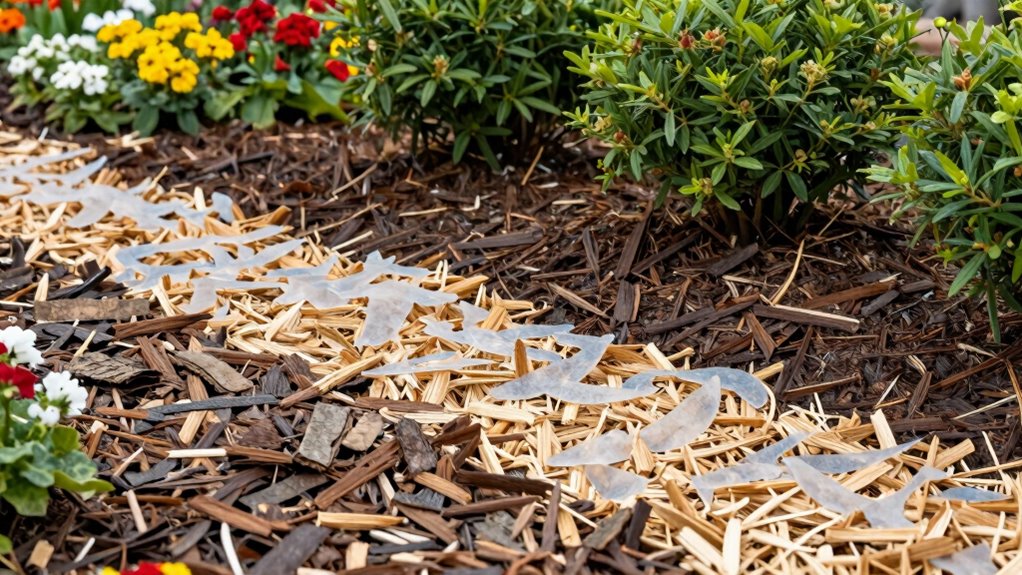
Different types of mulch require varying thicknesses to be most effective. For organic mulches like wood chips or bark, a layer of 2 to 3 inches guarantees good mulch consistency and prevents weeds. If you use straw or shredded leaves, aim for about 1.5 to 2 inches to promote proper mulch layering without suffocating plants. Mulch thickness influences moisture retention and temperature control, so adjust accordingly. Additionally, understanding contrast ratio helps in selecting mulches that reflect light effectively, improving visual appeal. Proper mulch layering also supports soil health by preventing erosion and conserving nutrients. Using the right mulch thickness can also impact weed suppression, making your garden maintenance easier. Applying mulch at an appropriate depth enhances plant growth by maintaining consistent soil conditions and reducing stress on plants. Always tailor mulch layering to your specific mulch type and garden needs for ideal results. Recognizing the importance of mulch depth ensures optimal benefits for your garden’s growth and sustainability.
What Are the Risks of Over- or Under-Mulching: And How to Avoid Them?
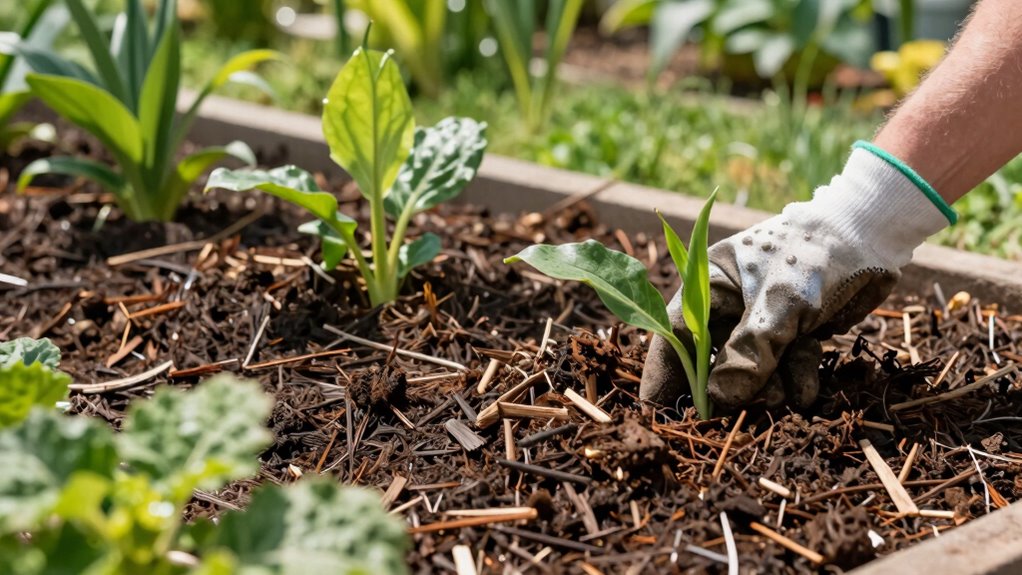
Applying the right mulch thickness is vital, but going too far in either direction can cause problems. Too much mulch can lead to soil compaction, which restricts air and water flow, harming plant roots. It also creates a moist environment that attracts pests like insects and rodents. Additionally, excessive mulch can suffocate beneficial soil microorganisms, disrupting soil ecosystem balance. Conversely, too little mulch offers minimal weed suppression and leaves soil exposed to temperature fluctuations, stressing plants. To avoid these issues, maintain an appropriate layer—usually 2 to 3 inches—adjusting based on your plant’s needs. Regularly check mulch depth and remove excess or add more as needed. Properly mulched beds promote healthy soil, discourage pests, and prevent damage caused by over- or under-mulching. Ensuring proper ventilation considerations in mulch placement can further enhance plant health and reduce pest issues. Additionally, understanding the benefits of proper mulching can help you optimize your gardening practices and prevent common problems. Maintaining appropriate mulch thickness is essential for a healthy garden environment and long-term plant vitality. For optimal results, consider how soil health can be supported through correct mulching practices.
How Can You Apply Mulch Effectively and Save Resources?
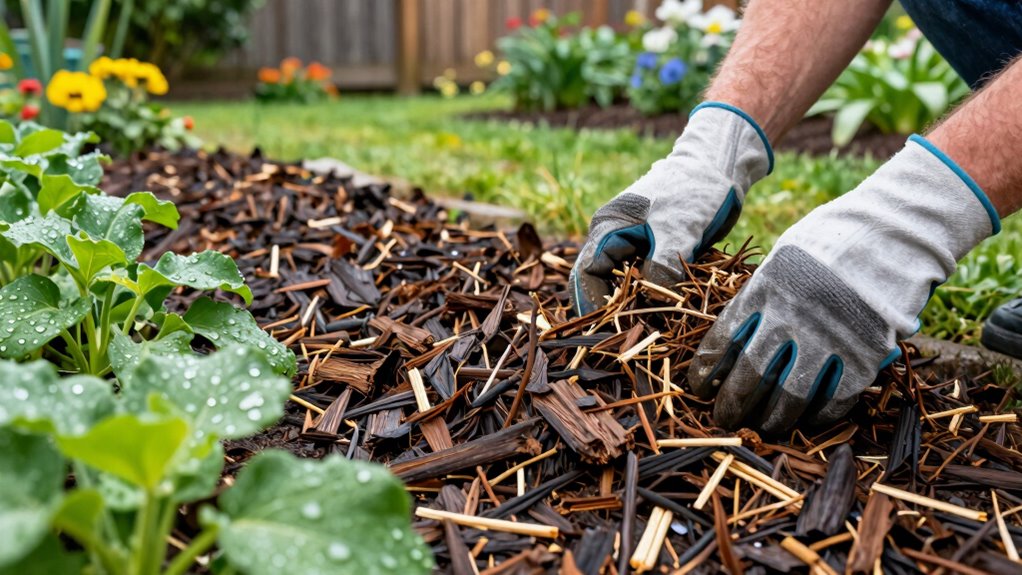
By planning your mulch application carefully, you can maximize its benefits while conserving resources. Start by applying mulch in a thick, even layer around your plants, but avoid piling it directly against stems or trunks. This improves watering efficiency by reducing evaporation and helping the soil retain moisture, so you don’t need to water as often. Incorporate compost into your mulch when possible; this boosts soil fertility and reduces the need for additional fertilizers. Use local or recycled materials to cut costs and minimize waste. Regularly inspect your mulch to maintain the right depth and replenish it only when necessary. Additionally, mulch depth plays a crucial role in ensuring optimal moisture retention and weed suppression. Proper mulch application techniques can further enhance the effectiveness of your mulch layer by promoting even coverage and stability. Proper sound therapy techniques, such as rhythmic auditory stimulation, can further enhance your gardening experience by creating a calming environment. Applying mulch at the correct horsepower of electric dirt bikes can help improve soil temperature regulation and plant health. These steps ensure you’re using mulch effectively, saving water, and supporting sustainable gardening practices.
How Should You Adjust Mulch Amounts for Your Garden’s Needs?
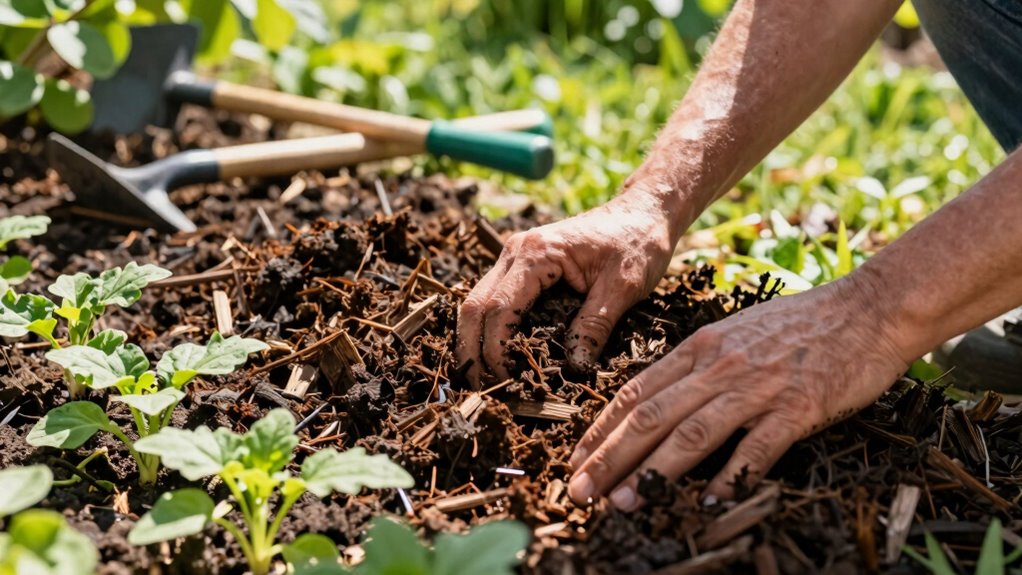
To guarantee your mulch is effective, you need to adjust the amount you apply based on your garden’s specific needs. For garden soil that retains moisture well, a thinner layer—about 2 inches—may suffice, preventing excess buildup and suffocation of roots. If your soil drains quickly or is prone to weeds, increasing mulch depth to around 3 inches can help conserve moisture and suppress weeds more effectively. Consider mulch color too; darker mulches absorb more heat, so in hot climates, a lighter mulch may require slightly more material to maintain soil temperature and moisture levels. Regularly check your mulch layer and adjust accordingly, ensuring it remains even and appropriate for your plants’ needs without smothering your garden soil. Additionally, understanding modern gardening techniques can optimize mulch application and overall garden health. Staying informed about soil health practices can also help you fine-tune your mulch strategy for better plant growth, especially when integrating companion planting to enhance garden resilience.
Frequently Asked Questions
Can Mulch Attract Pests or Promote Plant Diseases?
Mulch can attract pests or promote plant diseases if you use the wrong type or apply it improperly. Organic mulches, like wood chips or straw, may attract pest attraction if they stay wet or decomposing too long. To prevent disease promotion, keep mulch a few inches away from plant stems, avoid excessive layering, and choose clean, disease-free materials. Properly maintained mulch supports healthy plants without inviting pests or spreading diseases.
Is Organic Mulch Better Than Inorganic Options?
Organic mulch often outshines inorganic options, offering benefits beyond basic coverage. You get nutrient-rich, natural materials like wood chips or compost, which enrich your soil and support healthy plants. Inorganic mulches, like rubber or plastic, last longer but don’t nourish. When choosing, consider mulch color options—rich browns, vibrant reds, or sleek blacks—that complement your landscape. Organic mulch‘s natural appeal makes it a better, biodegradable choice for sustainable, scenic gardening.
How Often Should Mulch Be Replaced or Replenished?
You should replace or replenish your mulch every 1 to 2 years to maintain its effectiveness. Mulch lifespan varies depending on the type and climate, but seasonal replenishment helps keep it looking fresh and functioning well. Keep an eye on it; if it decomposes or erodes, add a fresh layer of mulch to guarantee continued weed control, moisture retention, and soil protection. Regular upkeep maximizes your mulch’s benefits.
Does Mulch Affect Soil pH or Nutrient Levels?
Mulch can influence soil acidity and nutrient levels over time. It may slightly increase soil acidity as it decomposes, especially with organic mulches like pine bark or cedar. Additionally, mulch helps reduce nutrient leaching by protecting soil from heavy rain and runoff. However, if you use too much or don’t replenish it, it can lead to imbalanced soil pH and depleted nutrients, so monitor and adjust as needed.
Are There Specific Mulch Types for Different Climate Conditions?
Yes, you should choose climate-specific mulches based on your regional conditions. For example, in colder climates, opt for organic mulches like straw or wood chips that insulate roots, while in hot, dry areas, use inorganic options like gravel to retain moisture. Regional mulch choices help protect your plants and improve soil health, ensuring you get the best results. Always consider your local climate to select the most effective mulch type.
Conclusion
Think of mulch as the foundation of a healthy garden—like a cozy blanket that keeps everything snug. By debunking myths and understanding exactly how much you need, you can avoid common mistakes and give your plants the perfect start. When you apply the right amount, you’ll see healthier growth and less wasted resources. So, get informed, stay attentive, and watch your garden flourish like a well-tuned symphony. Happy gardening!